 Ferndale Exterior
 Roofing for a Coastal Whatcom County Climate
Homes near Bellingham sit close enough to the Salish Sea that salt-laden air, wind-driven rain, and long stretches of damp, shaded weather are just part of owning a house here. Asphalt shingle roofs handle this climate well when they're specified and installed correctly, but a roof built for a drier inland market will not hold up the same way on this side of the Cascades. The combination of persistent moisture, moss growth, and coastal wind gusts means small installation shortcuts that might go unnoticed elsewhere tend to show up early here — as granule loss, curling shingle edges, or moss creeping under tabs within just a few seasons.
This page covers what a correctly built asphalt shingle roof looks like for a Bellingham-area home, what our crews actually do differently to account for the local climate, and what to expect from the process from first inspection to final walkthrough.
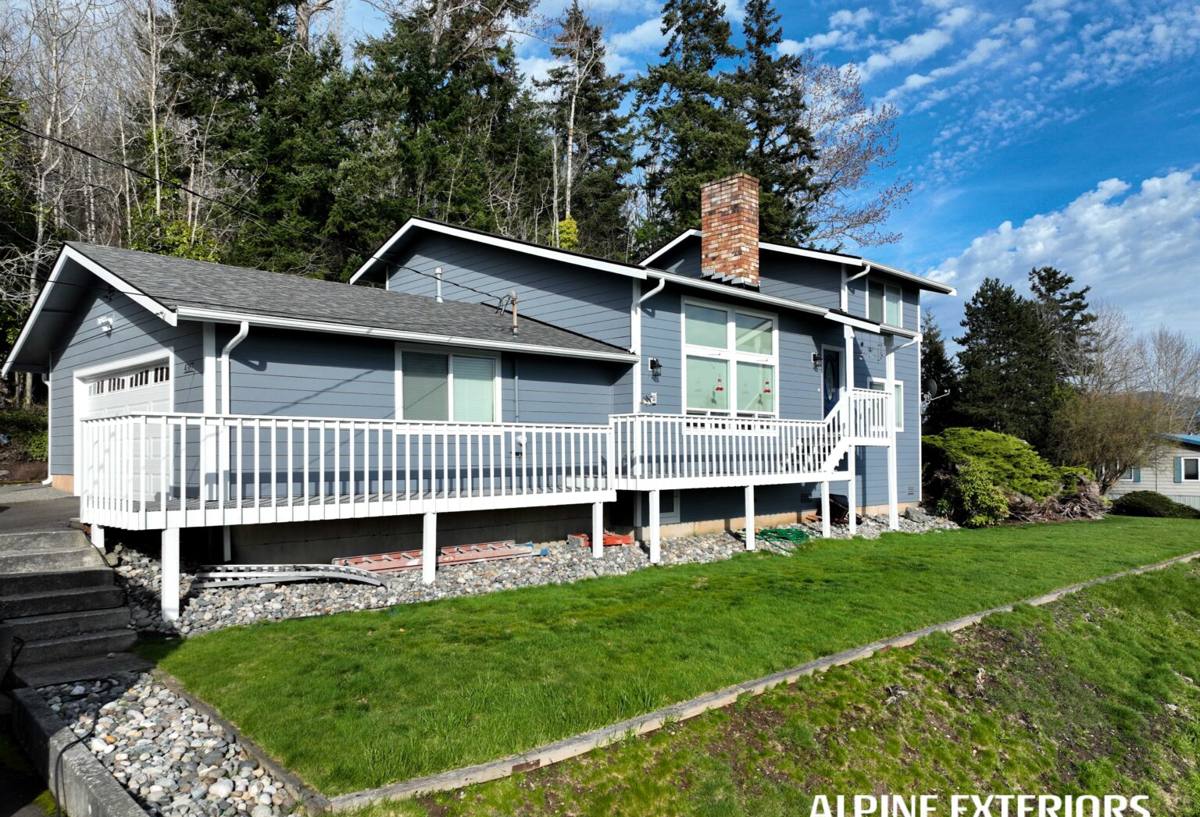
What Local Homes Actually Need From a Shingle Roof
An asphalt shingle roof in this part of Whatcom County has to manage three things at once: constant low-level moisture, occasional heavy wind-driven rain, and shaded roof sections that stay damp far longer than a roof would in a drier climate. Get any one of these wrong and the roof ages faster than its warranty suggests.
Underlayment and Water Barrier Detailing
Standard felt underlayment is not enough protection for a roof that spends a large share of the year under wet or overcast conditions. We use synthetic underlayment across the full roof deck for its tear resistance and consistent water-shedding performance, and we install self-adhering ice-and-water barrier membrane at the eaves, valleys, and any roof-to-wall transitions — the spots where wind-driven rain is most likely to work its way backward under a shingle course rather than simply running off. This detail matters more here than in a lot of the country, because rain in this region rarely falls straight down; a stiff wind off the water can push it sideways under improperly lapped shingles.
Ventilation That Matches the Roof, Not a Generic Spec
Balanced intake and exhaust ventilation keeps the underside of the roof deck dry and close to outdoor temperature, which reduces condensation buildup during our cool, wet stretches and helps shingles shed heat evenly in summer. A roof with mismatched or blocked ventilation traps moisture against the deck, and in a climate this damp, that moisture doesn't dry out quickly on its own. We check attic ventilation as part of every roofing estimate, not as an afterthought.
Choosing the Right Shingle for Bellingham Conditions
Not every shingle product performs the same way under constant damp and periodic moss pressure. We steer most Bellingham-area customers toward algae-resistant, architectural (laminated) shingles rather than basic three-tab products, for reasons that come down to how each style handles this specific climate rather than any brand preference.
| Factor | 3-Tab Shingles | Architectural Shingles |
|---|---|---|
| Algae/moss resistance | Available with copper-infused granules, but thinner profile offers less protection margin | Typically built with copper or zinc granule treatment plus a thicker mat for longer-lasting resistance |
| Wind performance | Rated lower; more exposed tab edges for wind to catch | Higher wind ratings; laminated layers resist lifting in gusty coastal wind |
| Expected lifespan (local conditions) | Shorter, especially on shaded or north-facing slopes | Longer, particularly with proper ventilation and gutter maintenance |
| Upfront cost | Lower material cost | Moderately higher material cost, offset by longer service life |
Algae-resistant granule treatments matter specifically because the moisture and shade common around Bellingham and Ferndale create ideal conditions for algae and moss spores to take hold. A shingle without that treatment can develop dark streaking or moss growth years before it otherwise would, which is a cosmetic and a performance issue — moss holds moisture against the shingle surface long after the rest of the roof has dried.
Moss, Algae, and the Marine Layer
Moss is the single most common complaint we hear from homeowners in this area, and it's a direct result of the regional climate: mild temperatures, high humidity, and long shaded periods under tree cover or during the fall and winter marine layer. Moss doesn't just sit on top of a shingle roof — its rhizoids work into the granule layer and butt joints, lifting shingle edges over time and creating small channels where water can pool or wick backward.
A correct installation reduces moss risk from the start: proper granule-treated shingles, adequate roof slope drainage, and clean valley and gutter lines that don't let debris collect and hold moisture against the shingle field. But even a well-built roof benefits from periodic moss treatment and gentle removal, especially on shaded north-facing slopes, which is why we treat moss management as an ongoing maintenance item rather than a one-time fix.
How Our Bellingham Shingle Roofing Process Works
Every roofing job follows the same sequence, whether it's a full replacement or a smaller repair, so homeowners know what to expect at each stage.
- On-site inspection. We walk the roof and attic, checking deck condition, existing ventilation, flashing points, and any signs of moss or moisture intrusion already present.
- Written estimate and product selection. We go over shingle options, underlayment approach, and any ventilation or flashing corrections the roof needs, with clear pricing before any work starts.
- Tear-off and deck check. Old roofing is removed down to the deck, and we inspect the sheathing for soft spots or rot before anything new goes down — a step that catches problems a re-roof over existing shingles would hide.
- Underlayment and flashing. Synthetic underlayment, ice-and-water membrane at vulnerable transitions, and new flashing at valleys, chimneys, and wall intersections.
- Shingle installation. Installed to manufacturer nailing and exposure specifications, with attention to proper overlap given our prevailing wind and rain direction.
- Ventilation and cleanup. Intake and exhaust vents confirmed or corrected, site cleaned, and magnetic sweep for stray nails.
- Final walkthrough. We review the finished roof with the homeowner and go over warranty paperwork and basic maintenance expectations.
Signs a Bellingham-Area Roof Needs Attention
Because damage from moisture and moss develops gradually, many homeowners don't realize a roof needs work until a leak shows up inside. A few earlier warning signs to watch for:
- Dark green or black streaking on the roof surface, especially on shaded slopes
- Visible moss growth, even in small patches near valleys or the roof's north side
- Granules collecting in gutters or at downspout outlets
- Curling, cupping, or lifted shingle edges
- Soft or discolored spots on attic sheathing visible from inside
- Daylight visible through the roof deck in the attic
- Missing or damaged shingles after a windstorm off the water
Maintenance That Extends Roof Life Here
Asphalt shingle roofs in this climate benefit from more frequent attention than the same roof would need in a drier region. We recommend the following baseline for Bellingham and Ferndale homeowners:
- Gutter cleaning at least twice a year, more often under heavy tree cover
- Visual roof inspection each fall before the wet season sets in
- Moss removal and treatment on affected slopes as needed, rather than waiting for full coverage
- Prompt attention to any flashing gaps around chimneys, vents, or skylights
- Trimming back overhanging branches that keep sections of the roof shaded and damp
None of these steps replace a properly built roof, but they meaningfully extend the life of one, particularly in the shaded, moisture-heavy conditions common around Whatcom County.
Why Hiring a Crew That Knows Bellingham Roofs Matters
A shingle roof is a system, not a single product, and the details that make it perform in this climate — underlayment choice, flashing sequence, ventilation balance, and shingle selection — are the same details that get skipped when a crew is used to building for a different climate. We work on roofs across Ferndale and the greater Bellingham area regularly, which means we're familiar with how local wind patterns, tree cover, and rainfall behave on this type of roof, and we build accordingly rather than applying a generic specification and hoping it holds up.
We also stand behind the workmanship on every roof we install, and we're straightforward about trade-offs between shingle products, underlayment upgrades, and cost — there's rarely a single "right" answer, and part of our job is helping you weigh those options honestly rather than upselling a product that doesn't fit your roof or budget.
Get a Free, No-Pressure Estimate
If your roof is showing moss, granule loss, or you just want an honest assessment of where it stands, we're happy to take a look. Fill out the form below for a free estimate on asphalt shingle roofing in Bellingham or Ferndale — no pressure, no obligation, just a clear picture of what your roof needs.