 Ferndale Exterior
 Why This Decision Is Harder Than It Looks
Every siding problem eventually forces the same question: patch it, or replace it? The honest answer depends on more than the size of the damage. It depends on what the siding is made of, how much of the wall system underneath has been compromised, and how many more years you actually want out of the current material before you're back here again.
In Ferndale and the rest of Whatcom County, that decision gets shaped by our specific climate. We're close enough to the water that salt-laden air is a real factor on exposed walls, we get long stretches of driving rain off the Strait of Georgia and Bellingham Bay, and our wet, mild winters create a moss and algae season that can run eight months or longer on north- and west-facing elevations. Siding here doesn't fail the way it does in a dry inland climate. It fails from the outside in, slowly, through moisture cycling — and by the time you can see the damage, it's often been developing for years.
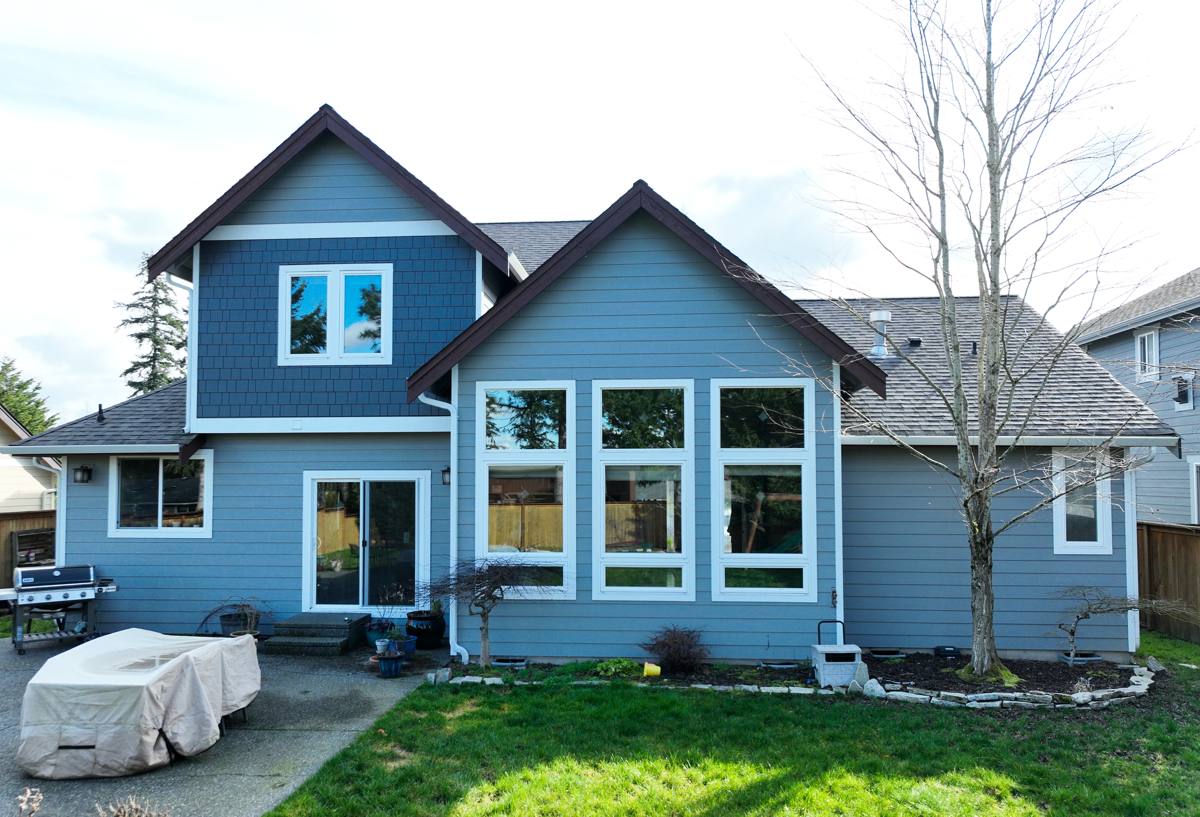
Signs Your Siding Can Still Be Repaired
Not every problem means a full tear-off. Repair is a legitimate, honest option when the damage is localized and the substrate underneath is still sound. Good candidates for repair include:
- A handful of cracked, split, or impact-damaged boards in an otherwise healthy wall
- Caulking failure at trim and butt joints that's let water in locally, without widespread rot
- Isolated moss or algae staining that hasn't yet broken down the surface of the material
- Damage from a single event — a falling branch, a ladder, a piece of equipment — confined to one area
- Fading or chalking on siding that is otherwise structurally intact
If a contractor can pull a few boards, confirm dry sheathing and framing behind them, and match the existing material closely enough that the repair won't stand out, repair is the responsible recommendation. Anyone who pushes a full replacement on a house with a few damaged boards and a sound structure underneath isn't doing you a favor.
Why "Matching" Is the Catch
The problem with repair is rarely the labor — it's finding material that actually matches what's already on the wall. Discontinued colors, weathered boards next to new ones, and profiles that were phased out years ago all make a technically successful repair look patchy. This is one of the practical reasons material choice matters up front, which we'll come back to.
Signs Replacement Is the Smarter Move
Some situations aren't repair situations, even if the damage looks contained from the driveway. Full or substantial replacement is usually the right call when you see:
- Soft, spongy, or crumbling siding across multiple walls, not just one spot
- Visible rot, delamination, or swelling at seams and butt joints in more than a few places
- Persistent moisture, mustiness, or staining on interior walls near exterior siding
- Widespread paint failure — peeling, bubbling, or alligatoring over most of the house
- Siding that's original to a home built more than 20-25 years ago, especially wood-based or older composite products
- Repeated repairs to the same areas year after year
The through-line here is scope. One or two problem areas is a repair. Damage that shows up in similar patterns across the whole house means the material itself, or the way moisture is managing around it, has reached the end of its service life. At that point, repeated patching becomes a way of spending money without actually solving anything.
Repair vs. Replacement: Weighing the Real Factors
| Factor | Favors Repair | Favors Replacement |
|---|---|---|
| Extent of damage | Isolated, one or two areas | Spread across multiple walls or elevations |
| Sheathing/framing condition | Dry and sound behind the damage | Soft, stained, or rotted framing found |
| Age of existing siding | Under 15 years, well maintained | Original to an older home, past its expected life |
| Material match availability | Close match possible | Discontinued color or profile, visible patchwork |
| Moisture history | No recurring water intrusion | Repeated leaks, mold, or interior moisture signs |
| Long-term plan | Selling soon or short-term hold | Staying long-term, want it solved once |
Material Matters More Than Most Homeowners Expect
This is the part of the conversation that gets skipped too often: how repairable your siding is later depends heavily on what it's made of now. We've built our business around installing only James Hardie fiber cement siding, and one of the reasons is exactly this repair-versus-replace question.
Wood and Engineered Wood Products
Primed spruce, cedar, and engineered wood siding products are the most vulnerable to the moisture-cycling problem that defines our climate. Once water gets behind the factory coating or into a cut edge, these materials can swell, delaminate, or rot from the inside — often before it's visible on the surface. Repairs on these products can look fine for a season and then fail again once the moisture pattern that caused the original damage repeats itself.
Vinyl Siding
Vinyl is inexpensive and low-maintenance in dry climates, but it has real limits here. It expands and contracts significantly with temperature swings, it can crack or become brittle with age and UV exposure, and color-matching an old panel to a new one is often impossible because vinyl fades unevenly and formulations change over time. A vinyl repair frequently means replacing an entire section, not just a board.
Fiber Cement (Where We Draw the Line)
Not all fiber cement is built the same way. We install exclusively James Hardie products because of how the company engineers for regional exposure — its HZ5 formulation is specifically designed for the wetter, harsher climates found in the Pacific Northwest, and the ColorPlus factory finish is baked on under controlled conditions rather than field-painted, which matters enormously when you're trying to match an existing wall years down the road. Hardie also maintains long production runs on its core colors and profiles, which means a repair five or ten years from now is far more likely to actually match than it would be with a discontinued vinyl or wood product.
Fiber cement doesn't rot, and it isn't a food source for moss and algae the way wood is, though like any siding it still needs to be kept clean in our climate to look its best. When damage does happen — impact, a cracked board — a correctly installed Hardie wall lets a contractor replace individual boards without disturbing the whole elevation, because the material and finish are consistent and available.
What a Real Repair Assessment Should Include
Before you agree to either a repair or a full replacement, a competent contractor should actually check the wall, not just eyeball it from the ground. A proper assessment includes:
- Pulling a sample board or two in the damaged area to inspect the sheathing and house wrap behind it
- Checking for soft spots by hand around window and door trim, at the base of walls, and at deck ledger connections
- Identifying the siding's age, manufacturer, and profile to determine whether matching material is realistically available
- Looking at the whole house, not just the reported problem area — damage on a shaded, moss-prone north wall often signals what's coming on other elevations
- Checking flashing at windows, doors, and roof-to-wall intersections, since siding damage is frequently a symptom of a flashing problem, not the root cause
Skipping that inspection is how homeowners end up paying for the same repair twice — once now, and again in a few years once the underlying moisture source finally shows itself somewhere else.
When Partial Replacement Is the Right Middle Ground
Full tear-off isn't always necessary even when a simple patch won't cut it. Replacing siding on one or two of the most exposed elevations — typically the walls that take the brunt of wind-driven rain off the water or sit shaded and damp under tree cover — while leaving well-maintained walls in place is a legitimate approach for homes in Ferndale and along the coastal parts of Whatcom County. It concentrates the budget where the climate is doing the most damage, rather than spending evenly across walls that don't need it yet.
What We Recommend, and Why
When a repair is the honest answer, we'll tell you that — there's no reason to sell a full replacement to a homeowner whose siding is sound. But when damage is widespread, the material is past its practical service life, or a homeowner is already looking at a partial or full replacement, we recommend James Hardie fiber cement because it holds up to what this climate does to a house year after year, and because it stays serviceable and repairable for the long haul rather than becoming another patchwork problem five years later.
If you're not sure which category your siding falls into, that's a normal place to start. We're happy to come take an honest look, tell you straight whether repair makes sense or whether you're better off putting the money toward a real fix, and put together a free, no-pressure estimate either way.