 Ferndale Exterior
 Exterior Work in a Place That's Different by Design
Point Roberts is one of the more unusual places to own a home on the West Coast. It sits at the tip of the Tsawwassen Peninsula, cut off from the rest of Whatcom County by water and from the rest of Washington State by Canadian territory. Getting materials, equipment, and crews there means routing through the border at Tsawwassen, which is a normal part of doing business here but not something every exterior contractor is set up to handle smoothly. Homes in Point Roberts also sit in a tighter, more marine-dominated microclimate than most of the rest of Ferndale Exterior Co's service area, and that shows up directly in how siding, roofing, windows, and decks age.
We've built our scheduling, material staging, and logistics around the reality of working in Point Roberts. That matters more than most homeowners realize until they've had a job stall out because a crew or a supplier couldn't get product across the border on the day it was needed.
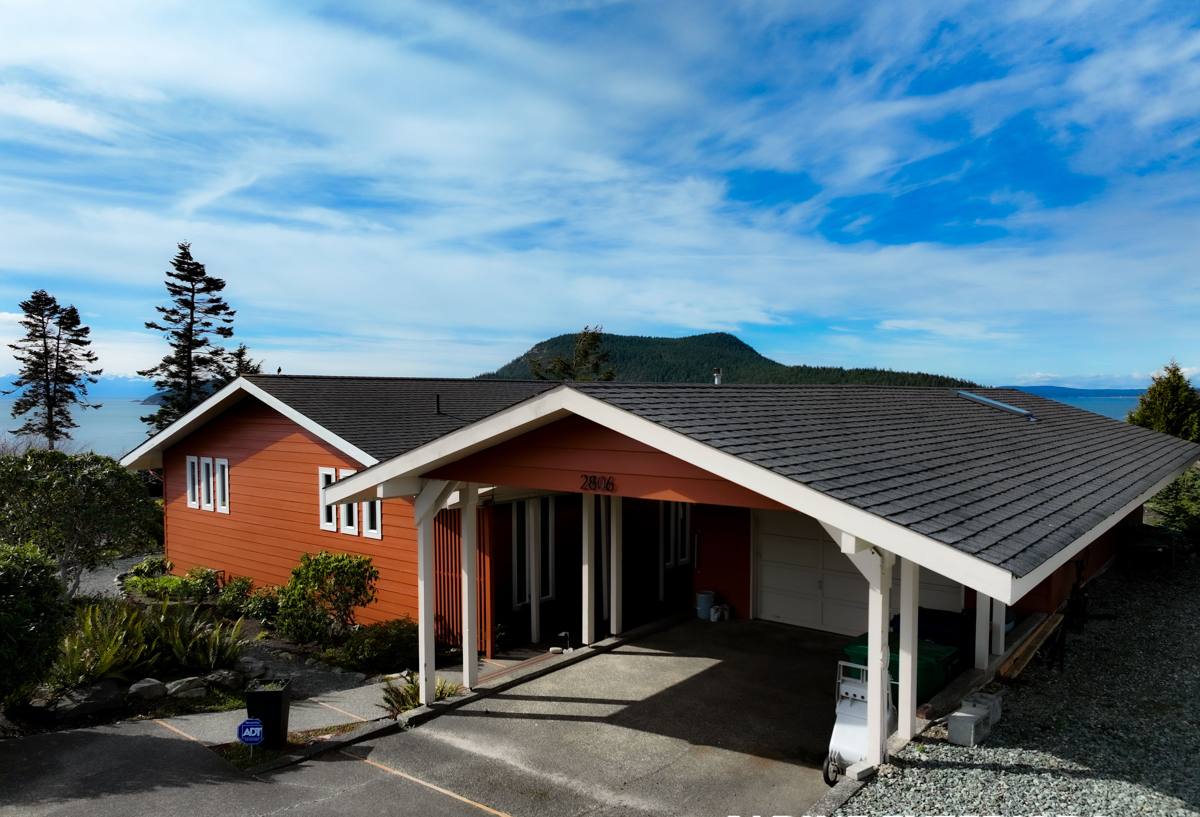
What the Climate Actually Does to a Point Roberts Home
Point Roberts is surrounded on three sides by water — Boundary Bay, Georgia Strait, and the Strait of Georgia's approaches all bring salt-laden air onto the peninsula almost constantly. Combine that with Whatcom County's long, wet fall-through-spring stretch and the result is an exterior environment that's tougher than a typical inland Ferndale or Bellingham lot.
Salt Air
Airborne salt accelerates corrosion on fasteners, flashing, gutters, and any exposed metal trim. It also degrades certain paint and coating systems faster than a homeowner would expect based on the product's rated lifespan, because most of those ratings assume a non-marine environment.
Driving Rain
Wind off the water pushes rain sideways into wall assemblies, not just straight down onto roofs. That means siding laps, window flashing, and deck ledger connections all take on more water-intrusion risk here than they would on a sheltered inland property. Sloppy flashing details that might survive for years elsewhere fail much sooner in a wind-driven-rain environment.
Moss and Sustained Moisture
The long wet season gives moss and algae a real head start, especially on north-facing walls, shaded roof slopes, and anywhere tree cover keeps a surface from drying out between rain events. Moss holds moisture against a surface long after the rain stops, which is exactly the condition that rots wood trim and lifts paint.
Siding: Why We Install James Hardie and Nothing Else
Siding is the part of the house doing the most day-to-day fighting against salt air and driving rain, so it's also where product choice matters most. Ferndale Exterior Co installs James Hardie fiber cement siding exclusively — we don't install vinyl, LP SmartSide, Cemplank, Allura, or unprimed cedar or spruce siding, even though all of those are still common on the market.
That's a deliberate standard, not a marketing line. Vinyl can warp and become brittle with UV and temperature cycling, and its seams and J-channels give wind-driven rain more places to work moisture behind the cladding. Wood-based composite and untreated wood siding depend heavily on an intact factory or field-applied coating to keep moisture out; once that coating is compromised by weather or a missed maintenance cycle, the substrate is vulnerable to swelling and rot — a bigger risk in a marine environment with a long wet season than almost anywhere else in the county.
James Hardie fiber cement is non-combustible, dimensionally stable in wet-dry cycling, and finished at the factory with ColorPlus technology, which resists fading and chipping far better than field-applied paint. Hardie's HZ5 product line is engineered specifically for cold, wet, freeze-prone climates, and the warranty structure is transferable if the home sells — a real factor for the vacation and second-home owners common in Point Roberts. We won't put a product on a Point Roberts wall that we don't think will hold up to what that wall actually faces.
| Factor | Vinyl / Composite Siding | James Hardie Fiber Cement |
|---|---|---|
| Salt air resistance | Coating and material can degrade faster near water | Factory ColorPlus finish holds color and integrity in marine air |
| Wind-driven rain | More seams/joints for water to exploit | Engineered lap and flashing details reduce intrusion points |
| Fire exposure | Combustible (vinyl melts/deforms; wood burns) | Non-combustible material |
| Long-term maintenance | Repainting or panel replacement over time | Factory finish extends repaint intervals significantly |
| Warranty transfer | Varies by manufacturer | Transferable warranty supports resale |
Roofing in a Marine, Moss-Prone Environment
Roofs in Point Roberts deal with the same combination that's hard on siding: salt exposure on flashing and fasteners, and a moss season that runs longer than it does further inland. A roof system here needs corrosion-resistant flashing and fastener hardware, proper ventilation to keep moisture from condensing in the attic, and valleys and penetrations detailed to shed wind-driven rain rather than just vertical rain. We also pay attention to moss growth patterns during roof inspections, since heavy moss on shaded slopes is often the earliest visible sign that a roof is holding moisture longer than it should.
Signs a Point Roberts Roof Needs a Closer Look
- Heavy moss buildup on north-facing or shaded slopes
- Rust streaking below flashing or fasteners
- Granule loss showing up in gutters
- Soft spots or discoloration on interior ceilings after storms
- Gutters overflowing during heavy wind-driven rain
- Visible gaps or lifted edges at flashing around chimneys and vents
Windows: Sealing Out Wind-Driven Rain and Salt
Window failures in a coastal setting like Point Roberts are rarely about the glass itself — they're about the seal, the flashing, and the frame material. Wind-driven rain pushes water at window assemblies from angles a sheltered inland home never sees, so flashing integration with the wall system has to be done correctly the first time. Salt air also accelerates corrosion on hardware and can degrade certain frame finishes faster than the manufacturer's climate assumptions account for. When we replace windows here, we treat the flashing and integration with the siding as just as important as the window unit itself, because a good window installed with a bad seal will leak regardless of its rating.
Decks: Built for Wet-Dry Cycling and Salt Exposure
Decks in Point Roberts take a beating from the same forces as the rest of the exterior, plus the added stress of direct weather exposure and, for many properties, proximity to the water itself. Fasteners and structural hardware need to be rated for corrosion resistance, ledger connections need proper flashing to keep water from tracking into the house framing, and decking material needs to handle repeated wet-dry cycling without cupping or splitting. We build and repair decks with attention to drainage and airflow underneath the structure, since trapped moisture under a deck is one of the more common hidden rot sources we find in this area.
Why a Local Crew Matters More in Point Roberts
Point Roberts' geography isn't just a curiosity — it's a real logistical factor in exterior work. Materials, equipment, and crews all have to cross an international border to get there, and that requires planning that a contractor unfamiliar with the area often doesn't account for. A crew that treats a Point Roberts job like any other Whatcom County job, without adjusting for border logistics and material staging, risks delays that leave a house exposed mid-project during exactly the kind of weather that causes damage.
Beyond logistics, familiarity with the specific way salt air, wind-driven rain, and moss behave on this peninsula shapes real decisions on site — where extra flashing attention is worth the time, which wall orientations need closer inspection, and how aggressively to plan for moisture management. That's the kind of judgment that comes from working the area repeatedly, not from a general specification sheet.
What to Expect From an Estimate
A Point Roberts estimate covers the same ground as anywhere else in our service area — a walk-around assessment of siding, roofing, windows, and deck condition, with particular attention to moss patterns, flashing condition, and any signs of wind-driven rain intrusion. We factor in the logistics of getting materials and crew to the property so scheduling is realistic from the start, not adjusted after the fact.
- On-site inspection of siding, roofing, window flashing, and deck structure
- Notes on moss, salt corrosion, and moisture intrusion specific to the property's exposure
- Straightforward explanation of why we recommend James Hardie fiber cement for siding work
- Realistic scheduling that accounts for border logistics
- No-pressure, plain-English write-up of findings and options
If you own a home in Point Roberts and want an honest read on how your siding, roof, windows, or deck are holding up against the salt air and driving rain this area is known for, we're happy to take a look. Request a free, no-pressure estimate and we'll walk the property with you and explain exactly what we see.