 Ferndale Exterior
 Exterior Work Built for Kendall's Climate
Kendall sits inland from Ferndale, tucked against the foothills that lead up toward Mount Baker, with the Nooksack River corridor running nearby. It's a different pocket of Whatcom County than the coastline, but the exterior of a house here takes its own kind of beating. Heavy tree cover, higher rainfall totals than you'll see closer to Bellingham Bay, and long stretches of shade on wooded lots all add up to siding, roofing, and trim that stay damp longer than homeowners often expect. Add in the driving rain that blows through this part of Washington in fall and winter, and you've got a climate that rewards exterior materials chosen for moisture performance, not just curb appeal.
We're based out of Ferndale and work this whole stretch of the county, so Kendall isn't an afterthought for us — it's a regular part of the route. That matters more than it sounds like it should. A crew that knows which neighborhoods sit in deep shade, which lots hold moisture longer after a storm, and how moss behaves differently on a tree-lined property than it does out in the open makes better calls on the job, not just faster ones.
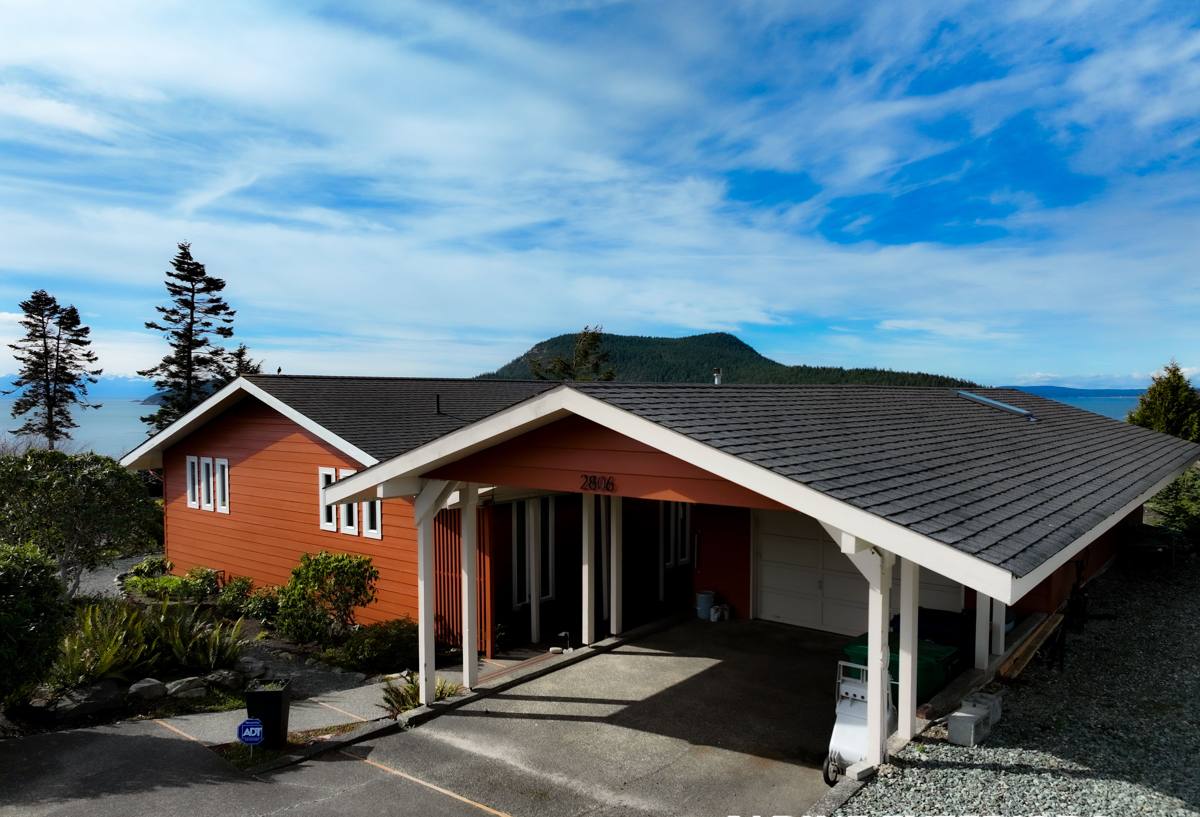
What Kendall Homes Face Over Time
Moisture That Doesn't Dry Out Quickly
Whatcom County gets a long wet season, and properties with more tree cover — which describes a lot of Kendall — hold onto that moisture longer than homes in open, sun-exposed areas. Siding, fascia, and roof surfaces that stay damp for extended stretches are more prone to moss, algae growth, and, on the wrong materials, swelling or softening at seams and cut edges.
A Long Moss Season
Where there's shade and moisture together, moss follows. On roofs, moss holds water against shingles and can work its way under tabs over time. On siding, it takes hold in horizontal laps, behind trim, and anywhere water sits instead of running off. A long moss season isn't just a cosmetic problem — it's a sign that a surface isn't shedding water the way it should, and it's worth addressing before it becomes a bigger repair.
Driving Rain and Wind-Driven Moisture
Storms moving through this part of Washington often bring rain at an angle, not straight down. That matters for exterior work because it pushes water into places a vertical rain never would — under poorly lapped siding, around loose trim, behind flashing that's not doing its job. Installation quality and flashing detail matter as much as the material itself.
Siding: Why We Only Install James Hardie
We install James Hardie fiber cement siding exclusively. We don't install vinyl, LP SmartSide, Cemplank, Allura, primed spruce, or cedar, and we're upfront about why: in a climate like this one, the trade-offs on those products add up over the years in ways that cost homeowners more than they expect.
- Vinyl expands and contracts with temperature swings, can crack in cold snaps, and doesn't hold paint if you ever want to change the color.
- LP SmartSide and other engineered wood products use wood strand cores. If moisture gets past a seam, a cut edge, or a failed caulk joint, that core can swell or degrade — and in a shaded, wet environment like parts of Kendall, moisture exposure is exactly the risk you're managing against.
- Cedar is a beautiful, genuine material, but it demands ongoing maintenance — refinishing, caulking, moisture monitoring — to hold up in a wet climate, and skipping a cycle shows up fast as cupping, splitting, or rot.
- Primed spruce and unbranded fiber cement (Cemplank, Allura) vary in factory finish quality and warranty backing, and we'd rather stand behind one system we know inside and out.
James Hardie is fiber cement: sand, cement, and cellulose fibers, engineered to resist moisture, hold paint, and shrug off the freeze-thaw and wet-dry cycles that define a Whatcom County winter and spring. It's non-combustible, which matters in a region where wildfire smoke and dry-season risk have become a bigger conversation every year. Hardie's HZ5 product line is specifically formulated for climates like ours — colder, wetter, higher humidity — and the factory-applied ColorPlus finish means the color is baked on before the boards ever reach a job site, not painted on-site where weather and prep quality vary. That finish carries its own multi-year warranty against fading and peeling, on top of Hardie's product warranty.
Where Moss and Shade Come Into the Siding Decision
On a shaded Kendall lot, siding spends more time damp than it would on an open, sun-exposed property. Fiber cement doesn't absorb and hold water the way a wood-based product can, and it won't support moss growth the way a porous or textured surface can encourage. That's a meaningful difference on a property where trees keep the siding out of direct sun for a good part of the day.
Roofing for Long Wet Seasons
A roof in Kendall deals with the same moss and moisture pressure as the siding, just on a horizontal surface where water and debris collect more easily. We look at three things on every roofing job out here: whether the underlayment and flashing are actually keeping water out at the vulnerable points (valleys, penetrations, chimney and vent flashing), whether ventilation is adequate to let the attic and roof deck dry out between wet spells, and whether the shingle or roofing material itself is rated for the moss and algae exposure common to shaded, tree-heavy properties. Skipping any one of those means the roof looks fine for a while and then fails at the seams.
Windows: Sealing Out Driving Rain
Old or poorly installed windows are one of the most common points of water intrusion we find on older homes in this area. It's rarely the glass — it's the flashing and sealant around the frame. When wind-driven rain hits a wall at an angle, a window that isn't properly flashed and integrated with the surrounding siding will let water track behind the frame and into the wall cavity, where it can sit unnoticed for a long time. Replacing windows is also a chance to correct that flashing detail, not just swap in more efficient glass — and pairing new windows with new siding lets us tie the water management together as one continuous system instead of patching around old gaps.
Decks: Built for a Wet, Shaded Climate
Decks on shaded or tree-covered Kendall properties deal with the same slow-drying conditions as the siding and roof — plus foot traffic and direct rain exposure. Framing and ledger connections need real flashing and moisture barriers, not just caulk, and decking material choice matters: some composite and wood products handle standing moisture and mildew far better than others. We build and repair decks with the same attention to water management we bring to the rest of the exterior, because a deck that traps moisture against the house structure creates problems well beyond the deck itself.
How a Project Typically Goes
- Walkthrough and assessment — we look at the whole exterior system together (siding, roof, windows, trim, drainage), not just the piece you called about, because water problems are rarely isolated to one component.
- Honest scope and options — we tell you what's actually needed now versus what can wait, and we explain the material reasoning, not just the price.
- Materials and scheduling — James Hardie siding is ordered to the specific HZ product line and ColorPlus finish for your project; roofing and window materials are selected for this climate.
- Installation to spec — proper flashing, house wrap or weather-resistive barrier integration, and correct fastening are what make the difference between a product that performs for decades and one that fails early regardless of brand.
- Final walkthrough — we go over the completed work with you before calling the job done.
Questions Worth Asking Any Contractor Before You Hire
- Are you licensed and insured to work in Whatcom County, and can you show proof?
- Who is actually on the crew doing the work — subcontractors or your own installers?
- What's your plan for flashing and moisture barriers at windows, roof penetrations, and siding laps?
- What warranty covers the material, and what warranty covers your labor separately?
- Can you explain why you recommend one product over another for this specific property?
Cost Factors to Understand Before You Budget
| Factor | Why It Moves the Price |
|---|---|
| Existing exterior condition | Rot, moisture damage, or failed flashing found during removal adds repair scope before new material goes on |
| House size and complexity | Roof lines, dormers, and multiple gables mean more cuts, flashing detail, and labor time |
| Access and site conditions | Steep or heavily wooded lots, common in Kendall, can affect staging, equipment access, and timeline |
| Material selection | James Hardie product line, profile, and ColorPlus color affect material cost versus base fiber cement pricing |
| Scope bundling | Combining siding, roofing, or windows in one project often reduces total mobilization and setup costs versus separate jobs |
Why a Local Crew Matters Here
Exterior work isn't one-size-fits-all across Whatcom County. A crew that mostly works drier, more open properties can misjudge how much moisture a shaded Kendall lot actually holds, or underestimate how aggressively moss will return without the right material and airflow. Working this area regularly out of Ferndale means we're not guessing at how a wooded property behaves in February — we've seen it, on the same kind of homes, more than once. That local pattern recognition shows up in smaller decisions throughout a project: how flashing is detailed, how ventilation is planned, which siding profile actually sheds water best on a north-facing wall that barely sees sun.
If you're weighing a siding, roofing, window, or deck project on a Kendall property, we're happy to come take a look and give you a straightforward assessment — no pressure, no sales script, just a clear picture of what your home needs and why. Reach out for a free estimate using the form below.