 Ferndale Exterior
 Why Roofs in Whatcom County Wear Differently
A roof in Ferndale doesn't age the same way a roof does in Spokane or Sacramento. Between the salt-laden air drifting in off Bellingham Bay, the driving rain that comes sideways during winter storms off the Strait of Georgia, and a moss season that can run eight or nine months out of the year, local roofs take a specific kind of beating. None of it is dramatic on any given day. It's cumulative — moisture that never fully dries out between rain events, organic growth that holds water against the roofing surface, and salt air that accelerates corrosion on metal fasteners and flashing. That combination is why a roof rated for 25 years in a drier climate often shows real wear here well before that mark.
Understanding that baseline matters because most homeowners don't think about their roof until something goes wrong — a stain on the ceiling, a shingle in the yard after a windstorm. By then you're often past the point where a simple repair solves the problem. This guide walks through the signs, the honest cost trade-offs, and what a straightforward replacement decision looks like in this part of Washington.
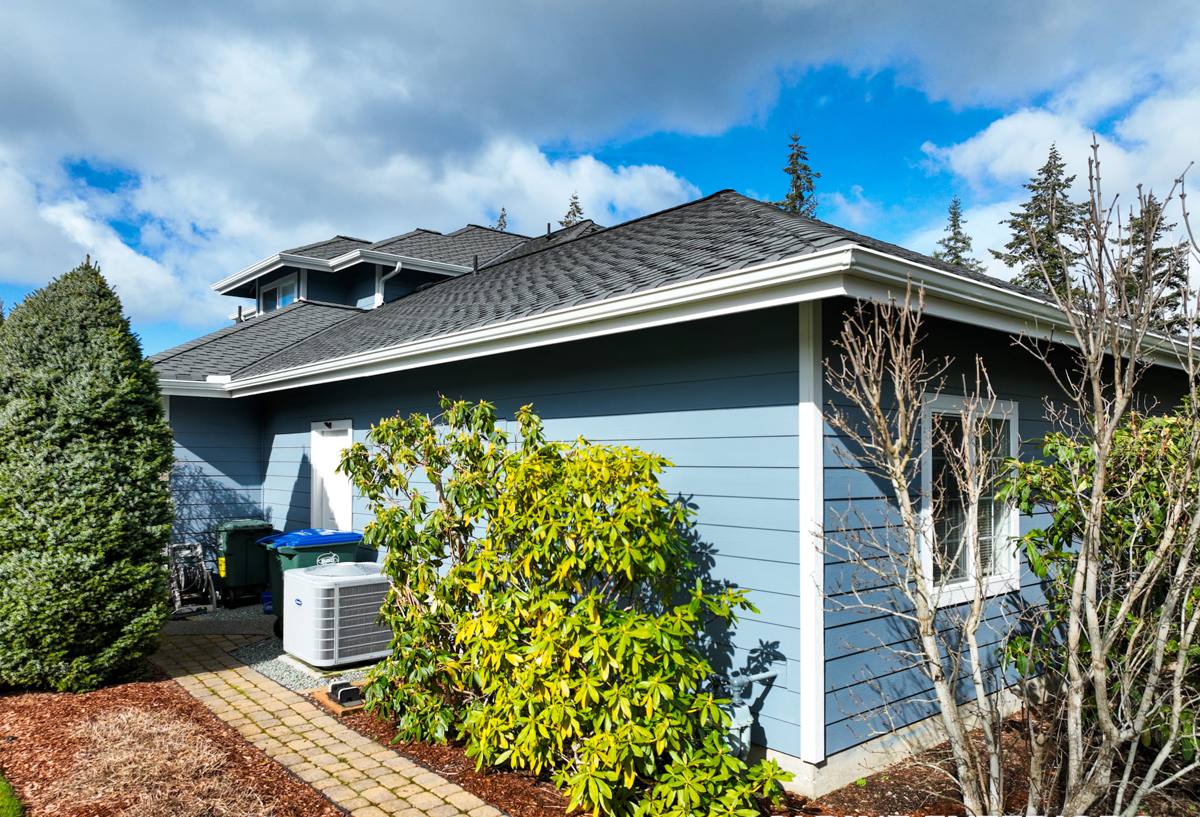
Signs Your Roof Is Telling You Something
Visual Signs From the Ground
- Shingles that are curling, cupping, or losing their granules (you'll see grit collecting in gutters or at downspout outlets)
- Dark streaking or heavy moss and algae growth across the field of the roof, not just in shaded valleys
- Missing, cracked, or lifted shingles, especially after a windstorm
- Sagging in the roofline, which can indicate deck or structural issues underneath
- Flashing around chimneys, vents, and skylights that looks rusted, lifted, or caulked over repeatedly as a patch job
Signs From Inside the Attic or Ceilings
Water stains on ceiling drywall are the obvious one, but by the time you see a stain, water has usually been getting in for a while. Less obvious signs include daylight visible through the roof deck when you're in the attic, damp or discolored insulation, a musty smell that doesn't go away with ventilation, and any soft or spongy feeling when you walk the attic decking (carefully, and only if you're comfortable doing so). Persistent moisture in an attic is also a moss-season symptom here — trapped humidity from a roof that isn't shedding water properly shows up indoors before it shows up as an obvious leak.
Age Is a Real Number, Not Just a Guideline
Every roofing material has a realistic service life, and it's worth knowing where your roof falls on that timeline even if it looks fine today. Manufacturer lifespan ratings assume ideal installation and a moderate climate — in a wetter, mossier region like Whatcom County, expect the lower end of these ranges rather than the upper end.
| Roofing Material | Typical Lifespan (National) | Realistic Lifespan (Whatcom County Climate) |
|---|---|---|
| 3-Tab Asphalt Shingles | 15-20 years | 12-17 years |
| Architectural/Dimensional Shingles | 25-30 years | 20-25 years |
| Cedar Shake | 25-30 years | 15-20 years (moss and moisture-dependent) |
| Standing Seam Metal | 40-60 years | 35-50 years |
| Membrane/Flat (TPO, EPDM) | 20-25 years | 15-20 years |
If your roof is within five years of the low end of its range, it's worth having it inspected annually even if it looks okay from the driveway. Deterioration under shingles or membrane isn't always visible until it's advanced.
Repair or Replace: How to Actually Decide
Not every problem means a full replacement, and a contractor who tells you otherwise without inspecting the roof first isn't doing you any favors. The honest decision usually comes down to scope and age together.
| Factor | Leans Toward Repair | Leans Toward Replacement |
|---|---|---|
| Age of roof | Under 60% of expected lifespan | Past 75-80% of expected lifespan |
| Extent of damage | Isolated to one section (e.g., around one vent) | Spread across multiple slopes or the whole field |
| Leak history | First occurrence, clear single cause | Recurring leaks in different spots |
| Deck condition | Solid, no soft spots | Soft, rotted, or delaminated sections found |
| Granule loss | Light, localized | Heavy and roof-wide, shingle color visibly changed |
A good rule of thumb: if you're facing a second or third repair on the same roof within a few years, the math usually favors replacement. Repeated repairs add up, and each new penetration or patch is another place water can eventually find its way in.
What a Professional Roof Inspection Actually Checks
A real inspection is more than a walk-around from the ground. If you're getting a roof evaluated — whether for a repair decision, before selling a home, or just as routine maintenance — here's what should be covered:
- Shingle or roofing surface condition across every slope, not just the visible front
- Flashing at all penetrations: chimneys, vents, skylights, and roof-to-wall transitions
- Gutter and downspout function, including signs of granule buildup or standing water
- Attic ventilation and insulation condition, checked from inside
- Roof deck integrity, checked for soft spots or visible sagging
- Moss and algae growth patterns, which can indicate poor drying or shaded areas holding moisture
- Fastener and nail condition, particularly on older roofs where corrosion is a factor near the water
Moss Season and What It's Actually Doing to Your Roof
Moss doesn't just look bad — it holds moisture directly against the roofing surface long after the rest of the roof has dried, which accelerates granule loss on asphalt shingles and can work its way under shingle edges over time. In Ferndale, north-facing slopes and areas shaded by trees are usually the first to show heavy growth, and it tends to come back faster than homeowners expect once it's established. Zinc or copper strips near the ridge can slow regrowth, and periodic gentle cleaning (never pressure washing, which strips granules) helps, but on an older roof moss is often a symptom of a roof that's already past its effective lifespan rather than a problem you can maintain your way out of indefinitely.
Timing a Replacement in the Pacific Northwest
Roofing work can technically happen year-round here, but late spring through early fall gives contractors the longest stretches of dry weather to work with, which matters for anything involving underlayment and open roof decking. That said, if you're seeing active leaks or storm damage, waiting for "the right season" isn't worth the risk of ongoing water intrusion — a reputable contractor can tarp and stabilize a damaged roof and schedule the full replacement for a better weather window if needed. If you're planning ahead rather than reacting to a problem, booking in late winter for a spring or summer install slot is usually the smoothest path, since good crews get booked up once the weather turns.
Vetting a Roofing Contractor
Roof replacement is a significant investment, and it's also one of the easier trades for a low-quality contractor to cut corners on invisibly — underlayment, flashing details, and deck repairs are all covered up once shingles go down. A few things worth confirming before you sign anything:
- Washington state contractor license number, verifiable through the L&I website
- Proof of current liability insurance and workers' compensation coverage
- A written estimate that specifies materials, underlayment type, flashing approach, and cleanup — not just a lump-sum price
- Manufacturer certification if they're proposing a shingle line with an enhanced warranty
- A local address and references from jobs in this climate, not just a regional or national sales office
- Clarity on who handles deck repair if rot is found once old roofing is removed, and how that's priced
Roof Replacement Is a Good Time to Look at the Rest of the Exterior
When a roof comes off, it's a natural point to take a hard look at the rest of the building envelope, since scaffolding, ladders, and crew access are already in place. Siding is the piece most homeowners overlook until it's convenient to address it alongside other exterior work. If your siding is showing its own age — cracking, moisture damage, or repeated paint failure — it's worth having it evaluated at the same time rather than as a separate project later. We install James Hardie fiber cement siding exclusively, specifically because it's engineered to handle the same wet, salt-air conditions that wear down roofs in this area, and it carries a strong transferable warranty that holds up over the long term. It's not a requirement to pair the two projects, but for homeowners already planning exterior work, it's worth the conversation.
If you're not sure whether your roof needs a repair or a full replacement, the safest first step is an honest inspection rather than a guess from the ground. We offer free, no-pressure estimates for Ferndale and Whatcom County homeowners — reach out through the form below and we'll take a straightforward look and tell you what we actually see, no upsell required.