 Ferndale Exterior
 Exterior Work Built for Sudden Valley Conditions
Homes in and around Sudden Valley deal with a specific mix of weather that's harder on exteriors than most homeowners realize until something starts failing. Whatcom County sits close enough to Puget Sound and Bellingham Bay that salt-laden air is a real factor on siding, trim, and fasteners, even a few miles inland. Add in driving winter rain that comes sideways off the water, tree canopy that keeps north-facing walls and rooflines shaded for weeks at a time, and a moss season that can run from October through April, and you've got an environment that punishes cheap materials and sloppy installation fast.
We're a local Ferndale crew, and we've built our whole business around one decision: install only what actually holds up here. That means James Hardie fiber cement siding, roofing systems matched to moss and moisture exposure, windows rated for wind-driven rain, and decking that won't rot out from underneath in five years. This page walks through what Sudden Valley homes typically face and how we approach each part of the exterior.
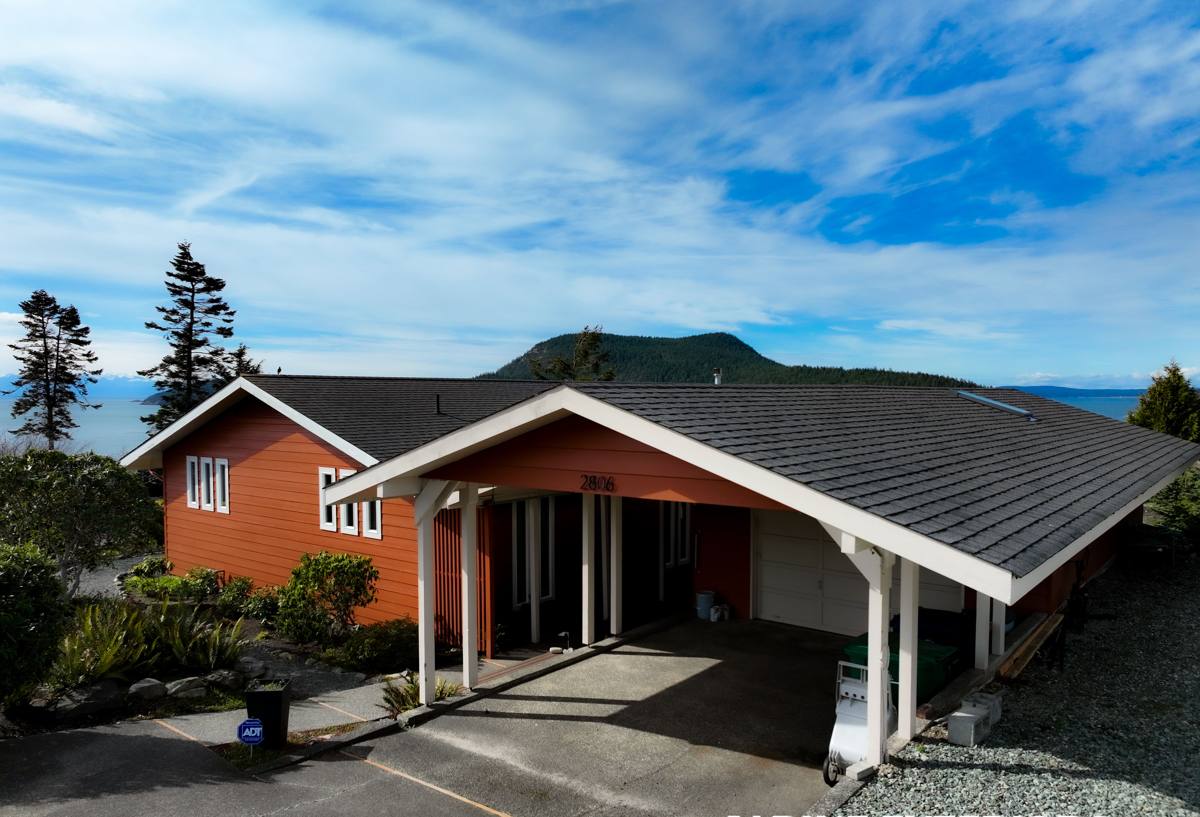
What the Local Climate Does to Exteriors
Salt Air and Metal Fatigue
Salt air accelerates corrosion on anything metal — nails, flashing, hose bibs, gutter hangers, even the fasteners holding trim boards on. Over years, corroded fasteners loosen, flashing pits and leaks, and paint fails faster on surfaces exposed to salt-carrying wind. It's not dramatic, it's cumulative, and it shows up as small leaks and stains long before anyone notices the cause.
Driving Rain and Wall Assemblies
Whatcom County doesn't just get a lot of rain — it gets a lot of wind-driven rain, which behaves differently than a straight-down downpour. Wind-driven rain gets pushed sideways and upward under laps, around penetrations, and into joints that would stay dry in calmer weather. A siding or window installation that isn't detailed for wind-driven rain — proper flashing, correct lap spacing, sealed penetrations — will eventually let water in, even if the material itself is fine.
Moss, Shade, and Moisture Retention
Tree-covered lots keep exterior surfaces damp longer after every rain event. That extended dampness is exactly what moss and algae need to establish, and once moss takes hold on a roof or the north side of a house, it holds moisture against the surface around the clock. On roofing, that shortens shingle life and can work moisture under tabs. On siding, it stains and can create the conditions for rot in wood-based products, even ones marketed as "engineered."
Siding: Why We Only Install James Hardie
We get asked regularly why we don't offer vinyl, LP SmartSide, Cemplank, Allura, primed spruce, or cedar. The honest answer is that in a climate like ours — persistent moisture, shade-driven mold and moss pressure, and salt-air exposure — the trade-offs on those products add up to more callbacks, more maintenance, and shorter real-world lifespans than homeowners are usually told upfront.
- Vinyl expands and contracts with temperature swings, can warp or crack in cold snaps, and its color is baked into a thin surface layer that fades over time — there's no repainting a failing panel back to new.
- Wood-based engineered siding (like LP SmartSide) performs well in dry climates but is still an organic, wood-fiber product at its core. In a persistently damp, shaded environment, any breach in the factory coating or field-cut edge becomes a moisture entry point, and moisture is what these products are least tolerant of.
- Primed spruce and cedar are real wood, which means they're always negotiating with moisture — swelling, checking, and needing repainting or restaining on a cycle that only gets shorter under heavy shade and rain.
- Other fiber cement brands (Cemplank, Allura) are chemically similar to Hardie, but we've standardized on one manufacturer so we can guarantee installation detailing, trim compatibility, and warranty administration without guessing at a competing product's specs.
James Hardie fiber cement is non-combustible, doesn't support moss or insect activity the way wood-based products can, and holds its factory-applied ColorPlus finish for years without repainting. Hardie also engineers specific product lines (the HZ5 line, for example) for wetter, harsher climate zones — which is exactly the category the Pacific Northwest falls into. It's not the cheapest option on day one, but it's the one we're willing to put a real warranty and our name behind.
How a Hardie Siding Job Actually Works
- Assessment: We look at existing wall condition, moisture history, tree cover, and sun exposure on each elevation before quoting anything.
- Weather barrier and flashing: Correct house wrap, window and door flashing, and kick-out flashing at roof-wall intersections come before a single piece of siding goes up — this is where most failures actually start.
- Installation to spec: Proper lap spacing, fastener pattern, and clearances (grade, roofline, deck) matter as much as the material itself. Hardie's warranty depends on installation matching their published specs.
- Trim and caulking: Corner boards, trim, and sealant joints are detailed to shed wind-driven rain, not just block straight-down water.
- Final inspection: We walk every elevation before calling a job finished, checking laps, fastener setting, and paint touch-up at cut edges.
Roofing for Moss-Heavy, Shaded Lots
Roofing in tree-covered Sudden Valley properties has to account for shade and debris as much as raw rainfall. We look at ventilation, underlayment quality, and valley/flashing detail as closely as the shingle brand itself, since a roof that's well-ventilated and properly flashed will shed moss and moisture problems far better than one that just has a "premium" shingle on top of poor detailing. Gutter and downspout capacity also matters more here than in open, sunny areas — clogged gutters under heavy tree cover back water up under roof edges fast.
Windows That Handle Wind-Driven Rain
Window failures in this area are rarely about the glass — they're almost always about flashing and sealant at the frame. We install and flash windows to shed water that's being pushed sideways by wind, not just water falling straight down, which is the actual condition Sudden Valley homes face most winters. Proper sill pan flashing and integration with the siding's weather barrier are non-negotiable details on every window job we do.
Decks: Built to Handle Shade and Standing Moisture
Decks under tree cover dry out slower than decks in open sun, which means ledger board connections, joist hardware, and decking material all need to tolerate extended dampness rather than occasional wetting. We pay close attention to ledger flashing (a common rot and structural failure point), proper joist spacing and hardware corrosion resistance given the salt-air factor, and gaps between boards that let air move and water drain instead of pooling.
Deck Maintenance Checklist for This Climate
- Clear leaves and debris from between boards each fall before heavy rains set in
- Check for moss buildup on shaded sections and remove it before it retains moisture against the decking
- Inspect ledger board flashing and joist hardware for corrosion or gaps
- Confirm downspouts and grading are directing water away from support posts
- Look for soft spots or discoloration near stairs and railings, common early rot indicators
Material Trade-Off Comparison
| Material | Handles Moisture/Shade | Salt Air Resistance | Maintenance Cycle |
|---|---|---|---|
| Vinyl siding | Doesn't rot, but can warp/crack | Fades faster near salt air | Low upkeep, but not repaintable when faded |
| Wood-based engineered siding | Vulnerable at breaches/cut edges | Moderate, coating-dependent | Coating inspection and touch-up needed |
| Cedar/primed spruce | Absorbs moisture, swells/checks | Moderate, needs sealed finish | Repaint/restain every few years |
| James Hardie fiber cement | Engineered for wet climate zones | Non-combustible, stable in salt air | Factory finish holds years without repainting |
Why a Local Crew Matters Here
Exterior work in Whatcom County isn't generic. A crew that mostly works drier inland climates will under-detail flashing, under-spec fastener corrosion resistance, and miss how much shade and moss pressure a tree-covered lot actually creates. We work this region full-time, which means we're accounting for wind-driven rain, salt air, and moss season as standard practice on every job — not as an afterthought when something already went wrong.
We also stand behind the products we install with a straight answer about why we chose them. If a product isn't something we'd put on our own homes in this climate, we don't offer it as an option — we'd rather explain the trade-offs upfront than sell something that needs replacing again in a decade.
Get a Local, No-Pressure Estimate
If you're planning siding, roofing, window, or deck work on a Sudden Valley area home, we're happy to take a look and give you an honest read on condition and options — no pressure, no upsell. Use the form below to request a free estimate from our local Ferndale crew.