 Ferndale Exterior
 Fairhaven's Exposure: Salt Air, Driving Rain, and a Long Moss Season
Fairhaven sits along Bellingham Bay, a short drive south of our home base in Ferndale, and it takes on a specific mix of weather that shapes how exteriors age there. The water brings a steady drift of salt-tinged air that works on fasteners, finishes, and caulking year-round, not just during storms. Rain off the Sound rarely falls straight down here; wind pushes it sideways into lap joints, trim seams, and anywhere a wall isn't detailed to shed water from an angle. And with mild temperatures, shade from mature trees, and dampness that lingers for much of the year, moss and mildew get a long growing season on north-facing walls, roofs, and anywhere a surface doesn't dry out between rain events.
None of that is unique to Fairhaven in isolation, but the combination and its consistency are what set coastal pockets of Whatcom County apart from drier inland areas. We work across the county, and Fairhaven is one of the spots where we see that slow, cumulative weather stress show up earliest on siding, trim, and roofing, often years before a homeowner notices anything from the curb.
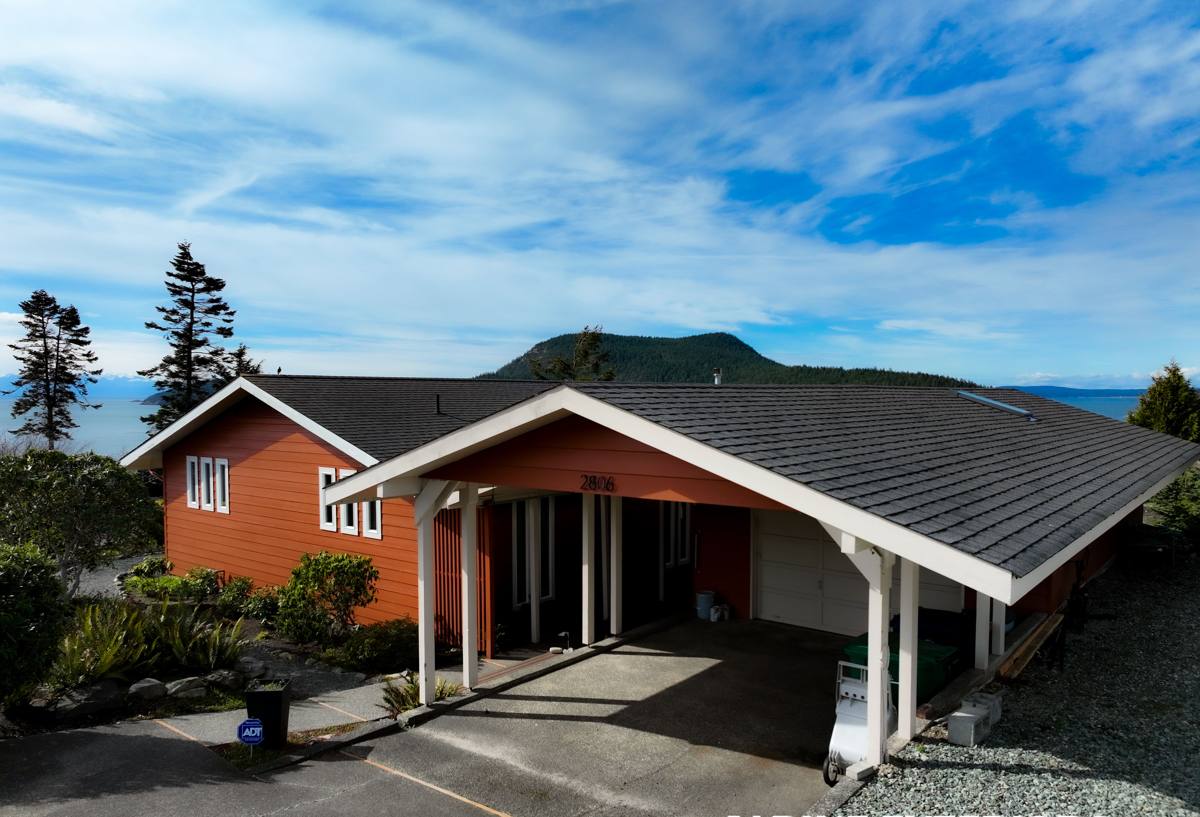
Doing the Whole Exterior Right, Not Just One Piece
"Exterior done right" isn't a slogan to us, it's a description of how we actually approach a house. A home's exterior is one connected water-management system, not four separate products bolted together. Siding, roofing, windows, and decks all touch each other at seams, flashing lines, and penetrations, and a weak point in any one of them tends to show up as damage somewhere else. That's why we handle all four rather than specializing narrowly and hoping the pieces line up.
Siding as the Outer Shell
Siding is the largest surface area on the house and the first thing exposed to wind-driven rain and salt air, but it only performs as well as what's behind it. House wrap, flashing, and fastening details determine whether water that reaches the wall gets shed or gets in.
Roofing as the First Line of Defense
A roof takes the brunt of Fairhaven's weather before it ever reaches the walls. Valleys, step flashing, and penetrations around vents and chimneys are the most common places a roof actually fails, and a leak there can travel down inside a wall for a long time before it becomes visible as siding damage or an interior stain.
Windows as the Seams in the System
Every window opening is a cut in the wall assembly, and how it's flashed and integrated with the siding around it determines whether it's a sealed seam or a slow entry point for water. Window flashing is one of the most common failure points we find when we open up a wall behind damaged siding.
Decks as an Attached Extension
A deck ledger board bolted to the house needs its own flashing to keep water from tracking behind the siding at the connection point, a detail that's easy to skip and expensive to ignore once moisture starts working its way into the wall from that ledger.
Because we handle all four trades, we can walk a Fairhaven property and trace a problem back to where it actually started, instead of replacing the siding on top of a roof leak or a bad window flashing that's still active underneath.
Why We Standardized on James Hardie Fiber Cement
When it comes to siding, we install James Hardie fiber cement, and only James Hardie. We used to offer more options. What we kept seeing on tear-offs and repair calls in this climate, wall after wall, made the case for standardizing on one system rather than letting price alone decide what went on a house.
- Non-combustible core: Fiber cement doesn't feed a fire the way wood-based siding products can, a real factor for household safety and often for insurance.
- Factory-applied ColorPlus finish: The finish cures under controlled conditions at the factory rather than being brushed on at the job site, which gives it meaningfully better resistance to fading, chalking, and moisture intrusion at the surface.
- Climate-engineered HZ product lines: Hardie's HZ5 formulation is built for regions with sustained moisture and freeze-thaw cycling, a closer match to coastal Whatcom County than a generic national spec.
- Dimensional stability: Fiber cement doesn't swell, cup, or warp through repeated wet-season moisture cycles the way engineered wood products can.
- A strong transferable warranty: Hardie backs its products with one of the more substantial warranty structures in the industry, as long as installation follows spec.
We don't install LP SmartSide, vinyl siding, Cemplank, Allura, primed spruce, or cedar. Those are legitimate products, and other contractors install them well. Our decision was about matching a product to this specific climate: engineered wood is more sensitive to moisture at cut edges and fastener penetrations than fiber cement; vinyl can warp in direct sun, crack in a cold snap, and trap moisture behind the panel if the wrap and flashing underneath weren't installed carefully; cedar and primed spruce look great but need a painting or sealing schedule that's easy to fall behind on in a climate this consistently damp, and once that schedule slips, the material's real-world lifespan drops well below what it's rated for. We'd rather stand fully behind one system we understand completely than sell a cheaper option and quietly hand the maintenance risk to the homeowner.
Repair or Full Replacement
Not every siding problem on a Fairhaven home means tearing the whole wall off. Isolated impact damage or a section that's failed around one window can often be repaired and matched into existing Hardie siding. But if water has been tracking behind the wall for a while, or the existing material has simply reached the end of its service life, a patch usually just delays a bigger project a year or two. We'll tell you honestly which situation you're actually in.
What "Done Right" Looks Like on Install Day
The material is only half the equation. A Hardie installation that performs the way it's engineered to depends on correct fastening patterns, proper clearance from grade and roofline, joints that are lapped and sealed the right way, and house wrap and flashing that work together as one system instead of separate steps done in isolation. The same standard applies to roofing, window, and deck work: sequencing and flashing details matter as much as the products themselves. A rushed installation is one of the most common reasons a good product develops a poor reputation, which is why we treat install detail with the same seriousness as material selection.
Reading the Warning Signs Early
Catching exterior problems early in a climate like this usually saves money, because water damage compounds quietly behind the wall long before it's visible from the street. Signs worth checking for around a Fairhaven property include:
- Moss or dark staining that comes back quickly after cleaning, especially on shaded or north-facing surfaces
- Soft or spongy siding, particularly low on the wall or around window and door trim
- Peeling, bubbling, or chalking paint on siding boards or trim
- Cracked, chipped, or missing siding after a windstorm
- Visible gaps at seams, corners, or trim joints where water can track in
- Rust staining around fasteners or flashing, a common early sign of marine air exposure
- A roof valley or vent boot that looks worn, cracked, or lifted
- A deck ledger area that stays damp or discolored longer than the rest of the wall
Cost Factors for Fairhaven Exterior Projects
| Factor | What It Affects | Why It Matters Here |
|---|---|---|
| Scope: single trade vs. combined project | Total labor and scheduling | Bundling siding, roofing, windows, or deck work into one project can reduce duplicate setup and staging time |
| Tear-off vs. overlay | Labor scope and substrate access | Tear-off exposes hidden moisture damage that's common under older siding and roofing this close to the bay |
| Substrate condition | Repair costs before new material goes on | Years of trapped moisture behind failing exterior surfaces can rot sheathing and framing before it's ever visible |
| Roof and wall interaction | Flashing complexity | Homes with more roof intersections and trim detail give wind-driven rain more places to work its way in |
| Finish selection | Material cost and finish longevity | Factory-cured finishes like ColorPlus outlast field-applied paint against salt air and UV exposure |
Real numbers depend on the specific house and what we find once we're up close, which is why we walk the property in person before quoting rather than pricing off square footage alone.
Why a Local, Ferndale-Based Crew Matters
A crew that works this part of Whatcom County regularly sees how salt air, wind-driven rain, and moss actually behave on real houses over a full year, not just how a product performs on a spec sheet. That shows up in practical decisions on install day: where extra flashing attention is worth the time, which wall orientations stay damp the longest, and which shortcuts simply don't hold up out here. Being based in Ferndale and working across the surrounding coastline, including the Fairhaven area, means we're not guessing at regional conditions from a spec sheet written for a drier climate somewhere else.
What to Expect When You Call Us
We start with a walk-through of the property, inside and out where it's relevant, so we can see how the current exterior is actually performing rather than just how it looks from the driveway. From there we'll explain what we're seeing in plain language, what's driving the recommendation, and what your realistic options are, including repair versus replacement where that applies. If the scope touches more than one trade, we plan it as one connected project rather than four separate ones scheduled at random. You'll get a written estimate with an actual scope of work, not just a lump-sum number.
- In-person walk-through and assessment, not a drive-by estimate
- A plain-language explanation of what's causing any damage we find
- An honest recommendation on repair versus replacement
- A written scope of work covering materials, flashing details, and sequencing
- One crew accountable for siding, roofing, windows, and decks, not a chain of subcontractors
If your Fairhaven-area home is due for siding, roofing, new windows, deck work, or just an honest look at what's happening behind an aging wall, we're glad to take a look. Reach out using the form below to schedule a free, no-pressure estimate.