 Ferndale Exterior
 Why Fairhaven Roofs Wear Differently
Homes near Fairhaven face a specific combination of conditions that inland Whatcom County properties don't deal with in the same way. The proximity to Bellingham Bay means salt-laden air moves through the area regularly, and that air interacts with roofing metals, fasteners, and even asphalt granules over time. Add in the long stretch of wet months typical of this part of Washington, and you get roofs that are working harder than a similar home might in a drier climate.
Driving rain off the water is another factor. When wind pushes rain sideways instead of straight down, it tests every lap, seam, and flashing detail on a roof in ways that calm, vertical rainfall doesn't. A roof that's technically installed to code can still underperform in these conditions if the details weren't built with wind-driven moisture in mind.
Then there's moss. Ferndale and the surrounding Whatcom County area see enough shade, moisture, and mild temperatures for moss to get a foothold on almost any roof that isn't actively managed. Left alone, moss holds water against the roofing material, works into laps and granule surfaces, and shortens the usable life of a roof faster than sun exposure ever would in this region.
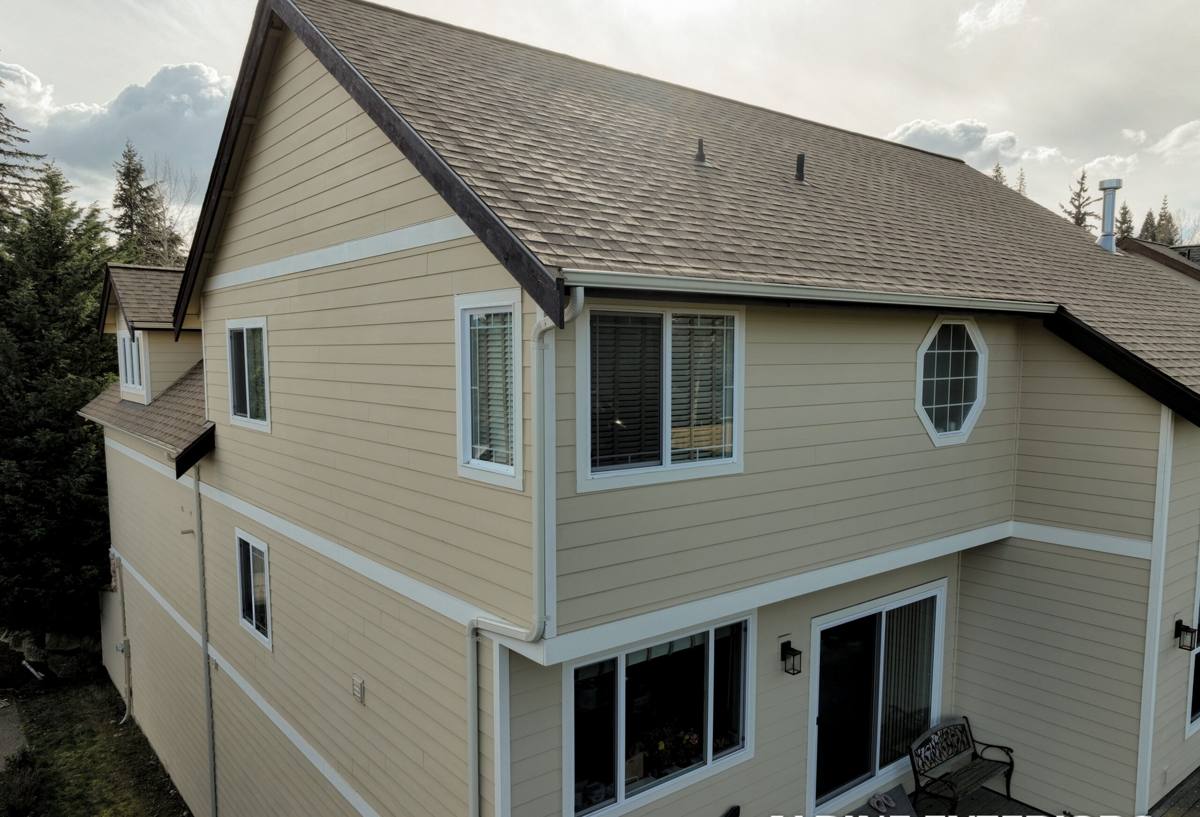
What a Correct New Roof Installation Involves
A new roof is more than shingles or panels laid over the old surface. For a Fairhaven-area home, the installation needs to account for the specific stresses described above from the deck up. That means:
Deck Inspection and Repair
Before anything goes down, the roof deck itself needs to be sound. Years of moisture intrusion — even minor, slow leaks — can soften sheathing without obvious signs from inside the attic. Any soft, delaminated, or water-stained decking should be replaced, not covered over. Skipping this step is one of the most common ways a "new roof" fails early.
Underlayment Selection
Given the rain and humidity typical of this area, underlayment choice matters more here than it might in a drier climate. Synthetic underlayments generally offer better tear resistance and water shedding than older felt products, and they hold up better during the installation window itself if weather turns while work is underway.
Ice and Water Barrier at Vulnerable Points
Eaves, valleys, and any low-slope transitions benefit from a self-adhering ice and water membrane, even in a region that doesn't see heavy snow. These areas are where wind-driven rain is most likely to work its way under the primary roofing material, and the extra barrier is inexpensive insurance against that.
Flashing Details
Flashing around chimneys, skylights, sidewalls, and roof-to-wall transitions is where most roof leaks actually originate — not the field of the roof itself. Correct flashing means proper step flashing at walls, counter-flashing that's integrated rather than just caulked, and kick-out flashing wherever a roof edge meets a wall to direct water into the gutter instead of behind the siding.
Ventilation
A roof system needs balanced intake and exhaust ventilation to manage moisture from inside the home and to keep the roof deck at a stable temperature. In a humid coastal climate, poor ventilation contributes to condensation issues that can rot decking from underneath, independent of any exterior leak.
Roofing Material Options for This Climate
There's no single "best" roofing material for every home — the right choice depends on the home's architecture, budget, and how much long-term maintenance the homeowner wants to take on. Here's how the common options compare for a coastal Whatcom County property.
| Material | Moisture & Salt Air Behavior | Moss Resistance | Typical Maintenance |
|---|---|---|---|
| Architectural asphalt shingles | Good when properly ventilated; granule loss can accelerate near salt air over decades | Moderate — benefits from periodic cleaning or zinc/copper strips | Low to moderate |
| Standing seam metal | Excellent water shedding; requires quality coatings and fasteners rated for coastal exposure | High — smooth surface discourages growth | Low |
| Composite/synthetic shingles | Very good; resists moisture absorption better than wood-based products | Moderate to high depending on product | Low |
| Cedar shake | Requires diligent maintenance in humid coastal air to prevent premature decay | Low without regular treatment | High |
For most Fairhaven-area homes, architectural asphalt and standing seam metal represent the best balance of upfront cost, longevity, and manageable upkeep given the local climate. We'll walk through the trade-offs specific to your roof's slope, exposure, and the look you're going for during an estimate.
Our Installation Process
We approach every new roof installation as a system, not a stack of materials. Here's how a typical project runs from first contact to final walkthrough:
- On-site assessment. We inspect the existing roof, deck condition, ventilation setup, and any problem areas like valleys or wall transitions before quoting anything.
- Material and scope walkthrough. We go over material options, warranty structures, and what's actually needed versus optional, in plain language.
- Tear-off and deck inspection. Old roofing comes off down to the deck, and we address any sheathing issues we find before moving forward.
- Underlayment and flashing installation. This is where most of the long-term performance of the roof gets built in — done carefully, not rushed.
- Roofing material installation. Installed to manufacturer specifications, which is also what keeps material warranties valid.
- Ventilation check and adjustment. We confirm intake and exhaust are balanced for the home's attic space.
- Site cleanup and final walkthrough. Debris and fasteners cleared from the property, and we go over the finished roof with you directly.
Weather Timing and Scheduling
Roofing work in this part of Washington means paying close attention to weather windows. We plan installations around forecasted dry stretches whenever possible, and when a project is exposed mid-tear-off, we take precautions to keep the deck protected from unexpected rain. Rushing a roof to beat weather that isn't actually coming — or ignoring weather that is — leads to the kind of moisture problems that show up months later as a hidden leak.
Fall and winter installations aren't off the table here; they just require more disciplined sequencing and, sometimes, smaller daily work sections so no deck area sits exposed longer than necessary.
Why a Local Fairhaven-Area Crew Matters
A roofing crew that regularly works in and around Ferndale and the Bellingham Bay area already understands how salt air, wind direction, and moss growth behave on roofs in this specific pocket of Whatcom County. That's not something you get from a national playbook. It shows up in small decisions — which flashing details get extra attention, which fastener coatings hold up better here, how aggressively to plan for moss management on a shaded north-facing slope.
It also matters for accountability. A local crew is easy to reach if a question comes up after the job, and we're not relying on a call center or a regional dispatch system to get someone back to your property.
Moss and Long-Term Roof Maintenance
Even a correctly installed new roof needs some ongoing attention in this climate. Moss doesn't mean the roof was installed wrong — it means the roof is doing what roofs in wet, shaded coastal areas do unless they're maintained. A simple annual maintenance checklist goes a long way:
- Visually check for moss or algae buildup, especially on shaded or north-facing slopes
- Keep gutters and downspouts clear so water isn't backing up under roof edges
- Trim back overhanging branches that keep sections of the roof shaded and damp
- Look for granule buildup in gutters, which can signal accelerated shingle wear
- Have flashing points around chimneys and vents inspected periodically, not just after a visible leak
- Address any moss growth promptly rather than letting it establish over multiple seasons
Signs Your Fairhaven-Area Roof May Need Replacement Soon
Not every roof problem calls for full replacement, but certain signs point toward it being the more sensible option rather than another round of patching:
- Shingles that are curling, cracking, or losing significant granule coverage across large areas
- Persistent moss or algae staining that returns quickly after cleaning
- Soft spots or sagging visible along the roofline
- Daylight visible through the roof deck from inside the attic
- Recurring leaks in different locations after previous repairs
- A roof that's approaching or past the expected service life of its material
What Affects the Cost of a New Roof
Every roof is different, and a real number only comes from an on-site look. Broadly, the factors that move the price on a Fairhaven-area home include roof size and pitch, the complexity of valleys and penetrations, deck condition once the old roofing is removed, material choice, and access around the property. A straightforward roof on a simple gable home will cost meaningfully less than a steep, multi-valley roof with several skylights and chimneys, even if the square footage is similar.
We'd rather give you an honest range after seeing the roof than a number over the phone that doesn't hold up once we're on-site.
If your roof is showing its age or you're planning ahead for a replacement, we're happy to walk your property and give you a straightforward, no-pressure estimate. Use the form below to get in touch and we'll schedule a time to take a look.