 Ferndale Exterior
 What Cordata Homes Are Up Against
Homes in and around Cordata sit in the same weather pattern that shapes exterior wear across Whatcom County: a marine climate off the Salish Sea that keeps things mild but relentlessly damp. That combination of salt-tinged air, sideways-driving rain off the water, and a moss season that can stretch from October well into spring is exactly the kind of slow, cumulative exposure that separates exteriors built to last from exteriors that just look fine on installation day. It's rarely one big storm that does the damage here — it's ten months a year of moisture finding every seam, every fastener, every low-quality material choice.
Salt air is often underestimated by homeowners who think of it as a coastal-only problem. But Cordata's proximity to the water means airborne salt still reaches siding, trim, fasteners, and metal roofing components, accelerating corrosion and breaking down finishes that weren't engineered for it. Add in wind-driven rain that hits walls at an angle instead of falling straight down, and you get water intrusion at joints and penetrations that a drier climate would never test.
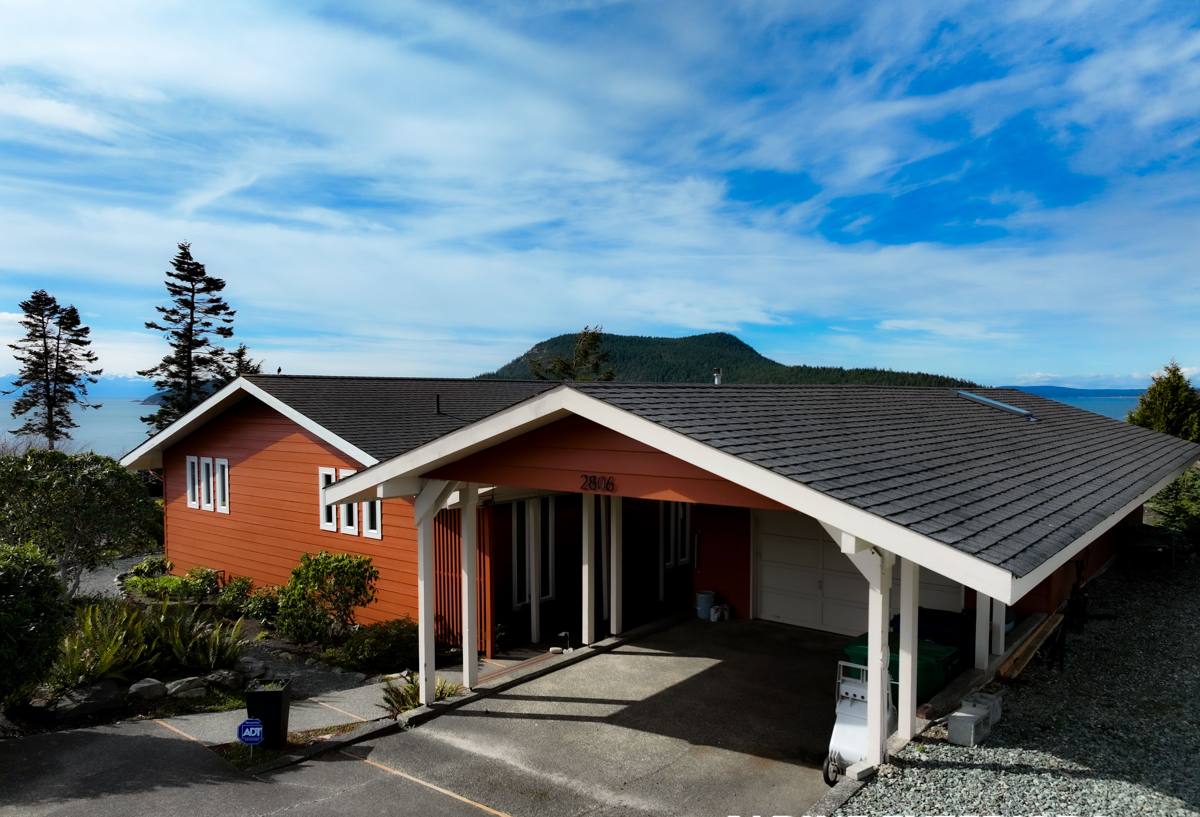
Siding That's Actually Built for This
This is why we install James Hardie fiber cement siding exclusively, and why we don't install vinyl, LP SmartSide, Cemplank, Allura, primed spruce, or cedar. Every one of those alternatives has a legitimate place in the industry — but each has a specific vulnerability that shows up early in a climate like Whatcom County's.
Why we don't install the alternatives
- Vinyl expands and contracts with temperature swings and can warp or crack under sustained moisture and UV exposure over the years; it's also a petroleum-based product with limited fire resistance compared to fiber cement.
- LP SmartSide is an engineered wood product — well-regarded for what it is, but wood-based siding depends heavily on unbroken paint and caulk seals to keep moisture out. In a region with this much sustained rain, any gap in that seal becomes an entry point for rot.
- Cemplank and Allura are also fiber cement, but we standardized on one manufacturer, one factory finish system, and one warranty structure so every installation, every color match, and every service call follows a single known standard instead of juggling specs across brands.
- Primed spruce and cedar are beautiful, traditional choices, but they require the most ongoing maintenance of anything on this list — regular refinishing, vigilant caulk inspection, and real vulnerability to moss and moisture staining in a climate that barely gives wood time to dry out between rain events.
James Hardie fiber cement is non-combustible, dimensionally stable, and factory-finished with the ColorPlus coating system, which means the color is baked on before the product ever reaches your house rather than depending on a field-applied paint job to hold up against salt air and driving rain. Hardie also engineers specific product lines (their HZ5 line, for instance) for climate zones like ours, and backs installations with a strong transferable warranty — which matters if you ever sell the home.
Moss and fiber cement
Moss doesn't rot fiber cement the way it can compromise wood siding, but it will still take hold on any exterior surface that stays shaded and damp long enough — especially on north-facing walls or areas under heavy tree cover, both common around Cordata's more wooded lots. Correct installation (proper clearance from grade, correct flashing, and factory-finished panels that shed water instead of absorbing it) keeps moss from becoming more than a surface issue that a periodic gentle wash handles.
Roofing for a Marine Climate
Roofs here take a different kind of punishment than roofs in drier parts of the state. Sustained rain, wind-driven moisture at the eaves and valleys, and moss growth on north-facing and shaded slopes are the recurring issues we see on Cordata-area homes. A roof system that's correctly flashed, ventilated, and detailed at every penetration — vents, chimneys, skylights — is what keeps water out over the long run, far more than the shingle brand alone. We pay particular attention to underlayment quality and valley detailing, since that's where driving rain finds its way in first.
Ventilation also matters more here than homeowners expect. A roof deck that can't breathe traps moisture underneath the shingles, which shortens roof life and can lead to sheathing rot you won't see until it's already a bigger repair.
Windows: Where Moisture Actually Gets In
Old or poorly flashed windows are one of the most common sources of hidden water damage we find on homes throughout this area. It's rarely the glass itself — it's the flashing and sealant around the frame failing quietly over years of wind-driven rain, letting moisture into the wall cavity long before anyone notices a stain. When we replace siding, we make a point of inspecting window flashing and integrating new siding correctly around each opening, because a beautiful new exterior installed over a poorly flashed window just hides the problem instead of fixing it.
Newer windows also help with the condensation that's common in this climate — consistently high humidity outside means single-pane or poorly sealed older windows tend to fog and sweat on the inside, which over time can affect surrounding trim and sills.
Decks in a Wet, Shaded Climate
Decks take some of the hardest year-round abuse of any exterior feature around here. Standing moisture, shaded areas that never fully dry, and moss buildup on horizontal surfaces all accelerate wear on ledger boards, joists, and decking material. Proper flashing at the ledger connection (where the deck attaches to the house) is one of the most important — and most commonly overlooked — details in deck construction in a climate this wet. We build and repair decks with drainage, spacing, and material choices suited to sustained moisture exposure, not just to how a deck looks the day it's finished.
Why a Local Crew Matters Here
Exterior work in Whatcom County isn't generic. A crew that mainly works drier climates can install a technically correct product and still get the details wrong for this environment — insufficient flashing overlap, wrong fastener spacing for wind exposure, or missing the moss-prone zones that need extra attention. We work on homes throughout Ferndale and the surrounding Whatcom County communities, including areas like Cordata, so the weather patterns, common house styles, and recurring failure points aren't a guess — they're what we deal with on every job.
Local also means accountability. If something needs a warranty follow-up or a maintenance check a few years down the road, we're not a crew that worked through the area once and moved on.
Cost Factors to Understand Before You Budget
Every home is different, but these are the variables that most affect the cost of exterior work in this area:
| Factor | Why It Matters |
|---|---|
| Home size and wall complexity | More corners, dormers, and trim detail mean more labor and material cuts |
| Existing exterior condition | Rot or moisture damage found during tear-off adds repair scope before new material goes on |
| Siding or roofing material chosen | Fiber cement, composite roofing, and quality windows cost more upfront than lower-tier alternatives but reduce long-term maintenance and replacement frequency |
| Access and site conditions | Steep lots, mature landscaping, or limited equipment access can affect labor time |
| Flashing and detail work | Correct flashing at windows, roof valleys, and deck ledgers takes more time than a rushed job, but it's what prevents the moisture problems this climate is prone to |
A Homeowner's Maintenance Checklist for This Climate
Whatever exterior materials your home currently has, these habits go a long way in a region with this much sustained moisture:
- Rinse siding and decking of moss and organic buildup at least once a year, more often on shaded north-facing surfaces
- Keep gutters clear so water doesn't back up under roofing or siding at the eaves
- Trim back vegetation that keeps exterior surfaces shaded and slow to dry
- Inspect caulking and flashing around windows and doors annually, especially before the wet season
- Check deck ledger boards and any wood-to-house connection points for soft spots or discoloration
- Look for granule loss or moss patches on roof slopes, particularly ones facing away from the sun
Getting Started
Whether you're dealing with a specific problem — a leaking window, a mossy roof, a deck that's starting to feel soft underfoot — or you're planning ahead for a full exterior update, it helps to have a local crew take a look before small issues turn into expensive ones. We offer free, no-pressure estimates for siding, roofing, window, and deck work for homeowners in Cordata and throughout the Ferndale area. Fill out the form below and we'll take it from there.