 Ferndale Exterior
 Homeowners in Ferndale and across Whatcom County ask us this question more often than almost any other: "What's the difference between Cemplank and James Hardie? They're both fiber cement, right?" The short answer is yes — both are fiber cement siding products, and both are a real step up from vinyl or untreated wood. The longer answer is why, after years of installing and repairing siding in this climate, we made the decision to install only one of them.
This isn't a knock on every fiber cement product that isn't Hardie. It's an explanation of the specific trade-offs we weighed, the failures we've seen in the field, and why we think James Hardie is the better bet for homes that have to survive salt air, driving rain, and a moss season that can run half the year.
What Cemplank Actually Is
Cemplank is a fiber cement siding product manufactured by Universal Forest Products (UFP), sold primarily through Menards and a handful of regional lumber yards. It's cellulose fiber reinforced cement board, extruded and cured much like other fiber cement products on the market. On paper, it checks a lot of the same boxes as James Hardie: non-combustible, resistant to rot, and far more dimensionally stable than wood or engineered wood siding.
We want to be fair here — Cemplank is not a bad material in the way that, say, thin vinyl or unprimed OSB siding can be a bad material. It's a legitimate fiber cement product. Our concerns aren't about the chemistry of the board itself. They're about manufacturing consistency, factory finish quality, regional support, and warranty structure — the things that determine how a product performs fifteen years after installation, not on day one.
Where It's Sold and How That Matters
Cemplank's distribution model — largely through big-box and regional lumber retailers rather than a dedicated contractor network — means less direct manufacturer oversight of how it gets installed. Fiber cement is unforgiving of installation mistakes: wrong fastener pattern, missing flashing details, or improper clearance from grade can shorten the life of the siding regardless of how good the board itself is. Manufacturers who build their business around a trained, certified installer network have a direct incentive to make sure crews get it right. That structural difference matters more in a marine climate than it does somewhere dry and mild.
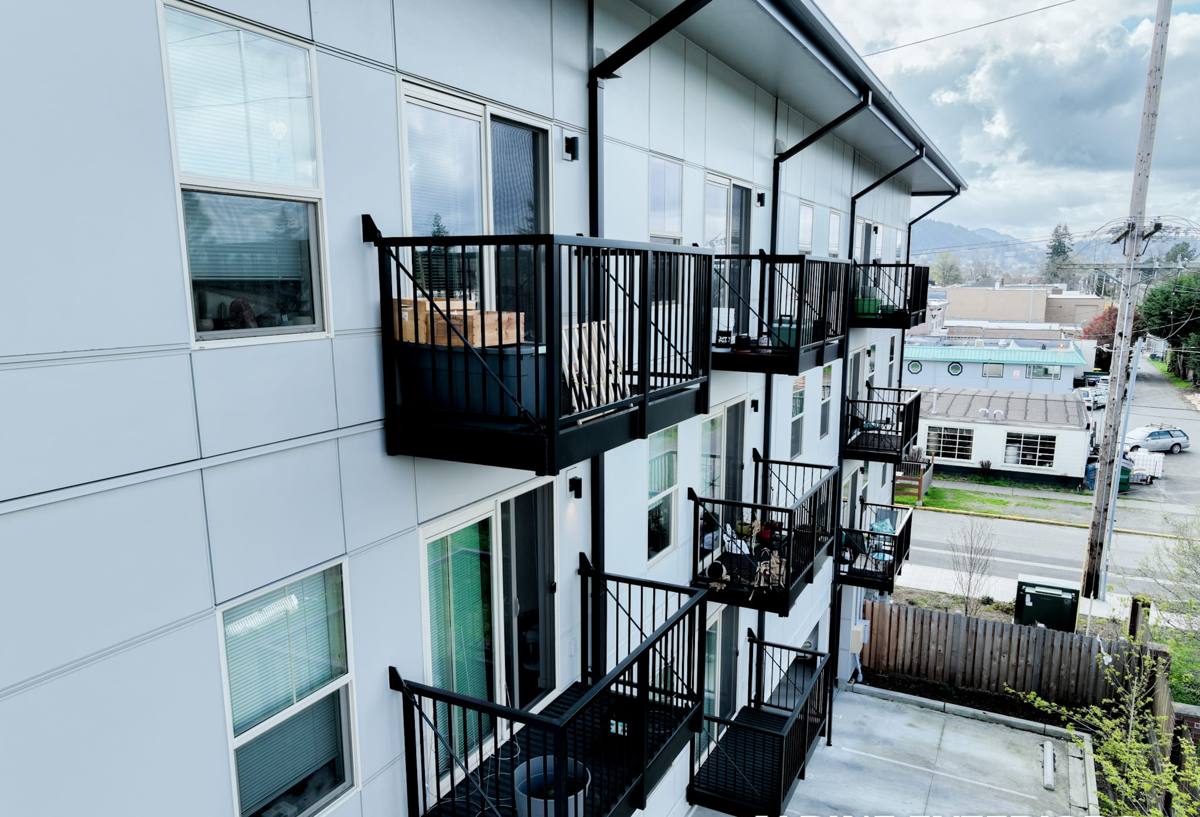
What Cemplank Gets Right
Its biggest selling point is price — it's typically less expensive than James Hardie, which makes it attractive on a tight remodeling budget. It's also genuinely fire-resistant and won't feed pests the way wood siding can. For a homeowner comparing it only against vinyl or cedar, Cemplank is a reasonable upgrade.
Where it starts to lose ground is in the details that only show up over time: factory-applied finish durability, color consistency across production runs, and how the manufacturer backs the product when something does go wrong.
The Factory Finish Difference
This is the single biggest reason we standardized on James Hardie. Hardie's ColorPlus finishing system is a proprietary, baked-on, multi-coat finish applied and cured in a controlled factory environment before the board ever reaches a job site. It's engineered specifically to resist UV fade and to hold up against the kind of driving, wind-blown rain that Whatcom County gets off the Strait of Georgia and Bellingham Bay every fall and winter.
Cemplank offers factory-primed and some factory-finished options, but the finish technology and warranty backing behind it are not the same system, and coverage varies by product line and finish type. In a climate where siding gets saturated repeatedly through a long wet season, the quality and warranty of the factory finish is not a cosmetic detail — it's the first line of defense against moisture intrusion at the board's surface.
Fiber Cement Basics: What Every Board Shares
It's worth pausing to explain what all fiber cement siding — Cemplank, Hardie, Allura, and others — has in common, because the shared strengths are real:
- Non-combustible core, which matters for fire insurance and wildfire-adjacent building codes
- Resistant to rot, insects, and woodpeckers in a way that cedar and untreated wood are not
- Dimensionally stable — it doesn't swell, cup, or warp with humidity swings the way wood-based products can
- Heavier and more impact-resistant than vinyl
- Requires correct installation (proper gapping, fastening, and flashing) to perform as designed — this is true across every brand
That last point is the one that trips up more installations than any material defect. Fiber cement is a system, not just a board. Get the flashing, caulking, and clearances wrong, and any fiber cement product — including Hardie — will fail early. That's exactly why we don't cut corners on installation regardless of brand, and why product consistency matters so much to us as installers.
Side-by-Side: Cemplank and James Hardie
| Factor | Cemplank | James Hardie |
|---|---|---|
| Manufacturer network | Sold through big-box/lumber retail, broader installer base | Trained, certified Preferred Contractor network |
| Factory finish | Primed and some pre-finished options available | ColorPlus baked-on finish system with dedicated warranty |
| Product engineering by climate | General-purpose product lines | HZ5 product line engineered for wet, freeze-prone climates like the Pacific Northwest |
| Warranty transferability | Varies by product and retailer | Non-prorated limited warranty, transferable to a subsequent owner |
| Upfront cost | Generally lower | Generally higher |
| Long-term maintenance | Dependent on finish quality and installation | Engineered for minimal repainting when ColorPlus finish is used |
Why Ferndale's Climate Raises the Stakes
Ferndale sits close enough to Bellingham Bay and the Strait of Georgia that salt-laden air is a real factor on siding, trim, and fasteners — not just near the water, but well inland on days with a strong westerly wind. Combine that with Whatcom County's long wet season, driving horizontal rain during fall and winter storms, and the moss and algae growth that thrives in constant shade and moisture, and you get a climate that actively hunts for weak points in a siding system.
Moss Season Isn't Cosmetic
Moss and algae growth on the north and shaded sides of a house isn't just an appearance issue. Sustained organic growth holds moisture against the siding surface longer, which stresses any finish and accelerates wear at seams, laps, and fastener penetrations. A finish that's engineered to shed water and resist staining buys real years of service life in a climate like this.
Salt Air and Fastener Corrosion
Salt exposure doesn't just affect the siding board — it accelerates corrosion of fasteners, flashing, and trim if they aren't spec'd correctly. This is an installation-and-materials-system issue as much as a siding-brand issue, but it's another reason we don't want variability in the finish or backing behind the board itself. We want one accountable system, top to bottom.
The Warranty Question
A warranty is only as good as the company standing behind it and how clearly its terms are written. James Hardie's limited warranty on ColorPlus products is non-prorated for its stated term and transfers to a new owner if the home sells — a meaningful detail in a market where houses change hands. Warranty terms on Cemplank vary by specific product line and by the retailer's own return or satisfaction policies, which makes it harder to give homeowners a straight answer about what's covered ten or fifteen years down the road.
When we stand behind our own installation workmanship, we want the material warranty behind it to be just as clear and just as durable. That consistency is worth more to us than the savings on the material line item.
What We Install Instead
We install James Hardie exclusively, and specifically the HZ5 product line engineered for climates that see significant moisture and temperature swings — a good match for Whatcom County's marine weather pattern. Combined with the ColorPlus factory finish, that gives homeowners a siding system where the board, the finish, and the warranty all come from one manufacturer with one accountable standard, installed by a crew trained specifically on that system.
That focus also makes us better installers. When you install one product system day in and day out, you know its quirks, its flashing details, and its failure points cold. Spreading a crew's expertise across five different fiber cement brands means more room for the small mistakes that shorten a siding job's life.
What to Check Before You Choose a Siding Product
- Ask what warranty term applies, whether it's prorated, and whether it transfers to a new owner if you sell
- Ask whether the finish is factory-applied and cured, or field-primed and painted after installation
- Ask if the installer is trained or certified specifically on the product being quoted
- Ask how the product performs in wet, salt-air, or freeze-thaw climates specifically — not just its general spec sheet
- Get the installation details in writing: fastener type and pattern, flashing at penetrations, and clearance from grade and roof lines
If a contractor can't answer those questions clearly for the specific product they're proposing, that's worth pausing on regardless of brand.
Our Bottom Line
Cemplank is a legitimate fiber cement product, and we're not here to tell you it will fail on your house. What we can tell you is that after weighing factory finish technology, warranty structure, climate-specific engineering, and installer accountability, James Hardie is the system we're willing to put our name behind on every job in Ferndale and the surrounding county. We'd rather install one product exceptionally well than several products adequately.
If you're comparing bids or products for an upcoming siding project, we're happy to walk through what we install and why — no pressure, no sales pitch, just a straight answer. Reach out for a free estimate and we'll take a look at your home in person.