 Ferndale Exterior
 Sandy Point: A Different Kind of Exposure
Sandy Point sits right on the water, and that changes what a house has to deal with compared to homes even a few miles inland in Ferndale. Wind comes off open water with nothing to slow it down, rain arrives sideways more often than straight down, and salt-laden air settles on every exterior surface, year-round, whether or not a storm is happening. Homes here age differently than homes in town, and the exterior systems that hold up best are not always the ones that look fine on a spec sheet.
We've worked on enough waterfront and near-waterfront properties in Whatcom County to know that "good enough for a typical Ferndale lot" isn't always good enough for a lot like this. That's the whole reason this page exists — to walk through what Sandy Point's climate actually does to siding, roofing, windows, and decks, and how we approach exterior work differently for a property in this kind of exposure.
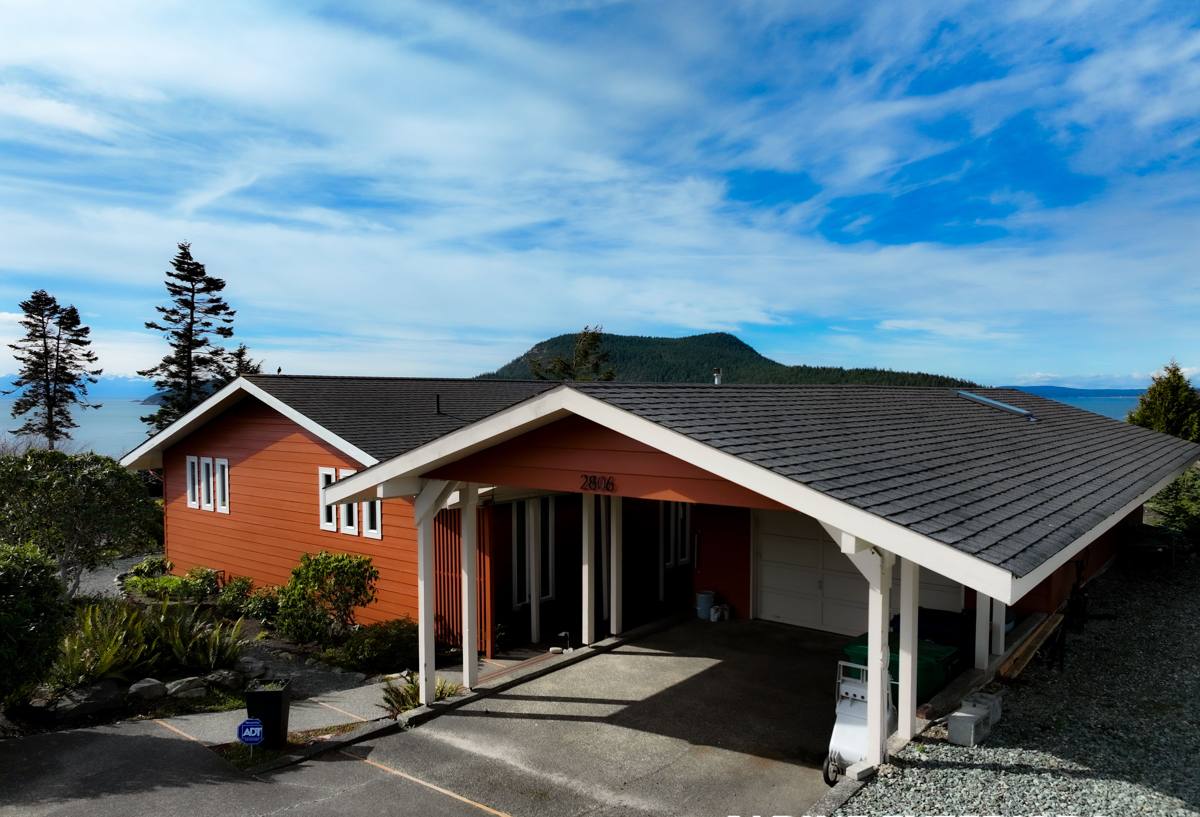
What Salt Air, Rain, and Moss Do to a Home's Exterior
Salt Air and Metal Corrosion
Airborne salt is corrosive to unprotected or poorly coated metal — fasteners, flashing, hardware, and trim. On a typical inland home, a fastener with a marginal coating might last for decades without issue. On a beachfront property, the same fastener can start showing rust streaks in a fraction of that time. This matters more than most homeowners realize, because a single corroding nail head or a weak flashing seam is often where a much bigger moisture problem starts.
Driving Rain and Water Intrusion
Wind-driven rain doesn't behave like ordinary rainfall. It gets pushed sideways and upward under laps, around window and door openings, and into any gap in the building envelope that wouldn't normally see water. Homes near the water need tighter flashing details, better house wrap integration, and siding that doesn't wick or swell when it takes on repeated moisture exposure.
Moss and Shade
Whatcom County's long wet season already favors moss growth, and shaded, damp, north-facing exterior surfaces near the water are prime territory for it. Moss holds moisture against a surface long after the rain stops, which accelerates rot in wood substrates and shortens the life of roofing materials that aren't rated to handle sustained damp conditions.
Siding That Can Actually Handle This Environment
Why We Only Install James Hardie Fiber Cement
We install James Hardie fiber cement siding exclusively — we don't install vinyl, LP SmartSide, Cemplank, Allura, primed spruce, or cedar. That's not a marketing position; it's a standard we hold because of what we've seen happen to exterior products in coastal and heavy-rain environments like this one.
Vinyl siding is affordable and low-maintenance in mild conditions, but it's a plastic product that expands, contracts, and can become brittle with UV and temperature swings, and it isn't a structural moisture barrier on its own — water management still depends entirely on what's behind it. Wood-based engineered siding like LP SmartSide performs well when installed and maintained exactly to spec, but it's an OSB-core product, and OSB cores are not forgiving of sustained moisture exposure at cut edges, seams, or fastener penetrations — exactly the failure points that wind-driven rain and salt air go looking for. Cedar and primed spruce are beautiful, traditional choices, but they're organic materials that require an ongoing paint and sealing commitment to keep water out, and that maintenance burden only grows in a climate that stays wet for most of the year.
Fiber cement is a non-combustible material made from cement, sand, and cellulose fiber. It doesn't rot, it doesn't support insect activity, and it holds up to repeated wet-dry cycling far better than wood-based products. James Hardie's ColorPlus finish is baked on at the factory under controlled conditions, which gives it more consistent, more fade-resistant coverage than field-applied paint — and one less maintenance task for a homeowner dealing with a house that already faces more weather than most.
Climate-Engineered Product Lines
James Hardie makes region-specific HZ product lines engineered for different climate zones, including versions built for areas with heavier moisture exposure. For a property like this, choosing the right HZ line and installing it to Hardie's documented specifications — correct fastener spacing, proper clearances, sealed cut edges, and flashing integrated the way the manufacturer requires — is what actually delivers the long-term performance the product is capable of. Installation quality matters as much as the product choice itself.
Roofing in a Moss-Prone, Salt-Exposed Community
Roofing near the water has to deal with the same two problems as siding: corrosion and sustained moisture. Flashing, fasteners, and any exposed metal components need to be rated for coastal exposure, not just standard residential-grade hardware. Ventilation matters too — a roof deck that can't breathe properly holds moisture longer, which is exactly the condition moss needs to establish itself and spread.
Gutter and downspout sizing is another detail that gets overlooked. Homes taking on more wind-driven rain need water moved off the roof and away from the foundation efficiently, and undersized or poorly pitched gutter systems on a coastal property tend to show problems faster than they would on a sheltered inland lot.
Windows: The Weak Point in Coastal Homes
Windows are one of the most common places water intrusion actually starts, because every window is a planned hole in the building envelope. In a driving-rain environment, the flashing and sealant details around a window opening matter as much as the window unit itself. Aluminum window frames and hardware without adequate coastal-grade coatings can corrode and pit over time, and condensation issues tend to show up sooner on properties with consistently higher humidity and salt content in the air.
When we replace windows on a property like this, we're paying close attention to how the new unit integrates with the house wrap and siding around it — not just the window itself, but the whole assembly that's supposed to keep water out.
Decks Built for Wet, Rot-Prone Conditions
Decks near the water face two related problems: sustained moisture and reduced traction from moss and algae on shaded surfaces. Ledger board flashing — where a deck attaches to the house — is one of the highest-risk failure points on any deck, and it's even more critical here, since that connection point sees repeated wetting and drying and has to shed water away from the house structure rather than trapping it against it. Fastener corrosion resistance, proper drainage under and around the deck surface, and material choice all play into how long a deck actually lasts in this kind of exposure versus how long it's supposed to last on paper.
Material Comparison for Coastal Exposure
Here's a general comparison of how common exterior siding materials tend to perform under the salt air, driving rain, and moss conditions typical of a waterfront property like Sandy Point. This reflects general material behavior, not a guarantee for any specific installation.
| Material | Moisture Tolerance | Salt Air Durability | Ongoing Maintenance |
|---|---|---|---|
| James Hardie fiber cement | High — non-organic, doesn't rot | High with coastal-rated fasteners/flashing | Low — factory finish, occasional wash |
| Vinyl siding | Moderate — depends on water management behind it | Moderate — can become brittle over time | Low, but limited repair options if damaged |
| LP SmartSide / engineered wood | Moderate — OSB core sensitive to sustained wetting | Moderate if sealed and maintained precisely | Moderate — edge sealing and paint upkeep |
| Cedar / primed spruce | Lower — organic material, absorbs moisture | Lower without frequent sealing | High — regular painting/sealing required |
A Local Crew's Advantage
A crew that works Whatcom County regularly understands how this area's weather actually behaves — where wind tends to drive rain, which sides of a house take the worst of it, and how long moss season really runs here. That local knowledge shows up in details a generic contractor might miss: flashing choices, fastener specs, and where to spend extra care during installation because that's the spot most likely to see trouble first.
It also matters for permitting and code compliance. Exterior work in unincorporated Whatcom County properties, including waterfront and near-waterfront lots, can involve permitting considerations that a crew unfamiliar with the area might not anticipate. Working with a local contractor means fewer surprises and a project that's planned around the realities of the site from the start.
Homeowner Maintenance Checklist for Coastal Exposure
Regardless of what materials are currently on a home, a few habits go a long way toward protecting an exterior in a salt-air, high-rain environment:
- Rinse siding and trim periodically to remove salt residue buildup, especially on sides facing open water
- Inspect flashing around windows, doors, and roof penetrations at least once a year for gaps or corrosion
- Clear moss from roofing and shaded siding promptly rather than letting it establish and spread
- Check gutters and downspouts for proper flow, especially before the wettest months
- Look closely at deck ledger connections and fasteners for early signs of rust or softening wood
- Address any paint failure, caulk cracking, or visible gaps in the exterior envelope quickly — small gaps become bigger problems fast in this climate
Ready When You Are
If you own a home in Sandy Point and you're weighing what to do about siding, roofing, windows, or a deck, we're happy to take a look and talk through what your property is actually facing — no pressure, no obligation. Fill out the form below for a free estimate, and we'll walk the exterior with you and explain what we see.