 Ferndale Exterior
 Exteriors Built for Everson's Climate
Everson sits inland from Ferndale along the Nooksack River, in the low, green farmland that makes up so much of Whatcom County. It's a different setting than the coast, but the exterior of a house here still takes a beating year-round. Long stretches of steady rain, high humidity that never fully lifts in the winter months, and shaded, tree-lined lots that stay damp long after a storm passes all add up to conditions that are hard on siding, roofing, windows, and decks alike.
Whatcom County as a whole sits under a marine-influenced weather pattern — moisture-laden systems roll in off the water and settle over the lowlands, feeding the driving rain and the long moss season that homeowners here know well. Everson may be a few miles from the coastline, but that same wet regional pattern shapes what a house has to withstand: prolonged dampness, low winter sun that leaves north-facing walls in shade for weeks, and the kind of humidity that gives moss, mildew, and algae everything they need to take hold.
We work on homes across this area regularly, and the wear patterns are consistent. Understanding them is the first step to building or maintaining an exterior that actually holds up instead of just looking good for a season or two.
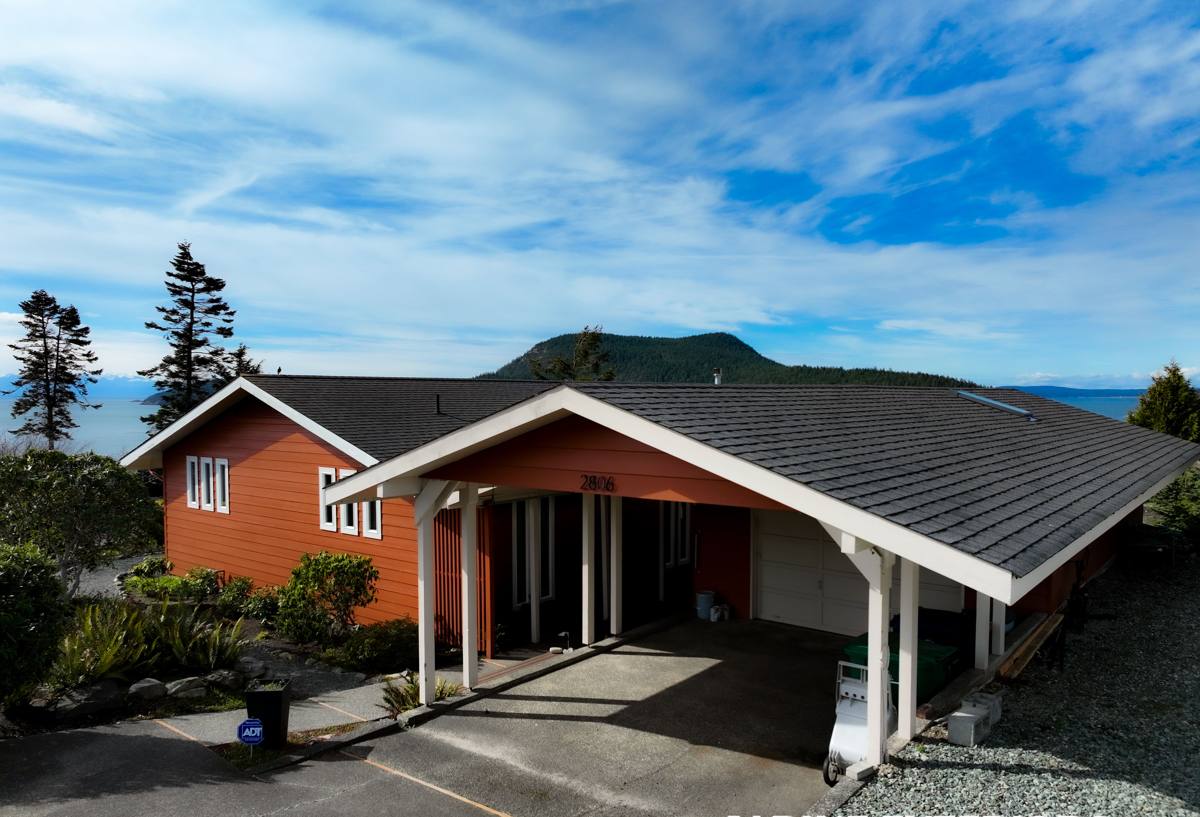
What Everson Homes Face
Persistent Moisture
It's not any single storm that causes damage — it's the cumulative effect of moisture that never fully dries out between rain events. Wood trim, cedar siding, and low-quality composite products absorb that moisture over time, and once it's inside the material, rot and swelling follow.
Moss and Organic Growth
Shaded rooflines, north walls, and anything under tree cover in Everson's more wooded lots tend to grow moss and algae faster than homes in open, sun-exposed areas. Left unaddressed, moss holds moisture against roofing and siding surfaces, which accelerates whatever underlying wear is already happening.
River-Valley Dampness
Being close to the Nooksack River and its surrounding farmland means many properties in and around Everson deal with higher ambient humidity and, in some low-lying spots, seasonal water tables that stay high through the wet months. That's not something siding or roofing can fix on its own, but it's a real factor in how quickly exterior materials age, and it's part of why product choice and installation quality matter more here than in a drier climate.
Temperature Swings
Whatcom County doesn't get extreme heat, but it does get freeze-thaw cycles in the winter. Moisture that's already trapped in a wall assembly or roof deck expands and contracts with those swings, which is how small problems — a missed flashing detail, a crack in old siding — turn into bigger ones.
Siding: Why the Material You Choose Matters More Here
We install James Hardie fiber cement siding exclusively. That's not a marketing preference — it's a decision we made after years of doing exterior work in this exact climate and watching which materials actually perform over decades versus which ones look fine at installation and start showing problems five to ten years in.
Vinyl siding is inexpensive and low-maintenance in the sense that it doesn't need painting, but it's not a moisture-management product — water that gets behind it during driving rain has to find its way back out, and vinyl can warp or become brittle over time with UV and temperature cycling. LP SmartSide and similar engineered wood products perform reasonably well when installed and maintained exactly to spec, but they're wood-based, which means cut edges, seams, and any breach in the factory coating are vulnerable to exactly the kind of sustained moisture Everson sees for months at a time. Cedar and primed spruce are beautiful materials, but they demand a maintenance schedule — recoating, caulking, watching for rot — that most homeowners underestimate until they're a decade in and behind on it.
Fiber cement doesn't have those same failure points. It's non-combustible, it doesn't swell or rot the way wood-based products can, and James Hardie's ColorPlus factory finish is baked on and warrantied against fading, so you're not repainting the house every several years. For a climate that stays wet for most of the year, that combination matters more than it does somewhere dry.
Siding Material Comparison
| Material | Moisture Behavior | Maintenance | Long-Term Fit for This Climate |
|---|---|---|---|
| James Hardie Fiber Cement | Engineered to resist moisture damage; won't rot or swell | Occasional wash; factory finish holds color | Strong — built for wet, humid regions |
| Vinyl | Water can travel behind panels; no rot risk to the panel itself but can trap moisture at the wall | Low, but can crack or warp with age | Fair — budget option with real trade-offs |
| LP SmartSide | Wood-based; vulnerable at cut edges and coating breaches | Moderate — coating and caulking upkeep | Fair — depends heavily on installation quality |
| Cedar / Primed Spruce | Absorbs moisture; prone to rot without upkeep | High — regular recoating and inspection | Weak unless owner commits to ongoing maintenance |
Roofing for Whatcom County Weather
A roof in Everson has to shed a lot of water over its lifespan, and it has to do it while staying resistant to moss growth on shaded slopes and around valleys where debris collects. We look at ventilation and underlayment as closely as we look at the roofing material itself — a roof that traps moisture in the attic space will fail from the inside long before the shingles wear out. Proper flashing at chimneys, vents, and roof-to-wall transitions is where most leaks actually start, and it's the detail that separates a roof installed correctly from one that just looks finished.
Windows: Sealing Out the Damp
Old or poorly installed windows are one of the most common sources of moisture intrusion we find on Everson homes. It's rarely the glass itself — it's failed flashing, degraded sealant, or a window that was never properly integrated with the wall's water-resistive barrier in the first place. Replacing windows is also a chance to improve energy efficiency, which matters in a house that runs the heat for a good chunk of the year in a climate like this one. We install with the same attention to flashing and sealing details that we bring to siding, because a window is only as good as the water management around it.
Decks: Built to Handle Year-Round Exposure
A deck in this climate is essentially wet for months at a stretch, with only brief dry windows in summer. That means drainage, proper fastener choice, and material selection all matter more than they would somewhere drier. Whether we're building new or replacing an aging deck, we design for water to move off and away from the structure rather than pooling against ledger boards or posts, since that's where rot typically starts.
Why a Local Crew Matters in Everson
Exterior work isn't one-size-fits-all, even within a single county. A crew that mainly works on tighter coastal lots doesn't automatically know how to account for a shaded, tree-covered property near the river, or how moss patterns differ on a house set back from the road versus one in an open field. We work across Whatcom County, including Everson, Ferndale, and the surrounding communities, and we bring the same standards and the same product to every job — no cutting corners because a property is a little further from the shop.
Being local also means we're not disappearing after the install. If a warranty question comes up or something needs a look five years down the road, we're still here and still reachable.
Signs Your Exterior Needs Attention
- Moss or algae buildup on roof slopes, siding, or trim, especially on shaded or north-facing surfaces
- Soft or spongy spots on decking, especially near ledger boards, posts, or stairs
- Peeling or bubbling paint on wood trim or siding, a sign moisture is trapped underneath
- Drafts, fogging, or visible gaps around window frames
- Discoloration or staining on interior ceilings near roof valleys or chimneys
- Warped, cracked, or separated siding panels or seams
- Gutters that overflow regularly or pull away from the fascia
What Working With Us Looks Like
We start with an on-site look at the specific conditions your property deals with — sun exposure, tree cover, drainage, and the current condition of whatever's already on the house. From there we walk through material and product options honestly, including the trade-offs of anything we don't install ourselves, so you understand why we recommend what we recommend rather than just taking our word for it. Once a project is scoped, we handle siding, roofing, windows, and decks with the same crew and the same attention to the water-management details that actually determine how long the work lasts in this climate.
If you're in Everson and dealing with an aging roof, tired siding, drafty windows, or a deck that's seen better days, we're happy to take a look. Reach out for a free, no-pressure estimate — there's a form below to get started.