 Ferndale Exterior
 Semiahmoo's Exterior Climate Challenge
The Semiahmoo area sits close enough to the water that homes here take on a different kind of weather beating than houses just a few miles inland. Salt-laden air off the Strait of Georgia and the Salish Sea works on metal fasteners, paint, and porous building materials year-round, not just during storms. Add Whatcom County's long, wet winters — driving rain that comes in sideways more often than straight down — and a moss and algae season that can run eight or nine months out of the year on north-facing surfaces, and you have a climate that punishes shortcuts. We've built our business around exterior work in exactly this kind of environment, and the specs we use for siding, roofing, windows, and decks in Semiahmoo reflect what actually survives here, not just what looks good on a sunny install day.
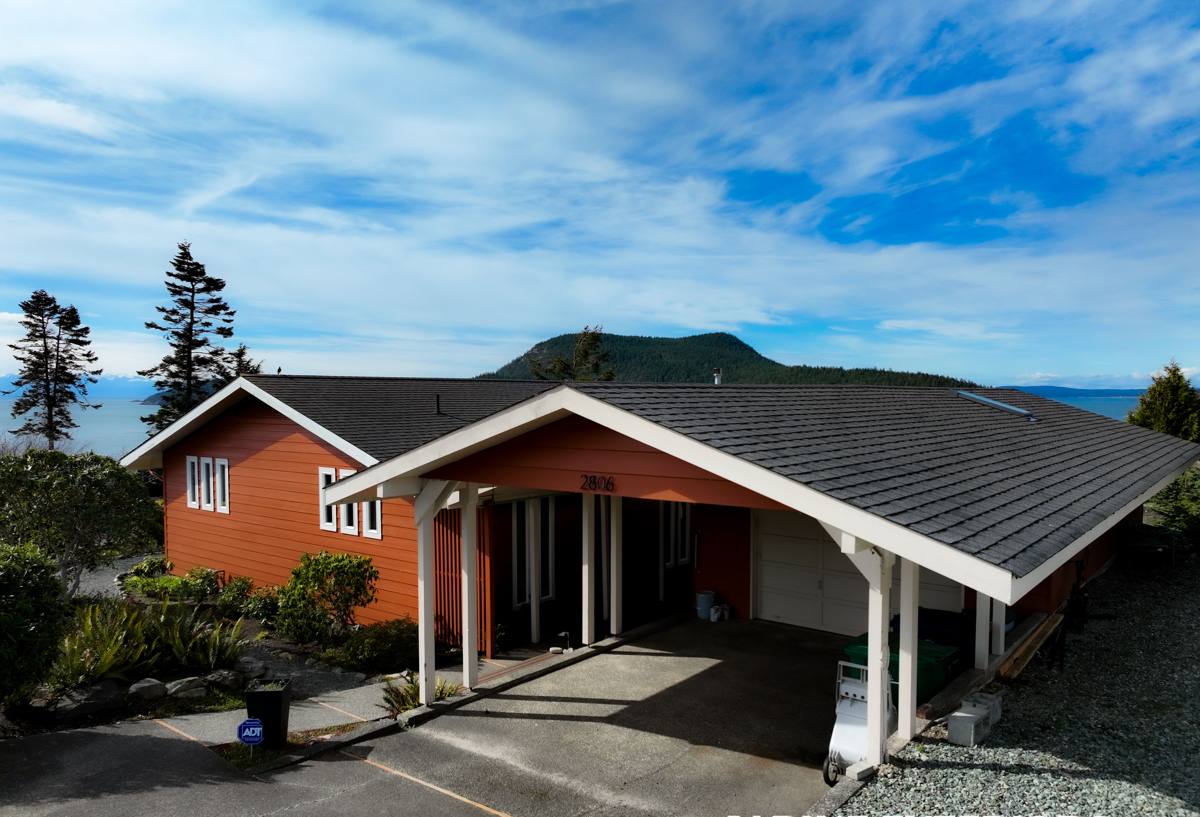
Siding That Holds Up to Salt Air and Rain
Siding in a coastal-influenced area like Semiahmoo has to do two jobs at once: keep bulk water out of the wall assembly, and resist the slow chemical and physical wear that salt air and constant moisture cause. A lot of common siding products struggle with one or both. Vinyl can warp and fade faster near open water. Untreated or primed wood needs a maintenance schedule most homeowners can't keep up with once moss and mildew get a foothold. Engineered wood products depend on perfect edge-sealing and flashing to keep moisture from wicking into the substrate — miss one detail during install, and the clock starts ticking on a repair.
Why We Only Install James Hardie
We made a decision as a company to install only James Hardie fiber cement siding, and we don't treat that as a sales pitch — it's a standard we hold ourselves to because we've seen what a marine-influenced climate does to the alternatives over time. Hardie is non-combustible, doesn't rot, and doesn't feed the moss and algae growth that softer materials do. The factory-applied ColorPlus finish is baked on under controlled conditions, which matters in an area where field-applied paint has to cure in unpredictable, often damp weather. Hardie also builds specific product lines engineered for different climate zones — the HZ5 line is formulated for colder, wetter regions like ours, with different moisture and freeze-thaw performance than the version sold in the desert Southwest. That's a level of climate-specific engineering we haven't found in the other products we used to install.
What Correct Installation Looks Like Here
Fiber cement only performs as well as its installation. In Semiahmoo's rain exposure, that means correct starter strips, properly lapped and taped house wrap behind the siding, flashing at every window and door head, and gaps maintained at the bottom of the siding so water can drain and the material can breathe. Fastener spacing and type matter too — corrosion-resistant fasteners aren't optional this close to salt air. We install to Hardie's published specifications, not a shortcut version of them, because the difference shows up in year eight or ten, not on install day.
Roofing for a Long Moss Season
Whatcom County's roofs deal with more standing moisture and shade-driven moss growth than most people expect, especially on the north and east-facing slopes of a roof surrounded by mature trees, which describes a lot of properties in and around Semiahmoo. Moss holds moisture against roofing material, works its way under shingle edges, and accelerates granule loss on asphalt roofs. Left unaddressed for a few seasons, it stops being a cosmetic issue and starts being a moisture-intrusion issue.
Materials and Ventilation
We spec roofing systems with attention to two things that matter more here than in drier climates: proper attic and roof ventilation to reduce condensation-driven moisture from the inside, and underlayment and flashing details that assume the roof will see sustained wet weather rather than occasional rain. Zinc or copper strips near ridge lines can help slow moss regrowth, and we'll talk through that option on roofs with heavy tree cover. The goal is a roof that sheds water fast and dries out between storms instead of staying saturated.
Windows and Wind-Driven Rain
Wind-driven rain off open water finds gaps that would never leak in a calmer inland setting. Window failures in this area are rarely about the glass — they're almost always about flashing, sealant, and how the window integrates with the wall assembly around it. When we replace windows, we pay close attention to head flashing, sill pans, and how the new unit ties into the house wrap and siding, because a window that's beautifully installed but poorly flashed will leak eventually, just slower than a cheap one. We also talk with homeowners about glass packages and frame materials suited to a marine climate — condensation resistance and thermal performance both matter when the outside air is consistently damp and cool for much of the year.
Decks Built for Wet Winters
A deck in the Semiahmoo area spends more of the year wet than dry. That changes what matters in the build: proper ledger flashing where the deck meets the house, joist protection or tape to stop end-grain rot, and decking material chosen with the local moss and mildew pressure in mind. Composite decking sheds water and resists the algae growth that plagues untreated wood in shaded, damp yards, though it still needs a substructure built correctly underneath it. Wood decking can look great here too, but only with a realistic maintenance plan — cleaning and sealing on a schedule, not "when it starts looking bad."
Comparing Exterior Material Choices for a Coastal Whatcom County Home
| Factor | Coastal/Marine Exposure Concern | What We Recommend |
|---|---|---|
| Siding | Salt air corrosion, moss/algae growth, moisture wicking | James Hardie fiber cement with corrosion-resistant fasteners |
| Roofing | Moss growth on shaded slopes, sustained saturation | Roofing system matched to ventilation and drainage needs, moss-resistant details at ridges |
| Windows | Wind-driven rain intrusion at flashing points | Properly flashed sill pans and head flashing, climate-appropriate glass package |
| Decking | Extended wet season, algae on shaded surfaces | Composite decking or a disciplined wood maintenance schedule |
Signs Your Semiahmoo Home Needs Exterior Attention
Coastal moisture problems tend to develop slowly, which is exactly why they're easy to miss until repairs get expensive. A few things worth checking on a home in this area:
- Dark streaking or green growth on north-facing siding or roof slopes that keeps coming back after cleaning
- Soft or spongy siding, especially near ground level or below windows
- Peeling or bubbling paint, which often signals moisture trapped behind the surface rather than a simple cosmetic issue
- Rust staining around fasteners or flashing
- Musty smells or visible mold near exterior walls on the inside of the home
- Missing or lifted shingle granules collecting in gutters
- Deck boards that stay damp or feel spongy days after the last rain
None of these mean the sky is falling, but they're worth a professional look before they turn into a structural repair instead of a maintenance item.
What Working With a Local Crew Looks Like
A contractor based elsewhere in the region can install siding or a roof competently, but they're guessing at how a specific property handles wind, rain, and shade. A crew that works this stretch of Whatcom County regularly has a feel for which sides of a house take the worst weather, how much moss pressure to expect based on tree cover and orientation, and which flashing details actually get tested by a real Pacific Northwest winter rather than a mild one. That local familiarity shapes small decisions throughout a project — where to add extra flashing, which side of the house needs a different fastener spacing, whether a deck's drainage plan needs adjusting for a shadier lot — that add up to the difference between an exterior that lasts and one that needs attention again in five years.
We handle siding, roofing, windows, and decks as a connected system rather than separate trades, because on a coastal property they all affect how water moves around and off the house. A roof decision affects gutter and fascia performance. Siding choices affect window flashing details. Getting the whole envelope working together is where the real durability comes from.
If you're weighing a siding, roofing, window, or deck project for a home in the Semiahmoo area, we're happy to take a look and talk through what your property actually needs — no pressure, no hard sell, just a straight assessment. Use the form below to request a free estimate.