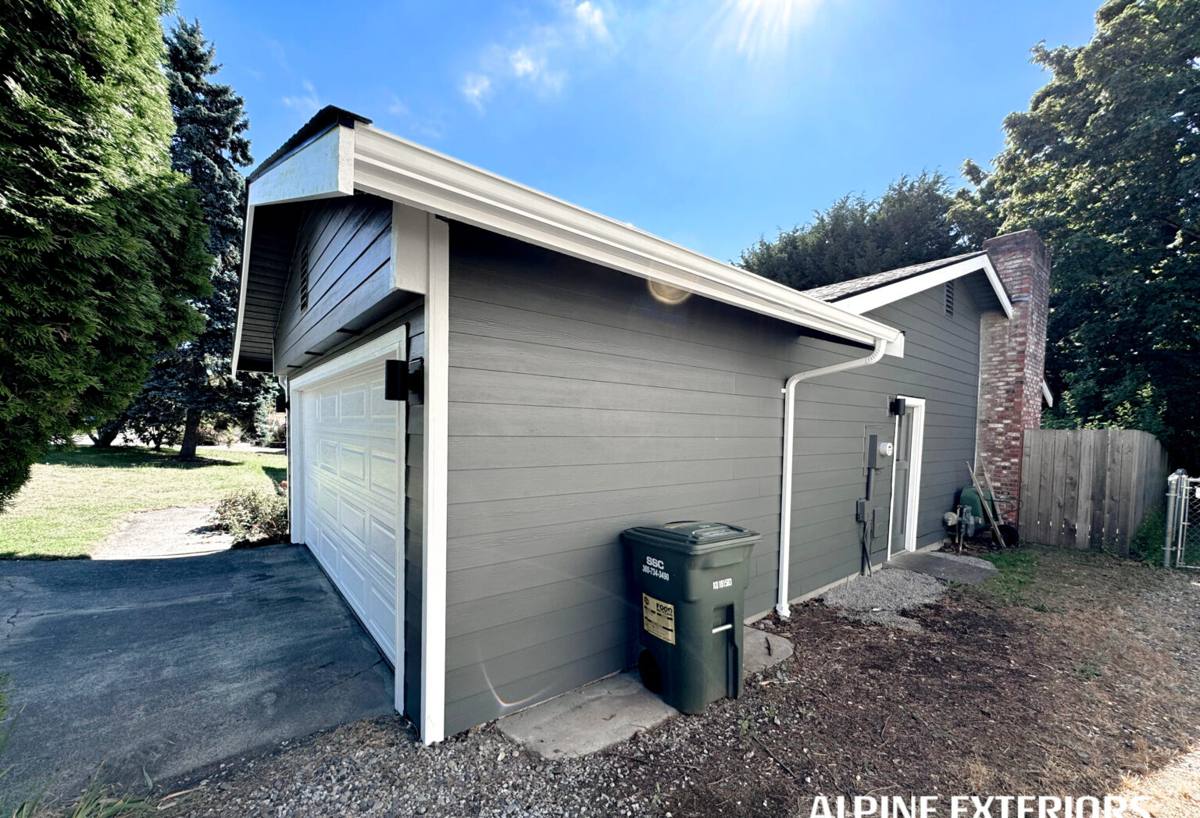
 Ferndale Exterior
 What Primed Wood Siding Actually Is
Primed wood siding — often spruce, sometimes pine or fir — is solid-sawn lumber milled into lap boards or panels and coated at the factory with a base primer coat before it ships. The primer is meant to seal the wood and give painters a ready surface, cutting down on prep time. It's been a staple of Pacific Northwest construction for generations, and there's a reason: it's real wood, it's workable with standard carpentry tools, and it gives a house the traditional lap-siding look a lot of buyers still want.
We get asked about it often enough that it's worth explaining plainly why it's not something we put on homes anymore. This isn't about bashing wood siding — it's about being honest with Ferndale homeowners about what that material asks of you over the next twenty years, especially this close to Bellingham Bay and the Strait of Georgia.
What Primed Wood Gets Right
Credit where it's due. Primed spruce siding has real advantages that explain why it's been around so long:
- Lower upfront material cost than most fiber cement or engineered products
- Easy to cut, nail, and patch with basic tools — friendly for small repairs
- Authentic wood grain and profile that some homeowners specifically want, especially on older Whatcom County farmhouses and craftsman-style homes
- Repairable in sections without replacing entire runs, if caught early
If a homeowner is fully committed to the wood look and understands the maintenance commitment going in, that's a legitimate choice. Where it gets people into trouble is when the upkeep gets skipped — which, in our experience, is most of the time.
The Maintenance Burden Nobody Budgets For
Factory priming is not a finish coat. It's a base layer that still needs a full topcoat of exterior paint within a matter of weeks of installation, and then a repaint cycle every 3 to 6 years after that depending on sun exposure and how much weather the elevation takes. Skip that cycle and the primer itself starts to break down, exposing bare wood to moisture.
Over a 20-year window, that's four to six full repaint jobs — scaffolding or lift rental, labor, caulking touch-up, and paint — on top of the original installation cost. Most homeowners don't factor that recurring bill into their siding decision, but it's the real long-term cost of the material.
Where the Failures Start
Wood siding rarely fails across a whole wall at once. It fails at the weak points first:
- Cut ends — factory priming coats the face and back of the board, but field cuts expose raw end grain, which soaks up water like a straw unless every single cut is re-primed or sealed on site before installation
- Butt joints and laps — where boards meet is where caulk failure and capillary water intrusion start
- Bottom courses — closest to splash-back from rain and irrigation, and slowest to dry
- Nail heads — if not properly set and puttied, they become tiny points of water entry that telegraph rust streaks and rot over time
Why Whatcom County's Climate Makes This Worse
Ferndale sits close enough to Bellingham Bay and the Strait of Georgia that salt-laden air is a real factor on exterior materials here, not a coastal-town cliché. Salt air accelerates the breakdown of paint films and metal fasteners alike, which shortens the interval between repaints compared to drier inland climates.
Add in the driving rain that comes with our fall and winter storm systems — rain that hits siding at an angle instead of falling straight down — and wood siding here takes on moisture at joints and end cuts far more than the same product would in a dry climate. Then there's moss. Whatcom County's long, damp moss season means north-facing and shaded wall sections stay wet longer, and moss and algae growth on painted wood siding isn't just cosmetic — it holds moisture against the surface and accelerates paint and wood degradation underneath.
None of that means wood siding "fails" here. It means the maintenance schedule that works in Eastern Washington or inland climates isn't aggressive enough for a Ferndale property, and most paint schedules don't get adjusted to account for it.
Installation Sensitivity
Primed wood siding is far more installer-dependent than most homeowners realize. Get these details wrong and the clock on visible problems starts ticking a lot faster:
- Every field cut needs to be back-primed or sealed before the board goes up — a step that's easy to skip under time pressure and invisible once the piece is nailed in place
- Proper flashing and weather-resistive barrier detailing behind the siding, especially at windows, doors, and butt joints
- Correct nailing pattern and fastener spacing to avoid splitting and to allow for the wood's natural expansion and contraction
- Adequate ventilation gap behind the siding so trapped moisture can dry out rather than sit against the wall assembly
- Quality, paintable caulk at every joint, applied correctly and replaced as it ages
Any one of those steps done poorly won't show up at final walkthrough. It shows up two, five, or ten years later as a soft spot, a paint bubble, or a stain — often after the original installer is long gone.
Lifetime Cost: Wood vs. Fiber Cement
| Factor | Primed Wood Siding | James Hardie Fiber Cement |
|---|---|---|
| Upfront material cost | Lower | Moderate to higher |
| Factory finish | Primer only — needs topcoat | ColorPlus baked-on finish, ready to install |
| Repaint cycle | Every 3-6 years | 15+ years, often longer with ColorPlus |
| Moisture behavior | Absorbs at cuts, joints, end grain | Engineered for wet Pacific Northwest exposure (HZ5 line) |
| Fire resistance | Combustible | Non-combustible fiber cement |
| Insect/rot vulnerability | Yes, if moisture gets in | Not organic material — no rot or insect feeding |
| Warranty | Typically none beyond material defect | Manufacturer warranty, transferable |
The wood is cheaper on day one. Over a 20 to 30 year ownership period, the repaint cycle alone often closes that gap, before accounting for any repair work at failed joints or cut ends.
What We Install Instead — and Why
We install James Hardie fiber cement siding exclusively. It's not a marketing preference — it's a standard we settled on after weighing exactly the trade-offs above against what actually holds up on Whatcom County homes.
- Non-combustible — fiber cement doesn't feed a fire the way wood siding can
- ColorPlus factory finish — a baked-on finish that holds color and resists fading and peeling far longer than field-applied paint over primer
- HZ5 climate-engineered formulation — Hardie's HZ product lines are engineered for specific climate zones; the HZ5 formulation is built for wetter, moisture-heavy regions like ours
- Dimensionally stable — fiber cement doesn't swell, cup, or split with moisture cycling the way solid wood can
- Strong, transferable warranty — backed by the manufacturer, not just the installer's word
Installed to spec — correct flashing, proper fastening, correct clearances — it's a system built to handle salt air, driving rain, and a long moss season without asking for a repaint every few years.
A Quick Checklist If You Already Have Wood Siding
If your home currently has primed wood or spruce siding and you're not ready to replace it yet, here's what's worth checking each year:
- Look for paint that's peeling, cracking, or chalking, especially on south and west-facing walls
- Check butt joints and corner boards for open caulk lines
- Press on bottom courses and areas near ground splash-back to feel for soft or spongy wood
- Check for moss or algae buildup on shaded or north-facing sections
- Look at exposed end cuts near trim and corners for raw, unpainted wood
- Note how many years it's been since the last full repaint
Catching these early keeps a maintenance issue from becoming a replacement issue.
Making the Right Call for Your Home
If you like the traditional wood-lap look and you're prepared to stay on top of a repaint schedule shortened by our coastal air and rain, primed wood siding can still be a defensible choice for the right homeowner. But most people choosing it aren't signing up for that maintenance schedule knowingly — they're comparing an upfront price tag without seeing the years of repainting behind it.
We'd rather tell you that up front than sell you a product we know will need constant attention in this climate. If you're weighing your options, or your current wood siding is starting to show its age, we're happy to take a look and talk through what makes sense for your home — no pressure, no sales script. Reach out for a free estimate and we'll give you a straight answer.