 Ferndale Exterior
 Living With the Elements on Lummi Island
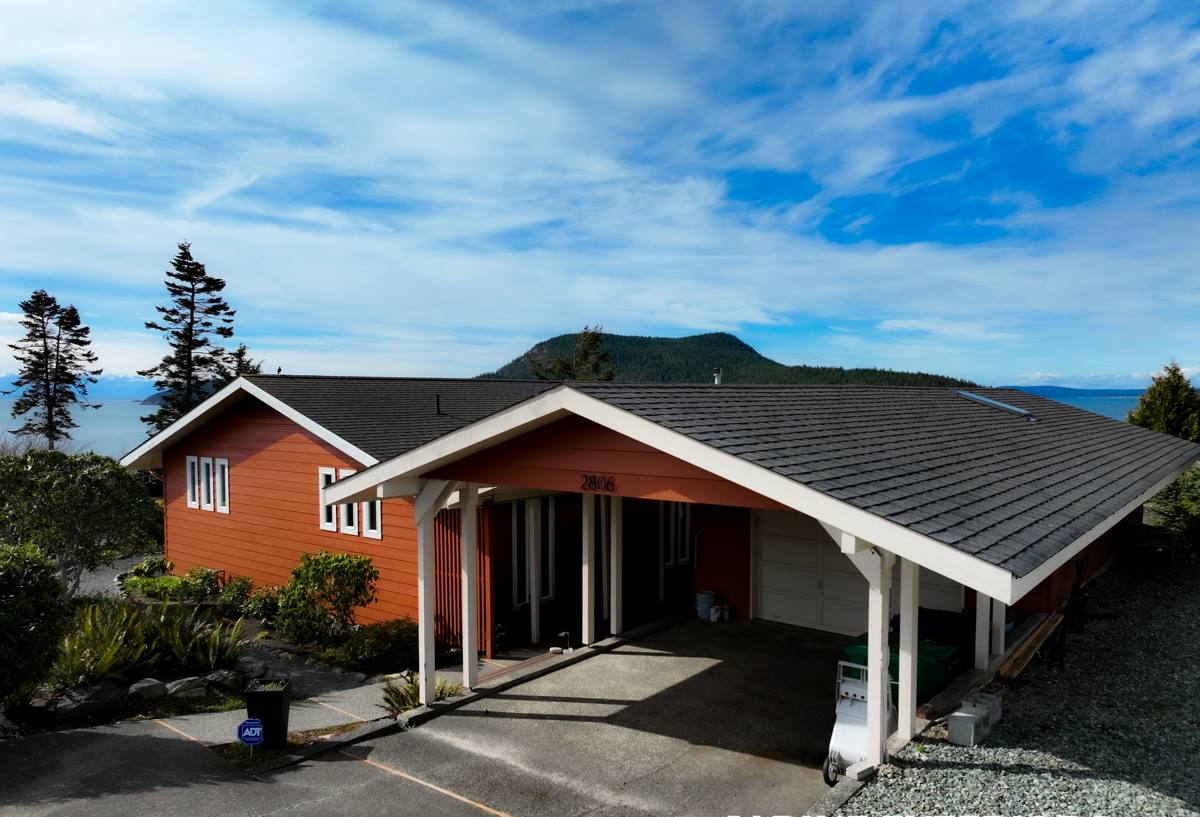
Lummi Island sits out in Whatcom County waters, reached by ferry from Gooseberry Point, and that separation from the mainland is part of what makes it special — and part of what makes exterior maintenance a different conversation than it is a few miles inland. Homes here sit closer to open salt water, catch more direct wind off the Sound, and spend more of the year damp than dry. Ferndale Exterior Co. works this whole corner of Whatcom County, and Lummi Island homes get their own set of considerations before we ever talk about products or pricing.
The short version: salt air, driving rain, and a long moss season all take their toll on siding, roofing, trim, and decking out here. None of that is unusual for the Pacific Northwest coast, but it's more concentrated on an island than it is a few miles inland, and it changes what "good enough" exterior work looks like.
What Salt Air Actually Does to a House
Salt-laden air isn't just a coastal cliché — it's a slow, steady corrosive and moisture carrier that settles on every exterior surface of a home, day after day, whether or not it's actively raining.
Metal fasteners and flashing
Uncoated or poorly coated fasteners, cheap flashing, and low-grade hardware corrode faster near open water. Once a fastener starts to rust, it can bleed staining down the face of siding or trim, and a corroded fastener holding siding in place is a problem that's much cheaper to prevent than to fix after the fact.
Paint and finish coatings
Salt air accelerates the breakdown of standard paint films. Homes on Lummi Island tend to need repainting more often than similar homes set back from the water — unless the exterior material carries its color in a factory-applied, baked-on finish rather than a field-applied paint job.
Wood trim and siding
Wood products absorb moisture from humid salt air even without direct rain contact, which speeds up swelling, checking, and eventual rot at joints, corners, and butt seams — the same spots that are hardest to keep sealed year after year.
Driving Rain and Wind-Driven Weather
Rain that falls straight down is manageable for almost any exterior material. Rain that comes in sideways, pushed by wind off the water, is a different problem — it finds horizontal laps, exposed end-grain, window and door transitions, and any gap in flashing that a calmer rain would never reach.
- Lap siding needs correct overlap and fastening to resist wind-driven rain being forced upward or sideways into seams
- Window and door flashing has to be detailed correctly, not just caulked, since caulk alone degrades faster under constant wet-dry cycling
- Roof edges, valleys, and any roof-to-wall transition are where driving rain most often finds its way behind the exterior envelope
- Decks exposed to open wind need attention to end-grain sealing and ledger board flashing, since standing or driven water at the house connection is where deck rot usually starts
This is why installation quality matters as much as material choice. A premium product installed with the wrong lap, the wrong fastening pattern, or gaps in flashing will still leak. A correctly installed exterior is the actual line of defense — the material is only half the equation.
The Long Moss Season
Whatcom County's wet stretch runs long, and on an island with more shade, more humidity, and more still, damp air pockets than an open inland lot, moss and algae growth on roofs, north-facing siding, and decking can start earlier in the fall and hang on later into spring.
Moss holds moisture against the surface it's growing on. On a roof, that means shingle granule loss and slow degradation under the moss line. On siding, sustained moss or algae growth can hold water against the surface and, on materials sensitive to moisture, contribute to swelling or coating breakdown over time. On decking, it's both a maintenance nuisance and a slip hazard.
What actually helps
- Roofing materials and installation details that shed water quickly and don't trap organic debris in valleys or behind flashing
- Siding that doesn't rely on a field-applied coating to resist moisture absorption
- Keeping gutters, downspouts, and roof valleys clear so water isn't sitting where moss thrives
- Trimming back vegetation that shades and dampens exterior walls where practical
Why We Install Only James Hardie Fiber Cement Siding
We get asked on nearly every island job why we don't offer vinyl, LP SmartSide, or other engineered wood siding products. It's a fair question, and the honest answer is that we made a standard, and we stand behind it because of exactly the conditions described above.
Vinyl siding
Vinyl is affordable and low-maintenance in mild conditions, but it's a thin plastic product that expands, contracts, and can become brittle with UV and temperature cycling. In wind-driven coastal conditions it's more prone to rattling, warping, or blowing off in a strong gust than a heavier, mechanically fastened product. It also isn't fire-resistant, which matters as wildfire smoke and dry-season risk have become a bigger part of Pacific Northwest summers even in traditionally wet counties.
LP SmartSide and other engineered wood products
Engineered wood siding has real strengths — it's lighter than fiber cement and easier on installers. But it's still wood-based at its core, meaning it depends heavily on intact factory coatings and correctly sealed cut edges to resist moisture. In a salt-air, high-humidity, long-moss environment like Lummi Island, any breach in that coating — a cut edge, a fastener hole, a scuff from installation — becomes an entry point for moisture absorption and eventual swelling or rot. That's a maintenance burden we don't think island homeowners should have to manage.
Why James Hardie
James Hardie fiber cement is non-combustible, doesn't absorb moisture the way wood-based products do, and comes with a factory-applied ColorPlus finish that's engineered to hold color and resist fading and chipping far longer than field-applied paint. Hardie's HZ product lines are climate-engineered for different regions, and the HZ5 line used in the Pacific Northwest is built specifically for wetter, harsher weather exposure. Combined with a strong transferable warranty, it's the product we're willing to put our name behind on a house that's going to spend decades facing salt air and driving rain.
Comparing Siding Options for a Coastal Whatcom County Home
| Factor | Vinyl | Engineered Wood (LP SmartSide) | James Hardie Fiber Cement |
|---|---|---|---|
| Moisture resistance | Doesn't absorb water, but seams can trap it | Depends on coating and sealed edges | Doesn't swell or rot like wood-based products |
| Wind resistance | Lighter, can flex or dislodge in strong gusts | Moderate, standard fastening | Heavier, mechanically fastened, rated for high wind exposure |
| Fire resistance | Not fire-resistant | Combustible wood-based core | Non-combustible |
| Finish longevity | Can fade, doesn't need repainting but can chalk | Factory coating, vulnerable at cuts/edges | Factory-baked ColorPlus finish, long color retention |
| Typical maintenance | Low, occasional cleaning | Moderate, edge sealing and coating checks | Low, periodic washing |
Roofing, Windows, and Decks in This Environment
Roofing
A roof on Lummi Island is doing more work than the same roof set back from the water. Correct underlayment, ice-and-water protection at vulnerable spots, and attention to valleys and flashing details all matter more here, since the combination of driving rain and long wet seasons gives water more chances to find a weak point.
Windows
Window flashing and sealing around the rough opening is often where coastal homes actually leak — not through the glass or frame itself, but around it. Correctly integrated flashing that ties into the siding's water-management system is worth more than upgrading to a marginally better window unit installed with poor detailing.
Decks
Decks facing open wind and salt air need attention at fastener choice, ledger flashing where the deck meets the house, and end-grain sealing on cut boards. A deck built without those details will show rot and corrosion years before one built with them, regardless of the decking material on top.
Why a Local, Ferndale-Based Crew Matters on the Island
Working on Lummi Island means planning around ferry schedules, coordinating material deliveries so they land on the island when the crew does, and understanding that a callback for a missed detail costs a lot more time here than it would on a mainland job a few blocks from the shop. Being based in Ferndale means we already know Whatcom County's weather patterns, work this area regularly, and aren't learning the logistics of island access on your job.
It also means accountability. A warranty is only as good as the company standing behind it, and a local crew with a track record in this county has a real incentive to get the installation right the first time — not just because it's good practice, but because we're going to be a phone call away, not a company that disappears after the invoice clears.
What to Look For Before Hiring Anyone for Island Exterior Work
- Ask how they plan logistics around ferry schedules and material delivery timing
- Ask specifically about fastener and flashing materials used near salt water, not just the siding brand
- Ask whether they've worked on homes with similar wind and moisture exposure, not just similar square footage
- Get manufacturer warranty documentation in writing, not a verbal assurance
- Ask how moss and algae growth are addressed in the installation plan, not just as an afterthought
Getting Started
If you own a home on Lummi Island and you're noticing early moss growth, staining around fasteners, paint that's failing faster than it should, or you're just planning ahead for a roof, siding, window, or deck project, we're happy to take a look and talk through what your home actually needs. We offer free, no-pressure estimates — fill out the form below and we'll get in touch to schedule a visit.