 Ferndale Exterior
 Why Bellingham Decks Wear Out Faster Than the Manual Says
Every deck material comes with a lifespan printed somewhere in a spec sheet, and almost none of those numbers were tested a few miles off Bellingham Bay. Between the salt-laden air coming off the water, the long stretch of driving rain that defines a Whatcom County winter, and a moss season that can run from October well into spring, decks here get pushed harder than the national averages suggest. We repair decks throughout Bellingham and the surrounding Ferndale area, and the pattern is consistent: it's rarely one dramatic failure. It's slow, cumulative damage from moisture and salt that homeowners don't notice until a board flexes underfoot or a railing post feels loose.
Salt air accelerates corrosion on any exposed metal fastener, connector, or hardware — nails, screws, joist hangers, bolts. Once corrosion starts, it weakens the very connections holding your deck together, often well before the visible wood shows a problem. Combine that with near-constant winter moisture and a coating of moss that holds water against the decking surface, and you've got the three biggest drivers of premature deck failure in this part of the county.
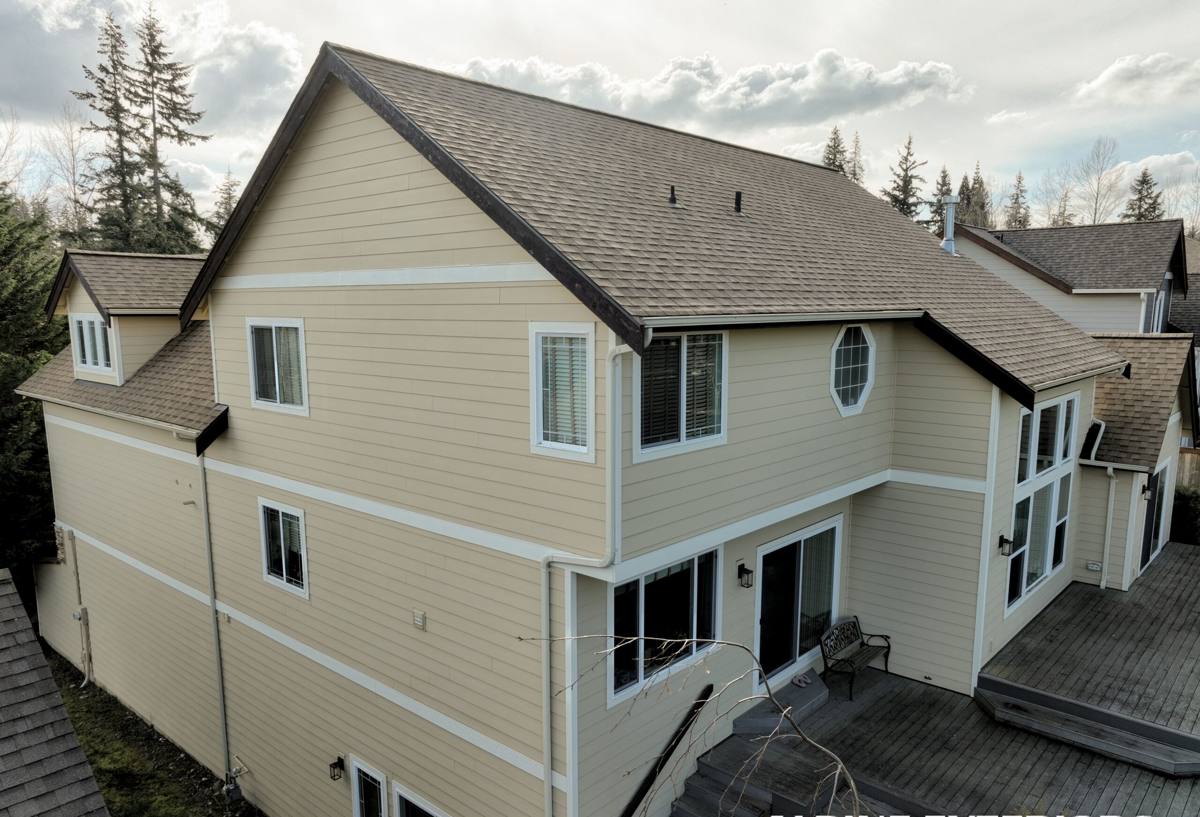
Signs a Bellingham Deck Needs Repair
Most deck damage announces itself quietly. Catching it early is the difference between a repair bill and a full rebuild. Walk your deck and check for these:
- Soft, spongy, or springy spots in the decking boards, especially near the house or in shaded corners
- Rust streaks bleeding out from nail or screw heads onto the wood surface
- Green or black moss buildup that stays damp for days after rain stops
- Any gap, crack, or separation where the deck's ledger board meets the house
- Railings or posts that wiggle, rock, or feel less solid than they did last year
- Stair stringers that flex or creak under normal walking weight
- Visible wood splintering, graying, or checking (long surface cracks) on older boards
- Standing water that pools instead of draining off the deck surface
Any one of these on its own might be a minor fix. Two or three together usually means the moisture problem has been active for a while and it's worth a full inspection before it spreads.
The Problems We See Most Often in This Area
Ledger Board Rot
The ledger board — where the deck attaches to the house — is the single most common failure point we find on Bellingham repairs. If it was under-flashed or not flashed at all when the deck was built, years of driving rain will find that seam and start rot from the inside, hidden behind the decking boards where you can't see it until it's advanced.
Corroded Fasteners and Connectors
Salt air doesn't need direct ocean spray to do damage — it travels on the wind and settles on exposed metal throughout the area. Standard galvanized fasteners that would last decades inland can start showing corrosion noticeably sooner here. Once a fastener corrodes, it loses holding strength long before it looks obviously broken.
Moss-Related Surface Damage
Moss doesn't just look bad — it holds moisture directly against the wood or composite surface, keeps that spot from ever fully drying, and creates a genuinely slick, slippery walking surface. On wood decking, prolonged moss coverage accelerates rot underneath. On composite, it can stain and roughen the surface over time.
Structural Joist and Beam Damage
Underneath the visible decking, joists and beams that don't get airflow — low-clearance decks, decks over unheated crawlspaces, shaded north-facing decks — stay damp longer after every rain. That's where we find the most serious structural issues, because damage here isn't visible from a casual walk-through.
Repair or Replace? Weighing the Real Factors
Not every damaged deck needs to come out. A lot of what we do is targeted repair — replacing specific boards, sistering a damaged joist, re-flashing a ledger board — rather than a full rebuild. The right call depends on how much of the structure is actually compromised versus how much is cosmetic.
| Factor | Leans Toward Repair | Leans Toward Replacement |
|---|---|---|
| Extent of rot | Isolated to a few boards or one connection point | Spread across multiple structural members |
| Frame condition | Joists and beams are sound | Ledger, joists, or posts show widespread decay |
| Deck age | Under 15 years, built to a reasonable standard | Original construction is old or was undersized to begin with |
| Fastener condition | Hardware is sound, only surface corrosion | Connectors are structurally compromised |
| Codes at time of build | Meets current attachment and railing standards | Built before current ledger/railing code requirements |
We'll always tell you honestly which side of that table your deck falls on. If a repair will hold up, that's what we recommend — a full rebuild isn't the right answer just because it's more billable work.
What a Correct Deck Repair Actually Involves
Start With What You Can't See
Before we touch a single board, we check the structure underneath: joist condition, ledger attachment, post bases, and any hardware that's exposed to the elements. A repair that only replaces the surface boards and ignores a compromised ledger or corroded hanger is a repair that fails again within a couple of seasons — and in this climate, that timeline can be short.
Proper Flashing at Every Connection Point
If the ledger board isn't properly flashed to shed water away from the house, that's the first thing we fix, regardless of what else is on the repair list. Given how much driving rain this area sees, a poorly flashed ledger is close to a guaranteed repeat problem.
Matching Fastener Grade to the Environment
We use stainless steel or hot-dip galvanized fasteners and connectors rated for coastal and high-moisture exposure, not the standard-grade hardware that might be fine in a drier inland climate. It costs a bit more up front and saves you from redoing the same repair in a few years.
Addressing Drainage and Airflow
A repair that doesn't fix the underlying moisture problem is a repair that doesn't last. That can mean adjusting board spacing for better drainage, clearing vegetation that's trapping moisture underneath, or improving grading so water isn't pooling against posts and footings.
Our Deck Repair Process
We keep this straightforward so you know what to expect from first call to final walkthrough:
- On-site inspection. We check the full structure — decking, joists, ledger, posts, railings, and hardware — not just the visible damage you called about.
- Honest scope and estimate. You get a clear picture of what's actually wrong, what needs to be repaired versus what can wait, and a written estimate before any work starts.
- Repair the structure first. Any compromised framing, ledger connection, or hardware gets addressed before cosmetic work begins.
- Replace damaged decking and railings. Boards, balusters, or posts that have failed get swapped with material suited to this climate.
- Final check for drainage and moisture paths. We confirm water is shedding away from the house and off the deck surface, not pooling anywhere that caused the original damage.
- Walkthrough. We show you what was done and give you straightforward maintenance guidance to protect the work going forward.
Material Choices That Make Sense for Coastal Whatcom County
Wood decking remains a solid, cost-effective choice when it's properly maintained — sealed on a regular schedule and kept clear of moss and debris. Composite decking asks less in ongoing maintenance and resists moisture-driven rot by design, though it comes at a higher upfront cost and still needs occasional cleaning to prevent moss and algae buildup on the surface. Neither material is the "right" answer across the board — it depends on your budget, how much upkeep you want to do yourself, and how the deck is oriented relative to sun and shade. We'll walk through the honest trade-offs for your specific deck rather than push one product line.
Whatever material we're working with, the fasteners and structural hardware get the same treatment: rated for coastal exposure. That detail matters more than which decking brand you choose, because hardware failure is what actually brings a deck down.
Why a Crew That Already Works Bellingham Matters
Deck repair isn't identical everywhere. A crew that mostly works drier inland climates will default to standard-grade materials and standard flashing details because that's what usually holds up where they're from. Working Bellingham and the greater Ferndale area regularly means we've seen firsthand which fastener grades actually last through a Whatcom County winter, which ledger details fail first, and how moss season affects a deck that isn't cleared regularly. That local pattern recognition shortens the inspection, sharpens the diagnosis, and means the repair we recommend is built for the conditions your deck actually faces — not a generic national standard.
Keeping a Repaired Deck in Good Shape
Once your deck is repaired, a little seasonal attention goes a long way in this climate:
- Clear moss and debris from the surface and between boards before it has a chance to trap moisture
- Check and reseal wood decking on the schedule appropriate to the product you have
- Look at the ledger board connection once or twice a year for any sign of new gaps or staining
- Keep gutters and downspouts clear so runoff isn't draining directly onto or under the deck
- Trim back vegetation that's shading the deck and keeping it damp longer than it should be
If you're noticing soft spots, rust stains, or a deck that just doesn't feel as solid as it used to, we're happy to take a look. Reach out for a free, no-pressure estimate using the form below, and we'll give you an honest read on what your Bellingham-area deck actually needs.