 Ferndale Exterior
 Why Siding Installation Looks Different in Bellingham
Homes in and around Bellingham sit in one of the more demanding exterior environments in Washington. You've got proximity to salt water, wind-driven rain coming off the Sound, and a wet season that stretches long enough for moss and algae to get a real foothold on north-facing walls and anything shaded by mature trees. None of that is exotic or rare here — it's just the baseline. But it means siding installation isn't a one-size-fits-all job. What holds up in a drier inland climate can fail early in this one if the material, the detailing, or the crew doesn't account for what this area actually throws at a house.
We install siding across Whatcom County, and Bellingham's mix of older housing stock, infill construction, and homes tucked against tree lines gives us a good cross-section of what goes wrong with the wrong siding choice or a rushed install. This page covers what a correct siding installation looks like for a Bellingham home specifically — not siding in general.
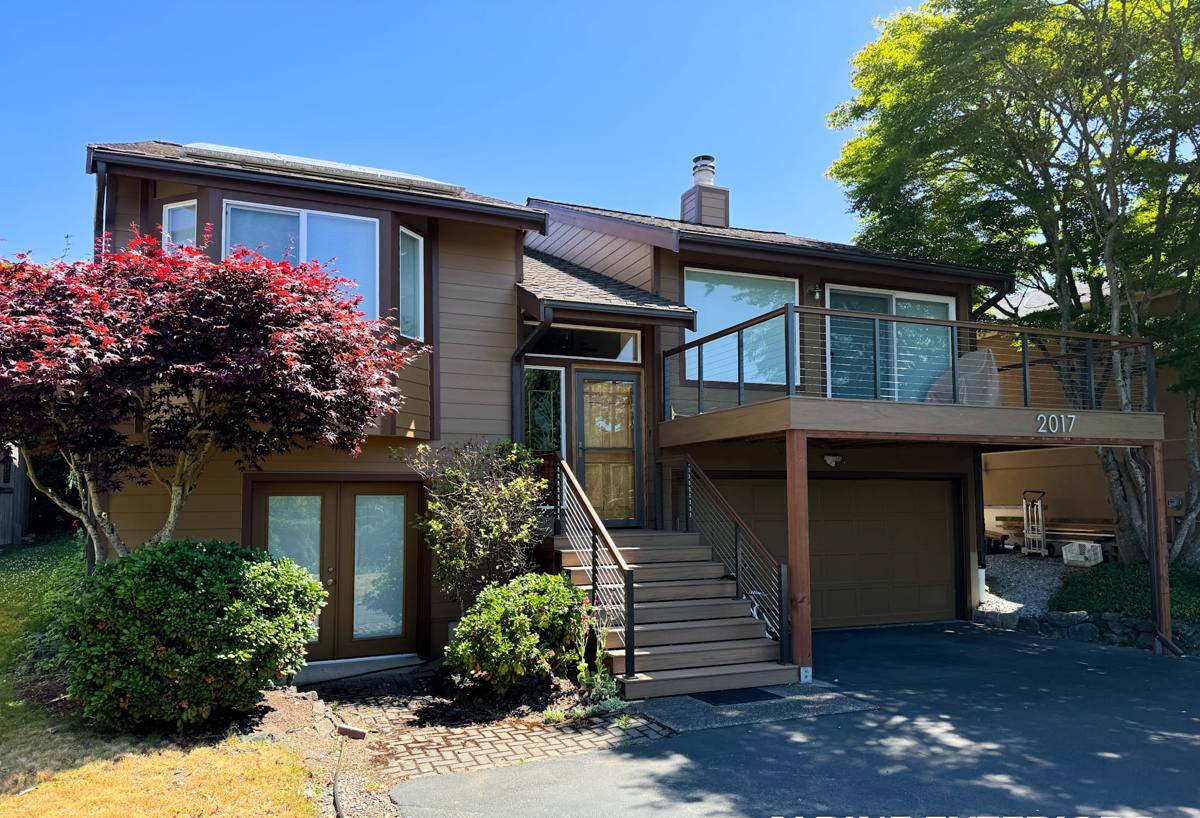
What Salt Air, Driving Rain, and Moss Season Actually Do to Siding
Salt Air
Coastal proximity means airborne salt settles on exterior surfaces and accelerates corrosion of exposed metal fasteners, flashing, and trim. It also breaks down some coatings and finishes faster than a manufacturer's standard lab testing accounts for. This is one of the reasons fastener choice and flashing material matter as much as the siding itself.
Driving, Wind-Driven Rain
Bellingham doesn't just get rain — it gets rain pushed sideways by wind off the water, which means water finds gaps that would stay dry in a calmer climate. Siding systems here need to shed water at every horizontal joint, every window and door transition, and every penetration, not just on the flat field of the wall.
Long Moss and Algae Season
Shaded, north-facing, and tree-adjacent walls stay damp for extended stretches. Materials that absorb moisture, or finishes that don't resist mildew and algae growth, will show green and black staining years before a homeowner expects it — and that staining is often blamed on "bad siding" when the real issue is a product that was never built for a climate like this one.
Why We Install James Hardie Fiber Cement — And Nothing Else
We made a deliberate decision as a company to install only James Hardie fiber cement siding. We don't install vinyl, LP SmartSide, Cemplank, Allura, primed spruce, or cedar. That's not a marketing position — it's a standard we hold because of what we've seen these products do (or fail to do) in exactly the conditions Bellingham deals with.
- Vinyl can warp and become brittle with UV and temperature cycling, and its seams are a weak point against wind-driven rain.
- Cedar is a genuinely beautiful natural material, but it needs consistent maintenance to resist moisture absorption and rot, and moss/algae staining shows up fast in shaded, damp conditions.
- Primed spruce and OSB-based products (like LP SmartSide) rely on the integrity of a factory coating and correct field sealing at every cut edge — if that's compromised anywhere, moisture gets into the substrate and the clock starts on swelling and delamination.
- Cemplank and Allura are also fiber cement, and reasonable products in their own right, but we've standardized on one manufacturer so we can guarantee consistent specs, warranty terms, and installation training across every job we do.
James Hardie fiber cement is non-combustible, dimensionally stable, and manufactured with regional climate engineering — the HZ5 product line is built specifically for the kind of wet, marine-influenced weather Western Washington sees. The factory-applied ColorPlus finish is baked on and warrantied against fading and peeling, which matters a lot when a home is exposed to salt air and prolonged UV. It's the product we're willing to put our name behind on a Bellingham roofline.
What a Correct Siding Installation Involves
The siding panel itself is maybe 40% of what determines whether a job lasts. The rest is in the details most homeowners never see once the job is done.
Weather-Resistive Barrier and Drainage Plane
Every wall gets a continuous weather-resistive barrier behind the siding, lapped correctly from the bottom up so water is always directed outward and down, never into a seam. In a climate with sustained wind-driven rain, this layer is doing real work, not just meeting code minimums.
Flashing at Every Penetration
Windows, doors, hose bibs, vents, light fixtures — anywhere something breaks the plane of the wall is a place water can get behind the siding if it isn't flashed correctly. This is one of the most common failure points we find on older Bellingham homes we're re-siding.
Fastener Selection
Given the salt air exposure, we use fasteners rated to resist corrosion in coastal-influenced environments. Cheap or mismatched fasteners are a slow-motion failure — they don't show up as a problem for a few years, then streaking and loosening start showing up all at once.
Clearances and Gaps
Hardie siding needs proper clearance from grade, roof lines, decks, and other trim to allow drainage and airflow. Installed too tight, moisture gets trapped and the long moss season in this area will find that trapped moisture fast.
Caulking and Joint Treatment
Butt joints, corners, and trim transitions need the right sealant, applied correctly, per Hardie's installation specifications — not just wherever a gap looks like it needs filling.
Our Process for a Bellingham Siding Installation
- On-site assessment — we look at sun exposure, tree cover, drainage patterns, and existing moisture or moss damage before we recommend anything.
- Tear-off and substrate check — removing old siding lets us inspect sheathing for hidden rot or water damage before it gets covered up again.
- Barrier and flashing installation — the weather-resistive barrier and all flashing details go in first, and this is the stage that determines long-term performance more than any other.
- Hardie panel or lap installation — installed to manufacturer spec, with correct fastener spacing, clearances, and joint treatment.
- Trim, caulking, and final detailing — the finish work that determines both appearance and water-tightness.
- Final walkthrough — we go over the finished job with the homeowner before calling it done.
Why Local Experience in Bellingham Matters
A crew that only occasionally works this area can miss things that are obvious to someone who sees these conditions every week. Knowing which walls in a given neighborhood tend to hold moisture longer, how much wind exposure a given lot actually gets off the water, and how moss behaves on shaded Whatcom County properties changes how a job gets detailed — not just what product goes up. It also means we're not guessing at permitting requirements or typical drainage issues in this part of the county; we've already dealt with them.
Cost Factors for Siding Installation in This Area
Every home is different, but these are the main variables that affect the scope and cost of a siding project here:
| Factor | Why It Matters in Bellingham |
|---|---|
| Existing substrate condition | Hidden moisture or rot found during tear-off adds repair work before new siding can go on |
| Home size and wall complexity | More corners, dormers, and penetrations mean more flashing and detail work |
| Sun and tree exposure | Heavily shaded walls may need additional moisture mitigation given the long moss season |
| Siding profile and Hardie product line | Lap, panel, and shingle profiles vary in material and labor cost |
| Color and finish selection | ColorPlus factory finishes vs. field-painted options affect both cost and long-term maintenance |
| Accessibility | Multi-story homes or tight lots near the water can affect equipment and labor time |
Signs a Bellingham Home May Need New Siding
- Persistent green or black staining that returns shortly after cleaning
- Soft spots, swelling, or visible warping in existing siding panels
- Paint that's peeling or bubbling repeatedly in the same areas
- Visible gaps, cracking, or separation at seams and corners
- Rising energy bills that may point to compromised wall insulation or air sealing
- Siding older than its expected service life, especially on shaded or water-facing walls
What to Ask Before Hiring Anyone for This Work
Because so much of siding performance depends on details you can't see after the job is done, it's worth asking direct questions before hiring any contractor for this kind of work:
- Are you installing to the manufacturer's written specifications, and can I see them?
- What weather-resistive barrier and flashing details will you use around windows and doors?
- What fasteners are you using, and are they rated for coastal exposure?
- What does the manufacturer's warranty cover, and does it transfer if I sell the home?
- Have you worked in this specific area before, and do you understand its moisture and moss issues?
If your Bellingham home is due for new siding, or you're seeing early signs of moisture or moss trouble, we're happy to take a look and walk you through what we'd recommend. Reach out for a free, no-pressure estimate using the form below.