 Ferndale Exterior
 Windows Built for Where Birch Bay Actually Sits
Birch Bay homes take a different kind of beating than houses a few miles inland. The water is close enough that salt-laden air reaches window frames and hardware year-round, driving rain comes in sideways off the Strait during winter storms, and the damp, shaded stretches common along the bay hold onto moisture long enough to grow moss and mildew on anything that isn't sealed and finished correctly. Windows here don't fail because of one dramatic event — they fail slowly, from years of small moisture intrusion, UV exposure, and salt corrosion that nobody caught early because it started on the inside of the frame, not the outside.
When we replace or install custom windows for a Birch Bay home, we're not just matching a size and swapping units. We're accounting for wind-driven rain loads, salt exposure on hardware and finishes, and the reality that a window installed a little bit wrong here will show it within a year or two, not a decade.
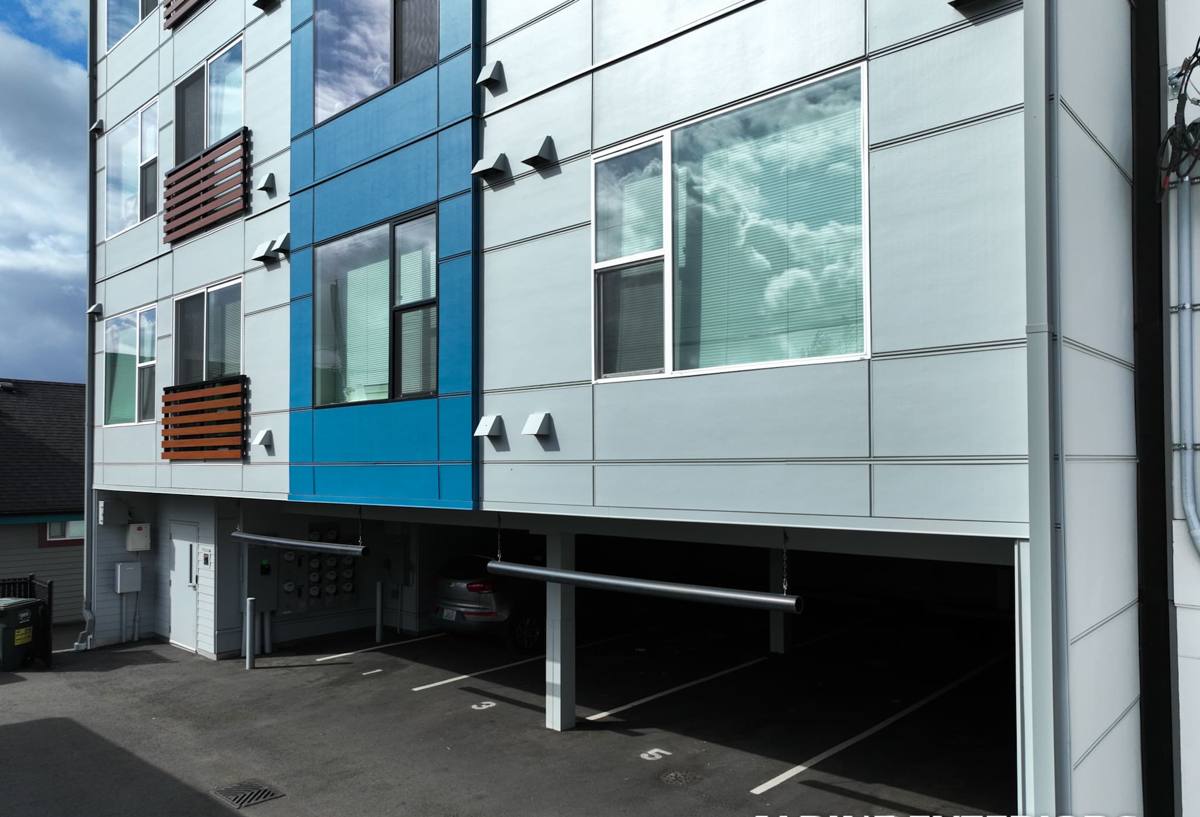
What Correct Custom Window Installation Actually Involves
"Custom" windows means the unit is built to fit your actual opening and your home's actual look — not a stock size from a big-box shelf. That matters more in older Birch Bay and Ferndale-area homes, where openings have often shifted slightly over the decades and a true custom fit avoids the shims, gaps, and caulk-heavy fixes that create long-term leak paths.
A correct installation, whether it's one window or a whole-house replacement, includes:
- Removing the old unit and inspecting the rough opening for rot, soft framing, or prior water damage before anything new goes in
- Correcting any framing or sill issues found — installing over a hidden problem just seals it in
- Installing (or reinstalling) proper flashing at the head, sides, and sill so water is directed out and away from the wall assembly, not just caulked over
- Setting the window level, plumb, and square, then securing it per the manufacturer's fastening schedule
- Insulating the gap between the frame and rough opening properly — not overpacked, not left empty
- Sealing the interior and exterior with the right sealants for our climate, not a single bead of caulk expected to do everything
- Reinstalling or replacing trim, siding, and any weather barrier so the whole assembly sheds water as a system
Skip any one of these steps and you can end up with a window that looks fine for a season or two but is already letting moisture into the wall cavity — which, in a climate like ours, turns into rot faster than most homeowners expect.
Why the Rough Opening Inspection Matters Most
Of everything on that list, the rough opening inspection is where we catch the most surprises. In homes near the water, we regularly find sills and framing that have taken on moisture over the years without any obvious sign from inside the house. Replacing the window without addressing that means the new unit is going in on top of a problem instead of solving it.
Choosing Window Materials for a Salt Air, High-Moisture Climate
Not every window material handles our conditions the same way. This is one of the most important conversations we have with Birch Bay homeowners before ordering anything, because the wrong material for the exposure means more maintenance and a shorter service life — regardless of how well it's installed.
| Material | Salt Air / Moisture Behavior | Maintenance | Best Fit |
|---|---|---|---|
| Vinyl | Resists corrosion well; won't rot; can look chalky over many years of UV and salt exposure | Low — occasional cleaning | Budget-conscious replacements, rental or secondary properties |
| Fiberglass | Excellent resistance to salt, moisture, and UV; dimensionally stable in temperature swings | Low | Direct water-facing exposures, long-term ownership |
| Aluminum-clad wood | Good exterior protection if the cladding and seams are intact; wood interior offers a traditional look | Moderate — watch cladding seams and interior finish | Homeowners wanting a wood interior with better exterior durability |
| Solid wood | Most vulnerable to moisture and salt without diligent upkeep; beautiful but demanding here | High — regular refinishing and inspection | Historic or architecturally specific homes where the owner accepts the upkeep |
We're honest with clients about this table, including the trade-offs. Solid wood windows can be gorgeous, but on a home exposed to Birch Bay's salt air and driving rain, they demand a maintenance routine most owners underestimate. That's not a knock on wood as a product — it's a fact about what this climate does to any material with organic content, and we'd rather tell you that upfront than have you find out after the finish starts failing.
Glass and Hardware Choices That Matter Near the Water
Frame material gets the most attention, but glass package and hardware selection matter just as much for a bay-facing home.
For glass, we typically talk through double- or triple-pane options with low-E coatings, weighing energy performance against your existing wall assembly and budget. In homes that catch more wind and driving rain, we also look at the window's design pressure rating — how much wind and water load the assembly is actually engineered to handle — rather than assuming any window rated for general residential use is automatically enough for a more exposed elevation.
Hardware is where salt air does its quiet damage. Standard mill-finish hardware can start showing corrosion within a few years in a coastal-adjacent setting. We spec corrosion-resistant hardware finishes for homes with real salt exposure, because replacing a handle or a failed lock mechanism is a minor annoyance — but corroded hardware that's seized up and stressing the sash over time is a bigger, more expensive problem.
Our Process, Start to Finish
- On-site assessment. We look at your current windows, the framing behind them where visible, and the specific exposure of each elevation — a window on the water side of the house often needs different specs than one on a sheltered wall.
- Material and product walkthrough. We go over frame material, glass package, and hardware options honestly, including what each choice will and won't do for your specific exposure and budget.
- Accurate measurement and custom order. Every opening gets measured individually — no assuming two windows on the same wall are identical, because in older homes they often aren't.
- Installation with proper flashing and sealing. This is where most of the long-term performance is decided, and it's not a step we shortcut to save time.
- Final walkthrough. We check operation, seals, and finish work with you before we consider the job done.
Timing Around Whatcom County Weather
We schedule window installations around weather windows whenever possible. Opening up a wall to a bad storm system moving in off the coast isn't good for your home or our work, so we plan installs to minimize the time your walls are exposed and avoid pushing through when conditions make a clean, dry installation unlikely.
Signs Your Birch Bay Home's Windows Need Attention
Because window failure here tends to be gradual, it helps to know what to watch for before a small issue becomes a wall repair.
- Fogging or moisture between panes on a double- or triple-pane window — the seal has failed
- Soft, discolored, or bubbling paint and trim around the window frame
- Drafts you can feel even with the window fully latched
- Difficulty opening, closing, or locking a window that used to operate smoothly
- Visible moss, algae, or black staining building up on the sill or frame
- Musty smell near a window, especially after heavy rain
- Wood trim that feels soft or spongy when pressed
Any one of these on its own might be minor. Several together, or any sign of soft wood, usually means moisture has already gotten past the frame and it's worth having someone look before it spreads into the surrounding wall.
Energy Performance and Comfort
Custom windows are also one of the more noticeable comfort upgrades a Birch Bay home can make. Older single-pane or worn-out double-pane windows let a lot of heat out in the winter and let cold, damp air settle right at floor level near the window — a common complaint in older coastal-area homes. A properly installed, well-sealed replacement window with an appropriate glass package cuts that draft significantly and reduces the condensation that tends to form on cold glass during our wetter months, which is itself a contributor to window-area mold and mildew.
Why Local Experience in Birch Bay Matters
A crew that mostly works inland doesn't always think about design pressure ratings, salt-resistant hardware, or the specific flashing details that matter on a more exposed elevation, because they don't need to most of the time. Working regularly in Ferndale and around Birch Bay means we're used to sizing up a home's exposure correctly the first time — which wall catches the worst of the weather, which openings have likely seen past water intrusion, and which material trade-offs actually make sense for this specific stretch of Whatcom County rather than for a generic climate zone.
That local pattern recognition saves time during the assessment and reduces the odds of a callback down the road for a problem that better upfront planning would have avoided.
Protecting Your Investment After Installation
New custom windows are a significant investment, and a little seasonal attention keeps them performing for the long haul in our climate:
- Rinse salt residue off exterior frames and glass periodically, especially on water-facing elevations
- Check and clear weep holes so water can drain out of the frame rather than pooling
- Inspect exterior caulking annually and touch up before gaps let water behind the trim
- Wipe down and lightly lubricate hardware to keep corrosion from setting in
- Remove moss or algae buildup on sills promptly rather than letting it sit and hold moisture
None of this is heavy maintenance, but skipping it in a climate with this much salt air and rain is how a good window installation loses years off its service life.
If your Birch Bay home's windows are drafty, showing early signs of wear, or you're planning a full custom replacement, we're happy to come take a look and walk you through honest options for your home's exposure. Estimates are free, and there's no pressure to move forward — just use the form below to get started.