 Ferndale Exterior
 Building Decks That Hold Up in Birch Bay
Birch Bay sits right on the water, and that changes what a deck needs to survive compared to a deck built a few miles inland in Ferndale or Lynden. The same design that works fine on a sheltered inland lot can start showing problems in a few seasons on a waterfront or near-waterfront property — soft spots in the decking, rust bleeding out of fasteners, black streaks of algae and moss on the boards by late winter. None of that is inevitable. It comes down to choosing the right materials, building the substructure correctly, and using hardware rated for the exposure this location actually gets.
This page covers what a deck build in Birch Bay specifically needs to account for, what a correct job looks like from the footings up, and how we approach the work when we're building or replacing a deck in this area.
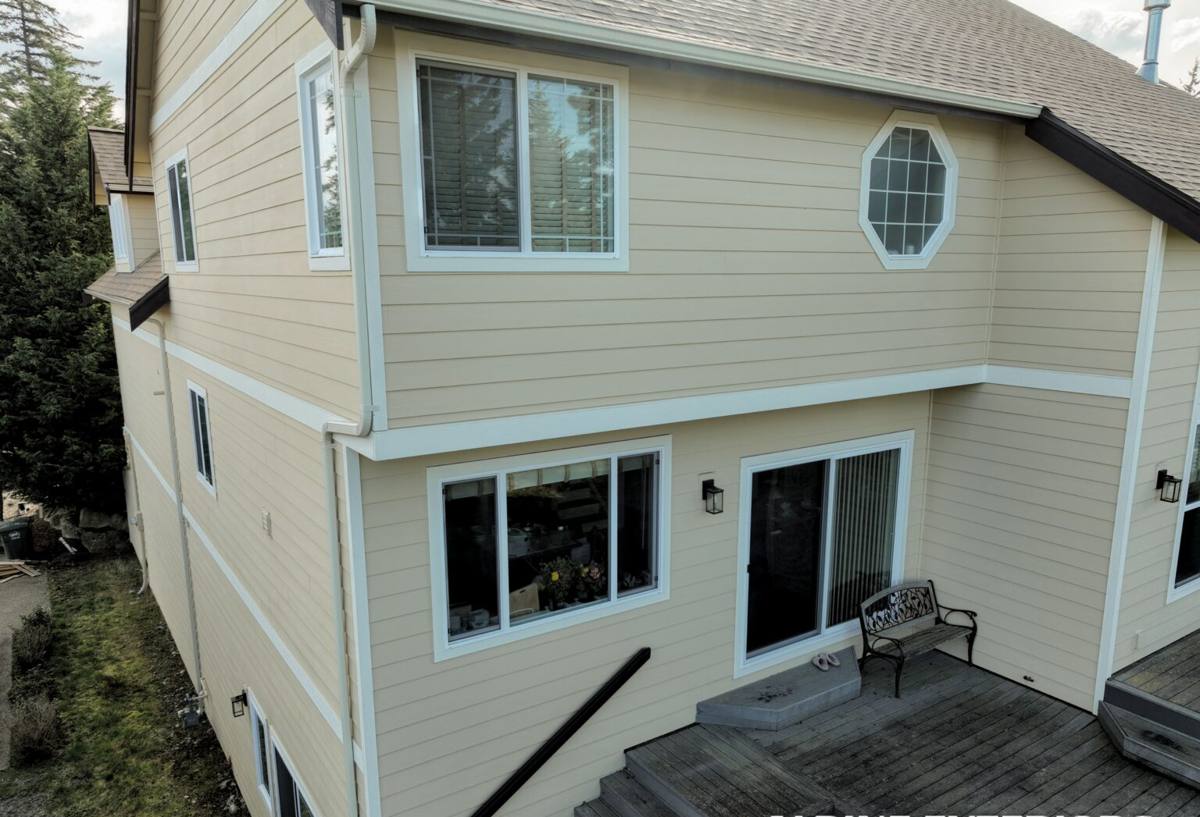
What Salt Air, Rain, and Moss Actually Do to a Deck
Salt Air and Corrosion
Proximity to Birch Bay and the Strait of Georgia means airborne salt is a real factor, not a marketing talking point. Salt-laden air accelerates corrosion on any exposed metal — fasteners, joist hangers, post bases, railing hardware. On a standard-grade galvanized screw, that corrosion can start within a couple of years this close to the water. Once a fastener starts rusting, it weakens, stains the surrounding wood or composite, and eventually needs to be replaced — which usually means pulling up decking that was otherwise fine.
Driving Rain and Moisture
Whatcom County gets a lot of rain, but the difference near Birch Bay is that storms coming off the water often arrive with wind, driving rain sideways into railings, fascia boards, and any horizontal surface that isn't sloped to shed water. That means end grain, top rails, and any horizontal trim take on more moisture than they would on a wall or roof that's protected from wind-driven rain. Wood that stays wet longer rots faster, and any gap or seam that traps water becomes a weak point.
The Long Moss Season
Cool, damp conditions for a large part of the year mean moss and algae have a long window to establish themselves on decking, especially in shaded spots or areas with poor airflow underneath. Moss holds moisture against the board surface, which speeds up wood decay and, on composite decking, becomes a slip hazard and a stubborn cleaning problem if it's allowed to build up season after season.
Choosing Decking Material for a Waterfront-Adjacent Property
There's no single "best" decking material — the right choice depends on budget, how much upkeep you want to do, and how exposed the deck is to wind, rain, and salt air. Here's how the common options actually perform in this environment:
| Material | Moisture & Salt-Air Behavior | Maintenance | Relative Cost |
|---|---|---|---|
| Pressure-treated fir/hem-fir | Treated for rot resistance but still absorbs water; needs sealing to perform well long-term | Annual cleaning, re-seal every 1-2 years | Lowest upfront |
| Cedar | Naturally rot- and insect-resistant, but softer and can gray or check faster in constant wind and salt exposure | Regular cleaning, periodic oil/stain | Mid-range |
| Composite decking | Doesn't absorb water or rot, but lower-quality composites can still trap moisture at fastener points and grow algae in shaded areas | Periodic washing; no sealing or staining | Higher upfront |
| PVC / capped polymer decking | Fully sealed surface, best resistance to moisture and salt air of the common options | Occasional washing | Highest upfront |
For a deck that's fully exposed to wind off the water, we generally steer homeowners toward composite or capped polymer decking, or well-sealed cedar if the wood look matters more than minimal upkeep. Pressure-treated lumber is a legitimate budget option, but it's the one that demands the most consistent maintenance in this climate — skip a sealing cycle or two and the boards will show it.
The Structure Underneath Matters More Than the Boards
Footings and Posts
A deck is only as good as what's holding it up. Footings need to be sized and set to local frost depth and soil conditions, and posts need proper post bases that keep the wood end grain off concrete and out of standing water — a post set directly in or against wet concrete is one of the most common causes of early post-base rot we see on older decks in this area. Post bases and any embedded hardware should be rated for exterior/coastal use, not general-purpose galvanized.
Framing and Ledger Attachment
Where a deck attaches to the house, the ledger board and its flashing are doing the real work of keeping water out of the house structure. A ledger that's flashed correctly sheds water away from the rim joist and wall sheathing; one that's caulked instead of properly flashed will eventually let water track behind it, and you won't see the damage until it's well established. Joists themselves should be sized for the actual span and load, with joist tape or a comparable moisture barrier on top of each joist before decking goes down — a cheap step that meaningfully slows rot at the fastener line, which is where most joist damage starts.
Fasteners and Hardware: Don't Cut Corners Here
Given the salt air exposure around Birch Bay, hardware selection isn't a place to save money. Stainless steel fasteners and connectors cost more than standard galvanized, but on a waterfront-adjacent build they hold up dramatically longer and don't bleed rust stains into the decking around them. At minimum, structural hardware — joist hangers, post bases, structural screws — should carry a coating rated for coastal or high-corrosion exposure, and any fastener you can see from the surface (deck screws, railing hardware) should match the decking material's own fastener recommendations so you're not voiding a manufacturer's warranty over a hardware choice.
Drainage, Spacing, and Airflow to Keep Moss and Rot Away
Most of the moss and rot problems we get called out for on existing decks in this area trace back to one thing: water that has nowhere to go. A few details make the difference:
- Correct board spacing so water drains through rather than sitting on the surface
- Adequate clearance and airflow underneath the deck, especially on lower decks close to grade
- Grading and drainage around footings so water doesn't pool against posts
- Gaps around framing connections so wood can dry out between rain events instead of staying saturated
- Avoiding solid skirting or enclosures that trap moisture and block sun/wind from reaching the underside
A deck that's built with these details in mind sheds water fast and dries out between storms, which is what actually keeps moss from getting a foothold — pressure washing helps, but it's treating a symptom if the underlying airflow and drainage aren't there.
Permits and Local Requirements
Most new decks and many deck replacements in Whatcom County require a building permit, and requirements can differ slightly depending on whether the property falls under Whatcom County jurisdiction or the City of Ferndale, along with any shoreline setback considerations for properties close to the water. We handle the permit process as part of the job rather than leaving it to the homeowner, but if you're planning ahead, it's worth checking with the relevant building department early — especially for anything near the shoreline, where setback rules can affect what's buildable before design work even starts.
Our Process for a Birch Bay Deck Build
We approach every deck build in this area the same structured way:
- Site visit and assessment — we look at sun/wind exposure, existing drainage, soil conditions, and how close the deck will be to the water or open exposure
- Material and hardware selection — matched to how exposed the specific site is, not a one-size-fits-all default
- Permitting — pulled and coordinated before framing starts
- Footings and framing — built to span, load, and frost-depth requirements, with corrosion-rated hardware throughout
- Flashing and moisture barriers — ledger flashing and joist protection installed correctly, not caulked as a shortcut
- Decking and railing installation — spaced and fastened per the manufacturer's specifications for the material chosen
- Final walkthrough — we go over basic maintenance expectations specific to the material installed
Maintenance Checklist for a Coastal Deck
Whatever material you choose, a little seasonal attention goes a long way in this climate:
- Rinse or sweep off debris and standing moisture regularly, especially in shaded areas
- Check railing and structural hardware annually for early signs of rust staining
- Clear leaves and debris from between boards and around drainage paths each fall
- Re-seal wood decking on the schedule recommended for the specific product — don't wait for visible graying
- Confirm underdeck airflow hasn't been blocked by stored items, planters, or added skirting
- Address any soft spots, loose fasteners, or rust staining promptly rather than waiting for the next season
Why a Crew That Already Works Birch Bay Matters
A deck built for inland conditions and a deck built for a windward, salt-air property near Birch Bay shouldn't look the same on paper — different hardware, different attention to drainage, sometimes a different material recommendation entirely. A crew that's already built and maintained decks in this specific stretch of Whatcom County has seen which shortcuts fail here and which details actually matter, instead of applying a generic build spec to a coastal lot. That local track record is worth more than a lower bid from a crew unfamiliar with what driving rain and salt air do to a deck over time.
If you're planning a new deck or need an honest look at an existing one, we're happy to walk the property and give you a straightforward assessment. Use the form below to request a free, no-pressure estimate.