 Ferndale Exterior
 Building Decks for Blaine's Coastal Conditions
Blaine sits close enough to open salt water that it changes how a deck should be built. We work this stretch of Whatcom County regularly out of Ferndale, and the pattern is consistent: decks here take more punishment than decks even a few miles inland. Salt-laden air accelerates corrosion on fasteners and hardware, driving rain off the water finds its way into every gap and end-cut, and the long stretch of wet, low-light months from fall through spring keeps everything damp long enough for moss and algae to take hold. A deck built to a generic spec doesn't hold up the same way out here — the details that matter change.
This page is about deck building specifically for Blaine-area homes: what the climate demands, what a correctly built deck actually involves, and how we approach the work so it lasts.
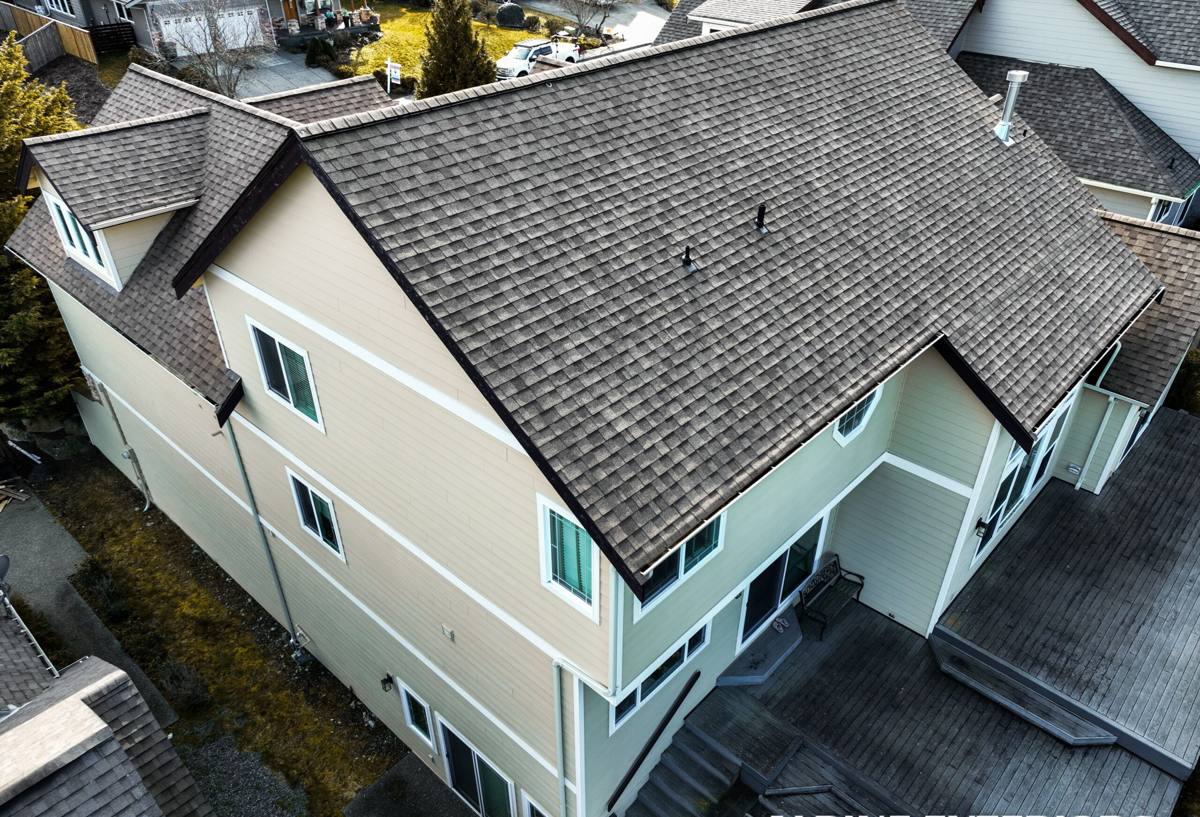
What Salt Air and Driving Rain Do to a Deck
Fasteners and Hardware
Standard galvanized fasteners corrode faster in salt-influenced air than manufacturers' general ratings assume. Screw heads rust and streak the decking, joist hangers weaken at the point where they're needed most, and structural bolts can lose integrity years before the wood itself shows wear. This is the single most common failure point we see on older decks in this area — not the boards, but what's holding them together.
Moisture Intrusion
Wind-driven rain off the water doesn't fall straight down — it comes in at an angle and gets pushed into ledger connections, stair stringers, and any horizontal surface that isn't properly flashed or sloped. Once moisture gets behind a ledger board or into an end-grain cut that wasn't sealed, rot starts from the inside where you can't see it until it's advanced.
Moss, Algae, and Surface Wear
Whatcom County's wet season runs long, and shaded or north-facing decks in Blaine can stay damp for weeks at a stretch. That constant moisture grows moss and algae on decking surfaces, which isn't just cosmetic — it holds water against the board and makes the surface slick and genuinely dangerous underfoot, especially on stairs.
Material Choices That Actually Hold Up Here
There's no single "right" decking material for every budget, but in a salt-air, high-moisture climate some choices perform noticeably better than others. Here's how the common options compare for this specific environment.
| Material | Salt Air / Corrosion Behavior | Moisture & Moss Resistance | Maintenance Burden |
|---|---|---|---|
| Pressure-treated fir/hem-fir | Wood itself is fine; fasteners are the weak point | Needs sealing and regular cleaning to resist moss | Annual cleaning, re-seal every 2-3 years |
| Cedar | Naturally rot-resistant, but hardware still needs to be corrosion-rated | Good, but greys and can still host moss if shaded | Periodic cleaning, optional staining |
| Composite decking | No corrosion issue in the board itself; fastener quality still matters | Resists rot well; surface can still grow moss if never cleaned | Low — occasional wash, no sealing |
| PVC decking | Fully synthetic, unaffected by salt exposure | Best moisture resistance of the group | Lowest — soap and water is usually enough |
We don't push one material on every job. Cedar still has a place where a homeowner wants a natural look and is willing to maintain it. Composite and PVC cost more up front but make sense for shaded, moisture-heavy lots or for owners who don't want a re-sealing schedule. What matters more than the decking material, in our experience, is getting the structure and hardware right underneath it — that's where salt-air decks actually fail first.
Hardware and Fasteners: Where We Don't Cut Corners
For anything within reach of coastal salt air, we treat corrosion-rated hardware as the baseline, not an upgrade. That means stainless steel or heavy-duty coated fasteners rated for coastal exposure, corrosion-resistant joist hangers, and structural connectors sized and installed to the connection they're actually protecting — not just whatever's fastest to run. It costs more than standard galvanized hardware, but replacing hardware later means tearing into a finished deck, so getting it right the first time is cheaper over the life of the structure.
Ledger Attachment and Flashing
The ledger board — where the deck attaches to the house — is the single most important connection on the entire structure, both structurally and for moisture control. We flash it properly so wind-driven rain can't work its way behind the board and into the house's wall assembly. This is also the connection most often done poorly on older or lower-bid decks, and it's usually invisible until there's already damage.
Post Bases and Footings
Posts that sit in standing water or damp soil for months at a time rot from the base up. We set posts on proper elevated bases rather than burying them directly, and we size footings for our local frost and soil conditions so the structure stays stable through the wet season.
Design Decisions Specific to This Climate
Drainage and Slope
Every deck surface should have a slight slope away from the house so water sheds instead of pooling. On a deck getting regular driving rain, even a small dead-flat spot becomes a place where water sits, feeds moss, and eventually finds its way into a seam.
Board Spacing and Airflow
Correct gapping between boards lets air move underneath and lets water drain through instead of sitting on the surface. Too tight, and the deck stays wet longer after every rain; too loose, and you get debris buildup and a less finished look. We space to the material's actual expansion behavior, not a one-size-fits-all number.
Sun and Shade Exposure
Where a deck sits relative to tree cover and the house itself changes how much moss risk it carries. Shaded, north-facing decks in Blaine hold moisture far longer than open, sun-exposed ones. We factor that into material recommendations and, where practical, spacing and orientation — a shaded deck built with a moss-prone material is signing up for a maintenance headache from day one.
Our Process, Start to Finish
- On-site assessment — we look at sun/shade exposure, drainage, existing structure (for rebuilds), and how close the deck sits to salt-influenced air and prevailing weather.
- Material and design walkthrough — honest trade-offs between wood and composite/PVC options based on your maintenance appetite and budget, not a default upsell.
- Permitting — decks above a certain height or attached to the house typically require a permit; we handle that process rather than leaving it on the homeowner.
- Structural build — footings, framing, ledger flashing, and corrosion-rated hardware installed to spec before a single deck board goes down.
- Decking, railing, and finish work — installed with proper spacing and fastening for the material chosen.
- Walkthrough — we go over maintenance expectations for the specific material installed, so there are no surprises a year in.
Repair, Rebuild, or Replace?
Not every aging deck needs to be torn out. If the framing and footings are sound and the problems are limited to surface boards, hardware, or a compromised ledger, targeted repair can extend a deck's life for a fraction of a rebuild's cost. But once rot has reached the structural framing — which happens faster here than in drier climates once moisture gets behind a ledger or into a post base — patching becomes a short-term fix on a long-term problem. Part of our assessment is telling you honestly which category your deck falls into before any work starts.
Signs It's Time to Call Someone Out
- Soft or spongy spots underfoot, especially near the house or stairs
- Rust streaks running down from screw heads or connectors
- Persistent moss or algae that comes back within weeks of cleaning
- Visible gaps or movement where the deck meets the house
- Railings or stair stringers that flex more than they used to
- Standing water on the surface after rain instead of draining off
Why a Crew That Already Works Blaine Matters
Deck building isn't uniform across a region — what holds up on a sheltered inland lot doesn't automatically hold up on a property taking direct salt air and driving rain. A crew that already works this specific area has already seen which hardware corrodes too fast, which ledger details actually keep water out, and which materials handle the long wet season without turning into a maintenance chore. That's not something you get from a general contractor working from a standard spec sheet — it comes from building decks in these exact conditions, season after season, and seeing what comes back for repair versus what doesn't.
We're based out of Ferndale and work the surrounding Whatcom County communities, including Blaine, regularly. That means we're not guessing at what this climate does to a deck over ten or fifteen years — we've watched it happen and built our process around avoiding the failures we've seen elsewhere.
Get a Straightforward Estimate
If you're planning a new deck, a rebuild, or just want an honest read on whether your current deck needs repair or replacement, we're happy to come take a look. There's no pressure and no sales script — just a clear assessment and a straightforward estimate based on what your property and the local climate actually call for. Use the form below to get started.