 Ferndale Exterior
 Board & Batten Siding for Sudden Valley Properties
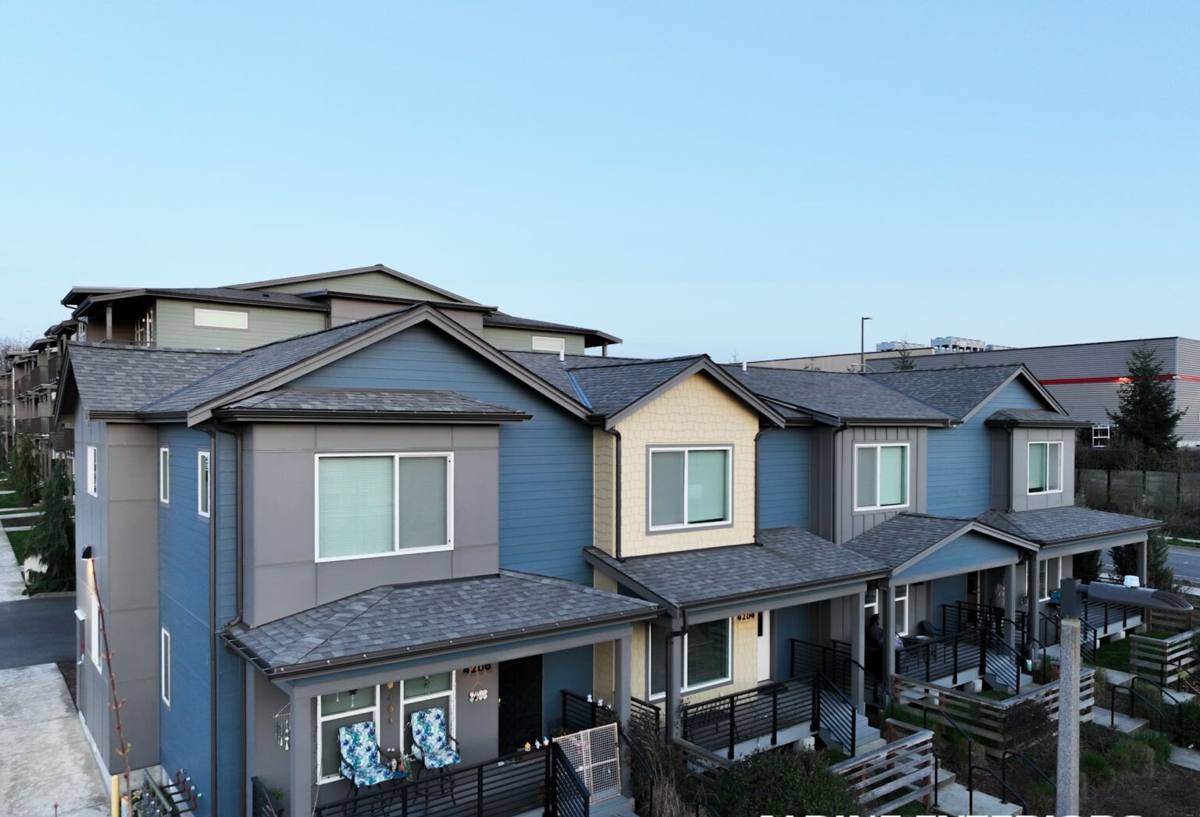
Board and batten has become one of the most requested siding profiles in Whatcom County, and it's easy to see why. The vertical lines read as modern on a new build and as timeless farmhouse on a remodel, and the pattern holds up visually on both large wall planes and small accent gables. For homeowners in and around the Sudden Valley area looking at this style, the design question is usually settled before we ever show up — what isn't settled is whether the siding product and the installation underneath it can actually survive the climate here. That's the part of the job most homeowners never see, and it's the part that determines whether the siding looks good for five years or for thirty.
This page is specific to board and batten in the Sudden Valley area — not a general overview of the profile. We'll cover what the local climate does to vertical siding, what a correct installation actually involves, and why we install this style exclusively in James Hardie fiber cement rather than the wood, engineered wood, or vinyl alternatives.
What Whatcom County's Climate Does to Vertical Siding
Board and batten is a beautiful profile, but its design also makes it less forgiving than horizontal lap siding when moisture management is done poorly. The vertical battens create more seams running with the water flow instead of shedding across it, and every one of those seams is a potential entry point if it isn't flashed and fastened correctly. In a drier climate that's a minor concern. In this part of Washington, it's the whole ballgame.
Marine Air and Driving Rain
Whatcom County sits close enough to the water that homes deal with persistent marine air on top of regular wind-driven rain events. That combination pushes moisture into places that stay dry in a fair-weather climate — batten edges, panel joints, and anywhere fasteners break the surface. Over time, materials that aren't dimensionally stable or properly sealed at these points start to cup, swell, or let water track behind the cladding.
Moss and Shade
Many properties in and around Sudden Valley sit on wooded, tree-shaded lots, which is part of the appeal of living out here — and it's also exactly the environment moss and algae prefer. Shade keeps siding damp longer after every rain, and a long moss season means organic growth gets a real head start on any surface that holds moisture or has a rough, absorbent texture. Siding that can't shed water quickly, or that gives moss something to grip onto, ends up needing pressure washing and refinishing far more often than it should.
Freeze-Thaw Cycling
It's not extreme cold here, but Whatcom County does get enough freeze-thaw cycling in winter that any siding material already holding moisture is at risk of cracking, splitting, or delaminating at the seams. This is where board and batten's extra joinery either works in your favor or against it, depending entirely on what the boards and battens are made of.
Why We Install Board & Batten Only in James Hardie Fiber Cement
We don't install board and batten in vinyl, engineered wood, or primed wood products, and the climate above is the reason. Vinyl vertical panel systems can look the part from the street, but they're thin, flex with temperature swings, and their seams and J-channels are common points for water intrusion on a profile that already has more seams than lap siding. Primed wood and engineered wood battens look and perform beautifully when new, but they're organic materials in a climate that stays damp for long stretches — moisture wicking at cut ends and fastener penetrations is a matter of when, not if, without obsessive maintenance.
James Hardie fiber cement is cement, sand, and cellulose fiber — it doesn't rot, it doesn't support the kind of organic growth that thrives on wood-based products, and it's non-combustible. Hardie's HZ10 climate engineering, used across the wetter, milder regions of the Pacific Northwest, is formulated specifically for high-moisture climates like ours rather than the freeze-heavy Midwest and Northeast formulation. For a profile that already puts more seams and fastener points on the wall than lap siding, starting with a material that's dimensionally stable and moisture-resistant by nature isn't optional — it's what makes board and batten a smart long-term choice here instead of a maintenance liability.
The factory-applied ColorPlus finish is the other half of the equation. It's baked on under controlled conditions rather than brushed on in the field, so the color coverage and adhesion are more consistent than a job-site paint job, and touch-up product is available to match without a full repaint. On a vertical profile with a lot of visible edges and reveals, that consistency matters more than it does on a plain lap wall.
What a Correct Board & Batten Installation Involves
The visual result of board and batten is simple: wide vertical panels with narrower strips covering the seams. What's underneath that determines whether it lasts. A correct installation includes:
- A proper water-resistive barrier and drainage plane behind the panels, not just house wrap stapled flat to the sheathing
- Rain screen or furring strategy that lets any moisture that does get behind the siding drain and dry instead of sitting against the wall
- Panel and batten fastening per Hardie's published specifications — correct fastener type, spacing, and embedment, not "close enough"
- Proper flashing at every horizontal transition: window and door heads, roof-to-wall intersections, and any deck ledger or utility penetration
- Correct clearance at the foundation and any hardscaping so siding never sits in direct or near-constant contact with soil, mulch, or concrete
- Caulking and sealant only where Hardie's installation guide calls for it — over-caulking a fiber cement joint can trap moisture just as badly as under-caulking it
Skipping any one of these doesn't usually show up on day one. It shows up two or three winters later as staining, soft spots, or a panel that's started to bow — after the labor and material are already paid for.
Board & Batten Compared to Other Siding Profiles
| Profile | Look | Moisture Management | Typical Maintenance |
|---|---|---|---|
| Board & Batten (Hardie fiber cement) | Vertical, modern or farmhouse | Strong when installed with proper drainage plane and flashing | Periodic wash; factory finish reduces repaint frequency |
| Lap Siding (Hardie fiber cement) | Traditional horizontal | Naturally sheds water across the wall; fewer vertical seams | Periodic wash; factory finish reduces repaint frequency |
| Board & Batten (vinyl) | Vertical, budget option | Thin material, more seams, prone to flexing and gapping over time | Low upkeep but limited lifespan in wet climates |
| Board & Batten (primed wood/engineered wood) | Vertical, natural | Absorbs moisture at cut ends and fasteners without diligent upkeep | Frequent repainting and caulk inspection required |
Board and batten isn't inherently a higher-maintenance profile than lap siding — the material underneath is what decides that, not the pattern on the wall.
Our Process for Sudden Valley Projects
Most homes in this area share a few things in common: mature tree cover, sloped or wooded lots, and driveways or access points that take some planning to stage material on. None of that is a problem for a crew that's worked the area before, but it does mean the walkthrough matters.
- On-site assessment — we look at existing siding condition, sheathing and moisture barrier state, drainage around the foundation, and any tree cover or shade that affects how the wall dries after rain
- Product and layout plan — panel and batten spacing, trim details, and color selection, including how the vertical pattern will look against your roofline and window trim
- Written estimate — a clear scope of work and price, no pressure to sign on the spot
- Installation — tear-off of failing material where applicable, correct water-resistive barrier and drainage plane, Hardie panels and battens installed to manufacturer spec, flashing detailed at every transition
- Final walkthrough — we go over the finished job with you before we consider it done
What Drives the Cost of a Board & Batten Project
Every home is different, but the same handful of factors move the price on most board and batten jobs in this area:
| Factor | Why It Matters |
|---|---|
| Existing siding removal | Tear-off and disposal of failing material adds labor before new siding goes up |
| Sheathing and moisture barrier condition | Rot or water damage found underneath old siding needs repair before new panels go on |
| Wall complexity | Gables, dormers, and multiple roof transitions mean more flashing and cut work |
| Access and staging | Wooded or sloped lots can require more time to stage material and equipment safely |
| Trim and accent detail | Corner boards, window trim, and mixed-profile accents add material and labor |
We won't quote a number without seeing the house — anyone who does is guessing — but we'll walk you through exactly what's driving your number before you commit to anything.
Why Hiring a Crew That Already Works Sudden Valley Matters
Siding work in this area isn't quite the same as siding work in a flat, open subdivision. Wooded lots change how you stage equipment safely. Shaded walls stay wet longer, which changes how careful the crew needs to be about sequencing work around weather. Long driveways and tree-lined access mean material delivery takes planning most crews don't think about until they're already on-site losing time. A crew that's done this work in the Sudden Valley area before has already solved those logistics — you're not paying for them to learn on your house.
Local familiarity also means we know what the climate actually does to siding here over years, not just what a spec sheet says. That's the difference between an installer who follows a manual and one who understands why the manual says what it does.
Caring for Board & Batten After Installation
James Hardie board and batten is low-maintenance, not no-maintenance. A rinse with a garden hose once or twice a year keeps pollen, dust, and early moss growth from taking hold, especially on shaded walls. Avoid pressure washing directly into seams or up under battens — a gentle hose rinse or soft wash is enough. Keep gutters clear so overflow doesn't run down the wall face, and trim back vegetation that's grown in against the siding. Beyond that, Hardie's ColorPlus finish and the material itself are built to go a long time without needing attention.
If you're weighing board and batten for a home in the Sudden Valley area, we're happy to come take a look and walk you through what it would actually involve on your specific house. The estimate is free, there's no pressure, and you'll leave the conversation knowing exactly what you're working with — just fill out the form below to get started.