 Ferndale Exterior
 Why Windows Take a Beating in the Cordata Area
Homes in and around Cordata deal with a climate that is harder on windows than most homeowners realize. It's not one dramatic weather event that causes problems — it's the steady, year-round combination of moisture-laden air off the Salish Sea, wind-driven rain that hits window walls at an angle instead of falling straight down, and a moss and mildew season that can stretch from fall through spring. Add in the freeze-thaw swings we get most winters, and you have conditions that will find every weak point in a window's seal, frame, and flashing.
Older aluminum-frame and single-pane windows, along with early-generation vinyl units from the 80s and 90s, were rarely built with this specific combination of stresses in mind. Over time, seals shrink, weep holes clog with debris and moss spores, and condensation starts showing up between panes — a sign the gas fill and seal have failed. None of that is a workmanship failure on the homeowner's part; it's just what happens to a window system after two or three decades in a wet marine climate.
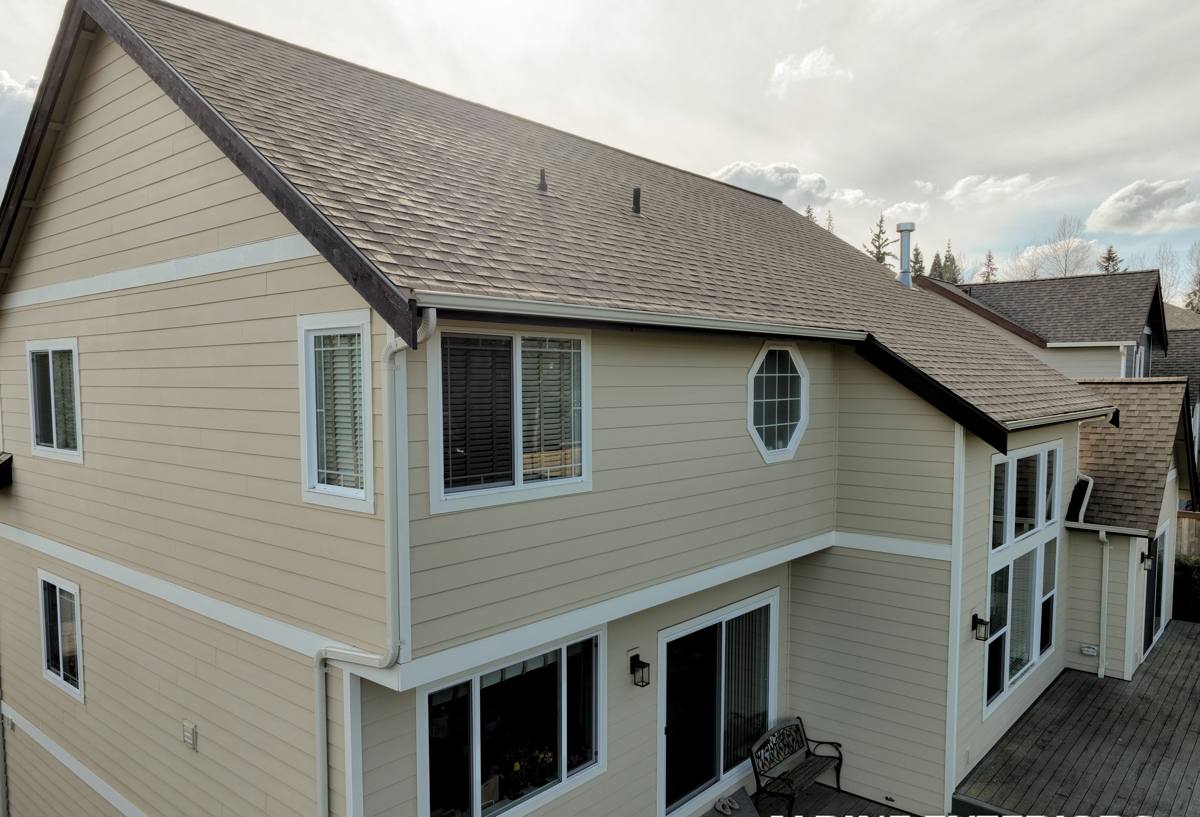
What "Energy-Efficient" Actually Means Here
Energy-efficient windows aren't just about a lower heating bill, though that matters. In Whatcom County's climate, efficiency and moisture management are the same problem. A window that's properly sealed against air infiltration is also a window that's properly sealed against wind-driven rain. The two go together — you can't really solve one without solving the other.
When we talk about energy performance for a Cordata-area home, we're looking at a few specific numbers and features:
- U-factor — how well the window resists heat transfer. Lower is better for our mild-but-damp winters.
- Air infiltration rating — how much outside air leaks through the frame and sash under wind pressure, which matters a lot given how often we get sustained wind-driven rain.
- Condensation resistance — a window that fogs up or sweats on cold mornings is losing efficiency and inviting moisture into the wall cavity.
- Frame material behavior — how the frame expands, contracts, and holds a seal through repeated wet-dry and freeze-thaw cycles.
Getting the Installation Right — Not Just the Window
A high-performance window installed poorly will underperform a mid-grade window installed correctly. This is where a lot of window jobs go wrong, and it's almost never visible from inside the house until years later when staining, soft trim, or a musty smell shows up.
The details that actually matter
Correct installation in our climate comes down to a handful of steps that are easy to skip and expensive to fix later:
- Removing the old window down to the rough opening and inspecting the sheathing and sill for hidden rot or prior water intrusion before anything new goes in.
- Installing a proper sill pan flashing so any water that does get past the window sheds outward, not into the wall.
- Integrating the window's flashing with the home's existing weather-resistive barrier in the correct shingle-lap order — house wrap over the top flange, never under it.
- Using backer rod and the right exterior sealant at the trim line, sized for the gap, not just caulked over.
- Shimming and fastening so the frame stays square and doesn't rack, which is what keeps the seal intact for the long run rather than just the first year.
This is the part of the job that determines whether a window performs for 25+ years or starts leaking at year six.
Comparing Common Window Options
There's no single "best" window for every home — it depends on your budget, your home's age and siding type, and how exposed the window wall is to prevailing wind and rain. Here's how the main options generally compare for a marine climate like ours:
| Frame Type | Moisture Behavior | Maintenance | Typical Fit |
|---|---|---|---|
| Vinyl | Won't rot; seals can degrade with age and UV/salt exposure | Low — occasional cleaning | Most retrofit and value-focused projects |
| Fiberglass | Very stable through wet-dry cycling; minimal expansion/contraction | Low | Homes wanting longer service life and better performance at a higher price point |
| Wood-clad | Good if the cladding and flashing details are done right; interior wood needs protection from condensation | Moderate — exterior clad, interior wood upkeep | Homes prioritizing a traditional interior look |
| Aluminum | Poor thermal performance in our climate; prone to condensation without a thermal break | Low, but efficiency suffers | Rarely recommended for full replacements here |
We don't push one brand or material on every job. What we do insist on is a documented warranty structure, a frame material suited to sustained damp exposure, and installation hardware (fasteners, flashing tape, sealants) rated for exterior use in a wet climate — cutting corners on those small parts is where premature failures usually start.
Signs Your Current Windows Are Costing You
Homeowners in the Cordata area often live with underperforming windows longer than they need to, mostly because the signs show up gradually. Worth checking for:
- Visible moisture or fogging between the panes — the seal has failed and the gas fill is gone.
- Moss or dark streaking building up on the sill or below the window on the siding.
- Drafts you can feel near the frame on a windy day, even with the window latched.
- Difficulty opening, closing, or latching — often a sign the frame has racked slightly.
- Soft or discolored trim or drywall near the window, which can indicate water has been getting behind the flashing.
- Noticeably colder rooms on the windward side of the house during winter storms.
Any one of these on its own isn't an emergency. Several together, especially moisture staining, usually means it's time for a real assessment rather than another round of caulk.
How We Approach a Cordata Window Project
Our process is the same whether it's two windows or a whole-house replacement — we just don't shortcut it:
- On-site assessment. We look at each opening individually — orientation, exposure to prevailing wind and rain, sill condition, and any existing moisture damage — rather than quoting a flat per-window price sight unseen.
- Product selection. We walk through frame material, glass package, and performance ratings that make sense for that specific wall and your budget, not a one-size-fits-all recommendation.
- Removal and inspection. Old windows come out carefully so we can check the rough opening and sheathing before anything new goes in. If we find hidden rot, we tell you before we cover it back up.
- Flashing and installation. Sill pan, house wrap integration, shimming, and fastening done to hold up against wind-driven rain, not just look finished from the curb.
- Interior and exterior finish work. Trim, sealant, and cleanup so the job looks as good as it performs.
- Walkthrough. We show you the operation of each window and go over anything specific to its care in our climate.
What Affects the Cost
Window project pricing varies a lot from house to house, but the main drivers are consistent. We'll always give you specifics after an on-site look, but this is generally what moves the number:
| Factor | Why It Matters |
|---|---|
| Frame material | Vinyl is typically the most economical; fiberglass and wood-clad cost more up front |
| Number and size of openings | Larger and more numerous windows increase both material and labor |
| Existing damage | Hidden rot or prior water intrusion adds repair scope beyond the window swap itself |
| Installation type | A full-frame replacement (down to the studs) costs more than an insert replacement into an existing frame in good condition |
| Access and exposure | Second-story or hard-to-access openings, and walls facing prevailing wind and rain, may need extra flashing detail |
| Trim and finish work | Matching existing interior trim or exterior siding detail adds labor |
Why Local Installation Experience Matters
Window installation looks similar on paper everywhere, but a crew that regularly works the Cordata area and greater Whatcom County knows things a generalist doesn't: how far wind-driven rain can push under a poorly lapped house wrap on an exposed wall, how quickly moss establishes on north-facing sills, which older home vintages in this area tend to have specific rough-opening quirks, and how to time exterior sealant and flashing work around our wetter months so it cures properly instead of failing early.
That local pattern recognition is what keeps a window project from becoming a callback. It's also why we're upfront when a home needs more than a window swap — sometimes the right fix includes addressing siding or trim moisture issues at the same time, rather than installing a good window into a wall that's already compromised.
Caring for New Windows in This Climate
A well-installed, energy-efficient window still benefits from basic seasonal attention here:
- Clear debris and moss from sills and weep holes a couple of times a year so water can drain as designed.
- Rinse salt-laden grime off frames and glass periodically, especially on wind-exposed elevations.
- Check exterior sealant lines annually for cracking or separation and have them touched up before they fail completely.
- Keep gutters and downspouts clear so roof runoff isn't sheeting down over window heads.
None of this is heavy maintenance — it's the kind of quick seasonal check that keeps a good installation performing for its full service life instead of fighting the same moisture problems the old windows had.
If your Cordata-area home has drafty, foggy, or aging windows, we're happy to take a look and walk you through honest options for your specific house — no pressure, no upsell script. Use the form below to request a free estimate.