 Ferndale Exterior
 Deck Repair Built for Custer's Conditions
Custer sits close enough to the water and open farmland that decks here take a different kind of beating than decks twenty miles inland. Salt-laden air off the Strait drifts through on a west wind, driving rain comes in sideways more often than straight down, and the moss season stretches from October well into May most years. A deck that would hold up fine in a drier part of Whatcom County can develop soft boards, rusted fasteners, and slick, moss-covered surfaces within a few seasons out here if it wasn't built or maintained with that reality in mind.
We repair decks in Custer regularly, and the failure patterns are consistent enough that we can usually tell what we're dealing with before we even get out of the truck. This page walks through what actually goes wrong with decks in this area, what a correct repair looks like, and how we approach the job.
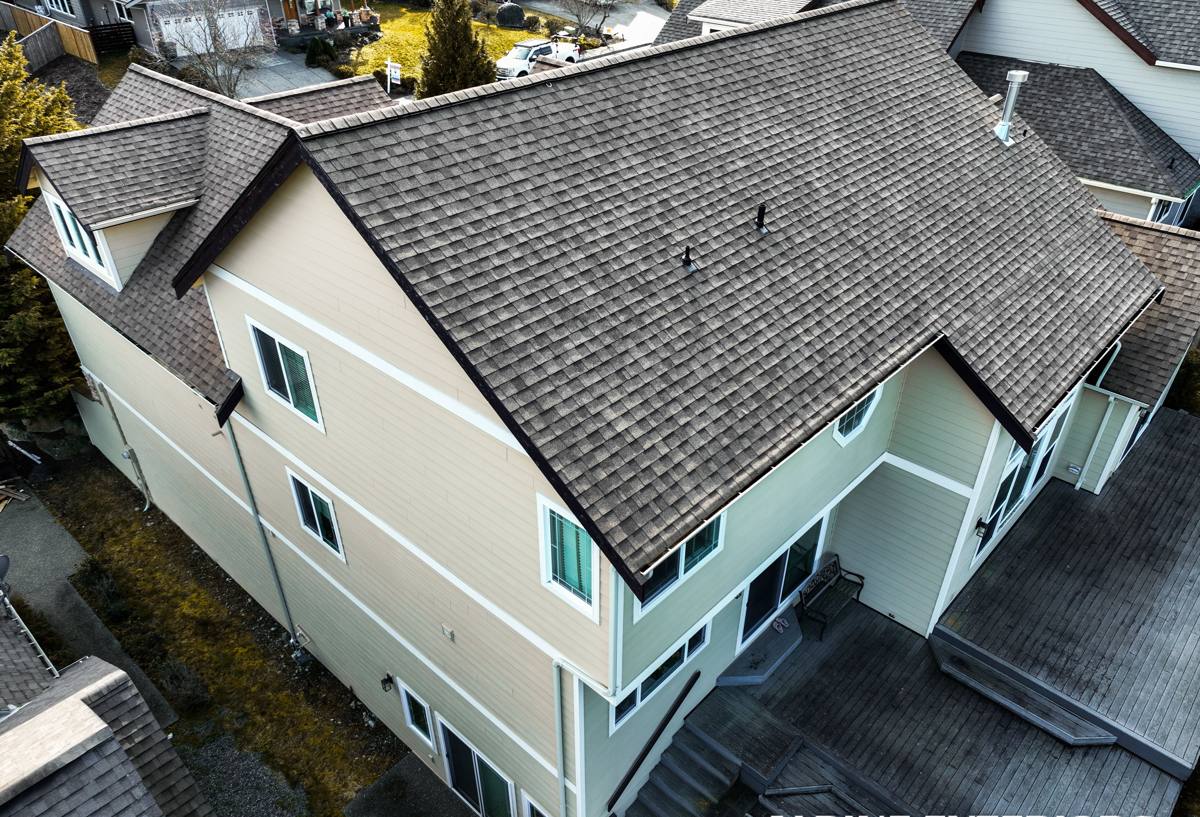
What Custer's Climate Actually Does to a Deck
Salt Air and Metal Fasteners
Homes closer to the water deal with airborne salt that accelerates corrosion on anything metal — nails, screws, joist hangers, and structural connectors. Once a fastener starts rusting, it loses holding strength long before it looks obviously bad. We see this most on older decks where standard galvanized hardware was used instead of hot-dip galvanized or stainless connectors rated for coastal exposure.
Driving Rain and Water Intrusion
Wind-driven rain doesn't just fall on a deck, it gets pushed sideways into ledger connections, under flashing, and into any gap where two boards meet end to end. Water that gets behind a ledger board or under improperly flashed framing doesn't dry out quickly in our climate — it sits there through the wet months and starts rotting the wood from the inside, often invisible from the top.
Moss, Algae, and Surface Decay
A long, damp moss season means any deck surface that doesn't drain and dry well becomes a growth medium. Moss holds moisture against the wood surface, which speeds up rot in untreated or under-treated boards, and it also makes stairs and walking surfaces genuinely slippery — a safety issue, not just a cosmetic one.
Signs a Custer Deck Needs Repair, Not Just Cleaning
- Boards that feel spongy or flex noticeably underfoot, especially near the house or stairs
- Rust streaks running down from screw heads or metal connectors
- Gaps or movement where the deck ledger meets the house siding
- Stair stringers or railing posts that wobble when pushed
- Persistent moss or dark staining that comes back within weeks of cleaning
- Nails backing out or popping up above the deck surface
- Visible daylight or soft wood where support posts meet concrete footings
- A musty smell coming from underneath the deck, which usually points to trapped moisture
Any one of these on its own might just need attention. Two or three together usually means the underlying structure is compromised, not just the surface.
What a Correct Deck Repair Involves
Diagnosis Before Demolition
We start by finding out how far the damage goes, not just fixing what's visible. That means probing suspect boards with an awl, checking ledger and post connections, and looking at the framing from underneath where possible. A board that looks fine on top can be rotten on the underside where it sits against a joist and never fully dries.
Structural Repairs First
Framing, ledger connections, posts, and footings get addressed before any decking or railing work. There's no point replacing surface boards on a structure that's still moving or still trapping water at the ledger. If joist hangers or fasteners have corroded, we replace them with hardware rated for our coastal-adjacent conditions rather than reusing standard-grade parts.
Decking, Railing, and Stair Repairs
Individual boards, stair treads, and railing components get replaced to match existing material as closely as possible, or we'll talk through options if a full resurface makes more sense than patching. Fasteners are set correctly the first time — proper spacing, correct depth, and hardware suited to whether the deck is wood or composite.
Drainage and Moisture Management
A repair that ignores drainage is a repair that fails again. That can mean adjusting board spacing, correcting flashing at the ledger, or making sure water has somewhere to go instead of pooling against the house or under the deck frame.
Repair vs. Replacement: How We Decide
| Factor | Leans Toward Repair | Leans Toward Replacement |
|---|---|---|
| Structural framing | Solid, dry, properly connected | Rot at multiple joists, ledger, or posts |
| Age of deck | Under 12-15 years, built to code | Older, unknown fastener quality |
| Extent of damage | Isolated boards or connections | Widespread soft wood or corrosion |
| Footings and posts | Stable, no movement or cracking | Settling, cracked concrete, undersized posts |
| Budget goals | Extend usable life affordably | Want a long-term reset with current codes |
Most decks we're called out to in Custer fall somewhere in the middle — sound framing with isolated problem areas. In those cases, targeted repair is the honest recommendation. We'll tell you plainly if we think a repair is a short-term patch on a structure that's better off rebuilt.
Cost Factors Worth Understanding
Repair costs on a Custer deck typically depend more on access and hidden damage than on the visible scope. A few things that move the number:
- Whether framing has to be opened up to check for hidden rot behind the ledger
- Matching existing decking material, especially on older or discontinued products
- How much of the substructure (posts, footings, beams) is involved versus just surface boards
- Stair and railing code compliance, which can add scope if current railing doesn't meet current standards
- Access — decks over slopes or with limited underneath clearance take longer to inspect and repair
We'd rather give you a realistic range after actually looking at the deck than a number over the phone that doesn't hold up once we start pulling boards.
Materials We Recommend for This Area
For repairs and replacement boards in Custer, we generally steer toward pressure-treated lumber rated for ground contact where framing is exposed to moisture, and composite or capped composite decking for surface boards on decks that see heavy moss and algae exposure. Composite isn't automatically the right call for every repair — it costs more upfront, and matching a partial composite repair to older composite boards can be harder than matching wood, since colors and profiles change between product runs. For wood decks, we'll match species and treatment as closely as we can and talk through the maintenance trade-off: wood needs more regular cleaning and refinishing out here to keep moss from taking hold, while composite needs less upkeep but costs more to repair in sections.
Whichever material is already on your deck, our standard is to use fasteners and connectors rated for coastal, high-moisture exposure — not the minimum-grade hardware sometimes used in original construction, especially on older decks built before this became common practice.
Our Process for a Deck Repair Job
- Free on-site inspection — we look at the full structure, not just the area you're concerned about
- Honest assessment of repair vs. replacement, explained in plain terms
- Written estimate with the scope broken out so you know what you're paying for
- Scheduled repair work, with structural issues addressed before cosmetic ones
- Final walk-through so you can see and understand what was done
We don't upsell a full rebuild when a repair will genuinely hold up, and we don't recommend a patch job on a deck we think is a safety risk. Both calls come from the same place: we want the deck to actually be safe and to last, since we're the ones you'll call if it doesn't.
Maintenance That Extends the Life of a Repair
A repaired deck in Custer will last a lot longer with a little seasonal attention, especially given how long moss season runs here:
- Sweep off leaves and debris regularly through fall so they don't trap moisture against the boards
- Clean moss and algae off surfaces and stairs before they build up, particularly on shaded or north-facing sections
- Check railings and stair connections for movement once or twice a year
- Keep gutters and downspouts near the deck clear so runoff isn't dumping extra water onto or under it
- Reseal or refinish wood decking on the schedule appropriate to the product — don't wait until it's visibly gray and weathered
Why Hire a Crew That Already Works in Custer
Deck repair isn't identical everywhere in Whatcom County. A crew that mostly works drier, inland conditions can miss the specific failure points that show up on decks exposed to salt air and driving rain near the water. We work this area regularly, so we know which fastener grades hold up, where moisture tends to get trapped on local deck designs, and how aggressive the moss problem gets on shaded or north-facing decks in this part of the county. That local pattern recognition means a faster, more accurate diagnosis and a repair that's built for the conditions your deck actually faces — not a generic fix.
If your deck in Custer has soft spots, rust stains, wobbly railings, or just isn't holding up the way it used to, we're happy to come take a look. The estimate is free, there's no pressure to book anything on the spot, and you'll get a straight answer about what it actually needs.