 Ferndale Exterior
 Custer Sits Right Where Marine Weather Meets the Roof
Custer is close enough to the water that the air itself works against a roof. Moisture carried in off the Strait of Georgia and the Salish Sea settles on roof surfaces most nights, whether or not it actually rains that day. Add Whatcom County's long wet season, where a roof can go weeks without a real drying-out stretch between October and April, and you get conditions that push moss, algae, and slow corrosion faster than a lot of manufacturers' literature accounts for. A repair approach that works fine in a drier inland climate can fail here in a fraction of the time if it doesn't account for how much moisture this roof will actually see year-round.
We work Ferndale and the surrounding Custer area regularly, so this isn't theoretical for us. It shapes which repairs we recommend, which we steer away from, and how we sequence the work when we're up on a roof out here.
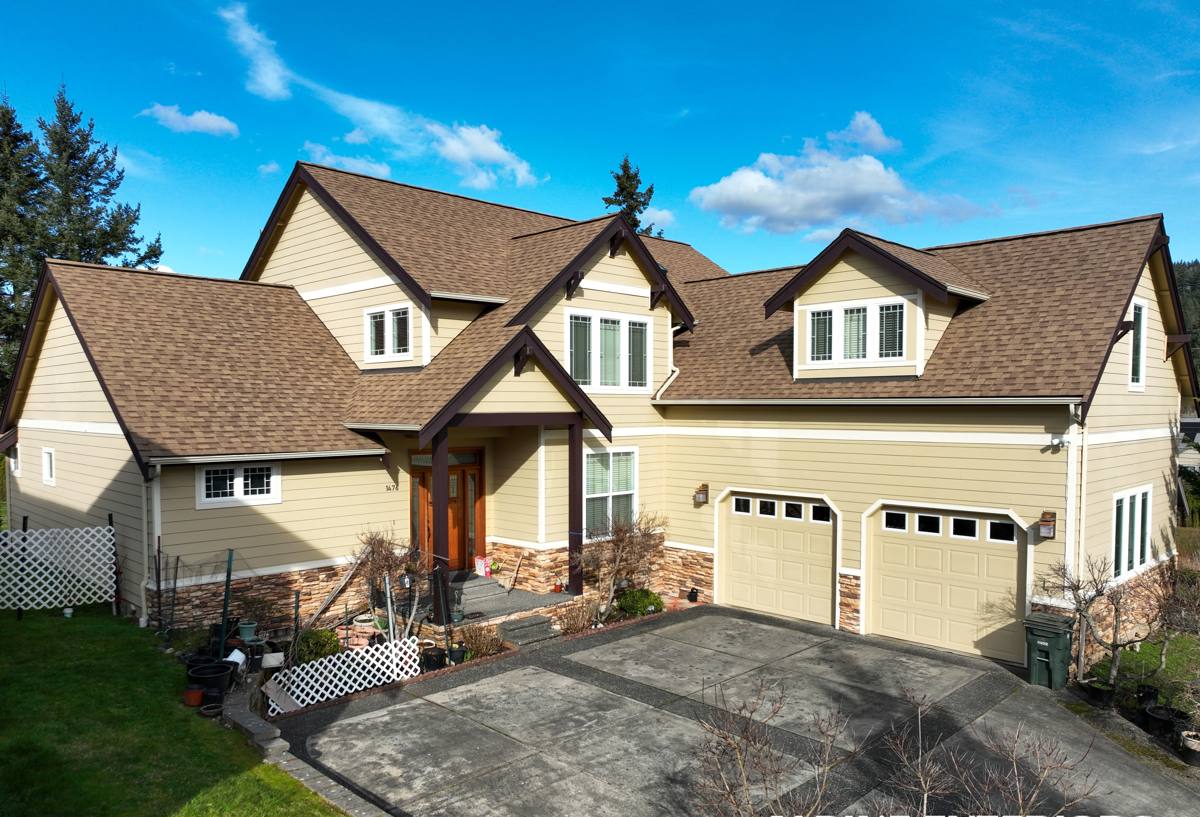
What Salt Air and Driving Rain Actually Do to a Roof
Salt Air and Metal Components
Salt-laden air accelerates corrosion on anything metal on the roof: flashing, fasteners, gutter hangers, exposed nail heads, and metal roofing panels themselves. Galvanized coatings that would last decades further inland can start showing rust bleed years sooner this close to open water. This matters most at repair time, because the fasteners and flashing you can't see from the ground are often the actual point of failure, even when the shingles above still look fine.
Driving Rain and Wind-Driven Water
Open farmland and fewer tall windbreaks around Custer mean wind gets a longer run before it hits a roof, and wind-driven rain behaves differently than straight-down rain. It can push water sideways under shingle tabs, up and under flashing laps, and into gaps that would stay perfectly dry in a calmer setting. A repair that only addresses the visible leak point, without checking whether wind-driven water is getting underneath the surrounding courses too, tends to come back within a season or two.
Moss: The Slow Damage Most Homeowners Underestimate
Whatcom County's moss season is long, realistically most of the year on north-facing slopes and anywhere shaded by trees. Moss itself doesn't punch holes in a roof, but it does three things that lead directly to repair calls:
- It holds moisture against the shingle surface far longer than bare roofing would, softening the mat underneath and shortening the shingles' usable life.
- It lifts shingle edges and tabs as it grows and spreads, creating small gaps where wind-driven rain can work its way underneath.
- It clogs valleys and gutters with debris, backing water up under the roofing at exactly the spots most prone to leaks in the first place.
By the time moss is visible from the ground, it's usually been established for a season or more. A repair visit is a good, practical time to deal with it properly instead of just patching around it and leaving the underlying cause in place.
Signs a Custer Roof Needs Repair Now
Inside the House
Ceiling stains, especially ones that show up after a windy rainstorm rather than a calm, steady one, usually point to wind-driven water finding a gap rather than a simple worn-out spot. Musty smells in an attic or a top-floor closet, even without a visible stain yet, are worth investigating before drywall damage actually shows up.
Outside the House
Granule buildup collecting in gutters, shingles that look darker or patchy rather than uniformly aged, lifted or curling tabs, and rust streaking below flashing or fasteners are all signals specific to this climate that get written off as cosmetic when they're actually early warnings.
- Check gutters after a storm for excess granules, which can mean shingle wear is accelerating faster than expected.
- Look specifically at north-facing and shaded slopes, where moss establishes first in this climate.
- Note whether ceiling stains appeared after a windy rain versus a calm one — the pattern helps narrow down the cause before anyone gets on the roof.
- Check exposed metal, flashing, vent caps, gutter hardware, for rust streaking, which shows up here well before it would further inland.
What a Correct Repair Actually Involves
A roof repair done right in this climate is rarely just swapping a few shingles. Here's the sequence we follow on most repair calls:
- Find the real source. Water travels before it stains, so the wet spot on the ceiling is often several feet from where the water actually got in. We trace it back rather than just patching below it.
- Check the flashing first. Around chimneys, vents, skylights, and roof-to-wall transitions, since these are the most common failure points in wind-driven rain, not the open field of shingles.
- Remove moss and debris from the repair area and surrounding courses so we're working on a dry, sound deck instead of sealing moisture in underneath new material.
- Assess the decking underneath for soft spots or rot before replacing anything on top of it. A new shingle over rotten decking is a repair that won't hold.
- Match materials and fastening to what's already there where possible, or explain honestly when an upgrade, such as better underlayment or corrosion-resistant fasteners, makes sense for this location.
- Re-check drainage at the valleys, gutters, and downspouts near the repair, since a repair that ignores a clogged valley just relocates the next leak a few feet over.
Repair Materials and Trade-Offs for This Climate
Not every fix belongs on every roof. The right approach depends on what's already installed and how exposed that section is to wind and salt air.
| Repair Approach | Best Suited For | Climate Consideration |
|---|---|---|
| Spot shingle replacement | Isolated wind or impact damage on an otherwise sound roof | Match granule color and age as closely as possible; confirm no hidden moisture underneath first |
| Flashing reseal or replacement | Leaks at chimneys, vents, skylights, or wall transitions | Corrosion-resistant metal and fresh sealant matter more here than further inland |
| Valley and gutter clearing with repair | Recurring leaks near valleys after storms | Moss and debris buildup is a near-constant issue during this area's wet season |
| Decking repair | Soft spots found under damaged shingles | Deck must be fully dried and treated before new roofing goes back over it |
| Moss treatment and prevention | North-facing or shaded slopes | An ongoing maintenance item here, not a one-time fix, given the length of the local moss season |
Repair vs. Replacement — and What Drives the Cost
When Repair Is the Right Call
A repair is the right call when the damage is localized and the rest of the roof still has reasonable life left in it. Replacement becomes the more honest recommendation when repairs keep recurring in different spots each year, when the decking underneath is failing in multiple places, or when the roof is old enough that any repair is really just buying a short amount of time. We'll tell you plainly which situation you're in rather than defaulting to the bigger job.
What Drives the Cost
| Repair Scope | What's Typically Involved | Relative Cost Range |
|---|---|---|
| Minor | Spot shingle swap, single flashing reseal, small-area moss or debris clearing | Lower end — usually a single visit |
| Moderate | Multiple flashing points, valley rebuild, minor decking repair | Mid-range — more material and labor time involved |
| Extensive | Widespread decking rot, repeated leak points, large sections of moss-damaged roofing | Higher end — approaching a repair-versus-replacement conversation |
These are relative categories, not quotes. The only way to know which one applies to your roof is a firsthand look, which is exactly what the estimate visit is for.
Our Process When We Come Out to Custer
Timing Around the Wet Season
An active leak doesn't wait for good weather, and we don't ask homeowners to wait for it either — it gets a response regardless of season, even if that first visit is a temporary stop-gap to keep water out. But for anything beyond an emergency patch, timing matters, since sealants and adhesives need dry, workable conditions to actually cure properly. In this climate that often means working around whatever break in the weather we can get rather than assuming a given calendar month will be dry. If a repair isn't urgent, doing it before the wet season sets in usually means a cleaner job and less risk of a rushed temporary fix becoming the only fix for months.
How a Visit Runs
- A walk of the roof and attic, where accessible, to find the actual source of the problem, not just the symptom.
- A plain-English explanation of what we found, what's causing it, and what it will take to fix, including if we think a fuller inspection is warranted.
- A written scope and price before any work starts, so there are no surprises mid-job.
- Repair work done with attention to the flashing, fastening, and drainage details that matter most in this climate, not just the visible patch.
- A check of nearby areas, valleys, gutters, adjacent flashing, so we're not leaving a second leak for you to find later.
Why a Local Crew Matters — and How to Keep It Working
A roofer who mostly works drier, more sheltered areas can misjudge how much wind-driven rain and salt air actually load onto a roof out here. We work Ferndale and the surrounding Whatcom County communities regularly enough to know a repair here needs to hold up against conditions a generic checklist doesn't cover: salt air on metal components, wind coming off open farmland with less break than a forested lot, and a moss season that runs most of the year. That local pattern recognition is often the difference between a repair that lasts and one that's back on the schedule next winter.
Between visits, a few habits go a long way toward protecting that work:
- Clear gutters and valleys at least twice a year, more often if there are overhanging trees.
- Have moss treated before it visibly takes over a slope, not after.
- Trim back branches that keep a roof section shaded and slow to dry out.
- Walk the attic after a hard windstorm and check for new stains or damp smells.
- Get a second look at flashing and fasteners every few years, since corrosion out here moves faster than the shingles' own wear.
If you're dealing with a leak, a patch of moss that's gotten out of hand, or just want an honest read on what a Custer roof needs before the next wet season sets in, we're glad to take a look. Fill out the form below for a free, no-pressure estimate.