 Ferndale Exterior
 Windows in Kendall Have to Work Harder Than Most
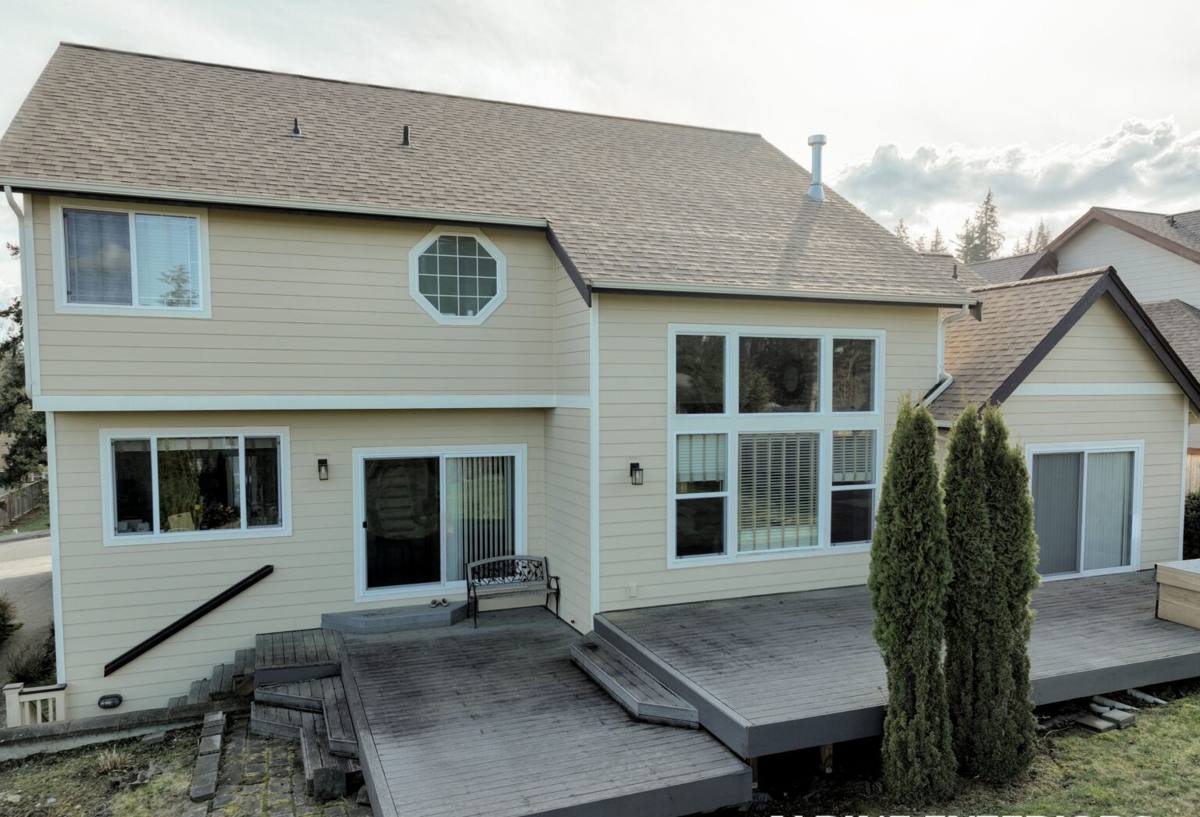
Homes out toward Kendall sit further from the coastline than the neighborhoods right along Ferndale's shoreline, so salt air isn't the daily factor it is closer to the water. But that doesn't mean windows here have it easy. This part of Whatcom County still deals with long, wet winters, heavy tree cover in a lot of yards, and stretches of the year where a home barely sees direct sun. That combination of shade, moisture, and driving rain off passing fronts is exactly the environment where older or poorly installed windows fail early — fogged glass, soft sills, drafts you can feel standing near the frame in January.
"Energy-efficient" gets used as a marketing word a lot. For a Kendall home, it should mean something specific: a window and installation that keep water out first, and heat in second. Get the water management wrong and no amount of glass technology will save the window from rot, mold, or a warranty claim a few years down the road.
What Energy Efficiency Actually Means Here
A window's energy performance comes down to a handful of measurable factors, and in a marine climate like ours, some matter more than others.
- U-factor — how well the window resists heat loss. Lower is better. This is the number that matters most for our mild-but-persistently-cool winters, where the goal is holding steady indoor temperatures, not blocking extreme cold snaps.
- Low-E coatings — a microscopically thin coating that reflects heat back in during winter and blocks solar heat gain in the rare stretches of strong summer sun. Standard on any window worth installing today.
- Gas fills (argon or krypton) — the inert gas between panes slows heat transfer. Argon is standard and does the job at a reasonable cost.
- Condensation resistance — arguably the most locally relevant spec. Homes with a lot of shade and damp air are prone to interior condensation on cold glass, which over time feeds the exact mold and mildew growth this region is known for.
None of these numbers matter if the window isn't sealed and flashed correctly. A high-performance window installed with a poor moisture barrier will underperform a mid-grade window installed right, every time.
Reading a Window Label Without the Sales Pitch
Every legitimate window comes with an NFRC (National Fenestration Rating Council) label listing U-factor, Solar Heat Gain Coefficient, and Visible Transmittance. You don't need to memorize the ratings — you just need a contractor willing to show you the label and explain why a given number fits your specific wall, orientation, and tree cover, rather than quoting a single "best" window for every house on the street.
Signs It's Time to Replace, Not Patch
A lot of window problems in this area get treated with caulk and weatherstripping for years past the point where that actually helps. Watch for:
- Visible fogging or a permanent haze between the panes — the seal has failed and the gas fill is gone
- Wood trim or sills that feel soft, spongy, or show dark staining
- Drafts you can feel with a hand near the frame on a windy day
- Difficulty opening, closing, or locking — often a sign the frame has shifted or swollen from moisture
- Visible moss or algae staining on the exterior sill or trim, especially on shaded walls
- Noticeably higher heating bills compared to similarly sized homes nearby
Any one of these on its own might just need a repair. Several together, especially combined with soft wood, usually means the window and the surrounding wall assembly need attention.
What a Correct Installation Actually Involves
Swapping in a new window is the easy part. What actually determines whether it lasts is everything around the window opening:
- Remove and inspect — pulling the old unit reveals the true condition of the framing, sheathing, and any existing water damage, which a surface inspection can't show.
- Repair the opening — any soft or water-damaged framing gets addressed before a new window ever goes in. Installing a new window into a compromised opening just hides the problem.
- Sill pan flashing — a sloped, sealed pan at the bottom of the opening gives any water that gets past the window a way out, instead of a place to collect.
- Proper flashing sequence — flashing tape and building paper have to be layered so water sheds downward and outward, shingle-style, at every layer.
- Air seal and insulate — the gap between the window frame and the rough opening gets sealed with low-expansion foam or backer rod and sealant, not just stuffed with fiberglass.
- Exterior trim and caulking — the final weather-facing seal, done with sealants rated for our wet climate, not a generic caulk that hardens and cracks within a season or two.
Skip or rush any of these steps and you can end up with a window that looks fine and still leaks behind the trim within a few winters — a common and avoidable problem in homes throughout Whatcom County.
Frame Material Comparison for This Climate
| Material | Moisture Behavior | Maintenance | Typical Fit |
|---|---|---|---|
| Vinyl | Doesn't rot or corrode; performs well in damp conditions | Low — occasional cleaning | Most Kendall-area replacements; strong value |
| Fiberglass | Very stable, resists expansion/contraction from temperature and moisture swings | Low | Homes wanting longer-term durability, willing to pay more upfront |
| Wood-clad | Interior wood needs protection from indoor humidity; exterior cladding shields the frame | Higher — interior finish upkeep | Homeowners prioritizing a traditional interior look |
| Aluminum | Conducts heat and cold readily; prone to condensation without thermal breaks | Moderate | Rarely our recommendation for residential energy efficiency here |
We install vinyl and fiberglass most often in this area specifically because they hold up to sustained dampness without the maintenance burden wood-clad options carry. That's a judgment based on how these materials perform under years of Whatcom County weather, not a knock on any particular brand.
What Drives Cost
| Factor | Why It Matters |
|---|---|
| Frame material and glass package | Higher-performance glass and fiberglass frames cost more upfront but reduce long-term energy loss |
| Full-frame vs. insert replacement | Full-frame replaces down to the studs and is needed when there's water damage; insert replacement fits into a sound existing frame |
| Number and size of openings | Larger picture windows and multi-window walls take more labor and material than standard sliders |
| Existing wall condition | Rot repair, re-flashing, or siding disturbance around the opening adds time and material |
| Access and site conditions | Upper-story or hard-to-reach windows require more setup time |
We give real numbers after seeing the actual openings — not a phone quote based on square footage alone. Two houses with the same window count can have very different scopes once you factor in what's happening behind the old trim.
How We Approach a Kendall Job
Our process is the same whether it's one window or a whole house, because skipping steps is where problems start:
- On-site assessment of every opening, including a look at the framing condition wherever accessible
- Honest recommendation on insert versus full-frame replacement — we don't upsell full-frame work that isn't needed, and we don't recommend an insert into a wall that needs repair
- Precise measurement and ordering, with realistic lead-time expectations
- Installation following the flashing and sealing sequence above, on every window, every time
- A final walkthrough so you understand what was done and how the new windows operate and lock
Why Local Experience Matters More Than It Sounds
A crew that works this specific area regularly has already seen how homes in and around Kendall respond to a full wet season — which wall orientations hold moisture longest, which older window brands from past decades tend to fail first, and what a properly sealed opening needs to look like to hold up through repeated freeze-thaw and rain cycles. That's different knowledge than what a crew coming from a drier climate or a one-off regional job brings. It shows up in fewer callbacks and windows that are still performing well a decade later, not just on install day.
Living With Moss Season After the Install
New windows don't eliminate the moss and algae growth this region is known for — that's a function of shade and moisture on exterior surfaces generally. What a correct installation does is make sure that growth stays cosmetic, on the exterior trim and sill surface, instead of working its way into the wall assembly. A simple annual check — clearing debris from sills and tracks, confirming caulk lines are intact, keeping nearby vegetation trimmed back from the house — goes a long way toward protecting the investment.
If your windows are drafty, fogged, or just old enough that you're not sure what's really happening behind the trim, we're glad to take a look. We offer free, no-pressure estimates for Kendall-area homes — use the form below to get started.