 Ferndale Exterior
 Why Marietta's Climate Is Hard on Windows
Marietta sits close enough to Bellingham Bay and the Lummi shoreline that salt-laden air is a daily fact of life, not an occasional nuisance. Combine that with the driving, wind-pushed rain that rolls in off the water most of the fall and winter, plus a long stretch of gray, damp months that keep every north-facing surface in a near-permanent state of moss growth, and you have one of the tougher environments in Whatcom County for exterior building products to survive in. Windows take the brunt of it. Salt air accelerates corrosion on hardware and metal components. Wind-driven rain finds any gap in flashing or sealant and pushes water sideways and even upward into wall cavities. And moss doesn't just grow on roofs — it takes hold in window sills, tracks, and weep systems that aren't detailed to shed water and debris.
None of this means energy-efficient windows are a bad investment in Marietta. It means the products and the installation have to be matched to the actual conditions here, not to a generic climate zone rating on a spec sheet.
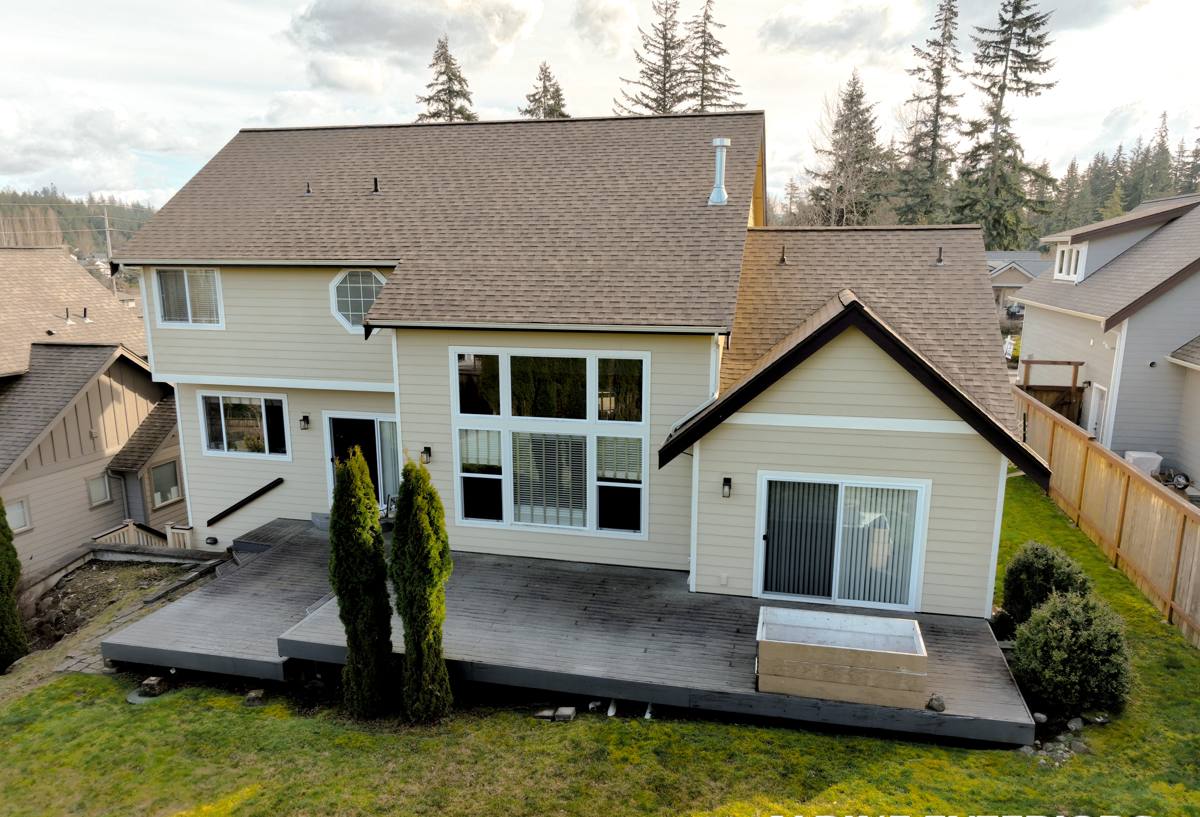
What "Energy-Efficient" Really Means in a Marine Climate
In a lot of the country, an energy-efficient window is mostly judged on how well it keeps heat in during winter and out during summer. That still matters in Marietta, but it's only part of the picture. In a wet, salt-exposed marine climate, an efficient window also has to manage moisture and air infiltration without trapping water against the frame or wall assembly. A window that scores well on paper for insulation but seals poorly against wind-driven rain will cost you more in the long run — through rot, mold, and repeated repairs — than one with a slightly less impressive energy rating but a detailing package built for this coastline.
The Three Things We Weigh for Marietta Homes
- Thermal performance — U-factor and solar heat gain coefficient appropriate for our mild but persistently damp and overcast climate.
- Water management — sill design, weep paths, and flashing details that handle sideways rain, not just vertical rainfall.
- Material durability in salt air — frame, hardware, and fastener choices that won't pit, corrode, or chalk prematurely this close to the water.
Signs Your Current Windows Are Costing You Money
Most homeowners don't think about window performance until something is visibly wrong, but by then the damage — and the energy loss — has usually been building for a while. Here's what we look for during a Marietta home assessment:
- Condensation or fogging between panes (a sign the seal has failed and the insulating gas or air gap is compromised)
- Visible moss or dark streaking building up on sills or in tracks
- Drafts you can feel near the frame on a windy day, especially during the fall storm season
- Wood sills that feel soft, spongy, or show paint bubbling near the corners
- Hardware — locks, cranks, hinges — that has become stiff, pitted, or discolored
- A noticeable jump in heating costs compared to similarly sized homes nearby
- Difficulty opening or closing sashes, often from swelling frame material
Any one of these on its own might be minor. Several together usually mean the window system — glass, frame, and seal — has reached the end of its useful life for this environment.
What a Correct Installation Actually Involves
The single biggest factor in how a window performs over time isn't the brand — it's the installation. A premium window installed with poor flashing will leak and rot faster than a mid-tier window installed correctly. This is especially true in Marietta, where wind-driven rain tests every seam.
Our Installation Standards
- Full removal and inspection of the existing opening — checking sheathing, framing, and sill plate for hidden water damage before anything new goes in.
- Repair of any rot or moisture-damaged framing found during removal, not just covering it up with the new unit.
- Proper flashing sequence — sill pan flashing first, then side flashing lapped correctly, then head flashing, so water is always directed outward and down, never trapped behind the window.
- Weather-resistant barrier integration so the window ties into the home's existing water management system rather than fighting it.
- Low-expansion, exterior-grade sealants applied at the correct points — sealing the perimeter without blocking the weep paths the window needs to drain.
- Interior air sealing and insulation around the frame to stop drafts without over-packing the cavity, which can distort the frame.
- Final function and water test before we consider the job done.
Skipping or rushing any one of these steps is exactly how a good window ends up performing poorly within a few wet seasons.
Choosing the Right Frame and Glass Package for This Coastline
There's no single "best" window material for every home — it depends on your budget, your home's style, and how directly exposed the elevation is to weather and salt air. Here's how the common options generally compare for a Marietta property:
| Frame Material | Salt Air / Moisture Resistance | Maintenance | Typical Fit |
|---|---|---|---|
| Vinyl | Good — won't corrode or rot | Low; occasional cleaning | Most homes; budget-conscious replacements |
| Fiberglass | Very good — dimensionally stable, resists pitting | Low | Homes with more direct wind/rain exposure |
| Wood-clad | Depends heavily on cladding integrity; interior wood needs protection from any moisture intrusion | Higher — cladding and seals need periodic checks | Homes prioritizing a traditional interior wood look |
| Aluminum | Prone to corrosion and heat transfer in coastal salt air unless thermally broken and properly finished | Moderate to high | Limited use; we're selective about where we recommend it here |
We're not tied to one manufacturer or material — our job is matching the window to the wall it's going into and the direction it faces. A west- or south-facing wall catching the brunt of storm winds off the bay gets a different recommendation than a sheltered, tree-covered elevation.
Glass Considerations
Double-pane, low-E glass with an appropriate gas fill is the baseline we work from for most Marietta homes — it balances winter heat retention with control over glare and solar gain during the brighter summer stretch. For rooms with heavy west or south exposure, we'll talk through solar heat gain coefficient options so the room doesn't overheat on the handful of genuinely sunny days we get.
Our Process, Start to Finish
We keep the process straightforward because homeowners deserve to know what's happening at each stage:
- On-site assessment — we walk the exterior with you, check each window opening, and note any signs of existing moisture damage or moss buildup around sills and trim.
- Honest recommendation — we'll tell you which windows need replacement now, which can wait, and why, rather than pushing a whole-house job when it isn't needed.
- Written estimate — clear scope, materials, and pricing so there are no surprises.
- Scheduling around the weather — we plan installation windows with Whatcom County's rain patterns in mind to keep openings protected and minimize exposure time.
- Installation following our full flashing and sealing standard outlined above.
- Site cleanup and walkthrough — every unit is tested for smooth operation and proper seal before we call the job complete.
Why a Crew That Already Works in Marietta Matters
Window installation guidance is written for climate zones on a map, not for a specific street a few blocks from the water. A crew that regularly works Marietta and the surrounding Ferndale area already knows which elevations take the worst of the storm-driven rain, where moss builds up fastest, and how salt exposure tends to show up first on hardware and finishes in this specific pocket of Whatcom County. That local pattern recognition means fewer surprises during the job and a better match between the window package and what your home actually faces year to year, rather than a one-size-fits-all recommendation.
Living With Your New Windows: Moss Season Maintenance
Energy-efficient windows installed correctly need very little upkeep, but a small amount of seasonal attention — especially heading into our long wet stretch — keeps them performing at their best for decades.
- Clear debris and moss buildup from sills and tracks a couple of times a year, especially before the heaviest fall rains
- Check weep holes at the base of the frame periodically to make sure they're clear and draining
- Rinse salt residue off exterior frames and hardware occasionally if your home is on a more exposed elevation
- Lubricate hardware — locks, cranks, hinges — annually to prevent stiffness or corrosion from taking hold
- Inspect exterior caulking lines once a year and flag any cracking or separation early, before water gets behind it
Getting Started
If your windows are drafty, fogged, or showing signs of wear from a few too many wet Whatcom County winters, it's worth having them looked at before small problems turn into framing repairs. We offer free, no-pressure estimates for Marietta homeowners — come walk your home with us, get a straight answer about what your windows actually need, and decide from there. Use the form below to get started.