 Ferndale Exterior
 Roofing for a Coastal Whatcom County Climate
Fairhaven sits close enough to the water that homes here take a different kind of weathering than roofs further inland. Salt-laden air off the bay works on metal fasteners and flashing year-round. Wind-driven rain off Puget Sound doesn't just fall straight down — it gets pushed sideways under shingle tabs and around fixtures that would stay dry in a calmer climate. And the tree cover and persistent damp that define this part of Whatcom County mean moss isn't an occasional nuisance, it's a season that lasts most of the year. An asphalt shingle roof that's installed to a generic spec, without accounting for those three things, tends to show problems years before it should.
We install and repair asphalt shingle roofs on homes in and around Fairhaven regularly, and the approach we take reflects what actually fails out here — not what fails on a roof in a dry climate three states away.
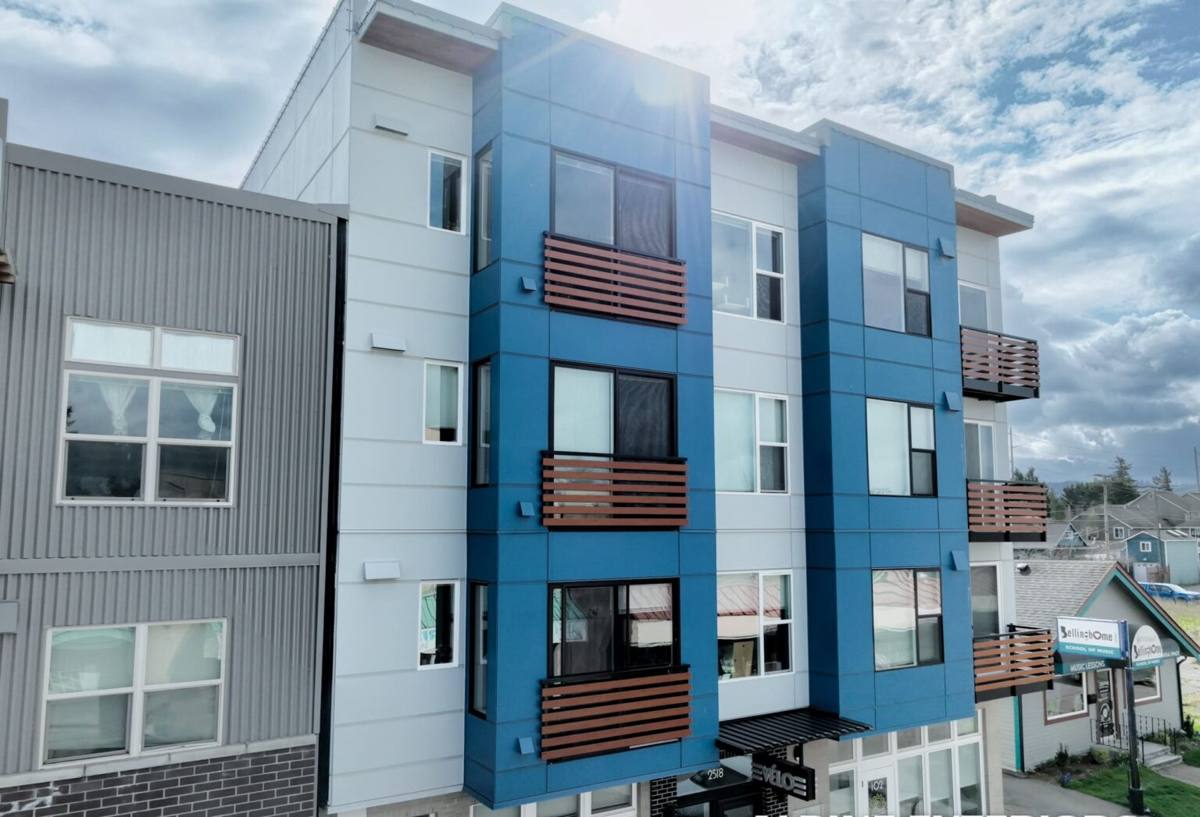
The Climate Factors That Actually Shorten a Roof's Life Here
Salt Air and Corrosion
Proximity to saltwater accelerates corrosion on anything metal — nails, flashing, drip edge, vent stacks. Standard electro-galvanized fasteners can start showing rust streaks on shingles well before the shingles themselves are worn out. Once fasteners corrode, their grip weakens, and that's how shingles start lifting in wind long before the end of their rated life.
Driving Rain and Wind-Driven Wet
Storms coming off the water tend to push rain at an angle rather than straight down. That matters at every penetration point on the roof — vent pipes, chimneys, skylights, wall-to-roof transitions — because water finds its way in horizontally, not just where it pools. A roof that only handles vertical rainfall well isn't built for this location.
Moss, Shade, and Prolonged Moisture
Tree cover and marine humidity keep shingles damp longer after every rain, and damp shingles are what moss needs to establish. Left alone, moss holds moisture against the shingle surface, lifts tabs as it grows, and works its way toward the underlayment. It's less a cosmetic issue than an early step toward granule loss and eventual leaks.
What a Correctly Installed Asphalt Shingle Roof Includes
A roof built for this environment isn't just "shingles nailed to plywood." The materials underneath and around the shingles do most of the actual water-shedding work.
Underlayment and Water Barrier
We use synthetic underlayment as the primary water-resistant layer, with self-adhered ice-and-water membrane at the eaves, valleys, and around penetrations — the spots most exposed to wind-driven rain and the last places you want a leak to start. This is a step that's easy to shortcut and hard to notice missing until years later.
Ventilation
Balanced intake and exhaust ventilation keeps the attic space dry and temperature-stable. Poor ventilation traps moisture under the roof deck, which speeds up rot and shortens shingle life from underneath — a failure mode that has nothing to do with the shingles themselves and everything to do with what's happening below them.
Flashing Details
Chimneys, skylights, sidewalls, and vent penetrations get step flashing, counter-flashing, or pipe boots sized and installed correctly for each condition — not a bead of sealant standing in for proper metal work. In a driving-rain climate, flashing quality is often the difference between a roof that's dry in year one and one that's dry in year fifteen.
Quick Checklist: What to Confirm Before a Roof Is "Done"
- Ice-and-water membrane installed at eaves, valleys, and penetrations
- Corrosion-resistant fasteners used throughout, not just at visible edges
- Intake and exhaust ventilation balanced, not just vents added for appearance
- Step and counter-flashing at every wall intersection and chimney
- Drip edge installed at eaves and rakes, not left off to save material
- Valleys either woven, closed-cut, or metal-lined correctly for the roof's pitch
- Manufacturer's nailing pattern followed for wind rating, not a generalized pattern
Choosing a Shingle for a Damp, Salt-Air, Moss-Prone Roof
Not every asphalt shingle performs the same way in this environment. The table below reflects trade-offs we weigh with homeowners, not a ranking of "best" versus "worst" — the right choice depends on budget, roof pitch, and how long you plan to stay in the home.
| Shingle Type | Typical Lifespan | Moss Resistance | Best Fit |
|---|---|---|---|
| 3-tab (standard) | 15–20 years | Standard — benefits from added moss control | Budget-focused projects, simpler rooflines |
| Architectural / dimensional | 25–30 years | Standard to good, depending on line | Most Fairhaven homes — better wind rating, thicker profile |
| Algae-resistant (copper-infused granules) | 25–30 years | Improved — granules discourage moss/algae growth | Shaded lots, north-facing slopes, homes near mature trees |
| Premium/luxury architectural | 30+ years | Good, especially algae-resistant lines | Steep-slope, high-visibility roofs, longer hold periods |
For most homes in this part of Whatcom County, we lean toward an architectural shingle with algae-resistant granules. The upfront cost difference over standard 3-tab is modest, and it directly addresses the moss and staining issue that's specific to this climate rather than something you'd deal with everywhere.
Our Process for Fairhaven Roofing Projects
The steps don't change much house to house, but what we're checking for at each one does, because we're accounting for this coastline's conditions specifically.
- On-site inspection. We look at the existing roof deck, ventilation, flashing condition, and any moss or moisture staining before quoting anything.
- Written estimate. Materials, scope, and timeline laid out clearly, with shingle options compared honestly against your budget and roof exposure.
- Deck assessment during tear-off. Any soft or water-damaged sheathing gets identified and replaced — this isn't something you can fully see until the old roofing is off.
- Underlayment and flashing installed to the standards above, not the minimum code requirement.
- Shingle installation following manufacturer nailing patterns for full wind-rating and warranty coverage.
- Final walkthrough covering what was done, what to watch for, and basic maintenance going forward.
Signs a Fairhaven Roof Needs Attention
- Dark streaking or green-black patches on north-facing or shaded slopes — early moss or algae growth
- Granules collecting in gutters or at downspout outlets
- Shingle tabs curling, cupping, or lifting at the edges
- Rust streaking near flashing, vent stacks, or nail heads
- Daylight or staining visible in the attic near penetrations or valleys
- Soft spots underfoot on a walkable roof, or sagging along the ridge or eaves
- Higher-than-usual heating or cooling bills, which can point to failing attic ventilation
Maintenance That Actually Matters in This Climate
Asphalt shingle roofs in Fairhaven benefit from more attention than the same roof would need in a drier region — not because the shingles are lower quality, but because the environment is more demanding. Periodic moss removal (done correctly, without pressure-washing that strips granules), keeping gutters and valleys clear of needles and debris, and trimming back overhanging branches to cut down on shade and moisture retention all extend the life of the roof. A quick annual check after storm season — looking at flashing, vent boots, and ridge caps — catches small issues before they become deck repairs.
What Drives Cost on a Fairhaven Roofing Project
| Factor | Why It Matters Here |
|---|---|
| Roof pitch and access | Steeper roofs near the bluff or with limited access take longer and require more safety setup |
| Deck condition | Moisture-related sheathing damage, common on older roofs here, adds repair cost once uncovered |
| Shingle grade | Algae-resistant and premium architectural shingles cost more upfront but reduce moss-related maintenance |
| Flashing and penetration count | Chimneys, skylights, and multiple vents each require correct metal work, which adds labor |
| Ventilation upgrades | Older homes often need added intake or exhaust venting brought up to a workable balance |
| Tear-off vs. layover | Most reroofs here should be full tear-offs given moisture history — layovers hide problems, not solve them |
We don't quote a roof without seeing it. Broad regional pricing ranges exist, but the honest answer for any specific home depends on the factors in that table, which is why we start with an on-site look rather than a phone estimate.
Why a Crew That Already Works in Fairhaven Matters
Roofing crews that work regularly along this stretch of coastline already know which details matter — how much ice-and-water membrane a given roof needs, where moss tends to establish first, how corrosion shows up on older flashing before it's obvious anywhere else. That's not something you get from a crew that mostly works inland and treats every job the same way. It shows up in smaller things too: knowing which shingle lines actually hold up to marine humidity, and not cutting corners on flashing because "it usually doesn't rain that hard" — because around here, it does.
If you're dealing with an aging roof, visible moss, or just want an honest read on where your roof stands, we're happy to take a look. Request a free, no-pressure estimate using the form below and we'll walk the roof with you and lay out exactly what we see.