 Ferndale Exterior
 Marietta Sits Right Where the Weather Gets Serious
Marietta is a small, low-lying community along the Nooksack River delta just outside Ferndale, tucked between tidal water, marshland, and the Lummi Nation reservation lands. That setting is part of what makes the area worth living in, and it's also exactly the kind of setting that finds every weak point in a siding system fast. Homes here sit close enough to open water that salt-laden air moves across exterior walls on a regular basis, not just during the occasional storm. Add Whatcom County's driving winter rain, wind that comes in sideways off the bay, and a moss season that can run most of the year on shaded or north-facing walls, and you've got a climate that punishes cheap material and sloppy installation in a matter of a few years, not a few decades.
We've worked enough exteriors in and around Marietta to know what actually holds up out here versus what performs fine on a spec sheet in a showroom somewhere inland. This page is specifically about James Hardie fiber cement siding for Marietta homes — what the local climate demands from it, what a correct installation actually involves, and why the crew doing the work matters as much as the board itself.
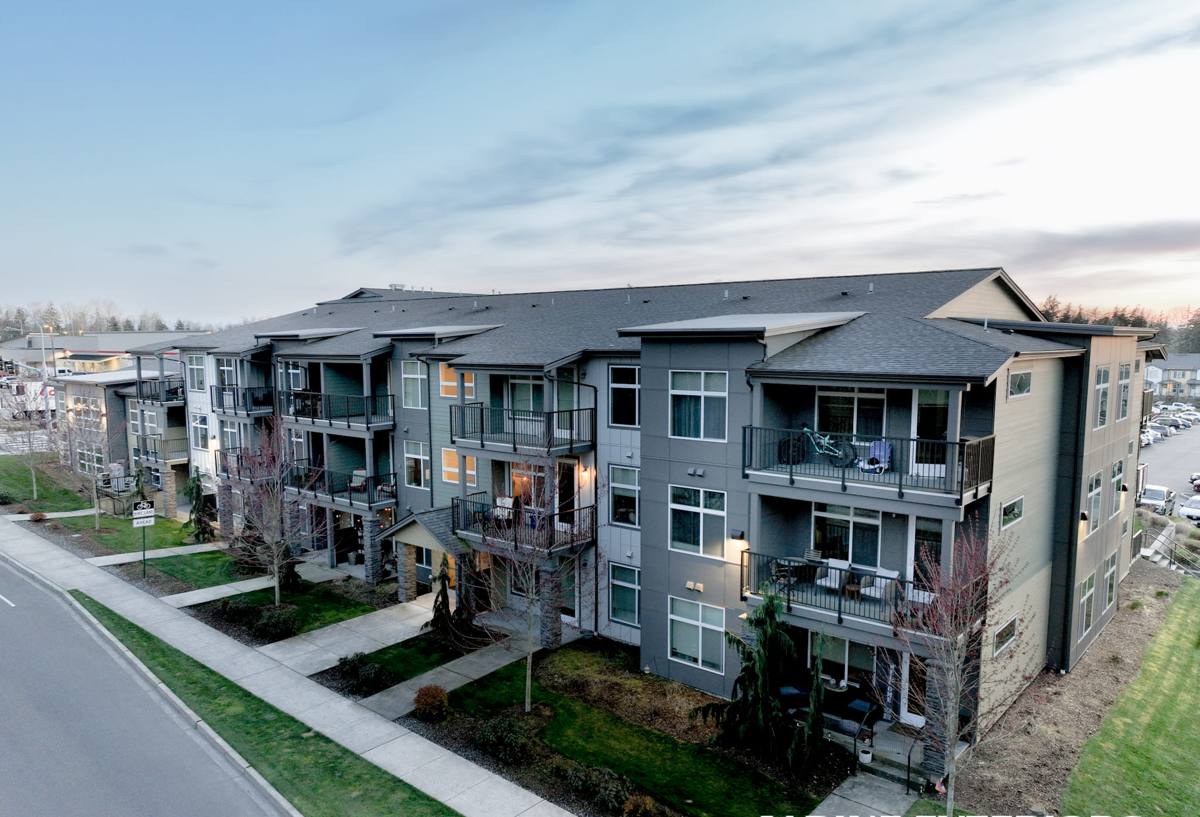
Why We Only Install James Hardie in This Climate
We install James Hardie fiber cement exclusively. We don't offer vinyl, LP SmartSide, Cemplank, Allura, primed spruce, or cedar, and that's a deliberate standard, not an accident of what we happen to stock. Vinyl softens, warps, and can crack in cold snaps, and it has no real defense against the kind of driving, wind-blown rain Marietta sees off the water. Engineered wood products depend on their outer coating staying intact to keep moisture out, and a coastal, high-moisture environment is a tough test for any coating over the long haul. Cedar is a beautiful, honest material, but it's also organic — it wants to absorb water, and in a climate with this much sustained dampness and moss pressure, that means a heavier, more frequent maintenance commitment than most homeowners sign up for expecting.
James Hardie fiber cement is non-combustible, dimensionally stable, and doesn't rely on an intact paint film alone to keep water out the way wood and some engineered products do. For the Pacific Northwest we install Hardie's HZ5 product line, engineered specifically for colder, wetter climate zones — it's formulated for the freeze-thaw and moisture cycling this region puts siding through, which matters more here than in a drier, milder market.
What We Don't Install, and Why
None of the products we've stepped away from are bad products in every setting — they're just products whose real-world trade-offs, in a marine, high-moisture climate like Marietta's, work against a homeowner more often than they work for one. We'd rather turn down that install than come back in five years to a maintenance problem that could have been avoided at the material stage.
What a Correct Hardie Install Looks Like on a Marietta Home
James Hardie's own warranty and durability claims assume the board is installed to its documented specifications. A Hardie board installed wrong performs closer to a cheaper product than to what the material is actually capable of. On homes this close to tidal water, the margin for installation error is smaller than it would be a few miles inland.
Ground and Foundation Clearance
Hardie's installation guidelines call for a minimum clearance between the bottom edge of the siding and grade, roofing, decks, and paved surfaces. On low-lying lots near the river and marshland — common around Marietta — that clearance is not a formality. Standing water, splash-back, and periodic high groundwater all put more moisture pressure on the bottom courses of siding than a typical inland lot sees, and skipping or shorting that gap is one of the more common causes of early siding failure we get called out to repair.
Flashing and Moisture Management
Correct installation means a continuous water-resistive barrier behind the siding, properly lapped and sealed flashing at every window, door, and roof intersection, and drainage that gives any moisture that does get behind the cladding a path back out. In a climate with this much sustained rain, a weather-resistive barrier with a drainage gap behind the siding — rather than the board sitting flush against the sheathing — makes a real difference in how quickly the wall assembly dries out between storms.
Fastening, Joints, and Caulking
Hardie specifies fastener type, spacing, and placement, and it specifies how butt joints should be treated — typically backed and sealed rather than simply butted and caulked over. Caulk alone, exposed to this much driving rain and UV cycling, is a maintenance item that will eventually fail; caulk used correctly as one part of a properly flashed, backed joint is a much more durable system. This is the kind of detail that's invisible once the job is finished and painted, and it's exactly the kind of detail that separates a siding job that lasts decades from one that needs attention in year six.
Matching the Right Hardie Product to Your Home
James Hardie makes several distinct product lines, and the right one depends on your home's style, exposure, and what you're trying to achieve visually. All of them, in our installs, use the ColorPlus factory-applied finish, which holds color far better against salt air and UV exposure than field-applied paint.
| Product | Best Fit | Notes for Marietta Homes |
|---|---|---|
| HardiePlank lap siding | Most home styles, traditional and modern | The most common choice locally; horizontal laps shed driving rain well when installed with correct overlap |
| HardiePanel vertical siding | Gables, modern facades, accent walls | Fewer horizontal joints for water to work into, often used with board-and-batten trim |
| HardieShingle | Craftsman and cottage-style homes | Shadow-line texture; needs careful flashing at the increased number of joints per square foot |
| ColorPlus factory finish | All product lines | Factory-cured finish resists the fading and chalking that salt air accelerates in field-applied paint |
What Affects the Cost of a Marietta Siding Job
Every home is different, but the same handful of factors drive most of the cost variation we see on jobs in this area. We won't quote a number here — that depends entirely on your specific home — but knowing what moves the price helps you evaluate any estimate you get.
| Factor | Why It Matters |
|---|---|
| Existing siding removal | Tear-off of old wood, vinyl, or damaged siding adds labor, and hidden rot found underneath can add scope |
| Sheathing and moisture barrier condition | Homes near tidal water more often need sheathing repair before new siding goes on |
| Home complexity | Gables, dormers, and multiple roof intersections mean more flashing detail and labor time |
| Product line and texture | Plank, panel, and shingle profiles have different material and labor costs per square foot |
| Trim and accent scope | Full trim replacement versus reusing sound existing trim changes the total materially |
Our Process, Start to Finish
- A walk-through of your home, inside and out, to check for existing moisture damage before we ever talk product or price
- An honest assessment of what your sheathing and framing actually need, not just what the visible siding needs
- A written estimate that separates material, labor, and any sheathing or repair work so you know what you're paying for
- Permitting through the appropriate local jurisdiction before work begins
- Removal of existing siding, repair of any sheathing or framing issues found underneath, and installation of a proper weather-resistive barrier
- Hardie installation to manufacturer specification — clearances, flashing, fastening, and joint treatment done the same way whether it's visible after paint or not
- A final walk-through with you before we consider the job done
Why a Crew That Already Works Marietta Matters
A siding crew that's worked this specific stretch of Whatcom County already knows what a lot near the Nooksack River delta tends to be dealing with underneath the old siding — the moisture patterns, the wind exposure off the bay, the way shaded walls under mature trees hold dampness longer than open ones. That's not something you can fully account for from a spec sheet or a drive-by estimate. It shows up in small decisions: where to add extra flashing attention, which walls need a more conservative color choice because of shade and moss exposure, how much ground clearance to build in on a lot that floods seasonally. None of that replaces following Hardie's installation manual — it supplements it with judgment earned from actually working this ground.
Living With Hardie Siding in Marietta's Climate
Salt Air
Homes closest to the water see more salt-laden air moving across their siding than homes set back further. A correctly installed Hardie system with a ColorPlus finish holds up well against this, but it's still worth rinsing salt residue off the siding periodically with a garden hose, particularly on walls that face open water directly.
Moss and Shaded Walls
North-facing walls and anything under mature tree canopy stay damp longer and are more prone to moss and algae, regardless of siding brand. A gentle wash — not a high-pressure blast, which can force water behind the boards or damage the finish — once or twice a year keeps this from building up and keeps the finish looking like it should.
Driving Rain
Marietta's exposure to wind off the bay means rain doesn't just fall here, it drives sideways into walls during storms. This is exactly why correct flashing and joint treatment at the install stage matters more than any maintenance step you can do afterward — you can't wash your way out of a flashing detail that was done wrong the first time.
A Homeowner's Checklist Before You Hire
- Confirm the contractor is licensed and bonded to work in Washington and will pull the required permit for your jurisdiction
- Ask specifically about ground clearance and flashing details — not just "do you install Hardie," but how
- Ask whether they check and repair sheathing before re-siding, not just cover over whatever's underneath
- Get a written estimate that separates material, labor, and any repair scope
- Ask how many Hardie installations they've completed specifically in a marine or high-moisture climate
- Ask what happens if hidden rot or damage is found once the old siding comes off
Talk to Us About Your Marietta Home
If your siding is showing its age, or you're planning ahead for a re-side and want to understand what this climate actually requires before you commit to a product or a contractor, we're happy to walk the property with you and put together a free, no-pressure estimate.