 Ferndale Exterior
 Siding Repair Built for Kendall's Wet, Wooded Conditions
Kendall sits inland from Ferndale in a part of Whatcom County that stays green for a reason: it rains a lot, the tree cover runs heavy, and a lot of homes sit on lots with more shade than sun for much of the year. That combination is hard on siding. Moisture lingers longer on shaded walls, driving rain off the foothills pushes water sideways into seams and trim, and moss finds every north-facing surface that doesn't dry out fast. If you own a home out here, you already know your siding works harder than siding on an open, sunny lot across the county.
Siding repair in this kind of environment isn't just about patching a hole or replacing a cracked board. It's about understanding why the damage happened in the first place — usually moisture that got behind the cladding and stayed there — and fixing the cause, not just the symptom. That's the standard we hold every repair to.
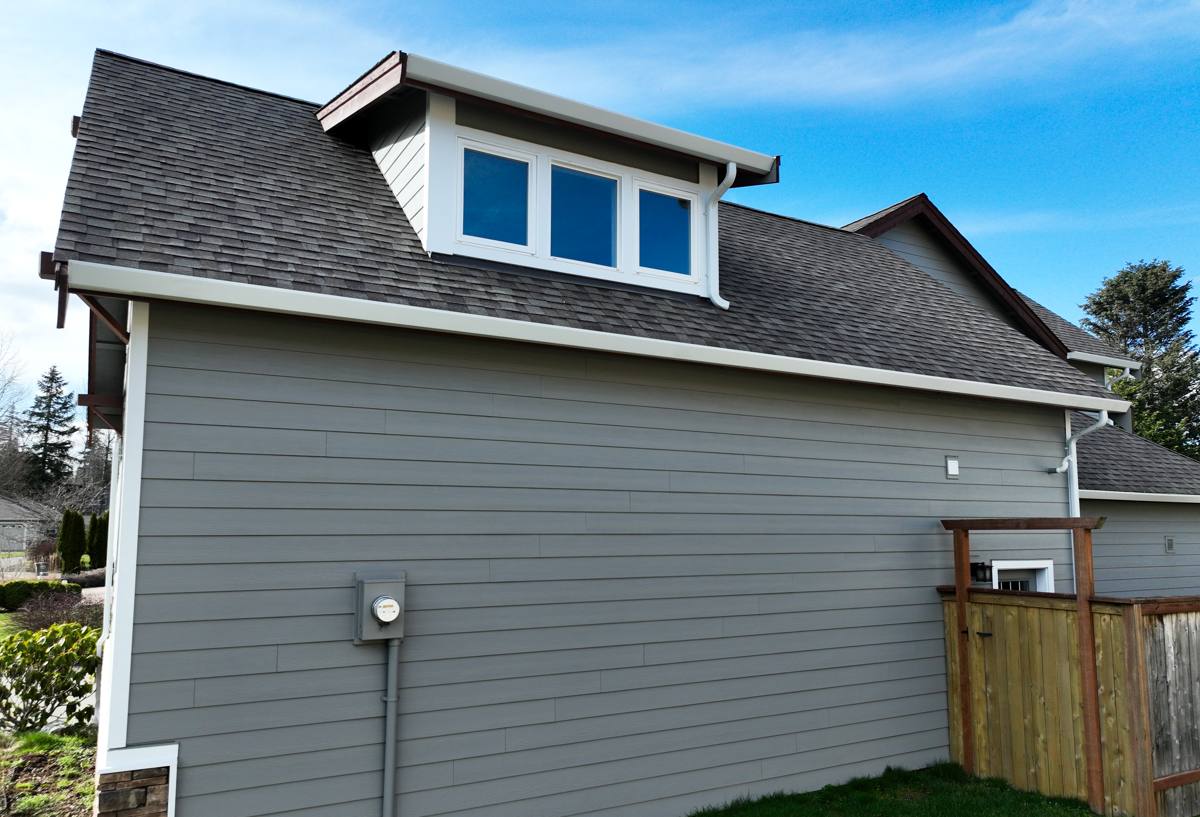
What Causes Most Siding Damage in Kendall
Moisture That Doesn't Dry Out
Wooded, shaded lots slow down evaporation. Siding that would dry within a day in full sun can stay damp for a week under tree cover. Over years, that constant low-grade moisture softens caulk joints, swells wood-based products, and creates the perfect growing conditions for moss and mildew — especially on north- and west-facing walls that catch the weather but not much sun.
Moss and Organic Growth
Moss isn't just cosmetic. Once it establishes on a siding surface, it holds water against the material and its root structure works into seams, laps, and any small crack in a factory finish. Left alone long enough, moss growth accelerates the very moisture damage that let it take hold to begin with.
Impact and Age Damage
Fallen branches, ladders, lawn equipment, and just decades of weather cause cracked boards, loose panels, and failed caulk lines. On older homes we're often called out to repair siding that was never rated for this kind of sustained wet exposure in the first place — wood composite or lower-grade products that were fine for a drier climate but were never going to hold up long-term in Whatcom County's driving rain and long moss season.
What a Correct Siding Repair Actually Involves
A repair that just covers the visible damage without addressing what's underneath is a repair you'll be paying for again in a few years. Every job we do starts the same way, regardless of how small the visible damage looks:
- Remove the damaged section and inspect the water-resistive barrier and sheathing behind it for rot, staining, or soft spots
- Identify how water was getting in — failed caulk, poor flashing, a gap at a trim joint, or a material that was never right for the exposure
- Dry out and, if needed, repair or replace any compromised sheathing before new siding goes back on
- Match the replacement material, profile, and factory finish as closely as possible so the repair doesn't stand out
- Re-flash and re-seal properly so the same failure doesn't happen again in the same spot
Skipping that inspection step is the single most common mistake in siding repair. A board can look fine on the surface while the sheathing behind it is already soft. Nailing new siding over that problem just hides it for another season.
Our Repair Process
1. On-Site Assessment
We walk the exterior with you, look at the damaged area up close, and check the surrounding siding for early signs of the same issue — moss creep, caulk pulling away, soft spots at trim. Kendall homes often have more than one problem area once you start looking closely, usually on the same shaded side of the house.
2. Diagnosis, Not Just a Quote
We tell you plainly what caused the damage and whether it's isolated or a sign of a broader moisture or material issue. If a repair is genuinely the right call, we'll say so. If the underlying siding is past the point where patching makes sense, we'll say that too.
3. The Repair Itself
We remove only what needs to come off, check the sheathing, correct any flashing or sealing problems we find, and install matching James Hardie fiber cement siding in the repaired section. We don't mix materials on a wall — a patch job that introduces a different product than what's already there almost always looks and performs worse over time.
4. Cleanup and Walkthrough
We clear debris, confirm the repair with you, and let you know what to watch for going forward, including any moss or drainage issues on the property that are likely to keep affecting that area of the house.
Repair or Replace? What Actually Decides It
| Factor | Leans Toward Repair | Leans Toward Replacement |
|---|---|---|
| Extent of damage | Isolated to one or two areas | Recurring problems across multiple walls |
| Sheathing condition | Dry, solid behind the damaged section | Rot or soft sheathing found during inspection |
| Existing material | Original siding is fiber cement in good shape | Original siding is wood, composite, or vinyl reaching end of life |
| Age of the siding | Newer install, damage is from a one-time event | Siding is decades old with widespread wear |
| Moss/moisture history | First occurrence, cause is identifiable and fixable | Chronic moss and moisture across the exterior |
We'll never push a full replacement when a proper repair will genuinely hold up — but we also won't patch over a problem that's going to resurface in another spot next season. Whatcom County's climate doesn't forgive shortcuts either way.
Why We Only Repair With James Hardie Fiber Cement
We install and repair with James Hardie products exclusively — not LP SmartSide, not vinyl, not cedar or primed spruce. For repair work specifically, that decision matters even more than it does on a full install. Fiber cement doesn't swell, warp, or rot the way wood-based products can when they take on moisture, which is exactly the failure mode we see most often out here. It also holds its ColorPlus factory finish far longer than field-applied paint, so a repaired section keeps matching the rest of the wall instead of visibly fading differently a year or two later. And because it's non-combustible, it doesn't introduce a weak point into the exterior the way a mismatched or lower-grade patch material can.
When we repair a section of Hardie siding, we're matching into a system that was engineered for exactly this kind of wet, shaded, moss-prone exposure. When we repair or replace a section of an older wood-based or vinyl product, we'll walk you through what upgrading that wall or the whole exterior to Hardie would look like — not as an upsell, but because it's the material we trust to actually solve the underlying problem instead of just deferring it.
Why Hiring a Crew That Already Works in Kendall Matters
Siding repair isn't a one-size-fits-all trade. A crew that mostly works drier, sunnier parts of the county can miss what's obvious to anyone who repairs siding in shaded, wooded conditions regularly: where moss actually takes hold first, which wall orientations fail earliest, and how much drying time a repair needs before it's sealed back up. We work Ferndale and the surrounding Whatcom County communities, including Kendall, and we bring that pattern recognition to every estimate — not guesswork, actual familiarity with how homes in this specific kind of setting age.
That local familiarity also means we're realistic about timelines. Wet-season repairs need dry working windows, and knowing the local weather patterns helps us schedule work when it will actually hold up, not just when it's convenient.
Simple Maintenance That Extends the Life of a Repair
- Trim back branches and vegetation touching or overhanging the siding to improve airflow and sun exposure
- Rinse moss and algae off siding surfaces before it builds up a thick mat — a soft wash, not a pressure washer aimed directly at seams
- Check caulk lines at trim, window, and door joints once a year and re-seal any that look cracked or pulled away
- Keep gutters clear so overflow doesn't run down the wall behind the siding
- Walk the exterior after any major windstorm and look for loose or cracked sections before small damage becomes bigger damage
None of this is complicated, but on a shaded, tree-heavy lot it makes a real difference in how long a repair — or the rest of your siding — actually lasts.
If you've got a damaged, mossy, or aging section of siding on your Kendall home, we're happy to take a look and give you an honest read on what it needs. Fill out the form below for a free, no-pressure estimate.