 Ferndale Exterior
 Windows Take a Different Kind of Beating Out Here
Homes around Kendall sit inside Whatcom County's marine-influenced climate, where damp air, driving rain, and long stretches of low winter sun put steady pressure on window assemblies year after year. It's rarely one dramatic storm that causes the trouble. It's the slow accumulation of moisture cycles, wind-driven rain, and shaded, moss-prone exteriors that eventually finds the weak point in an old window or a rushed installation job. Getting a window installation right in this area isn't about picking the fanciest product on the shelf — it's about how the window is flashed, sealed, and tied into the wall assembly so water has nowhere to go but back outside where it belongs.
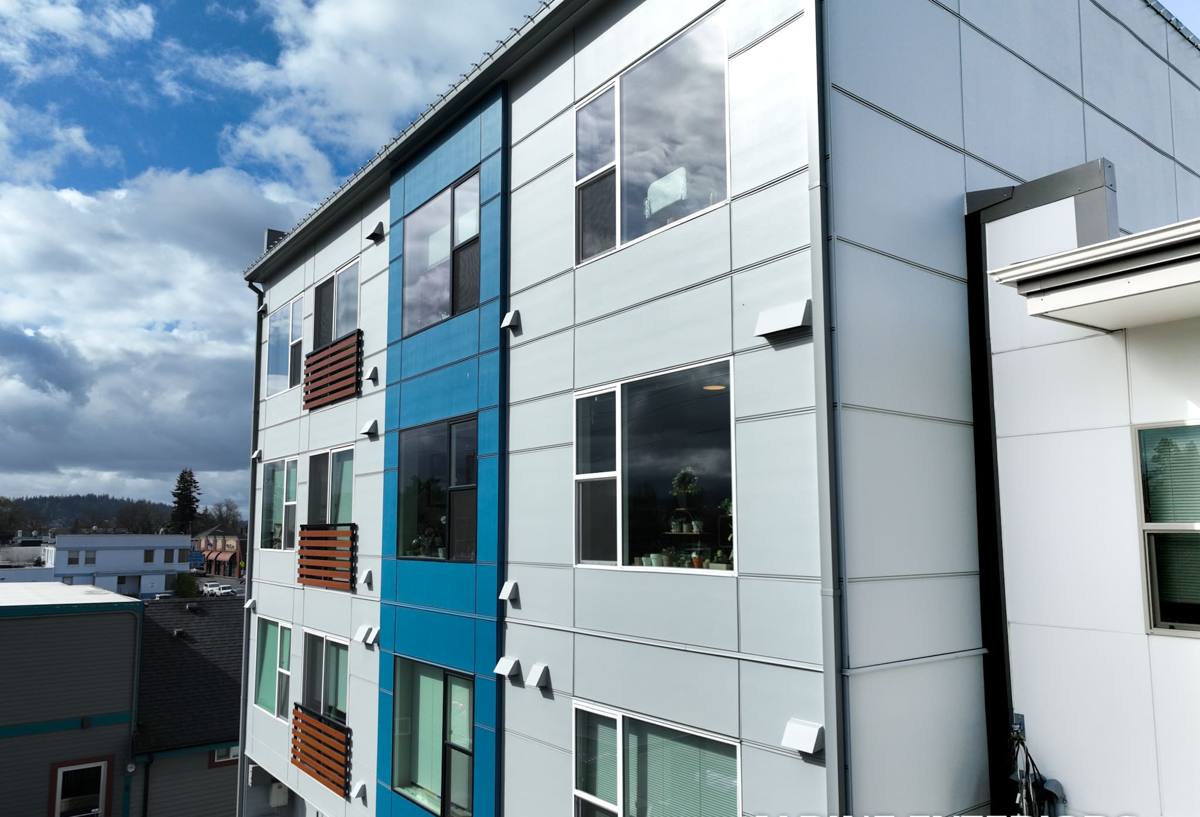
What Salt Air, Rain, and Moss Actually Do to a Window Opening
Every window opening is a hole cut into the weather barrier of a house. That's true anywhere, but in this part of Whatcom County the margin for error is smaller because the weather doesn't let up for long. Salt-tinged coastal air accelerates corrosion on hardware, screws, and unprotected metal flashing. Frequent rain keeps siding and trim damp far more often than in drier climates, which means any gap in the seal around a window has more opportunities to let moisture in. And the moss and algae that thrive in our shaded, wet winters don't just sit on the roof — they creep onto north-facing walls and window sills, holding water against wood and trim longer than it would otherwise sit there.
Moisture Finds the Framing First
Long before a homeowner sees a stain on drywall, water is usually already working on the framing around the window. Old caulk cracks, sill pans that were never installed correctly, or house wrap that wasn't lapped properly all give water a path inward. Once moisture gets behind the trim, it can sit there for a long time in our climate because there simply aren't as many hot, dry stretches to help things dry out.
Moss and Organic Growth Trap Water Against the House
Moss holds moisture like a sponge. When it establishes itself on a sill, a window ledge, or the siding just above a window, it keeps that surface wetter for longer stretches than bare wood or vinyl would be. Over time that constant dampness breaks down caulk, softens wood trim, and gives rot a foothold right at the point where the window meets the wall.
Wind-Driven Rain Tests the Seal, Not Just the Glass
Rain that falls straight down is rarely the problem. Rain pushed sideways by wind — which this area gets plenty of — tests every seam, seal, and flashing lap around a window. A window with excellent glass but a mediocre installation will still leak, because the glass was never the weak point to begin with.
Signs a Kendall-Area Home's Windows Are Overdue for Attention
Most homeowners don't think about their windows until something goes visibly wrong, but there are earlier warning signs worth catching first:
- Visible fogging or moisture trapped between panes of double-glazed glass
- Soft, discolored, or spongy wood trim around the frame, inside or out
- Drafts you can feel near the window even when it's fully latched
- Paint or caulk that's cracking, peeling, or pulling away from the frame
- Windows that are difficult to open, close, or lock — a sign the frame has shifted
- Moss or dark staining building up on the sill or the siding directly above a window
- A noticeable rise in heating costs without another clear explanation
What a Correct Window Installation Actually Involves
Swapping an old window for a new one sounds simple, but the installation is where most long-term problems either get solved or get built right back in. A correct job manages water at every layer, not just at the glass.
| Step | Why It Matters Here |
|---|---|
| Sill pan flashing | Gives any water that gets past the window a sealed path back outside instead of into the wall framing |
| Proper house wrap integration | Keeps the weather barrier continuous instead of creating a seam that wind-driven rain can exploit |
| Correct shimming and leveling | Prevents the frame from racking over time, which is what causes hard-to-close windows and gaps |
| Quality sealant at the right joints — not everywhere | Over-sealing can trap moisture inside the wall; under-sealing lets it in. Both are common mistakes |
| Insulating the gap around the frame | Cuts drafts and moisture-laden air movement without over-packing, which can bow the frame |
| Exterior trim and caulk detailing | The first line of defense against the salt-tinged, moss-prone conditions common on this side of the county |
Skipping or rushing any one of these steps is usually invisible on installation day. The problems it causes show up eighteen months to five years later, which is exactly why installation quality matters more than most homeowners realize when comparing quotes.
Choosing Window Materials for This Climate
There's no single "best" window for every home, but some materials and glass packages hold up more predictably in a wet, moderate coastal climate than others. We walk homeowners through the real trade-offs instead of pushing one product line.
| Frame Material | How It Holds Up Locally | Trade-Off to Know |
|---|---|---|
| Vinyl | Doesn't rot, resists moisture well, low maintenance | Quality varies widely by manufacturer; cheaper vinyl can warp with big temperature swings |
| Fiberglass | Very stable in wet climates, holds paint well, strong long-term | Higher upfront cost than vinyl |
| Wood-clad | Attractive, good insulator | Requires more diligent maintenance where cladding meets exposed wood — a real concern with our moss and rain patterns |
| Aluminum | Strong and slim-profile | Conducts cold and can corrode faster near salt-influenced air unless properly treated |
For glass, double-pane with a low-E coating and an argon or krypton gas fill is the practical standard for this area's temperature range. Triple-pane glass adds insulating value and sound dampening but comes at extra cost and weight — worth discussing if a home has a specific noise or exposure issue, but not a requirement for every window in every room.
Our Window Installation Process
- On-site assessment. We inspect the existing window openings, framing condition, and any signs of past water intrusion before recommending anything.
- Honest product recommendation. We talk through frame material and glass options based on the window's exposure — a north-facing window shaded by trees gets treated differently than a sun-exposed south wall.
- Removal and opening inspection. Once the old window is out, we check the framing and sheathing underneath for rot or moisture damage before anything new goes in.
- Repair before replacement. Any soft wood, damaged sheathing, or compromised house wrap gets repaired first. Installing a new window over a bad opening just hides the problem.
- Correct flashing and sealing sequence. Sill pan, side flashing, and head flashing go in following a shingled, water-shedding order — not just a bead of caulk around the edges.
- Fit, level, and insulate. The window is shimmed plumb and level, then insulated around the frame without over-packing.
- Exterior trim and finish work. Trim is sealed and finished to shed water and resist the moss growth common on this side of the county.
- Final walkthrough. We check operation, seals, and finish work with the homeowner before considering the job done.
Why a Crew That Already Works This Area Matters
A contractor who regularly works in and around Ferndale and greater Whatcom County has already seen how the local weather affects window installations five and ten years out — not just on installation day. That familiarity shows up in small decisions: which sill details hold up against sideways rain, where moss tends to build up and needs extra attention in the trim work, and how much clearance to leave for wood or wood-clad materials that will spend a lot of their life damp. It also means realistic scheduling around the rainy months rather than promising an outdoor install date that weather is likely to blow up.
What Affects the Cost of a Window Installation
Every home and window opening is different, so real numbers depend on a walkthrough, but the cost of a project is generally driven by a handful of factors:
| Factor | How It Affects Cost |
|---|---|
| Frame material and glass package | Vinyl is generally the most affordable; fiberglass and wood-clad cost more upfront |
| Number of windows and their size | Larger openings and multi-window projects have different labor and material needs per unit |
| Condition of the existing opening | Rot repair or sheathing replacement adds cost but is essential if it's needed |
| Access and window height | Second-story or hard-to-reach windows take more time and equipment |
| Trim and exterior finish work | Matching existing trim profiles or upgrading finish materials changes the scope |
We'd rather walk a homeowner through these factors honestly during an estimate than quote a number over the phone that doesn't hold up once we see the actual openings.
Caring for New Windows After Installation
A correctly installed window still benefits from a little seasonal attention in this climate. Keeping moss and organic debris cleared from sills and nearby siding, checking exterior caulk lines once a year for cracking, and making sure gutters and downspouts aren't dumping extra water near window openings all go a long way toward protecting the installation for the long haul. None of this is difficult, but it's easy to overlook until a small issue becomes an expensive one.
If you're weighing whether it's time to replace windows on a Kendall-area home, we're happy to take a look and give you a straightforward, no-pressure estimate — including an honest read on which openings actually need attention now and which can wait. Use the form below to get started.