 Ferndale Exterior
 Roofing on Lummi Island Is Its Own Job
Lummi Island sits out in the salt water off Whatcom County, reachable only by ferry, with homes that catch wind and spray off the water on more sides than most inland properties ever deal with. A roof built for a standard Ferndale subdivision lot isn't automatically built for a home facing open water on Lummi Island. The materials, the flashing details, and even the fastener choices need to account for salt-laden air, wind-driven rain that doesn't fall straight down, and a moss season that runs longer here than it does twenty miles inland.
None of that means Lummi Island roofing has to be exotic or expensive. It means the install has to be done with the local conditions in mind from the first shingle to the last bead of sealant, not treated as a copy-paste of a job done somewhere drier and more sheltered.
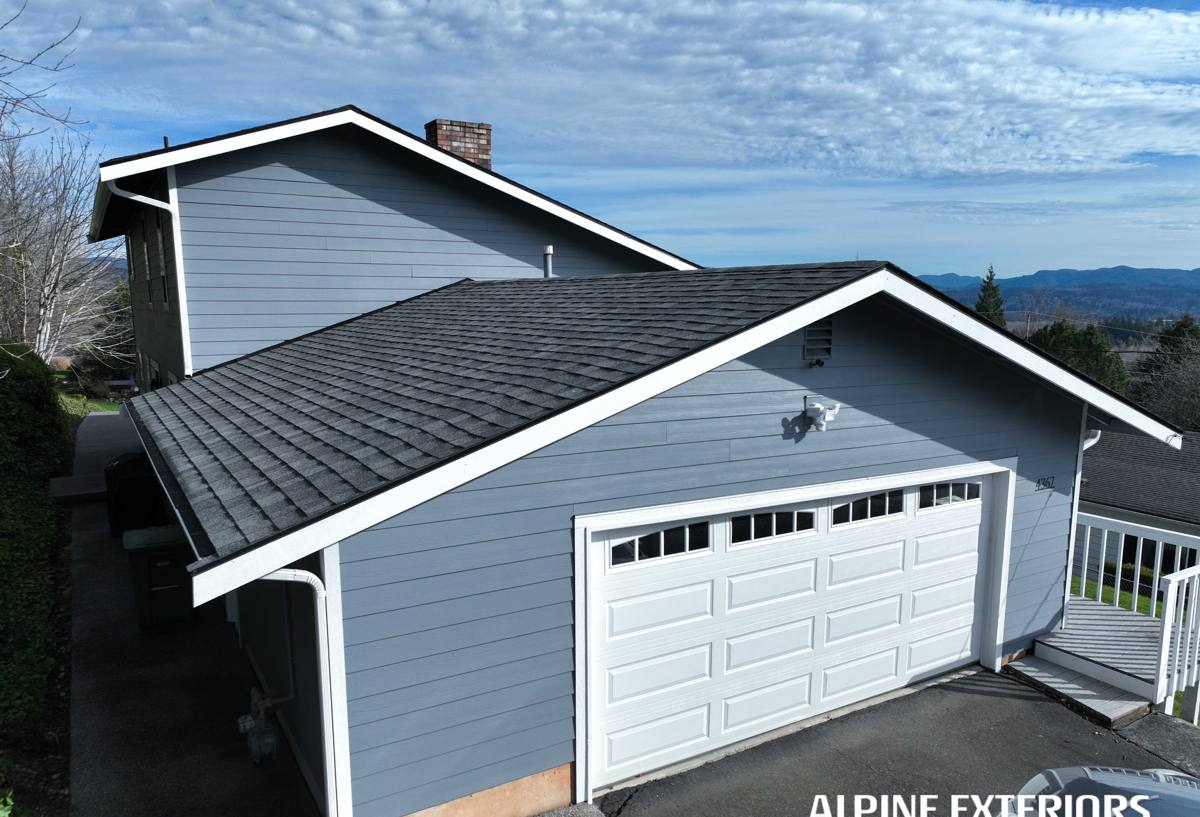
What a New Roof on Lummi Island Actually Needs
Salt-Air Exposure
Homes close to the water take on airborne salt that settles on every exposed surface, including the roof. Over years, that salt exposure accelerates corrosion on unprotected metal — fasteners, flashing, vent stacks, and gutter hardware. It doesn't ruin a roof overnight, but it shortens the life of the wrong materials significantly. The fix isn't complicated: use corrosion-resistant fasteners and flashing metals rated for coastal exposure, and avoid unprotected steel wherever water and salt can reach it.
Driving Rain and Wind-Driven Water
Whatcom County gets its share of steady, straight-down rain, but island homes with open water exposure also deal with rain pushed sideways by wind off the Sound. That kind of weather finds weaknesses that a calmer climate never would — under-lapped shingles, marginal flashing at wall-to-roof transitions, and valleys that aren't sealed deep enough. A correct install treats every penetration and transition as a place water will actively be pushed into, not just a spot rain might drip past.
Moss and Shade
Between the marine moisture and the tree cover common on the island, moss finds a foothold fast, and it stays green longer into the year than it would on a drier, more exposed roof. Moss isn't just cosmetic — it holds moisture against the roofing material, works its way under shingle tabs, and can lift edges enough to let water in. A new roof should be installed and detailed in a way that slows moss regrowth, not just cleaned once and left to fend for itself.
Choosing the Right Roofing Material for the Island
There's no single "best" roofing material for every Lummi Island home — it depends on the home's exposure, roof pitch, and how much upkeep the owner wants to do. Here's how the common options actually perform under salt air, driving rain, and moss pressure:
| Material | Salt-air performance | Moss resistance | Maintenance |
|---|---|---|---|
| Architectural asphalt shingle | Good with corrosion-resistant flashing and fasteners | Moderate — benefits from zinc/copper strips | Low to moderate |
| Standing seam metal | Very good when properly coated and fastened | High — sheds moss naturally on most pitches | Low |
| Cedar shake | Fair — needs regular treatment near salt air | Low without diligent upkeep | High |
| Synthetic composite shingle | Good — resists corrosion by design | Moderate to high depending on product | Low |
We don't push cedar shake on exposed, moss-prone roofs as a default. It can look great and hold up fine with a homeowner committed to regular treatment and cleaning, but the maintenance burden on a shaded, salt-exposed island roof is real, and we'd rather tell you that upfront than sell you a product that turns into a second job. Architectural asphalt and standing seam metal are what we recommend most often for Lummi Island homes because they balance performance against realistic upkeep.
What Getting the Ferry Right Means for Your Timeline
Lummi Island isn't connected by bridge — everything, including roofing materials, crew, and equipment, moves over on the ferry. That's not a big deal if it's planned for, and it's a real problem if it isn't. Contractors who don't regularly work the island tend to underestimate how much this affects scheduling: material deliveries have to be staged and timed around ferry availability, crews need to load efficiently to avoid extra crossings, and weather delays hit differently when your dump run or supply run means another ferry trip.
A crew that already works Lummi Island builds this into the estimate and the schedule from day one — not as a surprise change order halfway through the job. That's one of the most practical, least glamorous reasons local experience matters here.
Our New Roof Installation Process
A correct roof replacement follows the same core steps everywhere, but on Lummi Island each step gets extra attention to the details that salt air and driving rain expose over time.
- Inspection and tear-off. We remove the old roofing down to the deck and check for rot, soft spots, or water staining that points to past leaks — common at valleys, chimneys, and skylights on older island homes.
- Deck repair. Any damaged or delaminated sheathing gets replaced before anything new goes down. Installing over a compromised deck just hides the problem.
- Ice and water shield. Self-adhering membrane goes in at eaves, valleys, and around every penetration — the places wind-driven rain is most likely to find a way in.
- Underlayment. A synthetic underlayment covers the full deck as a secondary water barrier beneath the roofing material.
- Flashing. New corrosion-resistant flashing goes in at all walls, chimneys, valleys, and roof-to-roof transitions — this is where most leaks on coastal homes actually start.
- Roofing material installation. Shingles, metal panels, or synthetic material go on to manufacturer spec, with fastener patterns adjusted for wind exposure where the home's location calls for it.
- Ventilation check. Intake and exhaust ventilation get verified or upgraded — proper airflow reduces moisture buildup in the attic, which matters more in a marine climate.
- Ridge and final details. Ridge caps, vents, and any zinc or copper moss-control strips go in last.
- Cleanup and inspection. Full site cleanup including magnetic nail sweep, followed by a final walk-through.
Cost Factors for a Lummi Island Roof Replacement
Every roof is priced on its own specifics, but these are the factors that typically move the number up or down on an island job:
| Factor | Why it matters |
|---|---|
| Roof size and pitch | More surface area and steeper pitches take more material and labor time |
| Layers to remove | Tear-off of multiple existing layers adds labor and disposal cost |
| Deck condition | Rotted or soft sheathing found during tear-off requires repair before installation |
| Material choice | Asphalt, metal, and synthetic options carry different material and install costs |
| Access and logistics | Ferry scheduling and staging affect delivery and crew time on island jobs |
| Flashing and detail work | Homes with more valleys, chimneys, and wall transitions need more detail labor |
We walk every roof and give a written estimate based on what we actually find — not a phone-quoted number that changes once the tear-off starts.
Keeping Moss and Salt Damage From Coming Back
A new roof buys you a long runway, but a few habits keep it performing the way it should:
- Have gutters cleared at least twice a year — clogged gutters hold moisture against the roof edge and feed moss growth
- Trim back overhanging branches where possible to cut down on shade and debris buildup
- Rinse moss growth gently rather than power-washing, which can strip granules and shorten shingle life
- Check zinc or copper moss-control strips periodically — they lose effectiveness over time and can be refreshed
- Have flashing and sealant at penetrations checked every couple of years, since these are the first spots salt air and wind-driven rain will find a weakness
- Watch attic ventilation — musty smells or visible condensation are early signs of moisture buildup worth addressing before it affects the roof deck
Why Local Experience on Lummi Island Matters
Anyone can quote a roof from a satellite photo. Getting it right on Lummi Island means understanding how a specific home sits relative to open water and prevailing wind, knowing which materials actually hold up under this island's combination of salt air and shade-driven moss, and planning the job around ferry logistics so it doesn't drag out longer than it should. A crew that already works Ferndale and the surrounding Whatcom County coastline brings that judgment to the estimate, not just to the install.
It also means someone who'll actually come back. Roofing work on a ferry-access island isn't something every contractor wants to take on for a single job, and that shows up in how carefully — or how quickly — the work gets done.
Get a Straight Answer on Your Roof
If you're weighing a new roof for a Lummi Island home, we're happy to take a look and give you an honest read on what your roof actually needs — no pressure, no inflated scope. Use the form below to request a free estimate.