 Ferndale Exterior
 Why Lummi Island Siding Takes a Different Kind of Beating
Lummi Island sits out in the water off Ferndale, and that location changes the math on siding in a way that a few miles of distance from the mainland doesn't fully explain until you've seen what it does to a wall over a few winters. Homes here take a heavier, more constant version of the marine exposure the rest of Whatcom County deals with only part of the year: salt-laden air moving off the water day in and day out, rain that arrives sideways as often as it falls straight down, and enough shade and dampness on the island to keep moss active for most of the calendar. Any siding decision on Lummi Island has to start with that reality, not with whatever held up fine on a drier, more sheltered inland lot.
Salt Air and Slow Corrosion
Salt-laden moisture moving across an island property doesn't just sit on the surface — it works into fasteners, flashing, and any finish that isn't built to resist it. Over time that shows up as rusting nail heads bleeding through paint, corroding trim hardware, and factory or field-applied finishes that chalk and fade well ahead of schedule. It's a slow process, which is part of why it gets ignored until a homeowner is looking at a much bigger repair than they expected.
Driving Rain Off the Water
Open water exposure means fewer windbreaks, and wind is what turns ordinary rain into a problem that attacks a house from the side instead of from above. Wind-driven rain gets pushed into lap joints, trim seams, and any spot where flashing isn't doing its job, which is a tougher test than a rainfall total on its own would suggest. Siding that would perform fine on a calmer, more sheltered site can still fail here because the water is finding a way in sideways, not from the top down.
A Moss Season That Runs Most of the Year
Tree cover, shaded elevations, and near-constant island moisture add up to a moss and mildew season that runs longer here than in the drier pockets of the county. It shows up first on north-facing walls and shaded corners, and it's more than a cosmetic issue — sustained moss growth holds moisture directly against the wall assembly, which is exactly the condition that leads to rot behind the siding if nobody deals with it.
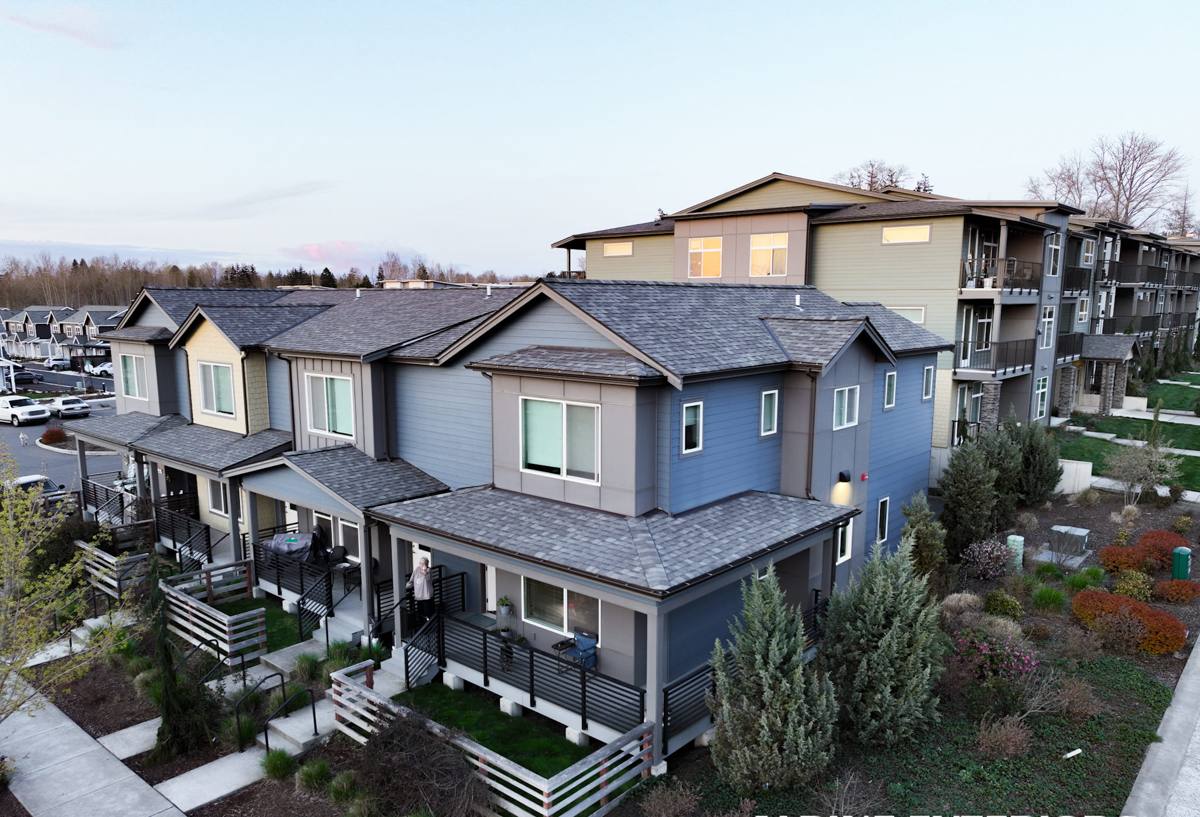
What a Correct Siding Replacement Actually Involves
Swapping old siding for new is the visible part of the job, but it's not where a re-side succeeds or fails. The work that actually determines how long a wall performs happens underneath, and it's easy for a crew in a hurry to skip past it.
Removing the Old Siding Without Hiding Problems
A proper tear-off comes off in a way that lets the crew actually see the wall underneath rather than papering over whatever's there. On an island property, that matters more than usual, because moisture problems tend to develop quietly behind older siding for years before they show up on the surface. Skipping this step to save a day of labor just means whatever's wrong gets sealed back up behind new material.
Checking Sheathing, Framing, and the Weather-Resistive Barrier
Once the old siding is off, the sheathing, framing, and house wrap underneath need a real inspection — not a quick glance. Soft or discolored sheathing, compromised house wrap, and any sign of past water tracking need to be addressed before a single new board goes up. New siding over damaged sheathing doesn't fix anything; it just buys a few more years before the same problem reappears, usually worse.
Flashing and Water Management Details
Flashing around windows, doors, and any wall penetration is where wind-driven rain actually gets stopped — or doesn't. Correctly lapped and integrated flashing, proper clearances at the bottom of the wall, and joints that shed water instead of just being caulked shut are the details that separate siding that lasts decades from siding that starts failing at the seams within a few wet seasons. On an exposed island lot, none of these details are optional.
Why We Only Install James Hardie Fiber Cement
We install one siding system, James Hardie fiber cement, and we don't install LP SmartSide, vinyl, Cemplank, Allura, primed spruce, or cedar. Every one of those products has a place in the broader market and satisfied owners somewhere. We made a professional call that on homes facing this level of sustained salt and moisture exposure, the trade-offs those products carry — an organic core that can swell or decay, a finish that needs recoating, or a joint system more sensitive to water intrusion — aren't worth the risk we'd be asking a homeowner to carry.
Fiber cement doesn't have an organic core for salt air, driving rain, or a long moss season to work into. Its factory-applied ColorPlus finish is baked on under controlled conditions, which holds up against UV and salt exposure far longer than a field-applied paint job. Hardie also engineers its HZ5 product line specifically for regions with heavy, sustained moisture exposure, which is a close match for an island property surrounded by water on every side. Add in a strong transferable warranty, provided the installation follows spec, and it's the system we're comfortable standing behind on homes that take this much punishment year after year.
How Siding Options Compare Under Island Exposure
It helps to see the trade-offs side by side rather than take our word for it. Here's how the common options stack up specifically against the conditions Lummi Island homes deal with.
| Material | Moisture Behavior | Salt Air / Finish Durability | Maintenance Burden |
|---|---|---|---|
| James Hardie fiber cement | No organic core; doesn't swell or absorb moisture like wood-based products | Factory ColorPlus finish resists fading and chalking well beyond field-applied paint | Low — occasional washing, no recoating schedule |
| Vinyl siding | Doesn't rot, but can warp or distort under sustained heat and wind cycling | Field-visible fading and chalking over time; seams can loosen with age | Low, but limited repair options once faded or warped |
| LP SmartSide (engineered wood) | Wood-strand core can swell or delaminate if moisture gets past the coating | Coating protects against salt and UV, but only as long as it's intact | Moderate — coating integrity needs regular checking |
| Cedar | Absorbs moisture directly; performance depends entirely on an intact finish | Salt and UV break down stain finishes faster near open water | High — recoating every 2-4 years, more often on exposed walls |
None of this means the alternatives are bad products in general — it means they carry a level of upkeep or moisture sensitivity that we think is a poor match for a property surrounded by open water, and we'd rather be honest about that up front than sell a homeowner a system we don't fully trust for their site.
Our Process for a Lummi Island Project
We walk every project the same way, but a few things get extra attention on an island job specifically.
Scheduling Around Ferry Access
Getting a crew, materials, and equipment onto Lummi Island means working around ferry access, which is a real logistics factor that a contractor unfamiliar with the island might not plan for. We build that into the schedule up front rather than discovering it mid-project, which is part of why continuity of crew and materials matters more here than on a mainland job.
Assessing Exposure by Wall and Orientation
Not every wall on an island home takes the same abuse. We walk the property and note which elevations face open water and prevailing wind, which stay shaded and damp longest, and which have the least protection from tree cover or terrain. That assessment shapes fastening patterns, flashing priorities, and sometimes even which sections need attention first if the budget calls for phasing the work.
An Honest Repair-vs-Replace Conversation
Not every siding issue on the island calls for a full tear-off. Isolated storm damage, a failed trim section, or an area that's taken an impact can sometimes be repaired and matched into existing Hardie siding. But if water has been tracking behind the wall for a while, or the home still has an aging, non-Hardie product near the end of its life, patching it usually just delays a bigger job while hidden rot keeps spreading. We'll tell you honestly which situation you're in.
What Affects the Cost of a Lummi Island Siding Replacement
Every property is different, but the same handful of factors drive most of the cost variation we see on island siding jobs:
- Square footage and the number of stories, which drive material quantity and labor time
- Tear-off scope — how many layers of old siding are coming off and what's found underneath
- Substrate repair needs if sheathing or framing has taken on moisture damage over time
- Trim, water table, and corner detail complexity, which take more labor than flat wall runs
- Color and profile selection, since some ColorPlus finishes and board styles carry different material costs
- Site access and staging, given the added logistics of getting materials and equipment onto the island
Exact numbers depend on the specific property and its exposure, which is why we walk the home in person and give a real, written estimate rather than a number pulled from a generic price sheet.
Living With Your New Siding Through the Seasons
One of the real advantages of fiber cement on a property like this is how little ongoing attention it needs once it's installed correctly. An occasional rinse to clear salt residue and moss spores off shaded or north-facing walls is usually enough to keep the finish looking the way it did on install day. There's no recoating schedule to plan around, no caulk joints that need annual inspection the way some wood-based systems require, and no finish that starts chalking within a few seasons of steady salt exposure. That's a meaningful difference on an island property, where every maintenance visit also means factoring in ferry access and travel time — something worth weighing honestly against a lower-maintenance material up front.
Why Hiring a Crew That Already Works the Island Matters
A contractor who already works Lummi Island regularly understands things a mainland-only crew has to learn the hard way: which wall orientations stay wet longest, how ferry scheduling actually affects a project timeline, and which fastening and flashing details are worth the extra time so a homeowner isn't dealing with a callback after the next winter storm. That experience isn't abstract — it shows up in fewer surprises during the tear-off, a more realistic schedule from the start, and a finished job built for the specific exposure the property actually faces rather than a generic mainland spec.
If your Lummi Island home needs new siding, or you're not sure whether what you're seeing is a repair or a sign of something bigger behind the wall, we're glad to take a look. Reach out using the form below to schedule a free, no-pressure estimate.