 Ferndale Exterior
 Roofing Built for Lummi Nation's Coastal Exposure
Homes in Lummi Nation sit close to the water, and that changes what a roof has to deal with day in and day out. Salt-laden air off Bellingham Bay and the surrounding waterways works its way into fasteners, flashing, and shingle granules over time. Add in the driving rain that comes through Whatcom County in fall and winter storms, plus a moss season that can stretch for most of the year under tree cover, and you have a roofing environment that's genuinely tougher than what an inland home a few miles away has to handle. An asphalt shingle roof can absolutely hold up here, but only if it's specified and installed with those specific conditions in mind, not treated like a generic install.
This page covers what we look at, what a correct job actually involves, and how we run the work from first estimate to final cleanup for asphalt shingle roofing specifically in this area.
Why Asphalt Shingles Still Make Sense Here
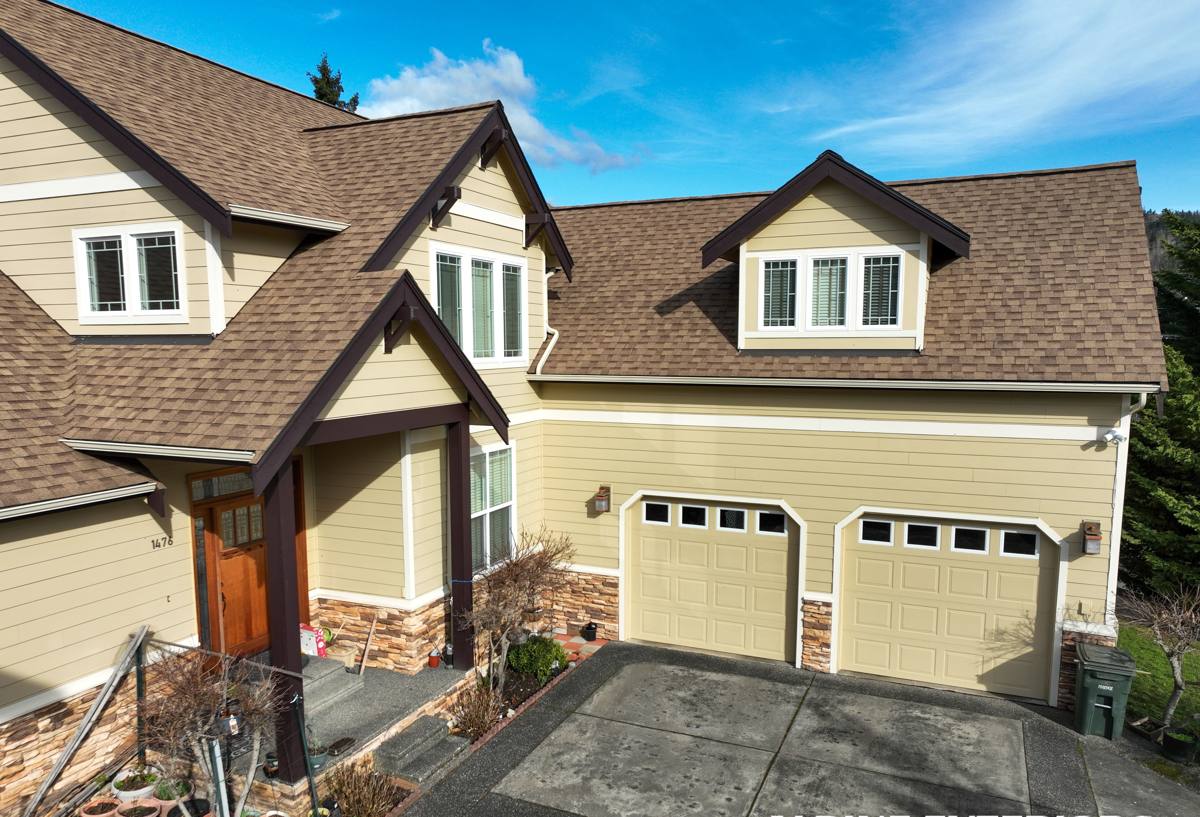
Asphalt shingles remain the most common roofing material in this part of Washington for good reason: they're cost-effective, they come in a wide range of styles and colors, and modern architectural shingles are rated for the wind and rain this region sees. They're also easier to repair in sections than some alternative materials, which matters when a windstorm off the water takes out a patch of shingles rather than the whole roof.
The tradeoff is that asphalt shingles are more sensitive to moisture and biological growth than metal or synthetic products. In a marine climate like this one, that means the product selection and installation details matter more than they would in a drier inland market. We don't treat every shingle roof the same — a waterfront or tree-shaded property in Lummi Nation gets different underlayment and ventilation decisions than a similar home a few miles inland in Ferndale.
What a Correct Installation Involves Here
Underlayment and Moisture Barrier
Standard felt underlayment is not enough for this climate. We use synthetic underlayment rated for high moisture exposure, and we install self-adhered ice-and-water membrane at the eaves, valleys, and around every penetration — not just where code minimums require it. Wind-driven rain off the water can push moisture up under shingles at the lower courses, and the valleys are where the largest volume of water concentrates during a heavy storm. This is the layer that keeps a leak from becoming a rot problem, and it's the layer that's invisible once the job is done — which is exactly why it can't be skipped or downgraded to save a few dollars.
Ventilation
Moss and algae growth is as much a ventilation and shading issue as it is a roofing product issue. A roof deck that stays cool and damp because it can't breathe will grow moss faster than one with proper intake and exhaust airflow, no matter how good the shingle is. On homes with heavy tree cover, which describes a good number of properties in this area, we check attic ventilation as part of every shingle estimate — not as an upsell, but because it directly affects how long the roof stays clean and how long the shingles last.
Flashing and Edge Details
Chimneys, skylights, dormers, and roof-to-wall transitions are where the majority of leaks actually start, not the open field of shingles. We use corrosion-resistant flashing throughout — salt air accelerates rust on lower-grade galvanized flashing faster than most homeowners expect, so we don't cut corners here just because it's a less visible part of the job.
Fastening and Wind Exposure
Homes with open water exposure or sitting on higher, more exposed ground catch more wind than sheltered inland lots. We follow manufacturer nailing patterns for the wind-rated shingle being installed, and on more exposed properties we'll discuss stepping up to a higher wind-rated product rather than relying on standard fastening alone.
Comparing Shingle Options for This Climate
Not all asphalt shingles perform the same in a marine environment. Here's how the common options compare on the factors that matter most for a Lummi Nation property.
| Shingle Type | Wind Rating | Algae/Moss Resistance | Best Fit |
|---|---|---|---|
| Standard 3-tab | Lower rated | Standard granules only | Budget-conscious, sheltered lots away from heavy tree cover |
| Architectural (dimensional) | Higher rated | Available with algae-resistant granules | Most homes in this area; good balance of cost and durability |
| Algae-resistant / impact-rated | Highest rated | Copper- or zinc-infused granules resist streaking | Waterfront, tree-shaded, or heavy-moss lots |
For most properties in this area, we lean toward architectural shingles with algae-resistant granules as the practical starting point, then adjust up or down based on tree cover, sun exposure, and how exposed the lot is to wind off the water.
Moss, Algae, and Salt: What Long-Term Care Actually Looks Like
A new roof in this climate is only half the equation — how it's maintained determines whether it reaches its full lifespan. A few things matter more here than in a drier part of the county:
- Moss should be treated early, before it lifts shingle edges and holds moisture against the deck — pressure washing is not the right tool and can strip granules or force water under shingles
- Gutters and downspouts need more frequent clearing where tree cover is heavy, since clogged gutters back water up under the lowest course of shingles
- Metal flashing and fasteners should be inspected periodically for salt-related corrosion, especially on homes with direct water exposure
- Overhanging branches should be trimmed back from the roofline to reduce shading, debris buildup, and physical abrasion during wind
- A roof that looks fine from the ground can still have granule loss or lifted edges from moss — a periodic close-up inspection catches problems while they're still cheap to fix
We're upfront that no shingle roof in this environment is entirely maintenance-free. The goal is to specify and install it so that reasonable, periodic upkeep is all it takes.
Our Process, From Estimate to Cleanup
We keep the process straightforward and communicate at each step:
- On-site inspection — we look at the existing roof, decking condition, ventilation, flashing points, and tree/water exposure specific to the property
- Written estimate — a clear scope of work and product recommendation, with options if there's a meaningful tradeoff worth discussing
- Tear-off or overlay decision — we'll tell you honestly whether the existing roof can be overlaid or whether a tear-off is the right call, based on deck condition and how many layers are already there
- Installation — underlayment, ice-and-water membrane, flashing, and shingles installed to manufacturer specification, with ventilation addressed as part of the job
- Cleanup and magnetic sweep — full site cleanup including a magnetic nail sweep of the yard and driveway
- Final walkthrough — we go over the finished roof with you before considering the job done
Why Local Experience in This Area Matters
A roofing crew that regularly works in Lummi Nation and the surrounding Ferndale area already knows what a property here is going to throw at them — tree cover that shades sections of the roof year-round, ground conditions that stay damp longer than more open inland lots, and the general wear pattern that salt air puts on metal components. That's not something you learn from a single job; it comes from doing this work repeatedly in this specific setting.
We also treat every property with the same respect and professionalism regardless of location, and we're straightforward about scope, access, and timeline before work ever starts. If there are any site-specific access or permitting questions particular to a property, we'll flag them during the estimate rather than after the fact.
Signs You Need a Shingle Roof Inspection or Replacement
A few practical signs it's time to have a shingle roof looked at, rather than waiting for a leak to show up inside the house:
- Granules collecting in gutters or at downspout outlets
- Visible moss or dark streaking across shingle courses
- Curling, cupping, or cracked shingles, especially on south- or west-facing slopes
- Soft spots or sagging when walked on, which can indicate deck moisture damage
- Daylight visible through the attic at roof boards, or damp insulation after a storm
- A roof approaching or past 20 years old, which is a reasonable point to start planning replacement in this climate rather than waiting for failure
Getting an Honest Look at Your Roof
If you're weighing a repair against a full replacement, or just want a straight answer on how much life is left in a shingle roof out here, we're glad to take a look. We'll tell you what we actually see — not what's easiest to sell — and give you a clear, written estimate with no pressure to decide on the spot. Use the form below to request a free estimate and we'll get back to you to schedule a time that works.