 Ferndale Exterior
 Fiber Cement Siding for a Peninsula Address
Lummi Nation sits out on the peninsula west of Ferndale, closer to open water than almost anywhere else in Whatcom County. That location changes what a homeowner should expect from siding. Salt-laden air moves in off Bellingham Bay and the surrounding waterways more consistently than it does a few miles inland, rain arrives sideways as often as it falls straight down, and enough shade and dampness sits across the peninsula to keep moss active for most of the year. This page covers one thing specifically: what it takes to install fiber cement siding correctly on a home in this area, and why we install James Hardie exclusively rather than one of the cheaper alternatives on the market.
This is general guidance for the area, not a description of any specific property. Every lot on the peninsula has its own exposure depending on tree cover, orientation, and distance from the water, and we account for that on-site rather than assuming one spec fits every home.
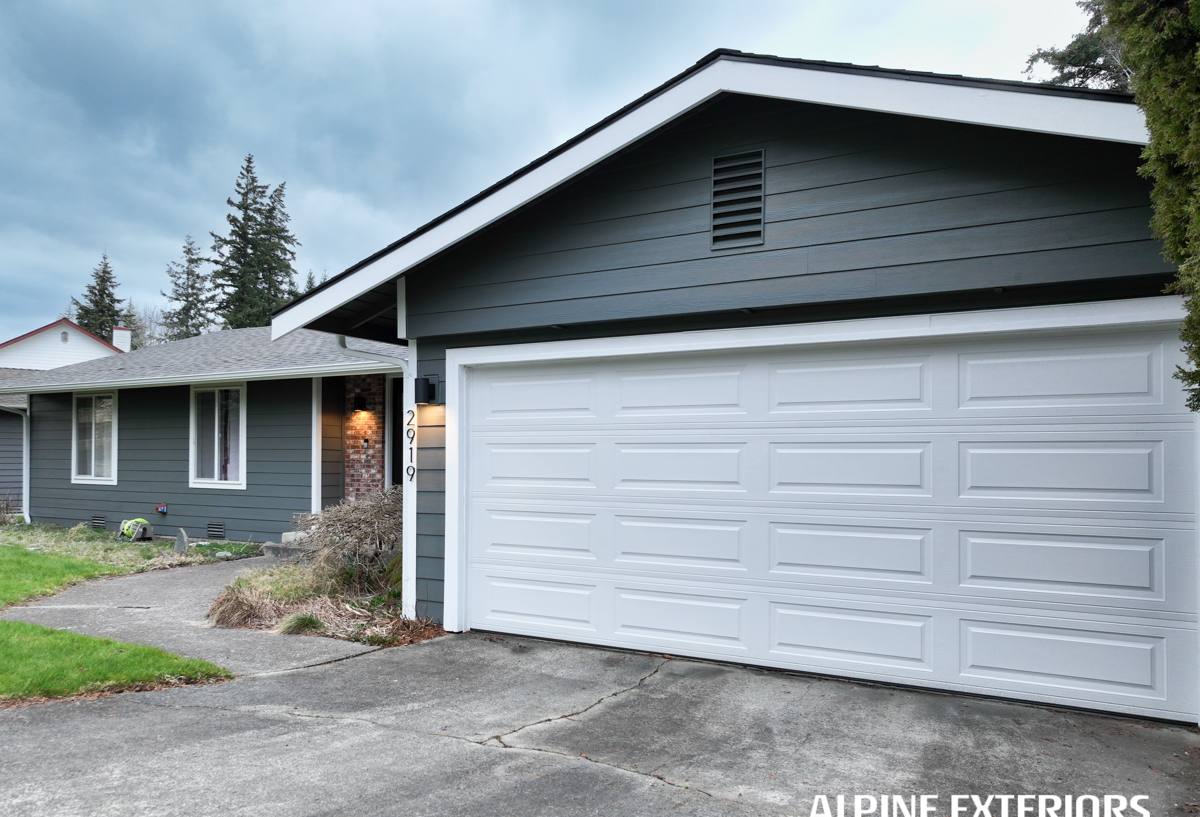
What This Exposure Actually Does to Siding
Salt Air, Close and Constant
The closer a home sits to open water, the more salt-laden moisture settles on every exterior surface, not just the siding. Salt accelerates corrosion in fasteners and flashing and breaks down lower-grade paint finishes faster than a drier inland climate would. On a peninsula lot, that process runs faster and more continuously than it does even a short distance further into town, which means materials and hardware picked without that in mind tend to show their age early — chalky finishes, rust streaks below fastener heads, and trim that fails well ahead of schedule.
Wind-Driven Rain
Open water means fewer windbreaks, and wind is what turns rain into a sideways problem instead of a straight-down one. Driving rain gets pushed into lap joints, trim seams, and butt joints, and it finds any spot where flashing isn't doing its job. That's a harder test on a siding system than an annual rainfall total suggests, because the water is attacking from an angle most inland installations never have to deal with.
A Long Moss and Mildew Season
Peninsula terrain, tree cover in places, and near-constant moisture add up to a moss and mildew season that runs longer here than in drier stretches of the county. It shows first on north-facing and shaded walls, and it isn't just cosmetic — sustained organic growth holds moisture against the wall assembly, which is exactly the condition that leads to rot behind the siding if it goes unaddressed for a season or two.
Why Fiber Cement Is the Right Match for This Exposure
Fiber cement handles sustained coastal exposure better than the alternatives because of how the material itself behaves, not just because of the finish on top of it. It doesn't absorb moisture into its core the way engineered wood products can, it doesn't expand and contract with temperature swings the way vinyl does, and it holds its shape through repeated wet-dry cycling instead of cupping or warping. On a peninsula lot that sees more of that cycling than almost anywhere else in our service area, those material properties matter more than they would on a sheltered inland site.
- Non-combustible core: Fiber cement doesn't feed a fire the way wood-based siding can, which matters for household safety and insurance underwriting alike.
- Factory-applied ColorPlus finish: Color is baked on under controlled factory conditions rather than brushed on in the field, so it resists salt exposure, UV, and fading far longer than site-applied paint.
- Climate-engineered HZ product line: Hardie's HZ5 formulation is built for regions with heavy, sustained moisture exposure and freeze-thaw cycling, which fits a Lummi Nation lot closer than Hardie's formulations meant for warmer, drier climates.
- Dimensional stability: Fiber cement doesn't swell, cup, or warp after repeated wet-season moisture cycles the way engineered wood siding can.
- Strong transferable warranty: Hardie backs its products with a warranty structure that holds up when installation follows spec, which is real protection rather than a marketing line.
We don't install LP SmartSide, vinyl siding, Cemplank, Allura, primed spruce, or cedar. Every one of those products has a place in the broader market and plenty of owners who are satisfied with them in calmer climates. On a peninsula with this much sustained salt and wind exposure, we'd rather stand fully behind one system we trust than offer something cheaper and let the trade-offs surface on the homeowner's timeline instead of ours.
Inside a Correct Fiber Cement Installation
The material only gets a Lummi Nation home halfway there. The rest comes down to installation detail, and on an exposed lot the margin for a shortcut going unnoticed is smaller than it would be somewhere calmer.
Flashing and Water Management
Housewrap, flashing, and siding need to work together as one drainage system rather than relying on caulk to bridge the gaps between them. Window and door openings, deck ledgers, and any wall penetration get flashed so water is directed out and down, not just sealed and hoped-away. On a wall taking wind-driven rain from the water side, this detail matters more than any other single step in the job.
Fastening for Wind Exposure
Peninsula and near-shoreline properties see stronger, more sustained wind during winter storm systems than homes tucked further inland. Fastening patterns get specified to match that exposure rather than defaulting to a minimum spec built for a sheltered lot, and corner and trim details get secured with the same standard in mind.
Joints, Laps, and Caulk
Board ends get properly lapped or backed with flashing at joints, not just butted together and caulked over. Caulk has a service life, and a joint that depends entirely on caulk to stay watertight is a joint that will eventually leak; a joint built with the right lap and backing behind it keeps working even after the caulk starts to age.
Hardware and Trim in a Salt-Air Environment
Salt air is hardest on the small stuff — the fasteners, the flashing metal, and the trim hardware that most homeowners never think to ask about. Corrosion-resistant fasteners rated for the exposure, flashing metals chosen to resist salt-driven corrosion rather than just cost less, and trim details that shed water instead of collecting it all add years to how long a siding job actually holds up on a property this close to the shoreline. Skipping this step doesn't show up on install day — it shows up two or three winters later as rust streaks and failing trim.
Fiber Cement Compared to the Alternatives Here
| Factor | James Hardie Fiber Cement | Vinyl | Engineered Wood (LP-type) |
|---|---|---|---|
| Salt air behavior | Resists corrosion and salt-driven finish breakdown well | Can chalk, fade, and become brittle faster under sustained salt and UV exposure | Coating can be compromised by sustained moisture, exposing the wood substrate |
| Wind-driven rain | Non-porous core resists moisture intrusion | Can flex and open at seams under wind loading | Vulnerable if water reaches the wood core through a coating gap |
| Moss and mildew resistance | Factory finish resists growth; core doesn't feed rot if it does form | Growth sits on the surface but can trap moisture at seams | More vulnerable if organic growth holds moisture against the substrate |
| Dimensional stability | Stable through wet-dry cycling | Expands and contracts with temperature swings | Can swell or cup after repeated moisture cycles |
| Fire performance | Non-combustible core | Combustible | Wood-based, combustible |
None of this means the alternatives are worthless products — they're simply built for a different, less demanding set of conditions than what a Lummi Nation lot delivers year-round. That's the professional judgment behind why we only install fiber cement here.
Our Process for a Lummi Nation Fiber Cement Project
- We walk the property in person and assess wall orientation, tree cover, and proximity to open water, since exposure varies lot to lot even within the same neighborhood.
- We check the existing siding and sheathing for hidden moisture damage before quoting the job, so the estimate reflects what's actually there rather than what's visible from the driveway.
- We spec Hardie's HZ5 product line, fastening pattern, and flashing details to match the wind and moisture exposure of that specific wall or elevation.
- We handle removal, housewrap and flashing correction, and installation to manufacturer spec, with joints and trim detailed for this climate rather than a generic national standard.
- We walk the finished job with you and register the material warranty, so the paperwork is in place from day one.
Cost Factors for This Area
| Factor | What It Affects | Why It Matters on the Peninsula |
|---|---|---|
| Distance from open water | Salt and wind exposure level | Lots closer to the shoreline see faster material wear and higher wind loads on fasteners and trim |
| Tear-off vs. overlay | Labor scope and substrate access | Tear-off reveals hidden moisture damage that's common under older siding on exposed walls |
| Substrate condition | Repair costs before new siding goes on | Trapped moisture behind failing siding can rot sheathing and framing over time |
| Wall orientation and shade | Moss and mildew growth rate | North-facing and tree-shaded walls stay wet longer and may need extra attention during install |
| Site access | Labor time and equipment needs | Peninsula lots can have tighter staging areas, longer driveways, or limited equipment access |
Exact numbers depend on the specific home and its exposure, which is why we walk the property before giving a real estimate instead of quoting off a generic price sheet.
Signs Your Siding Needs a Closer Look
- Moss or dark staining that returns quickly after cleaning, especially on shaded or north-facing walls
- Soft or spongy siding low on the wall or around window and door trim
- Rusting fasteners, corroding flashing, or chalky, faded finish
- Cracked, chipped, or lifted siding sections after a windstorm
- Visible gaps at seams, corners, or trim joints where wind-driven rain can track in
- Paint or caulk that's failed faster than expected, especially on the water-facing side of the home
- Rising energy bills that may point to a wall assembly no longer sealing the way it should
Why a Crew That Already Works This Area Matters
A crew that installs siding across Whatcom County regularly, including out on the Lummi Peninsula, sees firsthand how salt air, wind-driven rain, and moss behave on real homes over a full year rather than how a product performs on a spec sheet. That experience shows up in practical decisions on install day: which walls stay wet longest, where extra flashing attention actually pays off, and which fastening details are worth the added time so you're not dealing with a callback after the next winter storm off the water. It's also worth asking any contractor directly about their experience with this specific stretch of coastline before hiring them — general siding experience and experience with sustained salt-air, high-wind exposure are not the same thing, and the difference shows up in how the job holds up a few winters in.
If you own or maintain a home in or around Lummi Nation and want an honest look at your siding, we're glad to walk the property with you. Use the form below to schedule a free, no-pressure estimate.