 Ferndale Exterior
 Siding Duty Near the Water Is a Different Job
Homes on and around the Lummi Peninsula sit closer to the water than almost anywhere else in Whatcom County, and that changes what siding has to do all year. Salt-laden air off Bellingham Bay and the Georgia Strait works into seams and fasteners that inland homes never have to deal with. Add Ferndale's driving winter rain, blowing in sideways off the water more often than straight down, and a long, damp moss season that can run from October into May, and you have a siding environment that punishes shortcuts faster than almost any other part of the county.
This page is about one product, in one setting: James Hardie fiber cement siding on homes near Lummi Nation. Not a general siding overview — the specific climate stress here, what a correct installation looks like in response to it, and why the crew doing the work matters as much as the material itself.
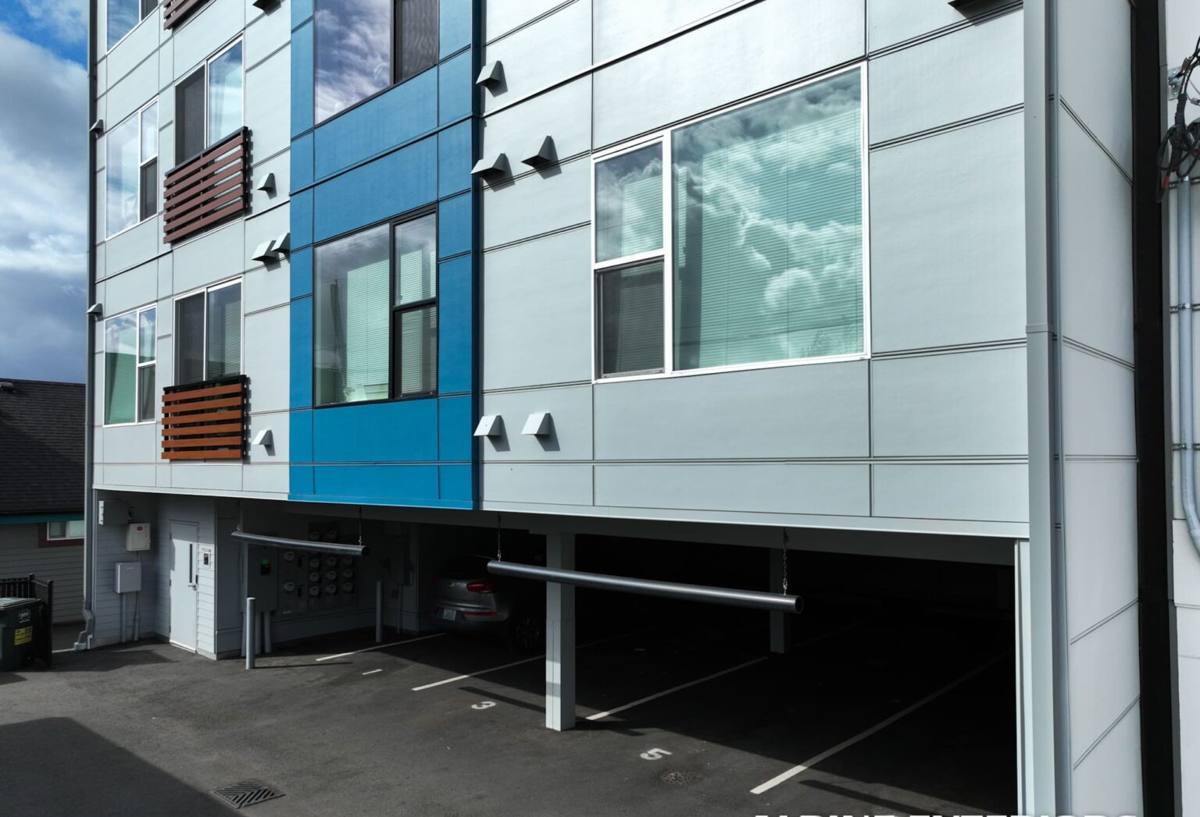
What Salt Air, Rain, and Moss Actually Do to Siding
Salt air doesn't just sit on a wall — it's hygroscopic, meaning it pulls moisture out of the atmosphere and holds it against whatever surface it lands on. On siding, that means fastener heads, cut edges, and seams stay damp longer than they would a few miles inland, even on days that look dry. Over years, that constant low-grade moisture exposure is what drives corrosion in fasteners and trim, swelling in wood-based products, and premature paint failure.
Driving rain adds a second, mechanical problem: wind-driven water finds horizontal laps, butt joints, and any gap around windows or trim and pushes water uphill and sideways, not just down. A siding system that only sheds water well in calm conditions isn't built for this stretch of coastline.
Moss is the third factor, and it's easy to underestimate. A long, shaded, damp season lets moss and algae establish on north-facing walls, under eaves, and anywhere airflow is poor. Beyond the cosmetic issue, moss holds moisture against the siding surface for extended periods, which is exactly the condition that accelerates rot in wood siding and delamination in lower-grade composite products.
Why This Combination Is Harder on Some Materials Than Others
Each of these three stressors — salt, wind-driven rain, and standing moisture from moss — targets a different weak point. A material has to resist all three at once, not just one, to hold up on a Lummi Nation-area home for the long term. That's the standard we install to, and it's why we don't treat this as a generic siding job.
Why We Install Only James Hardie Fiber Cement
We standardized on James Hardie siding and stopped installing vinyl, LP SmartSide, primed spruce, cedar, and other fiber cement brands because, over time, they each show a weak point that shows up faster in this climate than elsewhere.
- Vinyl can warp and buckle under temperature swings and wind-driven rain can push water behind loose panels with nowhere to drain.
- Wood and cedar siding needs a maintenance schedule most homeowners underestimate — repainting, caulking, and moss treatment on a near-annual basis to keep moisture out.
- LP SmartSide and other engineered wood products use a wood-strand core that, once its factory coating is compromised at a cut edge or fastener hole, can swell and deteriorate faster than fiber cement in a consistently damp environment.
James Hardie fiber cement is cement, sand, and cellulose fiber — it doesn't have an organic core to rot, it's non-combustible, and its ColorPlus factory finish is baked on under controlled conditions rather than field-applied, which matters a lot when a big share of paint failure on other products traces back to moisture getting under an inconsistent field coat.
The HZ5 Climate Line: Engineered for This Exposure
James Hardie doesn't make one product for the whole country — its HardieZone system engineers panels differently by climate zone. Western Washington, including Ferndale and the Lummi Peninsula, falls in the HZ5 zone, which is formulated for wetter, more moisture-cycling climates than the HZ10 line used in hot, dry regions. That distinction matters more here than almost anywhere: HZ5 panels are engineered with moisture and freeze-thaw cycling in mind, which lines up directly with the salt air and driving rain this area sees most winters.
Product Lines Homeowners in This Area Typically Choose Between
Within HZ5, most homes here use either HardiePlank lap siding (the most common choice, available in several exposure widths and textures) or a mix of HardiePlank with HardiePanel vertical siding and HardieTrim for accents, gables, and window and door surrounds. The right mix depends on the home's architecture, not a one-size answer.
What a Correct Installation Actually Involves
Fiber cement siding is only as good as the assembly behind it. Most of the failures we get called out to inspect on other companies' work trace back to installation shortcuts, not the material itself.
Weather-Resistive Barrier and Flashing
Before a single plank goes up, the home needs a properly lapped weather-resistive barrier and correctly integrated flashing at every window, door, and roof-to-wall intersection. In a driving-rain climate, flashing details are what actually keep water out — the siding itself is the second line of defense, not the first.
Clearances and Gaps
James Hardie's installation instructions specify minimum clearances from grade, roof lines, decks, and other siding — typically several inches — to keep the bottom edge of the siding away from standing water and splash-back. Skipping these clearances is one of the most common corner-cuts we see, and it's also one of the fastest ways to void the manufacturer's warranty.
Fastening
Fasteners need to be corrosion-resistant and driven to the manufacturer's specified depth — not overdriven, which crushes the plank's fiber structure and creates a moisture entry point, and not underdriven, which leaves panels loose in the wind loads this area sees in winter storms.
Joints, Caulking, and Field-Painted Cuts
Every cut edge needs to be sealed with a Hardie-approved caulk or touch-up product, because a factory ColorPlus finish only protects the factory edge. Butt joints need proper backing and sealant to shed wind-driven rain instead of channeling it into the wall assembly.
Our Process, Start to Finish
- On-site assessment: we inspect the existing wall assembly, look for moisture damage or rot already present, and check exposure — north-facing and water-facing walls often need extra attention here.
- Product and color selection: we walk through plank profile, texture, and ColorPlus color options suited to the home's exposure and the owner's preference.
- Removal and prep: old siding comes off, sheathing is inspected and repaired as needed, and a new weather-resistive barrier and flashing package goes on before any new siding is hung.
- Installation to manufacturer spec: proper clearances, fastening depth, and joint treatment throughout — the details covered above, not shortcuts.
- Final walkthrough: we go over the finished work with the homeowner, including basic care guidance for this climate specifically.
Comparing Siding Options for This Climate
| Material | Response to Salt Air & Driving Rain | Fire Resistance | Typical Maintenance |
|---|---|---|---|
| James Hardie fiber cement | Engineered for moisture cycling (HZ5); non-organic core resists rot | Non-combustible | Periodic recaulking at cut edges; occasional repainting after many years |
| Vinyl | Can warp/buckle with temperature swings; seams can allow water intrusion | Combustible, can melt/deform near heat | Low, but panels can't be simply repainted if faded |
| LP SmartSide / engineered wood | Wood-strand core vulnerable once factory coating is breached | Combustible | Ongoing coating inspection at edges and fasteners |
| Cedar / wood | Absorbs moisture readily; moss and algae take hold without upkeep | Combustible | Frequent repainting, staining, and moss treatment |
What Drives the Cost of a Hardie Project Here
Every home is different, but the same handful of factors move the price on most Lummi Nation-area projects. We'll walk through all of these during an on-site estimate rather than quoting blind over the phone.
| Cost Factor | Why It Matters |
|---|---|
| Home size and number of stories | More surface area and more difficult access both add labor time |
| Condition of existing sheathing | Water damage found during tear-off needs repair before new siding goes on |
| Trim and architectural detail | Gables, dormers, and multiple roof lines mean more flashing and cutting |
| Plank profile and texture selection | Smooth, cedar-textured, and different exposure widths carry different material costs |
| Tear-off vs. new construction | Removing and disposing of old siding adds labor compared to new-build installs |
Signs Your Current Siding Is Losing the Fight
Because this climate accelerates problems, it's worth knowing what to watch for — especially heading into another wet season.
- Persistent moss or dark streaking on north-facing or shaded walls that comes back quickly after cleaning
- Soft spots, especially near the bottom courses close to grade or near downspouts
- Paint that's peeling, bubbling, or chalking heavily rather than fading evenly
- Visible gaps or separation at butt joints and around window and door trim
- Fastener heads showing rust or "bleeding" staining down the face of the siding
Why Local Experience on This Coastline Matters
A crew that mostly works drier, inland neighborhoods can install Hardie siding correctly on paper and still miss the details that matter most a few hundred yards from saltwater — how much clearance to leave at grade in a spot that floods differently than an inland lot, which walls need extra flashing attention because they take the brunt of winter storms, or how much ventilation a shaded, moss-prone wall actually needs. Experience specific to Ferndale and the Lummi Peninsula's exposure isn't a marketing point — it changes real decisions on the job.
If you're weighing a siding project on a Lummi Nation-area home, we're glad to come take a look, walk the exterior with you, and put together a straightforward, no-pressure estimate based on what your home actually needs.