 Ferndale Exterior
 New-Construction Windows, Done Right From the Rough Opening
New-construction windows are a different job than replacement windows, even though the finished product can look the same. On a new build or a full-tear-out remodel, we're working with a bare rough opening, exposed sheathing, and house wrap that hasn't been cut yet. That gives us a real chance to get the water management right from the start — flashing sequence, sill pans, nailing fin integration, and weep paths — instead of working around decades-old framing decisions like we do on a replacement job. For homes going up or being rebuilt in and around Lummi Nation, that first-pass accuracy matters more than most builders realize, because this stretch of Whatcom County throws a lot of moisture at a house over its lifetime.
This page covers what a correct new-construction window install looks like specifically for this area, what the local climate demands from the window and the installation, and how our process is built around getting it right the first time — since callbacks on a sealed-up wall are expensive for everyone.
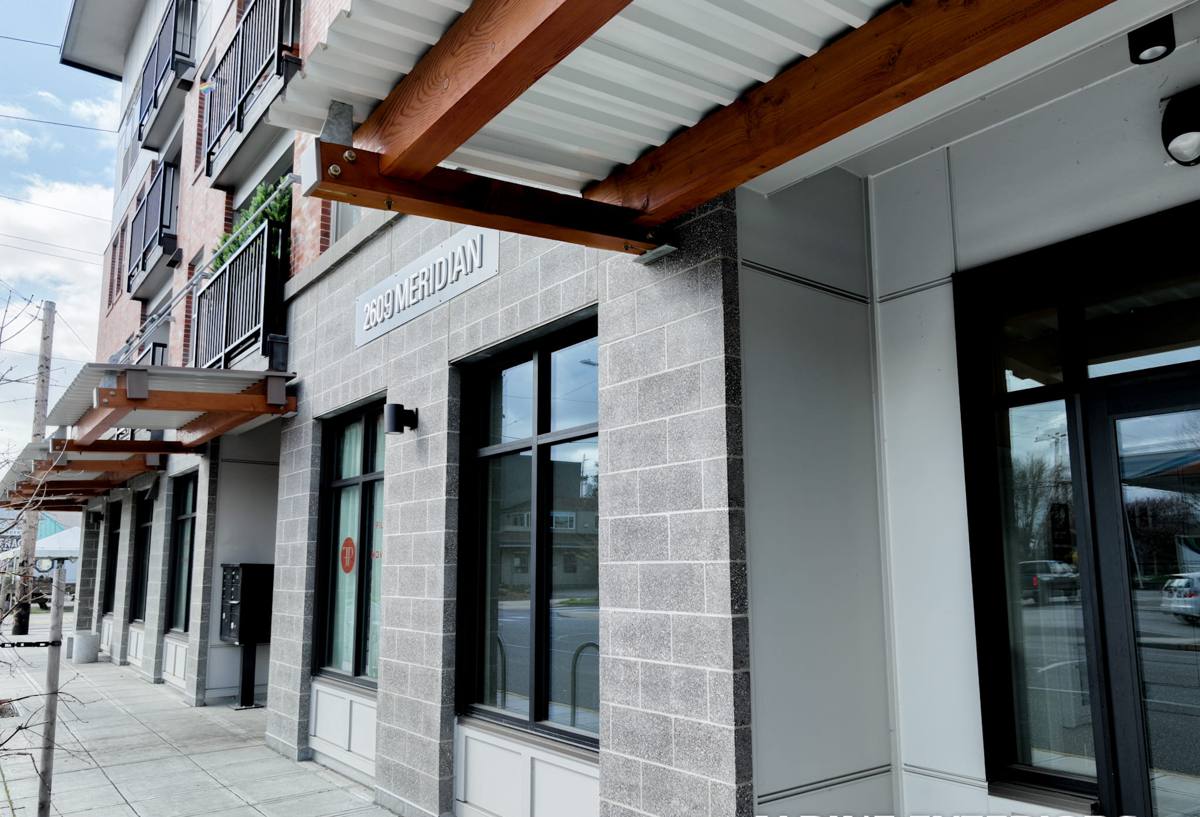
Why Lummi Nation's Climate Is a Real Factor in Window Selection
Homes near Lummi Nation sit close to Bellingham Bay and the Strait of Georgia, which means the building envelope deals with a few specific stressors that inland Whatcom County homes see less of:
Salt Air
Airborne salt accelerates corrosion on unprotected fasteners, low-grade hardware, and some aluminum components. It's not usually dramatic — it's slow, and it shows up years later as pitted hardware, stained sills, or a lock mechanism that starts binding. We factor this into hardware and fastener choices on every install near the water, not just the window unit itself.
Driving Rain
Wind off the water pushes rain sideways, not straight down. A window that would shed water fine in a calm inland yard can take on wind-driven rain here, which is exactly the condition that exposes a sloppy flashing job. This is the single biggest reason new-construction window failures happen in this area — not a bad window, but water finding a gap in the wall assembly around a good window.
A Long Moss and Mold Season
Whatcom County's wet season runs long, and shaded, north-facing walls near tree cover stay damp for extended stretches. Moss and algae growth on sills, trim, and low-slope surfaces isn't just cosmetic — sustained moisture against wood trim or an undersized sill pan is a slow path to rot. We pay attention to drainage and material choice at every sill, not just the window glass.
What a Correct New-Construction Install Actually Involves
The window unit itself is maybe a third of what determines whether an opening performs for the next 20-30 years. The rest is sequencing:
- Rough opening check — square, level, and sized correctly before anything gets set. Framing tolerances vary, and we don't assume the opening is right just because the plans say so.
- Sill pan flashing — a sloped, sealed pan under the window that gives any water that does get past the window a way out, instead of into the wall cavity.
- Nailing fin integration with the water-resistive barrier — the house wrap and flashing tape have to be layered in the correct shingle-lap order (bottom to top) so water sheds outward at every layer, never inward.
- Head flashing — the top of the opening gets a drip cap or head flashing detail that directs water away from the window, which matters most under wind-driven rain conditions.
- Air sealing and insulation of the shim space — gaps around the frame get sealed and insulated correctly, not just stuffed with fiberglass, to control both drafts and condensation risk.
- Weep hole and drainage path confirmation — for units with weep systems, we confirm they're clear and functional before trim goes on, not after.
Skip or rush any one of these and the window itself becomes irrelevant — water will find the weak point in the assembly, usually in the first two or three wet seasons.
Choosing Materials and Glass for This Environment
There's no single "best" window material — the right call depends on the home's exposure, budget, and how much maintenance the owner wants to take on. Here's how the common choices stack up for a coastal-influenced Whatcom County build:
| Material | How it handles salt air & moisture | Maintenance | Typical fit |
|---|---|---|---|
| Vinyl | Good — won't corrode or rot, seams are the main watch point | Low | Most builds, best value |
| Fiberglass | Very good — stable, low expansion/contraction, holds up well to weather cycling | Low | Higher-exposure walls, larger units |
| Wood-clad | Depends on cladding integrity — any breach exposes wood to prolonged moisture | Higher — finish and seals need monitoring | Interior aesthetic priority, protected exposures |
| Bare aluminum | Poor near salt air without upgraded finish — prone to pitting and corrosion over time | Moderate to high | We generally steer clients away from this near the water |
On glass, we default to dual-pane, low-E units with argon fill for new construction in this area — the low-E coating cuts heat loss during Whatcom County's long shoulder seasons, and argon fill adds a meaningful bump in performance for a small cost difference. For walls with heavier wind-driven rain exposure or west/southwest orientation toward the water, we'll talk through upgraded weatherstripping and a heavier-duty frame profile rather than just upgrading the glass package.
Our Process on Lummi Nation-Area Builds
1. Plan Review and Site Walk
Before install day, we review the rough opening dimensions against the window order and walk the site to check orientation, exposure, and any framing issues while there's still time to fix them cheaply.
2. Flashing and Water Management Sequence
This is where we spend the most care — sill pan, jamb flashing, and head flashing installed in the correct order and integrated with the house wrap, before the window ever goes in.
3. Window Set and Fastening
Units get shimmed, squared, and fastened per manufacturer spec — over-fastening or under-fastening both cause problems down the line, from warped frames to units that don't hold their seal.
4. Insulation and Air Sealing
Shim gaps sealed and insulated correctly, checked for gaps that would otherwise become a condensation or draft point once drywall goes up.
5. Final Inspection
We check operation, hardware function, and visible flashing lines before we consider a window opening finished — not just that it looks good from the outside.
Cost Factors on a New-Construction Window Job
New-construction window pricing depends on more than the window unit price tag. Rough numbers, not quotes:
| Factor | Why it moves the price |
|---|---|
| Window count and size mix | Larger units and specialty shapes (arched, oversized) cost more in both unit and labor |
| Material (vinyl vs. fiberglass vs. wood-clad) | Fiberglass and wood-clad run higher than vinyl for comparable performance |
| Exposure and elevation | Walls with heavy wind-driven rain exposure may warrant upgraded flashing details or frame specs |
| Glass package | Low-E, argon, and any additional coatings add incrementally to unit cost |
| Access and site conditions | Second-story or hard-access openings add labor time |
We'll always walk you through where your money is going before we order anything — the goal is to spend more where it actually protects the wall (flashing, sill details) rather than upselling features that don't change performance.
A Practical Checklist Before You Sign Off on Any New-Construction Window Job
- Rough openings measured and confirmed square before window order is finalized
- Sill pan flashing specified for every opening, not just "high-risk" ones
- Flashing sequence follows correct shingle-lap order with the house wrap
- Glass package matches the wall's actual sun and wind exposure, not a one-size spec across the whole house
- Hardware and fasteners appropriate for coastal-influenced air, not generic inland-grade parts
- Weep holes and drainage paths verified clear before trim installation
- Manufacturer warranty terms reviewed and understood before install, not after
Why Hiring a Crew That Already Works This Area Matters
Window installation standards are the same on paper everywhere. What's different is judgment calls — how much flashing overlap to use on a wall that catches the worst of the wind off the water, which sill details hold up through a Whatcom County wet season versus which ones start failing in year three, and where moss and shade patterns on a given lot mean extra drainage attention. A crew that's done this work around Ferndale and the Lummi Nation area repeatedly has already made those calls on real houses in this exact climate. That's not something you get from a general contractor working from a spec sheet written for a drier region.
Get a Straightforward Estimate
If you're framing a new build or planning a full window replacement on a remodel near Lummi Nation, we're glad to walk the site, look at your plans or existing openings, and give you a clear, no-pressure estimate — including what we'd actually change about a generic spec to suit this stretch of coastline. Use the form below to get started.