 Ferndale Exterior
 Why Lynden Roofs Wear Differently
Lynden sits inland from the coastline, but that doesn't mean its roofs get an easier ride. The same marine weather system that soaks the rest of Whatcom County — moisture pushed in off Bellingham Bay and the Strait of Georgia — rolls across the lowlands and settles into Lynden's farmland and residential streets just the same. Add in the tree cover common around many Lynden properties, and you get roofs that stay damp longer after every storm than they would in a drier inland climate.
That combination of driving rain, salt-tinged marine air, and long stretches of overcast, low-sun days adds up to a moss season that can run eight or nine months out of the year in shaded yards. Moss doesn't just look bad — it holds water against shingles and decking long after the rain stops, which is exactly the kind of slow, quiet damage that shortens a roof's life without ever announcing itself with a dramatic leak.
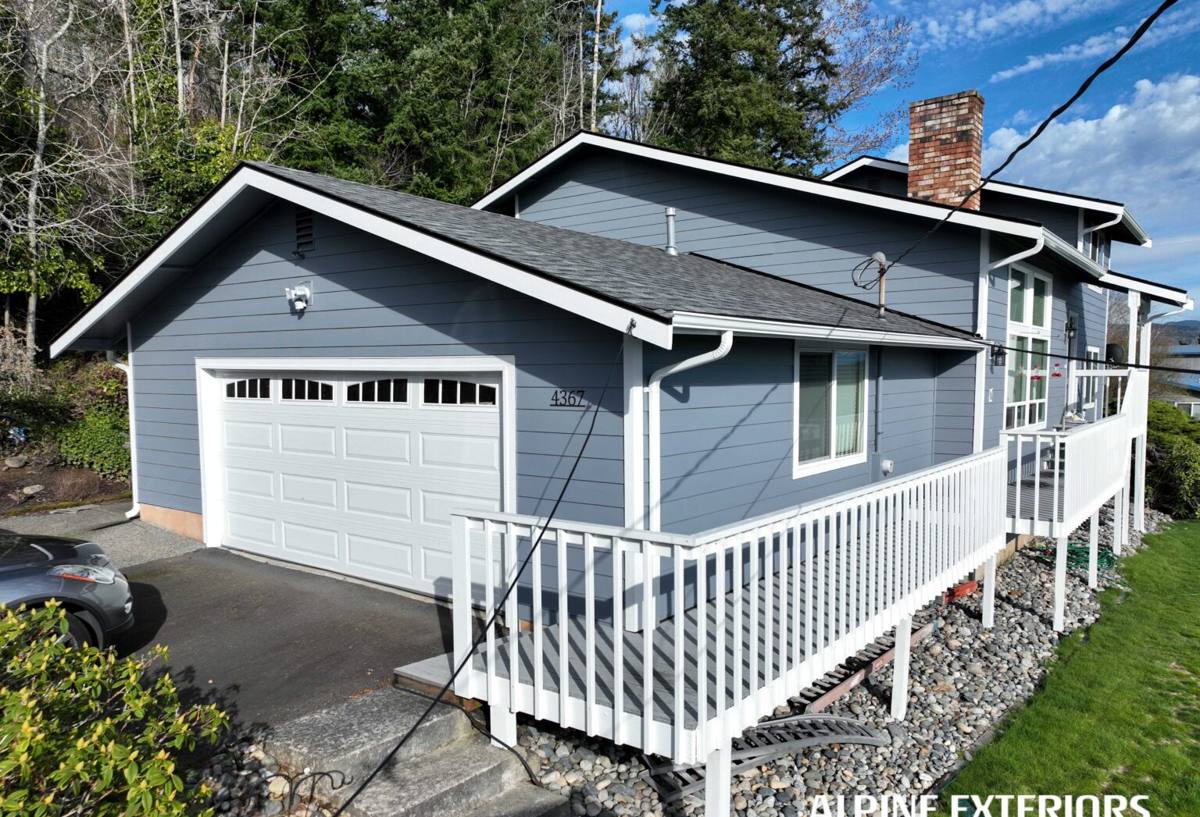
Signs a Lynden Roof Has Reached Replacement, Not Repair
Not every roof problem calls for a full replacement, and a straight contractor will tell you when a repair is the honest answer. But there's a point where patching stops making sense — where you're spending real money to buy a few more months on a roof that's already failing underneath. Common signs we see on Lynden homes include:
- Granule loss heavy enough that you can see bare asphalt in the gutters or downspouts
- Shingles curling, cracking, or lifting at the edges, especially on south and west-facing slopes
- Moss mats thick enough to hold visible moisture, particularly on north-facing roof planes that don't get direct sun
- Soft or spongy decking felt underfoot, or daylight visible through the attic sheathing
- Flashing leaks around chimneys, skylights, or valleys that keep coming back after repair
- A roof original to the home and past the 20-to-25-year mark for standard asphalt shingles
If a roof is showing two or three of these at once, a repair is usually just delaying the inevitable and adding cost on top of what a full replacement would have run.
What a Correct Roof Replacement Actually Involves
Full Tear-Off and Deck Inspection
A proper replacement starts by removing the old roofing down to bare decking — not layering new shingles over old. That's the only way to actually see the plywood or plank decking underneath, which after years of moss and moisture exposure is often where the real damage has been hiding. Any soft, delaminated, or rotted decking gets replaced before anything new goes down. Skipping this step is how a roof looks fine for a year or two and then fails from the inside out.
Underlayment Built for Wet Winters
In a climate that stays wet as long as this one does, the underlayment layer matters as much as the shingle itself. We use synthetic underlayment across the full roof deck for water resistance, with self-adhering ice-and-water barrier at the eaves, valleys, and around every penetration — chimneys, vents, skylights — where wind-driven rain is most likely to find a way in.
Ventilation That Matches the Climate
A roof that can't breathe traps moisture in the attic, which feeds condensation, encourages rot in the framing, and can shorten the life of the new roofing from underneath before it's had a chance to prove itself. Balanced intake and exhaust ventilation — ridge vents paired with proper soffit intake — is part of a correct install here, not an upgrade.
Flashing and Edge Details
Most roof leaks don't happen through the field of the shingles — they happen at the transitions: valleys, chimneys, sidewalls, and roof edges. New step flashing, valley metal, and drip edge, properly lapped and sealed, is standard on every replacement we do, not something added only if a homeowner asks.
Choosing a Roofing Material for Lynden's Climate
There's no single "best" roofing material for every home — the right choice depends on budget, roof pitch, how the home is shaded, and how much long-term maintenance a homeowner wants to take on. Here's how the common options actually compare for a climate like this one:
| Material | Typical Lifespan Here | Moss & Moisture Behavior | Maintenance Load |
|---|---|---|---|
| Architectural asphalt shingle | 25–30 years | Good with proper ventilation and periodic moss treatment | Low to moderate |
| Standing seam metal | 40–50+ years | Sheds moss and standing water very well; minimal debris hold | Low |
| Synthetic/composite shake | 30–50 years | Resists rot and moisture absorption better than natural wood | Low |
| Natural cedar shake | 20–30 years, climate-dependent | Absorbs moisture, prone to moss and rot without diligent upkeep | High |
We're upfront that natural cedar shake is a tougher recommendation in a climate this wet. It's a beautiful, traditional look, but it absorbs moisture, is one of the more forgiving surfaces for moss to establish on, and needs regular cleaning and treatment to hold up anywhere near its potential lifespan. That's not a knock on cedar as a product — it's simply a maintenance commitment that not every homeowner wants to sign up for, and we'd rather say so upfront than sell a roof that becomes a chore. Synthetic shake products have closed a lot of that gap for homeowners who want the look without the same upkeep.
Our Replacement Process, Start to Finish
- On-site assessment. We walk the roof, check the attic from the inside, and look at decking, ventilation, and flashing condition before we ever talk materials.
- Written estimate. A clear scope of work and price, spelling out materials, underlayment, ventilation changes, and any decking replacement contingencies.
- Scheduling around the weather. We plan installs around dry windows, since a tear-off roof needs to get dried in the same day whenever possible.
- Tear-off and deck repair. Old roofing removed, decking inspected and replaced where needed, before anything new goes down.
- Underlayment, ventilation, and flashing. The parts of the job that don't show but determine whether the roof actually performs.
- Final install and cleanup. Shingles or panels installed to manufacturer spec, site swept for nails and debris, and a final walk-through with the homeowner.
Living With Moss and Marine Moisture After Installation
A new roof doesn't mean moss and moisture stop being a factor — it means you're starting from zero with materials and ventilation designed to handle them better. A few habits go a long way toward protecting that investment:
- Keep gutters and valleys clear of needles and debris, especially heading into fall
- Trim back overhanging branches that keep roof sections shaded and slow to dry
- Have moss growth treated before it establishes into thick mats, rather than after
- Check attic ventilation isn't blocked by insulation at the soffits
- Have flashing and sealant points inspected every few years, particularly after wind events
Why a Crew That Already Works in Lynden Matters
Roofing crews that mostly work drier climates tend to underbuild for conditions here — lighter underlayment, minimal ventilation upgrades, flashing details that would be fine in Eastern Washington but aren't enough for a Whatcom County winter. A crew that regularly works Lynden and the surrounding area already knows how local roofs actually fail, which is different from how a spec sheet says they should perform. That familiarity shows up in the small decisions on a job — where to add extra ice-and-water protection, how much ventilation a particular roof shape actually needs, which valleys tend to collect debris and deserve extra attention.
It also matters for scheduling. Roofing needs a dry window to go in correctly, and a crew that works this region plans around our weather patterns rather than treating every week as interchangeable.
Permits, Timing, and Weather Windows in Whatcom County
Most roof replacements in and around Lynden require a building permit, and a legitimate contractor pulls it rather than skipping the step. We handle that as part of the job so it's not left to the homeowner to sort out. Timing-wise, we work replacements throughout the year, but we schedule around forecasted dry stretches whenever we can — a roof that's opened up for tear-off needs to be dried in before rain moves back through, and rushing that step is how corners get cut. Summer and early fall tend to offer the most predictable windows, but a well-run crew can work responsibly in shoulder-season weather too.
Questions to Ask Before You Hire
Whoever you choose to replace your roof, a few questions will tell you a lot about how the job will actually go:
- Is the estimate a full tear-off, or does it include roofing over the existing layer?
- What underlayment and ice-and-water protection is included, and where specifically?
- Will ventilation be assessed and upgraded if it's inadequate, or left as-is?
- Who pulls the permit, and is that cost included in the quote?
- What happens if decking damage is found once tear-off starts?
- Is the crew licensed, bonded, and insured in Washington, and can they confirm it in writing?
A contractor who answers these clearly and without hesitation is usually one worth hiring. One who gets vague or brushes past them is worth a second look before you sign anything.
If your roof is showing its age or you just want an honest read on where it stands, we're happy to take a look. Reach out for a free, no-pressure estimate using the form below.