 Ferndale Exterior
 Roof Repair Built for Marietta's Waterfront Climate
Marietta sits low and close to the water at the edge of Bellingham Bay, in the shadow of Ferndale and Whatcom County's marine weather patterns. That location is part of what makes the neighborhood a nice place to live, and it's also exactly why roofs here wear differently than roofs ten miles inland. Salt-laden air off the bay accelerates corrosion on fasteners, flashing, and exposed metal. Driving rain off the water finds every gap in a roof's defenses. And the long, damp moss season that defines this whole corner of the Pacific Northwest doesn't let up just because a home sits close to open water — if anything, the extra humidity keeps moss and moisture problems going a little longer into the season.
Roof repair in this area isn't a one-size-fits-all job. A repair that would hold up fine in a drier, inland part of the county can fail early in Marietta if it doesn't account for salt exposure and near-constant moisture. This page covers what that means in practice, and what a correct repair actually involves out here.
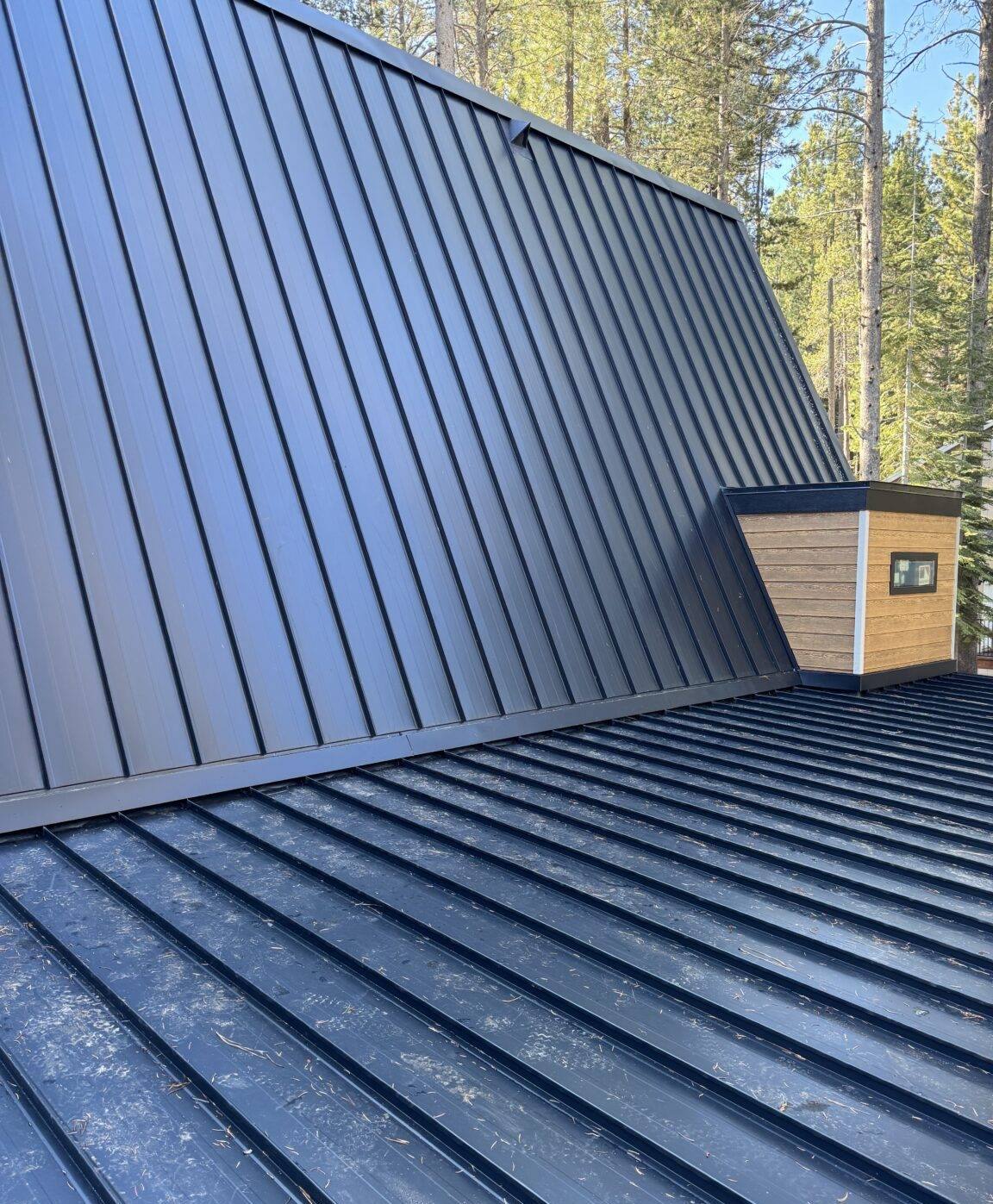
Why Marietta Roofs Fail Differently Than Other Ferndale-Area Roofs
Salt Air and Metal Fatigue
Every roof has metal components — flashing around chimneys and valleys, drip edge, fasteners holding shingles or panels down, vent boots with metal collars. In a coastal-influenced pocket like Marietta, that metal corrodes faster than it would further from the water. Corroded fasteners back out or lose their grip. Corroded flashing thins out and eventually pinholes, which is a slow, quiet way for water to get into a roof deck without any obvious sign from the ground.
Driving Rain and Wind-Driven Water
Open water nearby usually means less wind buffering than a roof would get in a more sheltered, tree-lined inland lot. Wind-driven rain doesn't just fall straight down — it gets pushed sideways and upward under shingle edges, around vents, and into any gap in a roof's flashing system. Repairs that only address the visible leak point and ignore how water is actually arriving at that point tend to come back.
Moss, Algae, and the Long Wet Season
Whatcom County's mild, wet climate keeps moss and algae growing on north-facing and shaded roof slopes for a large part of the year. Moss holds moisture directly against the roofing material, works its way under shingle tabs as it grows, and lifts edges enough for wind and rain to get underneath. On composition shingle roofs especially, sustained moss growth is one of the more common reasons a roof develops leaks well before it should, based on the material's expected lifespan.
What a Correct Roof Repair Involves
A roof repair is only as good as the diagnosis behind it. Chasing a stain on a ceiling without tracing it back to its actual entry point on the roof is how the same leak gets "fixed" two or three times. Our process for a Marietta repair generally looks like this:
- Interior and attic check first. If there's an active leak, we look at the attic or accessible roof framing before going up top, to see where water is actually tracking and how far it has traveled from its real entry point.
- Full roof inspection, not just the trouble spot. We walk the whole roof, not just the area over the stain. A single failure point rarely exists in isolation — if flashing is corroding in one valley, nearby flashing of the same age and exposure is worth checking too.
- Identify the actual cause. Cracked or lifted shingles, failed flashing, a deteriorated vent boot, moss holding water against the deck, nail pops, or a compromised seal at a penetration — the repair has to match the real cause, not just patch the surface.
- Repair with materials suited to the exposure. In a salt-air environment, that often means favoring corrosion-resistant fasteners and flashing over standard-grade materials, even if it costs a little more up front.
- Address moss and debris, not just the leak. If moss contributed to the failure, we treat and clear it as part of the repair — otherwise the same conditions just cause the next leak.
- Document what we found. Homeowners get a clear explanation of what failed, why, and what we did about it — not just an invoice.
Common Repairs We Handle Around Marietta
Flashing Repair and Replacement
Flashing around chimneys, skylights, roof-to-wall transitions, and valleys is one of the most common failure points on any roof, and salt air shortens its working life. We replace corroded or improperly installed flashing with material and fastening appropriate for coastal exposure, not just whatever matches the existing color.
Shingle and Roofing Material Repair
Cracked, curling, or wind-lifted shingles get replaced individually where possible, matched as closely as we can to the existing roof. Where damage is widespread enough that patch repairs won't hold reliably, we'll say so plainly rather than stacking small fixes on a roof that's telling us it needs a larger conversation.
Moss Treatment and Removal
Careful moss removal — not pressure washing, which can strip granules and shorten a shingle roof's life — followed by treatment to slow regrowth on the shaded or north-facing slopes that are prone to it.
Vent Boot and Penetration Repair
Rubber vent boot collars crack and shrink over time, especially with UV and salt exposure, and they're a very common source of small, slow leaks that go unnoticed for a while. We check every roof penetration during an inspection, not just the ones that are already leaking.
Gutter and Drip Edge Correction
Water that isn't shed cleanly off the roof edge finds its way back up under shingles and into fascia boards. We check that drip edge and gutter lines are actually doing their job, especially on homes getting regular wind-driven rain off the water.
Repair vs. Replacement: How We Help You Decide
Not every roof problem needs a full replacement, and not every roof problem should be patched indefinitely either. The honest answer depends on the roof's age, how widespread the damage is, and how many previous repairs it's already had.
| Factor | Leans Toward Repair | Leans Toward Replacement |
|---|---|---|
| Roof age | Under roughly 15-20 years, depending on material | At or past the material's typical service life |
| Damage location | Isolated to one area or component | Spread across multiple slopes or systemic (widespread moss, granule loss) |
| Repair history | First or second repair on this roof | Repeated repairs to the same or nearby areas |
| Decking condition | Solid, no rot found during inspection | Soft spots or rot found under the roofing material |
| Flashing condition | Localized corrosion, rest of the system sound | Widespread corrosion consistent with the roof's age |
We'll give you a straight answer based on what we actually find, not a default push toward the bigger job.
What to Look For Between Inspections
Most roof problems give some warning before they become an active leak. A few things worth checking from the ground or from inside the attic:
- Dark streaking or green growth on north-facing or shaded roof slopes
- Granules collecting in gutters or at downspout outlets
- Shingles that look curled, cupped, or lifted at the edges
- Rust staining running down from flashing or vent stacks
- Daylight visible through the roof deck from inside the attic
- Musty smell or visible moisture staining on attic framing
- Sagging or uneven rooflines viewed from the street
Catching any of these early usually means a smaller, less expensive repair. Waiting until there's a ceiling stain almost always means more has to be opened up to fix it properly.
Why Work With a Crew That Already Knows This Area
A roofer who works mostly in drier, more sheltered parts of Whatcom County isn't automatically going to default to corrosion-resistant flashing and fasteners for a Marietta job, because that's not what most of their work calls for. A crew that regularly works this stretch near Ferndale and the bay knows to plan for salt exposure and driving rain from the start, rather than treating it as an afterthought. That translates into repairs that are matched to the actual conditions the roof faces, not just to a generic checklist.
We also know that homes in this area can have a mix of roof ages and materials, sometimes from additions or partial re-roofs over the years. Matching a repair to what's already there — both in material and in how it was originally installed — takes some local familiarity, not just a manufacturer's install guide.
Get a Straightforward Look at Your Roof
If you're dealing with a leak, visible moss, aging flashing, or you just want a second opinion before winter weather sets in, we're happy to take a look and give you a clear, no-pressure assessment. Fill out the form below for a free estimate.