 Ferndale Exterior
 Siding Built for Marietta's Water-Adjacent Climate
Marietta sits low and close to the water on the edge of Whatcom County, which means homes here take on a different kind of weather load than houses further inland in Ferndale or up toward Lynden. The combination of salt-laden air off Bellingham Bay, near-constant driving rain through the fall and winter, and a moss and algae season that can run eight months or longer puts real, ongoing stress on exterior siding. This isn't a place where you can install a product designed for a dry climate and expect it to perform the same way it would somewhere inland.
Salt air is corrosive to fasteners and finishes over time, even at a few miles from open water. Combined with wind-driven rain that hits siding at an angle rather than straight down, and shaded, damp conditions that keep moss and algae growing on north-facing walls well into what would otherwise be a drying season, Marietta homes need a siding system — and an installation — that's actually built to handle all three at once, not just one of them.
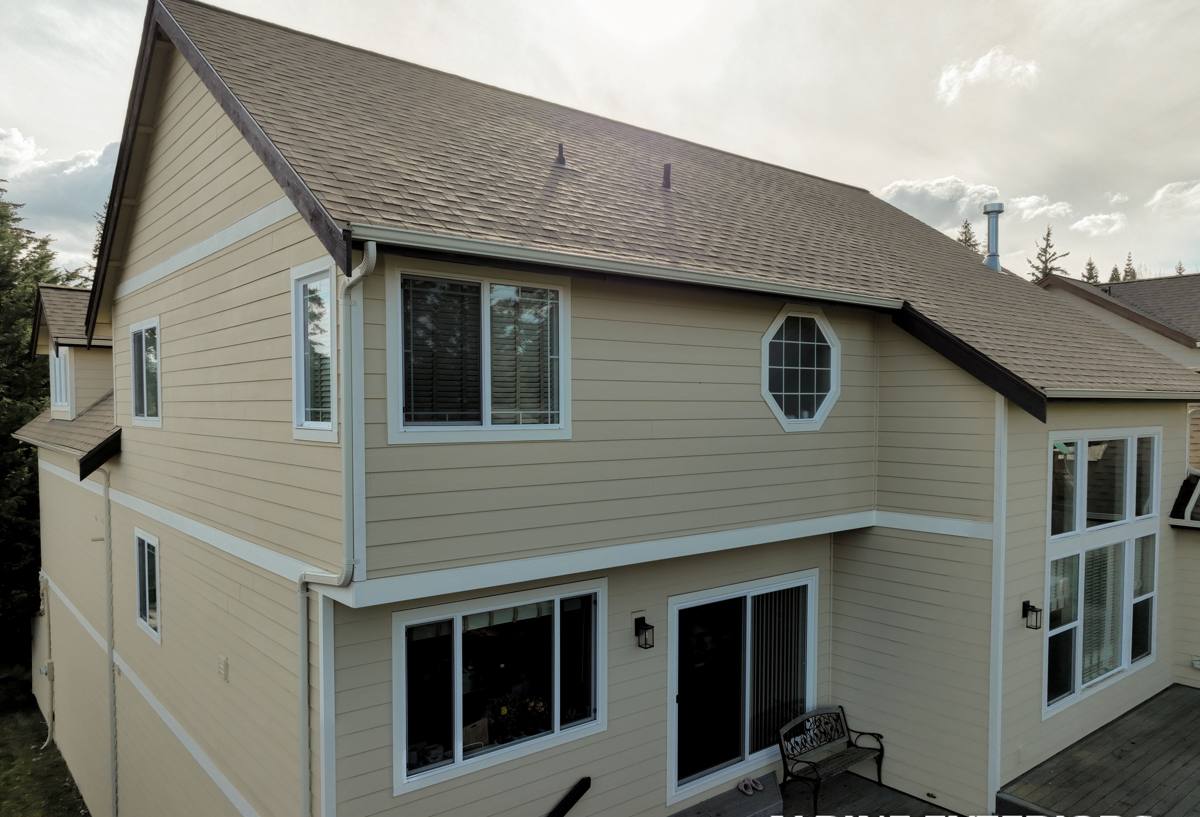
Signs a Marietta Home Needs Siding Replacement
Because moisture problems on siding often start behind the surface, by the time you can see damage from the ground it's usually been developing for a while. Homeowners in this area should watch for:
- Soft or spongy spots when you press on the siding, especially near the bottom courses and around window trim
- Paint that's peeling, bubbling, or won't hold a fresh coat no matter how many times you repaint it
- Persistent moss, algae, or black streaking that comes back within a season of cleaning
- Visible warping, cupping, or buckling in individual boards or panels
- Gaps opening up at trim, corners, or seams that weren't there a few years ago
- A noticeable jump in heating bills, which can mean water-damaged siding is compromising your wall's insulation
- Rot or crumbling at the lowest few feet of the wall, where splash-back and standing moisture do the most damage
Any one of these on its own might be a minor repair. Several at once, especially combined with siding that's already 20-plus years old, usually means it's time to talk about full replacement rather than another round of patching.
What a Correct Siding Replacement Actually Involves
Siding replacement isn't just pulling off old boards and nailing up new ones. In a climate like Marietta's, the work that happens underneath the visible siding matters more than the siding itself. A correct job includes:
Tearing Off and Inspecting
Full removal of the old siding down to the sheathing, with an honest inspection of what's underneath. This is often the first time in decades anyone has actually looked at the wall assembly, and it's common to find sheathing damage, rot around window openings, or old flashing that was never installed correctly in the first place.
Repairing the Water Management Layer
Any damaged sheathing gets replaced, not skimmed over. A proper weather-resistive barrier (house wrap) goes on next, lapped correctly so water sheds downward and out rather than getting trapped behind the siding — which matters more here than almost anywhere, given how much wind-driven rain the area sees.
Flashing Every Penetration
Windows, doors, hose bibs, vents, and any other penetration through the wall need proper flashing integrated with the house wrap, not just caulk. Caulk fails; correctly lapped flashing doesn't rely on a bead of sealant to keep water out.
Installing to Manufacturer Spec
Correct fastener type and spacing, correct clearance at the bottom of the wall and at grade, correct gaps at butt joints and trim to allow for expansion, and factory-recommended caulking only where the manufacturer actually calls for it. Installed-to-spec siding is what keeps a warranty valid — installed loosely "close enough" is how warranties get denied later.
Why We Install Only James Hardie Fiber Cement
We made a decision as a company to install James Hardie fiber cement siding exclusively, and we don't deviate from that for jobs in Marietta or anywhere else in our service area. That's not a marketing position — it's a response to what actually holds up in this specific climate.
Fiber cement doesn't rot, and it isn't a food source for the moss and algae that thrive in Whatcom County's damp, shaded conditions the way untreated wood products can be. It's non-combustible, which matters given how many properties in this area border trees and brush. Hardie's HZ5 product line is specifically engineered for climates with heavy moisture exposure, and the ColorPlus factory finish is baked on under controlled conditions rather than field-applied, which gives it far better resistance to salt air and UV fading than a job-site paint job ever will. It also carries a strong, transferable limited warranty when installed by a certified crew to spec — which ties directly back to why correct installation, not just the material choice, is what actually protects that warranty.
We get asked from time to time about vinyl, LP SmartSide, cedar, and other fiber cement brands. We're upfront about the trade-offs of each rather than dismissing them outright — but for the moisture, salt air, and moss exposure homes face this close to the water, we've concluded Hardie is what we're willing to put our name behind and warranty our work on.
How Common Siding Materials Compare in This Climate
| Material | Moisture / Salt Air Resistance | Moss & Algae Susceptibility | Maintenance | Fire Resistance |
|---|---|---|---|---|
| James Hardie fiber cement | Engineered for wet, coastal-adjacent climates (HZ5) | Low — not an organic food source | Occasional wash; factory finish holds color for years | Non-combustible |
| Vinyl | Can warp or crack under repeated wet/dry and temperature cycling | Moderate — grime and algae collect in panel grooves | Low, but color fades and can't be repainted easily | Combustible, can melt/deform near heat |
| LP SmartSide (engineered wood) | Vulnerable at cut edges and joints if moisture gets in | Moderate to high if finish is compromised | Requires diligent caulk/paint upkeep | Combustible |
| Cedar / primed spruce | Absorbs moisture; prone to cupping and rot over time | High — organic material feeds moss and algae directly | High — regular refinishing needed | Combustible |
Our Siding Replacement Process for Marietta Homes
Every project follows the same sequence, whether it's a small single-story home or a larger property closer to the water:
- On-site evaluation: We walk the exterior, check for soft spots and moisture damage, and talk through what we find before any work starts.
- Written estimate: A clear scope and price, with no surprise add-ons hidden in vague line items.
- Tear-off and sheathing inspection: Old siding comes off, and we document any rot or sheathing damage found underneath before covering it back up.
- Water management layer: House wrap and flashing installed correctly at every window, door, and penetration.
- Hardie installation: Panels or planks installed to manufacturer spec, with correct fastening, clearances, and joint treatment.
- Final walkthrough: We go over the finished work with you directly and address anything you're not satisfied with before calling the job done.
Why It Matters to Hire a Crew That Already Works Marietta
Siding installation isn't identical everywhere in Washington. A crew used to working in drier parts of the state can miss details that matter here — clearance at grade in low-lying, water-adjacent areas, flashing details that account for near-constant wind-driven rain, or fastening patterns that account for salt-air corrosion over the long term. A crew that regularly works Ferndale and the surrounding Whatcom County communities, including Marietta, already knows what this climate does to a wall assembly over ten or twenty years, and builds accordingly instead of learning it the hard way on your house.
It also means faster, more realistic scheduling. Local crews aren't budgeting travel time from out of the area, and they're already familiar with the permitting expectations and typical construction of homes in this part of the county.
Caring for Hardie Siding After Installation
One of the practical advantages of switching to fiber cement in a climate like this is how little ongoing maintenance it actually needs compared to wood-based products. That said, "low maintenance" isn't "no maintenance":
- Rinse the siding down once or twice a year with a garden hose to keep salt residue and grime from building up
- Keep gutters clean and downspouts directed away from the wall so water isn't running down the siding face
- Trim back vegetation and tree limbs that keep siding shaded and damp longer than it needs to be
- Have caulking at trim and penetrations checked periodically, since caulk is the one part of the system that does wear over time
- Address any impact damage (a dropped ladder, a stray baseball) promptly rather than letting a small chip become an entry point for moisture
Get a Free Estimate for Your Marietta Home
If your siding is showing signs of wear, or you'd just like an honest opinion on whether repair or full replacement makes more sense for your home, we're happy to take a look. Estimates are free, there's no pressure to move forward, and you'll get a straight answer about what your siding actually needs — not just a sales pitch. Use the form below to request your estimate.