 Ferndale Exterior
 Building Near the Water Changes What "Correct" Means
Semiahmoo sits right up against the salt water of Whatcom County, which means any new-construction window job out here is working against conditions most inland builders never have to think about hard: salt-laden air that accelerates corrosion on hardware and fasteners, wind-driven rain that gets pushed sideways into wall assemblies, and a wet, shaded off-season that keeps moss and algae active on north- and west-facing elevations for months at a time. A window that's technically "installed" but not installed for this environment will show it early — streaking, hardware that seizes up, seals that fail years ahead of schedule, or worse, water finding its way behind the siding where you can't see it.
New-construction windows are different from a retrofit or pocket replacement, and on a new build or an addition in the Semiahmoo area, getting that distinction right the first time matters more than almost anywhere else in the county. This page covers what that job actually involves, what to expect from a crew that does it correctly, and why local experience isn't just a nice-to-have here.
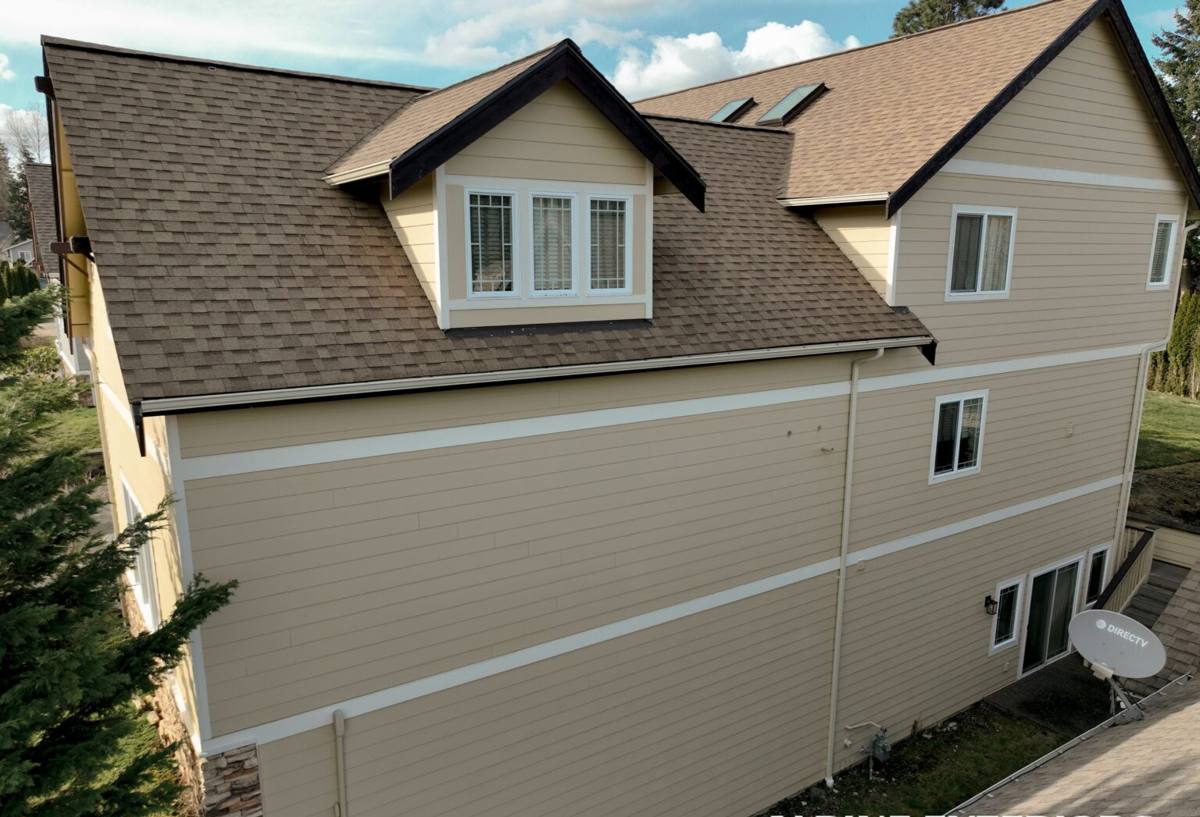
New-Construction vs. Retrofit: Why the Difference Matters Here
"New-construction" windows have a nailing fin (sometimes called a flange) built into the frame. That fin gets integrated directly into the wall's water-resistive barrier (WRB) and flashing system before siding goes on. Retrofit or "pocket" windows, by contrast, are designed to slide into an existing frame opening without disturbing the exterior wall — they lean on the old frame and trim for weather protection rather than tying into the wall assembly itself.
On new construction or a full addition, you have the wall open. That's the moment to do it right with a fin-flange window that's fully integrated into the flashing and drainage plane — not a patched-in retrofit unit that depends on caulk and hope. Skipping this step, or rushing it, is one of the more common ways a brand-new home in a wet, coastal location ends up with hidden moisture problems within the first few years.
What a Correct New-Construction Install Actually Involves
- Rough opening checked for square, level, and correct dimensions before the window ever shows up on site
- Sill pan flashing installed first, sloped to shed any water that gets past the window back out — not just a flat piece of tape
- Window set, shimmed level and plumb, and fastened per the manufacturer's schedule (not "however many screws looked right")
- Nailing fin integrated into the WRB in proper shingle-lap order — side flashing first, then head flashing lapped over the top, so water always sheds downward and outward
- Interior air sealing with low-expansion foam or backer rod and sealant, so conditioned air isn't leaking around the frame
- Exterior trim and sealant joints finished with a bead that's actually rated for the movement and UV exposure of a coastal exterior
Every one of those steps is checkable. If a crew can't walk you through their flashing sequence in plain language, that's worth asking about before work starts.
What Salt Air and Driving Rain Do to Windows Over Time
Semiahmoo's proximity to salt water isn't just a scenic detail — it changes what materials and hardware hold up. Salt air is corrosive to unprotected or poor-grade metal components: hinges, cranks, screen frames, and fasteners that would last decades a few miles inland can start showing pitting and stiffness much sooner near the water. Driving rain, especially in fall and winter storms off the Strait, tests the flashing and sealant details far harder than a calm inland rain ever will — wind pushes water sideways and upward under trim and siding laps that were never designed to handle standing water pressure.
Then there's the moss and algae season, which in this part of Whatcom County runs long. Shaded, north-facing walls and anything under an eave overhang or tree canopy stay damp for extended stretches, and organic growth on trim, sills, and frame edges isn't just cosmetic — trapped moisture behind growth is what eventually breaks down sealant joints and finishes.
None of this means windows near Semiahmoo need to be exotic or overbuilt. It means the frame material, hardware grade, and flashing detailing need to actually match the exposure the wall will see, not just meet a generic minimum.
Frame Material Comparison for This Climate
| Material | How It Handles Salt Air & Moisture | Maintenance | Typical Fit |
|---|---|---|---|
| Vinyl | Won't corrode; UV-stable formulations hold up well to coastal sun and salt exposure | Low — occasional cleaning | Most new-construction and addition budgets |
| Fiberglass | Very stable dimensionally; resists moisture-driven warping better than wood | Low | Higher-end new builds, larger openings |
| Wood-clad | Good performance if cladding and flashing details are done exactly right; the wood core is the risk point if water gets behind the clad exterior | Higher — finish and joint inspection matter | Design-driven projects prioritizing interior wood look |
| Aluminum | Prone to corrosion near salt water unless properly coated/anodized; thermally less efficient without a thermal break | Moderate to high | Limited use in this climate unless spec'd carefully |
We don't push one material on every job. The right call depends on the home's design, budget, and how exposed the specific wall or elevation is — a covered, south-facing wall has very different needs than an open, water-facing elevation.
Our Process for New-Construction Window Installs
1. Plan Review and Rough Opening Verification
Before windows are ordered, we confirm rough opening sizes against the actual window schedule and check for framing issues while there's still time to fix them cheaply — not after the windows arrive.
2. Flashing and Drainage Plane Coordination
We work with whatever WRB and siding system the build is using and make sure the window flashing integrates into it correctly, with proper laps and no reliance on sealant alone to do the job of flashing.
3. Setting and Fastening
Windows go in level, plumb, and square, fastened to the manufacturer's schedule, with shims placed to avoid frame distortion that can cause sashes to bind or seals to fail early.
4. Air Sealing and Insulation
Interior gaps get sealed properly — enough to stop air movement without over-packing foam, which can bow the frame.
5. Exterior Finish Detailing
Trim, sealant joints, and any cladding tie-ins are finished to shed water outward at every layer, with sealant products chosen for coastal UV and moisture exposure rather than a generic caulk.
6. Final Check
Every window gets operated, checked for square and smooth function, and the exterior perimeter is inspected before we call the job done.
Why a Crew That Already Works Semiahmoo Matters
A lot of window problems near the water aren't caused by bad windows — they're caused by installation details that would have been fine forty miles inland but weren't built for salt air, sideways rain, or a long damp season. A crew that regularly works this part of Whatcom County has already seen which flashing shortcuts fail first here, which hardware grades hold up, and which elevations on a typical Semiahmoo-area lot take the worst weather exposure. That's not something you can fully substitute with a generic install checklist — it comes from doing the work in this specific environment repeatedly.
Local experience also matters for practical reasons: familiarity with the permitting and inspection process in Whatcom County, realistic scheduling around the wetter months, and knowing which product lines actually stock and service well in this region instead of leaving you waiting on parts.
Cost Factors on a New-Construction Window Job
| Factor | Why It Moves the Price |
|---|---|
| Frame material | Vinyl is typically the most budget-friendly; fiberglass and wood-clad cost more up front |
| Window size and count | Larger openings and higher window counts increase both material and labor time |
| Elevation exposure | Water-facing or highly exposed walls may call for upgraded flashing details or sealant systems |
| Glazing package | Upgraded low-E coatings or impact-resistant glass add cost but can be worth it in exposed locations |
| Access and site conditions | Multi-story openings, tight lots, or limited staging area affect labor time |
We don't publish flat pricing because every build is different — but we'll walk through these factors with you honestly before any work is scheduled, so there are no surprises.
A Practical Checklist Before You Order Windows
- Confirm rough opening sizes have been field-verified, not just taken from plans
- Ask which elevations will get the most wind-driven rain and salt exposure, and whether the spec accounts for that
- Choose a frame material based on the specific wall's exposure, not just overall house style
- Confirm the sill pan and flashing sequence in writing or in the install plan, not just verbally
- Ask about hardware grade — cranks, hinges, and screen frames matter more near salt water
- Plan installation timing around the wetter months where possible to protect the open wall assembly
Getting Started
Whether you're framing a new home on the Semiahmoo side of Ferndale or adding on to an existing one, the window install is one of the few steps in a build where getting the details right the first time is genuinely cheaper than fixing it later. If you'd like to talk through your plans, we're glad to take a look and give you an honest read on what your project needs. Fill out the form below for a free, no-pressure estimate.