 Ferndale Exterior
 Building Decks for the Nooksack Area's Weather, Not Around It
A deck built in the Nooksack area of Whatcom County has to earn its keep every month of the year, not just on the handful of dry summer weekends everyone actually uses it. The lowland terrain along the Nooksack River valley holds moisture longer than higher, drier ground, and homes near Ferndale sit close enough to Puget Sound that salt-laden air is a real factor on fasteners, railings, and any exposed metal. Add in a rainy season that can stretch for months and a moss season that follows right behind it, and you have a set of conditions that punishes decks built to a generic, one-size-fits-all spec. We build decks for this specific climate, not for a catalog photo taken somewhere dry.
This page is about one thing: custom deck construction for homes in and around Nooksack and the greater Ferndale service area. Not a general overview of what a deck is — a straight explanation of what local ground, weather, and materials actually require, and how we handle each of those requirements.
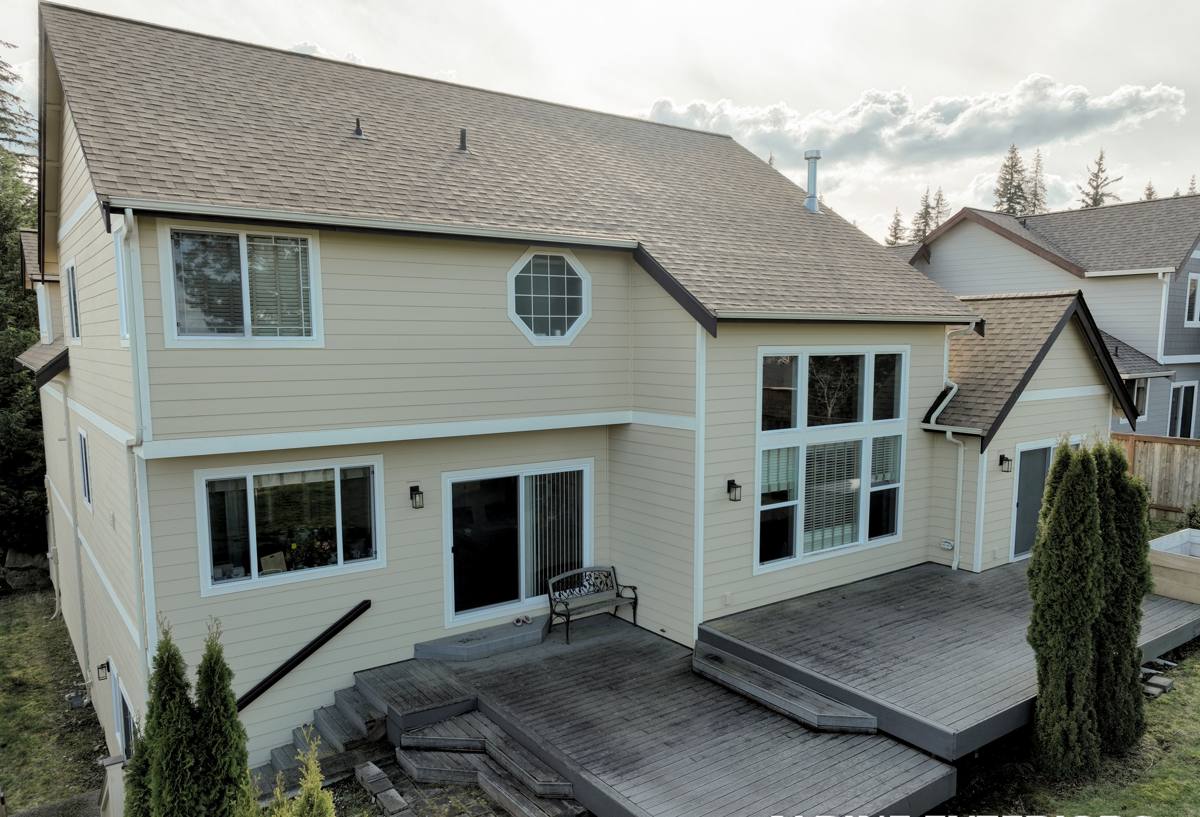
What Nooksack-Area Homes Need From a Deck
Three regional conditions drive nearly every decision we make on a deck build out here:
Salt Air and Corrosion
Even homes that aren't waterfront get exposure to salt-carrying air blowing in off the Sound, especially on north and west-facing structures. Salt accelerates corrosion in ungalvanized or poorly coated fasteners, and once a fastener starts rusting inside a joist or ledger board, the damage is invisible until it isn't. We spec corrosion-resistant hardware as a baseline, not an upgrade.
Driving Rain and Standing Moisture
Whatcom County's rain doesn't just fall straight down — wind-driven rain gets up under rail caps, behind fascia boards, and into any gap that wasn't flashed correctly. Combined with heavier clay and lowland soils near the river valley that drain slower than sandy ground, a deck's substructure needs real attention to water management, not just a tarp-and-hope approach during the build.
The Long Moss Season
Moss and algae aren't cosmetic problems here — they're a slip hazard and a moisture trap that shortens the life of decking boards. A deck that stays damp and shaded for months at a time will grow moss regardless of material, but board spacing, airflow underneath, and material choice all change how fast it happens and how easy it is to keep ahead of.
Choosing the Right Decking Material for This Climate
There's no universally "best" decking material — there's a best material for your budget, your sun exposure, and how much upkeep you're willing to do. Here's how the common options actually perform under Whatcom County conditions:
| Material | Moss/Algae Resistance | Maintenance | Typical Lifespan Here |
|---|---|---|---|
| Pressure-treated wood | Low — needs regular cleaning and re-sealing | Annual wash, periodic staining/sealing | 10-15 years with upkeep |
| Cedar | Moderate — natural oils help but fade over time | Regular cleaning, re-oiling every 1-2 years | 15-20 years with upkeep |
| Capped composite | Good — cap layer sheds moisture and resists staining | Occasional wash, no sealing/staining | 25+ years, warranty-backed |
| PVC decking | Best — fully synthetic, doesn't feed mold/algae the way wood fiber can | Occasional wash | 25+ years, warranty-backed |
We install pressure-treated and cedar framing on almost every project because both remain the right call structurally when properly detailed. For the walking surface, we install capped composite and PVC decking as our standard recommendation for homes in shaded, damp, or moss-prone yards because the maintenance burden of uncapped wood in a climate this wet is real and ongoing — that's a trade-off we're upfront about, not a knock on wood as a material.
Wood Decking: Still a Legitimate Choice
If you want a natural wood deck, cedar or a quality pressure-treated lumber can absolutely work here. It just means committing to a cleaning and sealing schedule. We'll tell you honestly what that schedule looks like before you buy, so there are no surprises the first time moss shows up in October.
Framing and Structure: What a Correct Job Actually Involves
The part of a deck nobody sees is the part that determines whether it lasts 10 years or 30. On every custom deck we build near Nooksack and Ferndale, the structural work includes:
- Footings sized and set below frost depth, appropriate to the soil conditions on your specific lot
- Proper ledger board attachment and flashing where the deck meets the house — this is the single most common failure point on older decks in wet climates
- Joist hangers and structural fasteners in corrosion-resistant, coated or stainless-rated hardware to stand up to salt air over decades, not years
- Joist spacing and beam sizing engineered for your decking material and expected load, not a generic minimum
- Positive drainage graded away from the house at the ledger and framing level
None of this is visible once the deck is finished, which is exactly why it matters who does it. A deck can look identical from the top and have a completely different service life depending on what's underneath.
Managing Moisture and Moss From the Ground Up
You can't eliminate rain or shade, but you can build a deck that handles both. Our approach includes airflow gaps under the decking surface so boards can dry out between rain events, board spacing appropriate to the material to prevent water pooling, and drainage planning so runoff moves away from the structure instead of sitting under it. Where a deck sits low to the ground or in heavy shade, we'll talk with you about ventilation options underneath and material choices that resist the moss problem specifically, rather than just hoping a sealed wood deck keeps up.
Our Process, Start to Finish
- Site visit and consultation — we look at your yard's grade, drainage, sun exposure, and how the deck will connect to your home before recommending anything
- Design and material selection — sized and laid out for how you'll actually use the space, with material options and honest trade-offs explained up front
- Permitting — we handle the permit process with the applicable local jurisdiction so the build is documented and inspected correctly
- Structural build — footings, framing, and ledger work completed to the standards described above, with corrosion-resistant hardware throughout
- Decking, railing, and finish work — surface material installed per manufacturer spec, railings set, all fasteners and flashing checked
- Final walkthrough — we go over the finished deck with you, including what maintenance (if any) your chosen material needs going forward
What Affects Deck Project Cost
Every deck is priced around your specific yard and choices, but these are the factors that move the number most:
| Factor | Why It Matters |
|---|---|
| Size and footprint | Square footage drives material and labor directly |
| Decking material | Composite and PVC cost more upfront than wood but less over the deck's lifetime |
| Height and grade | Elevated decks and sloped or uneven lots need more substructure and railing |
| Railing style | Cable, glass, and composite rail systems cost more than standard wood or metal baluster rail |
| Site access | Tight or obstructed access can add labor time for material staging and equipment |
| Permit requirements | Height, size, and proximity to property lines can affect permitting scope |
We give firm, itemized quotes after the site visit rather than ballpark numbers over the phone, because two decks that sound similar over the phone can end up very different once we see the actual site.
Keeping a Nooksack-Area Deck in Good Shape
Whatever material you choose, a little seasonal attention goes a long way in this climate. A basic maintenance routine looks like:
- Sweep off leaves and debris regularly through fall — trapped organic matter is what feeds moss growth
- Rinse or wash the deck surface a few times a year, more often in heavily shaded areas
- Check that drainage paths under and around the deck haven't been blocked by landscaping or debris buildup
- Inspect railings and fastener points annually for early signs of corrosion, especially on homes closer to the Sound
- For wood decks: re-seal or re-stain on the schedule appropriate to your product — don't wait until it visibly needs it
- For composite/PVC decks: confirm gaps between boards remain clear so water and debris can pass through
Why Hire a Crew That Already Works in Nooksack
A deck contractor who mostly works drier inland climates will often under-spec fasteners, skip flashing details that don't matter as much elsewhere, or recommend materials without accounting for how much shade and moisture your specific lot actually gets. We work in Whatcom County regularly, which means we already know how the local permitting process runs, what soil and drainage conditions to expect on lowland lots near the river valley, and which materials actually hold up once moss season sets in rather than just looking good on install day. That local familiarity shows up in fewer surprises during the build and a deck that's still performing the way it should years after the crew leaves.
If you're planning a new deck or replacing one that's struggling with rot, moss, or rusted hardware, we're happy to take a look and give you a straightforward, no-pressure estimate. Use the form below to get started.