 Ferndale Exterior
 Roofing Built for Nooksack's Weather, Not Just Any Weather
Nooksack sits inland from the coast, but it doesn't escape the marine-influenced weather that defines Whatcom County. The same weather systems that push salt air and driving rain across Ferndale roll straight through the Nooksack River valley too. Add in heavy tree cover, long stretches of shade, and a moss season that can run eight months a year, and you get a roofing environment that's harder on materials than most homeowners realize until shingles start failing early.
A roof replacement here isn't just about swapping old shingles for new ones. It's about building an assembly — deck, underlayment, flashing, shingles, ventilation — that's matched to how water, wind, and moss actually behave on this ground. That's the standard we hold every Nooksack job to.
Driving Rain and Wind-Driven Moisture
Whatcom County storms don't always come straight down. Wind pushes rain sideways and up under shingle edges, into valleys, and around penetrations like vents and chimneys. A roof that looks fine in a light shower can still leak in a wind-driven storm if the underlayment and flashing weren't installed with that in mind. This is one of the most common reasons we get called out to "mystery leaks" on roofs that are otherwise in decent shape.
Moss, Shade, and Tree Cover
Moss doesn't just sit on top of shingles — its root structure works into the granule surface and lifts shingle edges over time, creating gaps where water can get underneath. North-facing slopes and roof sections shaded by mature trees are the first to show moss growth, and they're usually the first to fail if moss isn't controlled. Any roof replacement in this area needs to account for shade patterns on the specific property, not just apply a one-size-fits-all spec.
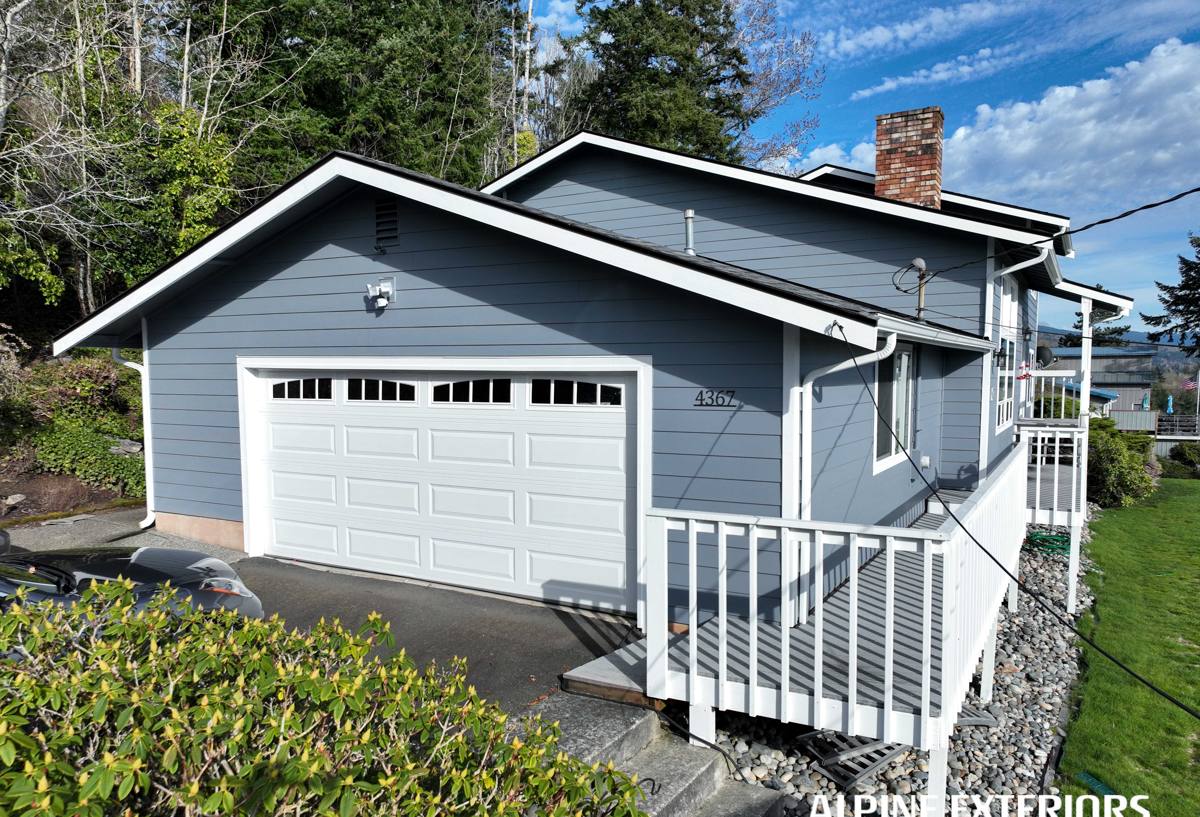
Signs a Nooksack Roof Needs Replacement, Not Repair
Repair makes sense when the damage is isolated. Replacement becomes the honest recommendation when the roofing system as a whole is past the point where patching buys you meaningful time. Here's what we look for:
- Shingles that are cupping, curling, or losing granules across large sections rather than one spot
- Moss or algae staining across multiple roof planes, especially on shaded or north-facing slopes
- Soft spots or sagging in the roof deck when walked, which points to moisture already in the sheathing
- Daylight visible through the attic or consistent staining on attic rafters and insulation
- Flashing that's rusted, cracked, or was never properly integrated with the roofing material
- A roof that's simply reached the end of its manufacturer-rated lifespan, even if it "looks okay" from the ground
- Repeated repair calls to the same areas of the roof over the past couple of years
If you're only seeing one or two of these, repair may still be the right call. When several show up together, that's usually a sign the underlying materials are wearing out as a system, not as isolated spots.
What a Correct Roof Replacement Actually Involves
A roof replacement done right is a sequence of decisions, each one matters in Whatcom County's climate. Skipping or shortcutting any of these steps is where premature failures usually trace back to.
Full Tear-Off and Deck Inspection
We remove the old roofing down to the deck rather than layering new shingles over old. That's the only way to actually see the condition of the sheathing underneath. Any soft, rotted, or delaminated decking gets replaced before anything new goes down — installing new shingles over a compromised deck just hides a problem that will resurface as a leak later.
Underlayment and Ice-and-Water Protection
The underlayment is the roof's real waterproofing layer; the shingles are the wear surface on top of it. In a climate with as much sustained rain as Whatcom County sees, we pay particular attention to eaves, valleys, and any low-slope transitions, using ice-and-water shield or high-quality synthetic underlayment in the areas most exposed to wind-driven moisture.
Flashing at Every Penetration
Chimneys, vents, skylights, and roof-to-wall transitions are where most leaks actually start — not in the open field of shingles. Correct flashing means new metal, properly stepped and integrated with the underlayment, not just caulked over old flashing to save time.
Ventilation That Matches the House
Attic ventilation affects both moisture control and shingle lifespan. Poor airflow traps humidity in the attic, which can lead to condensation, mold, and premature deterioration of the roof deck from underneath — a problem that has nothing to do with the shingles themselves but will shorten their life anyway. We check intake and exhaust balance as part of every replacement, not as an afterthought.
Choosing Roofing Materials for a Nooksack Home
There's no universal "best" roofing material — the right choice depends on the home's roof pitch, shade exposure, budget, and how long you plan to own the property. Here's how the common options compare for this area's conditions:
| Material | Typical Lifespan | Moss Resistance | Considerations for This Area |
|---|---|---|---|
| 3-Tab Asphalt Shingle | 15-20 years | Lower | Budget-friendly, but thinner profile can show wear faster under heavy moss and moisture exposure |
| Architectural (Laminate) Shingle | 25-30 years | Moderate to good with algae-resistant granules | Best balance of cost and durability for most homes; our default recommendation for shaded lots |
| Metal Roofing | 40-50+ years | Very good | Sheds moss and moisture well; higher upfront cost, longer-term value |
| Wood Shake | 20-30 years with upkeep | Poor without regular maintenance | Requires consistent moss and moisture management; higher maintenance burden in this climate |
For most Nooksack homes with tree cover, we lean toward architectural shingles with algae-resistant granules or metal roofing, simply because both hold up better against sustained moisture and moss pressure with less ongoing maintenance. That's a recommendation based on how these materials perform here over time, not a knock on any manufacturer.
Our Roof Replacement Process
Homeowners want to know what's actually going to happen on their property, and for how long. Our process for a Nooksack roof replacement generally runs like this:
- On-site assessment. We inspect the current roof, attic, and deck condition, and walk you through what we find in plain terms.
- Written estimate. Material options, scope of work, and cost are laid out clearly before any work begins.
- Scheduling around weather. Roofing work needs a dry window, so we plan installation dates with Whatcom County's weather patterns in mind.
- Tear-off and deck repair. Old materials come off, decking is inspected and repaired as needed.
- Underlayment, flashing, and shingle or metal installation. Installed to manufacturer specification, with extra attention to the details covered above.
- Site cleanup. Magnetic sweeps for nails and full debris removal before we consider the job finished.
- Final walkthrough. We go over the completed roof with you before closing out the job.
Why Local Experience in Nooksack Matters
A roofing crew that regularly works Whatcom County properties already knows how local shade patterns, rainfall, and moss cycles affect roof performance — they're not learning that on your roof. That experience shows up in small decisions: where to add extra underlayment protection, which slopes need better ventilation, and which material choices actually hold up here versus in a drier climate. It also means we're a known, reachable local business if a warranty question comes up years down the line, rather than a name from an ad that's moved on to the next region.
Cost Factors for a Nooksack Roof Replacement
Every roof is different, so we don't quote prices without seeing the property, but the factors below are what typically move the cost up or down:
| Factor | Why It Affects Cost |
|---|---|
| Roof size and complexity | More valleys, dormers, and penetrations mean more labor and flashing work |
| Current deck condition | Rotted sheathing found during tear-off requires replacement before installation continues |
| Material choice | Asphalt, architectural shingle, and metal have significantly different material and labor costs |
| Roof pitch and access | Steep or hard-to-access roofs require more safety equipment and time |
| Ventilation upgrades | Adding or correcting intake/exhaust venting adds labor but improves long-term performance |
| Layers of existing roofing | Multiple old layers add tear-off time and disposal cost |
Maintaining Your Roof Through Moss Season
A well-installed roof still needs some seasonal attention in a climate like this. A few habits go a long way toward protecting the investment:
- Keep gutters clear so water isn't backing up under shingle edges, especially heading into fall rain
- Trim back overhanging branches to reduce shade and debris buildup on shaded slopes
- Have moss growth treated before it spreads across a full roof plane, not after
- Schedule a visual inspection every couple of years, particularly after major windstorms
- Address small flashing or granule issues promptly rather than waiting for a leak to appear
If you're weighing repair versus replacement, or just want an honest read on where your roof stands, we're happy to take a look. Use the form below to request a free, no-pressure estimate for your Nooksack property.