 Ferndale Exterior
 Siding Built for Nooksack's Weather, Not Just Its Curb Appeal
Nooksack sits in a stretch of Whatcom County where the weather doesn't do anything halfway. Winters bring long stretches of driving rain that comes in sideways off the water and the valley. Summers bring warm, humid stretches that keep everything damp longer than homeowners expect. And year-round, the combination of moisture, shade from mature trees, and cool temperatures gives moss and algae exactly the conditions they need to take hold on siding, trim, and roofs. Add in the salt air that reaches inland from the Strait of Georgia and Bellingham Bay, and you've got a climate that is genuinely hard on exterior building materials — harder than most siding products were designed to handle over the long run.
When we talk about "siding installation" in Nooksack, we're not talking about a cosmetic upgrade. We're talking about the single largest weather barrier on the house, and the thing standing between the wood framing behind it and decades of rain, moisture cycling, and organic growth. Get it wrong — wrong product, wrong install, wrong details — and the problems don't show up right away. They show up in year six or year ten, as soft trim, staining, cupped boards, or rot that's already gotten into the sheathing before anyone notices.
Why Siding Fails Early in This Part of Whatcom County
Most premature siding failures we see in the Ferndale and Nooksack area trace back to a small number of causes, and almost none of them are "the siding wore out." They're moisture problems that a better product or a better install would have prevented.
Constant moisture cycling
Siding here rarely gets a long enough dry stretch to fully release the moisture it absorbs during the rainy season. Products that swell and shrink with moisture, or that wick water into their core, are working against the climate instead of with it.
Moss, algae, and organic growth
Shaded north and west-facing walls, common on wooded Nooksack lots, stay damp longer and grow moss and algae faster. Porous or textured surfaces give organic growth more to hold onto, and once it's established it holds moisture against the siding itself.
Salt-laden air
Homes with more exposure toward the water deal with airborne salt that accelerates corrosion on fasteners, trim, and any metal flashing that isn't properly rated or protected. It also speeds the breakdown of lower-grade coatings and finishes.
Poor installation details
Even a good product installed with tight caulk-only seams, missing flashing, or no drainage plane will trap water behind the siding. In a climate this wet, that's not a minor shortcut — it's the difference between siding that lasts 30-plus years and siding that needs major repair inside a decade.
What a Correct Siding Installation Actually Involves
A siding job that's going to hold up in Nooksack's weather is built in layers, and every layer matters. Skipping or rushing any one of them is where most of the early failures we get called out to inspect actually start.
The weather-resistive barrier
A continuous, properly lapped weather-resistive barrier goes over the sheathing before any siding goes up. Every seam, penetration, and window opening gets sealed and taped so water that gets past the siding has nowhere to go but back out.
A drainage gap behind the siding
Rather than fastening siding directly against the wall, a rainscreen gap allows any moisture that does get behind the siding to drain and the wall to dry out between rain events. In a climate that stays wet as long as Whatcom County's does, this gap is one of the most important — and most commonly skipped — parts of the job.
Flashing at every horizontal transition
Windows, doors, decks, roof-to-wall intersections, and butt joints all need metal or manufacturer-approved flashing installed in the correct shingle-lap order — never caulk alone. Caulk fails; properly lapped flashing sheds water by design and keeps working long after the caulk has cracked.
Correct fastening and clearances
Fastener type, spacing, and depth all need to match the manufacturer's specification for the climate and exposure. Siding also needs proper clearance from grade, roof lines, and decks so it isn't sitting in standing water or splash-back.
Factory-finished, not field-painted, color
A factory-applied finish cures under controlled conditions and bonds more consistently than a field-applied coat, which matters when the product is going to spend years being rained on before it ever fully dries.
Why We Install Only James Hardie Fiber Cement
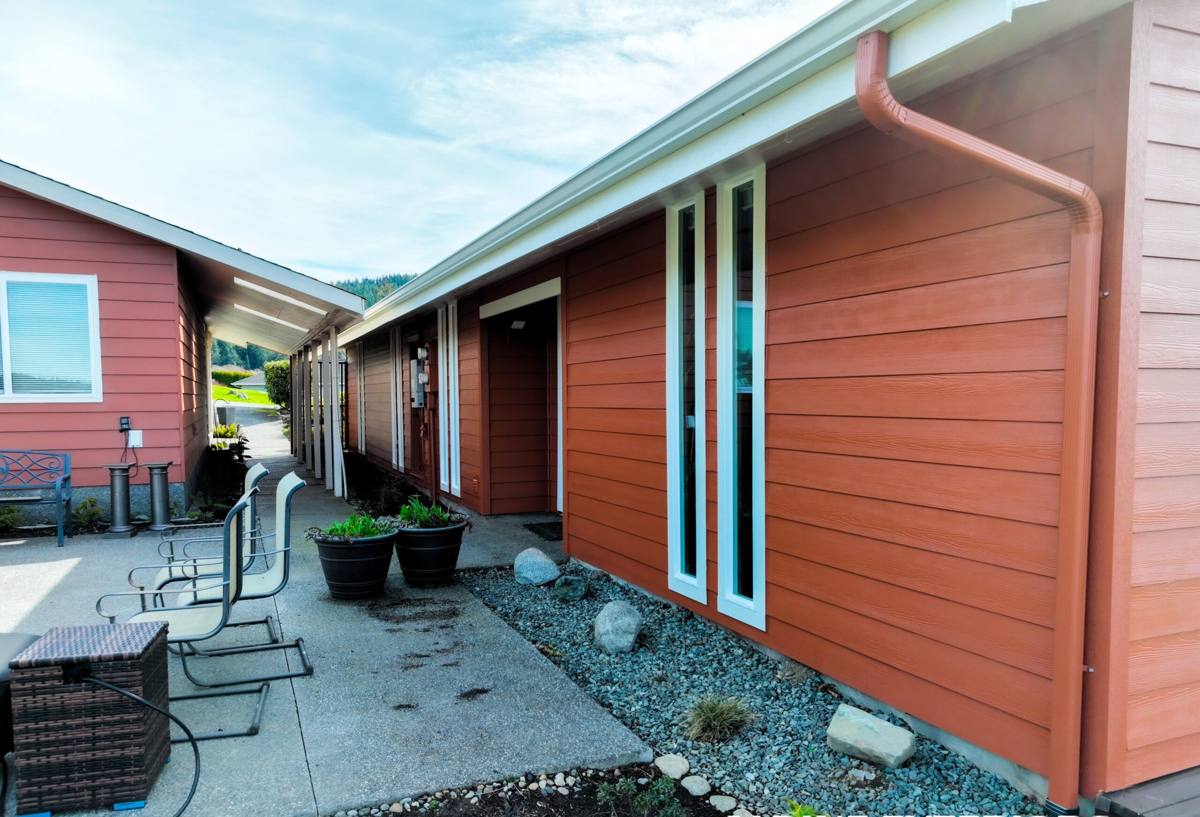
We made a decision a long time ago to install one siding system: James Hardie fiber cement. We don't install vinyl, LP SmartSide, Cemplank, Allura, or bare cedar or primed spruce, and that's not a marketing position — it's a standard we hold because of what we've seen these products do, and not do, in exactly this kind of climate.
Vinyl is inexpensive and low-maintenance, but it's a petroleum-based product that expands and contracts with temperature swings, can crack in impact or cold, and simply isn't the same class of weather barrier as a cement-based product in a climate this wet. Wood-based composite siding and untreated wood products offer a warmer, more traditional look, but wood-based cores are inherently more vulnerable to moisture intrusion at cut edges and fastener penetrations — exactly the failure points that matter most in a region with Nooksack's rainfall and humidity. We're not saying these products are junk; plenty of them are engineered well and perform fine in drier climates. We're saying that after years of working exteriors in Whatcom County, fiber cement's moisture resistance, dimensional stability, and non-combustible composition line up better with what this specific weather does to a house.
What James Hardie brings to a Nooksack home
- Non-combustible fiber cement construction that doesn't provide fuel in a wildfire exposure scenario
- ColorPlus factory-baked finish, engineered to resist fading and hold up to repeated wet-dry cycling better than field-applied paint
- HZ5 climate-engineered formulation, built for the Pacific Northwest's moisture and temperature profile
- A track record of dimensional stability — it doesn't swell, cup, or rot the way wood-based products can
- A strong, transferable manufacturer warranty backing the product itself
Fiber Cement vs. the Alternatives, at a Glance
| Factor | James Hardie Fiber Cement | Vinyl | Wood-Based Composite / Cedar |
|---|---|---|---|
| Moisture resistance | High — cement-based, engineered for wet climates | Good on its own, but seams and gaps allow water behind panels | Vulnerable at cut edges, fasteners, and end grain |
| Moss/algae resistance | Strong with ColorPlus finish and correct detailing | Moderate; smooth surface but seams collect debris | Lower; porous surface holds moisture and organic growth |
| Fire performance | Non-combustible | Combustible, can melt/deform in heat | Combustible |
| Expected lifespan when correctly installed | 30+ years | 20-30 years, variable | 15-25 years, highly dependent on maintenance |
| Ongoing maintenance | Periodic cleaning, minimal repainting | Low, but cracks/fading aren't repairable | Regular painting/sealing required |
Our Installation Process in Nooksack
Every siding job starts with an honest look at the existing wall assembly, not just a measurement for materials.
- On-site assessment — we check for existing moisture damage, evaluate the condition of the sheathing, and identify problem areas like north-facing walls, low-clearance sections, and existing flashing issues.
- Tear-off and inspection — old siding comes off and we inspect the sheathing underneath before anything new goes up. Any soft or damaged sheathing gets addressed before installation continues, not covered over.
- Weather barrier and rainscreen installation — a continuous, properly lapped weather-resistive barrier goes on, followed by a drainage gap system so the wall can breathe and dry.
- Flashing at every penetration — windows, doors, and roof lines all get flashed to manufacturer specification before siding closes them in.
- James Hardie installation to spec — correct fastener type, spacing, and clearances, following Hardie's published installation requirements for this climate zone.
- Final detail and walkthrough — trim, caulking at appropriate joints only (never as a substitute for flashing), and a walkthrough so you understand what was done and why.
Choosing the Right Hardie Line and Color for a Nooksack Property
James Hardie's lineup gives homeowners real options without stepping outside a product system built for this climate. Lap siding, board-and-batten, and shingle-style panels are all available in the HZ5 formulation appropriate for the Pacific Northwest. ColorPlus finishes come in a range of tones, and because the color is factory-applied and baked on, it resists the fading and chalking that field-applied paint shows first — particularly on walls that take direct sun exposure in the summer months between rain seasons. For homes closer to wooded or shaded areas where moss pressure is higher, we'll also talk through trim and detailing choices that reduce moisture-trapping ledges and horizontal surfaces where debris and moss tend to establish first.
What Affects the Cost of a Siding Installation
Every home is different, but the same handful of factors drive most of the cost variation we see on Nooksack jobs.
| Cost Factor | Why It Matters |
|---|---|
| Sheathing condition | Rot or moisture damage found during tear-off needs repair before new siding goes on — this is common on older homes with prior water intrusion |
| Home size and wall complexity | More corners, dormers, and transitions mean more flashing, more cutting, and more labor |
| Siding profile and accent details | Board-and-batten or mixed profiles with shingle accents cost more in labor than straight lap siding |
| Access and site conditions | Steep grades, limited driveway access, or dense landscaping around the home affect setup and staging time |
| Existing damage or code upgrades | Homes needing updated flashing, house wrap, or trim beyond a straight re-side will cost more than a like-for-like replacement |
We won't quote a job without seeing it — anything else is a guess. But those five factors are what we're actually evaluating when we walk a property.
Questions Worth Asking Before You Sign a Siding Contract
- Does the quote specify a rainscreen or drainage gap, or is siding going straight over house wrap?
- Is flashing detailed at every window, door, and roofline, or is caulk doing that job?
- What's the manufacturer's climate-zone rating for the product being installed, and does it match this region?
- Is the finish factory-applied, or will the crew be field-painting after installation?
- What does the warranty actually cover — labor, materials, or both — and is it transferable if you sell the home?
- Has the sheathing been inspected, and what happens if damage is found once old siding comes off?
Why Hiring a Crew That Already Works in Nooksack Matters
Siding installation isn't a one-size-fits-all trade. A crew that mostly works drier inland climates can do everything "by the book" and still get details wrong for a place like Nooksack, because the book assumes less rain, less moss pressure, and less salt exposure than this stretch of Whatcom County actually gets. Working this area regularly means we already know which walls are going to face moss pressure, which details fail first in this rainfall pattern, and how to sequence a job around the wet season instead of fighting it. That local pattern recognition is part of what you're paying for, not just the labor to hang boards.
If you're weighing a siding replacement or new installation in Nooksack, we're happy to take a look and walk you through what your home specifically needs — no pressure, no hard sell. Reach out for a free estimate using the form below.