 Ferndale Exterior
 Window Replacement Built for Nooksack's Climate
Nooksack sits inland from the water but still lives under the same weather system that soaks the rest of Whatcom County: long stretches of driving rain, salt-tinged air that moves in off the Strait and up the valleys, and a moss season that seems to start earlier every year. That combination is hard on windows in ways that homeowners in drier climates never have to think about. Wood frames swell and stick. Vinyl seals harden and crack sooner than the warranty implies. Aluminum frames sweat and corrode where the coating wears thin. None of this is dramatic on its own, but it adds up over a decade or two, and it shows up as drafts, fogged glass, and windows that won't latch right anymore.
When we replace windows in Nooksack, we're not just swapping old glass for new. We're re-solving the water and air management problem around each opening, because that's usually what failed the first time.
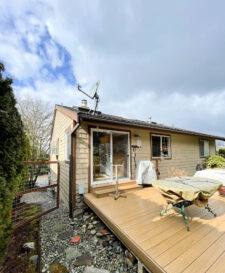
Signs a Nooksack Home Is Ready for New Windows
Most homeowners call us after noticing one or two of these, not because they set out to replace windows on a schedule. If you're seeing several of the items below, it's worth a look before the next wet season:
- Visible fog or moisture trapped between panes of double-glazed glass — the seal has failed
- Windows that are difficult to open, close, or lock, especially in wood or older vinyl frames
- Cold drafts near the frame edges even when the window is fully latched
- Soft, discolored, or bubbling wood on the interior or exterior sill and trim
- Visible moss or algae growth on the frame or sill that keeps coming back after cleaning
- Condensation forming regularly on the inside of the glass during cooler months
- A noticeable rise in heating costs without a clear explanation
- Paint that won't hold on exterior trim around the window, even after repainting
Any one of these can sometimes be repaired rather than replaced. Part of an honest estimate is telling you when that's true.
What a Correct Window Replacement Job Actually Involves
It's the Install, Not Just the Window
A high-end window installed poorly will leak and fail faster than a mid-grade window installed correctly. In a climate that delivers this much sustained moisture, the flashing and sealing details around the opening matter as much as the window itself. That means:
- Removing old caulk, rot, and failed flashing down to sound material — not just caulking over the top of a problem
- Installing proper flashing tape and sill pans that direct water back out, not into the wall cavity
- Using the correct sealants and backer rod at the frame perimeter, sized for the gap
- Checking that the rough opening is square and level before the new window ever goes in
- Insulating the gap between the frame and the rough opening without overpacking, which can bow the frame
- Finishing trim and exterior siding tie-in so water sheds away from the window, not toward it
Skipping any one of these steps is how a homeowner ends up with a brand-new window that still leaks two winters later.
Full-Frame vs. Insert Replacement
There are two basic approaches, and which one is right depends on the condition of the existing frame:
| Approach | When It Makes Sense | Trade-Offs |
|---|---|---|
| Insert (pocket) replacement | Existing frame is sound, dry, and square | Faster, less disruptive, but any hidden rot stays hidden |
| Full-frame replacement | Frame shows rot, water staining, or the opening has shifted | More labor and cost, but lets us fully address moisture damage and re-flash correctly |
We'll tell you which one your windows need after we actually look at the frame condition, not before.
Choosing a Window Frame for This Climate
Frame material is the decision that determines how much maintenance a homeowner signs up for. In a climate with this much rain and moss pressure, the trade-offs are real and worth understanding rather than guessing at.
| Material | Moisture Behavior | Maintenance | Typical Fit |
|---|---|---|---|
| Vinyl | Won't rot; seams are the weak point if welds are poor | Low — occasional cleaning | Most Nooksack homes, best value |
| Fiberglass | Very stable, minimal expansion/contraction | Low | Homes wanting longer service life, higher upfront cost |
| Wood | Handsome but absorbs moisture without diligent upkeep | High — repaint/reseal on a cycle | Historic or architecturally specific homes only |
| Wood-clad | Exterior protected by cladding, interior stays wood | Moderate | Homeowners wanting a wood interior look with better weather protection |
| Aluminum | Conducts cold, prone to condensation and corrosion over time | Moderate to high | We generally steer clients away from it in this climate unless it's a specific commercial application |
We don't push a single brand or material on every job. We do steer people away from options that create a maintenance burden they didn't ask for — that's a professional judgment call, not a sales pitch.
Glass Package Matters as Much as the Frame
For Whatcom County's climate, a standard double-pane, low-E, argon-filled unit is the sensible baseline for most homes — it balances cost with real performance against our wet, moderate-temperature winters. Homes with west or south exposure, or rooms with a lot of glass, sometimes benefit from a higher-performance glass package to cut down on heat loss and condensation risk. We'll walk through the actual options for your specific openings rather than upselling a package that doesn't fit the house.
Our Process for Nooksack Window Replacement
- On-site assessment. We look at every window being considered, check frame and sill condition, and identify any hidden moisture damage before quoting anything.
- Honest scope and estimate. You get a clear breakdown of insert vs. full-frame recommendations, material options, and pricing — no pressure to upgrade beyond what the house needs.
- Scheduling around the weather. We plan installs to minimize how long any opening sits exposed, which matters more here than in drier regions.
- Removal and opening prep. Old windows come out, the opening is inspected and repaired if needed, and it's brought back to square and dry before anything new goes in.
- Flashing, sealing, and install. New window is set, shimmed, insulated, flashed, and sealed to shed water correctly.
- Trim and cleanup. Interior and exterior trim finished, worksite cleaned, old windows hauled off.
- Walkthrough. We test operation and locks on every window with you before we call the job done.
What Window Replacement Costs
Exact pricing depends on window size, count, material, glass package, and whether the job is insert or full-frame. As a rough guide for planning purposes:
| Factor | Effect on Cost |
|---|---|
| Insert vs. full-frame replacement | Full-frame runs higher due to added labor and trim work |
| Frame material (vinyl vs. fiberglass vs. wood-clad) | Vinyl is typically the most affordable; fiberglass and wood-clad cost more upfront |
| Glass package (standard low-E vs. upgraded performance glass) | Upgraded packages add cost but can lower long-term heating bills |
| Hidden rot or structural repair at the opening | Only found once old windows and trim are removed; can add to scope |
| Number and size of windows in the job | Bundling multiple windows in one visit typically lowers per-window cost |
We won't give you a number over the phone that we can't stand behind in writing. A real estimate comes after we've actually looked at your windows.
Why a Crew That Works Nooksack Regularly Makes a Difference
Window installation quality is judged by how a house performs two, five, and ten winters later — not on install day. A crew that regularly works homes in and around Nooksack and greater Whatcom County has already seen how local moisture patterns interact with different frame materials, roof overhangs, and siding types. That experience shows up in small decisions during install: how much overhang a given wall gets from weather, whether a sill needs extra pitch, how aggressive the moss growth will be on a shaded north-facing elevation. It's the difference between a install that looks right on install day and one that's still performing correctly after several wet seasons have tested it.
After Installation: Keeping Windows Performing
New windows still need basic upkeep in this climate, especially in the first year while sealants cure fully:
- Rinse frames and tracks periodically to keep moss and algae from getting a foothold
- Check that weep holes on vinyl and fiberglass frames stay clear of debris
- Watch for any new caulking gaps at the trim line after the first full winter and have them addressed
- Wipe down interior sills if condensation appears, and improve room ventilation if it's frequent
A correctly installed window shouldn't need much beyond this. If it does, that's usually a sign something in the install wasn't done right.
If your Nooksack home has windows showing any of the signs above, or you're planning ahead of the next wet season, we're glad to come take a look. The estimate is free, there's no pressure to sign anything on the spot, and you'll get a straight answer about what your windows actually need — use the form below to get started.