 Ferndale Exterior
 Why Point Roberts Roofs Wear Out Faster
Point Roberts sits on its own peninsula at the southern tip of the Tsawwassen headland, surrounded by the Strait of Georgia and Boundary Bay on nearly every side. That exposure is the whole story for roofing here. Salt-laden air moves off the water and settles on every exposed surface — fasteners, flashing, vents, gutters — and it does not stop at the waterfront lots. Homes several blocks inland get the same treatment, just a little slower.
Add in Whatcom County's wet season, where driving rain comes in sideways off the strait rather than falling straight down, and you get water finding its way into laps, seams, and fastener penetrations that would stay dry in a calmer inland location. Then there's moss. The combination of shade, moisture, and mild temperatures through fall, winter, and spring gives moss months to establish itself on any roof that isn't shedding water fast and drying out in between storms.
None of this means a roof in Point Roberts can't last its full expected life. It means the installation has to account for these three things — salt exposure, wind-driven rain, and extended moss season — from the first course of underlayment to the last ridge cap. A roof installed the same way you'd do it in a dry, inland town will show problems here years before it should.
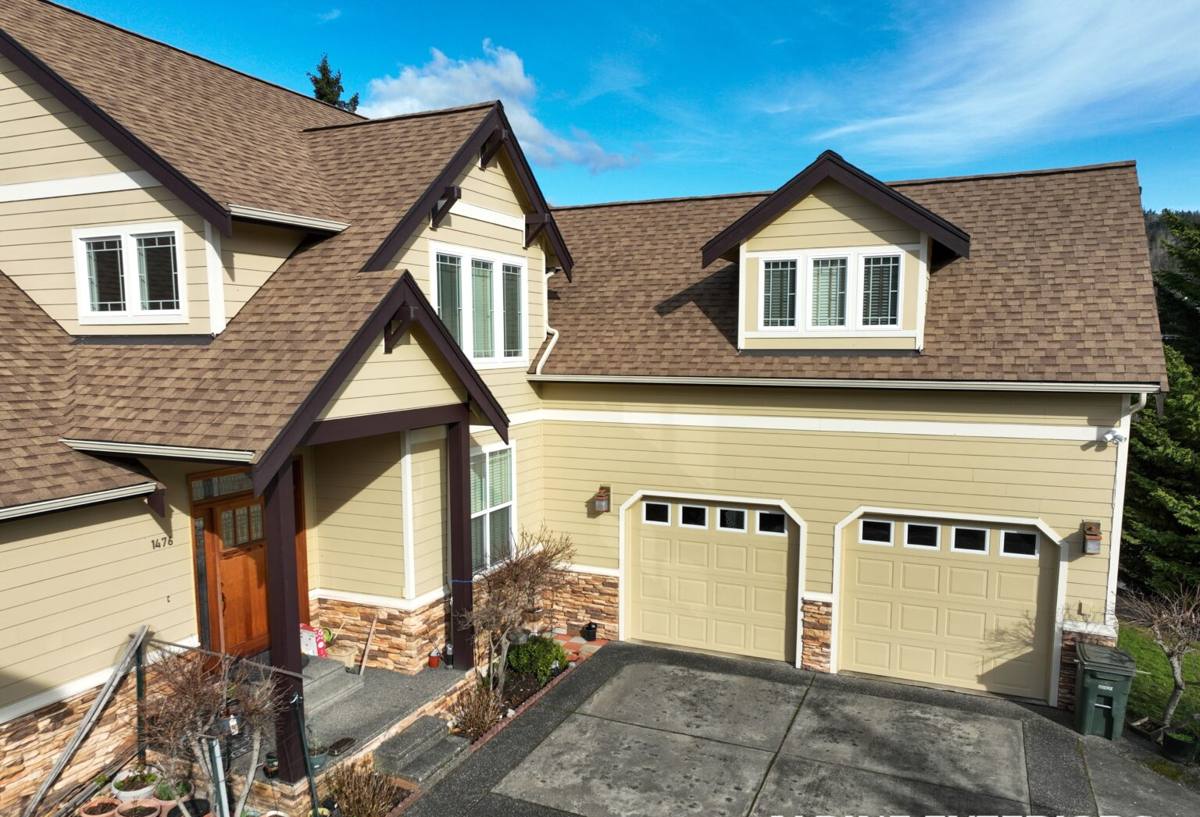
What a Correct Installation Actually Involves
Underlayment and Water Management
In a marine climate, the underlayment isn't a formality — it's the roof's actual second line of defense, because wind-driven rain can push water up and under shingle tabs in ways a calm-weather roof never experiences. We use synthetic underlayment rated for the exposure, with self-adhered ice-and-water membrane at eaves, valleys, and any low-slope transitions where water tends to pool or back up.
Flashing and Fasteners
Flashing is where most roof failures near the water actually start, not the field shingles. Chimneys, skylights, sidewall junctions, and any roof-to-wall transition need step flashing and counter-flashing sized and lapped correctly — not just caulked and hoped for. We also specify corrosion-resistant fasteners and hardware throughout. Standard galvanized fasteners can start showing surface corrosion within a few years this close to salt air; stainless or high-quality coated fasteners cost more up front and are worth it here.
Ventilation
A roof deck that can't breathe traps moisture underneath the shingles, which accelerates both rot and moss growth from below. Balanced intake and exhaust ventilation keeps the deck temperature closer to ambient, which also reduces the freeze-thaw and condensation cycling that shortens shingle life.
Roofing Materials: What We Recommend and Why
There's no single "best" roofing material for every Point Roberts home — the right choice depends on your roof's slope, your budget, and how much maintenance you want to take on. Here's how the common options compare under this specific climate load.
| Material | Salt Air Resistance | Moss Resistance | Maintenance | Typical Lifespan |
|---|---|---|---|---|
| Architectural asphalt shingle | Good, with quality fasteners and flashing | Moderate — benefits from zinc/copper strips | Low to moderate | 25-30 years |
| Standing seam metal | Very good with coated/marine-grade fasteners | Very good — sheds moss naturally | Low | 40-50+ years |
| Cedar shake | Fair — needs regular treatment | Poor without diligent upkeep | High | 20-30 years with maintenance |
| Synthetic composite shingle | Good | Moderate to good depending on product | Low | 30-40 years |
We install architectural asphalt and standing seam metal most often on Point Roberts homes because both hold up well against salt exposure when the hardware and flashing are specified correctly, and both give you real options for moss control. Cedar shake can look great, but it demands a maintenance commitment — treatment, cleaning, and moss removal on a schedule — that not every homeowner wants to sign up for, and we'll tell you that honestly rather than sell you a roof that becomes a chore.
Moss: Prevention Built Into the Roof, Not Just Cleaning After
Moss control starts at installation, not with a pressure washer two years later. We install zinc or copper control strips near the ridge on shingle roofs — rainwater carries trace metal ions down the slope and creates an environment moss doesn't like, without harsh chemical treatments. We also make sure the roof's slope, ventilation, and any overhanging tree exposure are accounted for in the design, since shaded, slow-draining sections are always where moss takes hold first. Trimming back branches that shade the roof and keeping gutters clear does more for long-term moss prevention than any product applied after the fact.
The Logistics of Working in Point Roberts
Point Roberts is a U.S. exclave — the only practical land route in and out crosses the Canadian border through Tsawwassen. That's not a small detail when you're scheduling a roofing crew, ordering materials, and coordinating a dumpster or debris haul-off. Crews and material deliveries that aren't used to routing through Point Roberts regularly can hit avoidable delays: border wait times, cross-border permitting for larger loads, and the simple fact that you can't just run back into town for a forgotten part.
Working this area regularly means we plan differently. Materials get staged and confirmed complete before the crew crosses, crew scheduling accounts for border timing, and we don't treat Point Roberts jobs like an afterthought squeezed between mainland Ferndale projects. A crew that's done this before knows how to keep a Point Roberts install running on the same timeline as anywhere else in Whatcom County — a crew doing it for the first time usually doesn't.
Our Installation Process
- Roof and structure inspection — we check the deck, existing flashing, ventilation, and any signs of moisture damage before quoting anything, so the estimate reflects your actual roof, not a generic assumption.
- Material selection and plan — we walk through the options above based on your roof's slope, sun/shade exposure, and budget, and explain the real trade-offs rather than steering you toward the highest-margin product.
- Tear-off and deck check — old roofing comes off down to the deck, and any soft, rotted, or water-damaged sheathing gets identified and replaced before anything new goes down. Covering up a bad deck is how "new" roofs fail early.
- Underlayment and ice-and-water membrane — installed to spec at eaves, valleys, and vulnerable transitions, sized for wind-driven rain exposure.
- Flashing — chimneys, skylights, sidewalls, and valleys flashed and lapped correctly, not just sealed with caulk.
- Field installation — shingles, panels, or shakes installed per manufacturer spec with corrosion-resistant fasteners throughout.
- Ventilation and moss-control details — intake/exhaust balance checked, control strips installed where applicable.
- Final walkthrough and cleanup — full site cleanup including magnetic sweep for stray fasteners, plus a walkthrough so you understand what was done and what to watch for.
What to Ask Before You Hire Anyone for This Job
- Do you regularly work in Point Roberts, or is this a rare trip across the border for your crew?
- What fastener and flashing materials do you use, and are they upgraded for salt air exposure?
- Will you inspect and replace damaged decking as part of the tear-off, or only if I ask?
- What's your plan for ventilation — intake and exhaust, not just "it'll have vents"?
- Do you install moss-control strips, and can you explain why or why not for my roof?
- What warranty covers labor versus material, and for how long?
- How do you handle material delivery and debris haul-off across the border?
Cost Factors to Expect
Every roof quote should reflect your specific job, not a flat per-square rate pulled from a national average. The factors that move the price most on a Point Roberts install are roof size and pitch, the number and complexity of penetrations (chimneys, skylights, vents), how much decking needs replacing once the old roofing comes off, the material you choose, and access — a roof that's easy to stage material on costs less to install than one requiring extra logistics. We'll walk through all of this in a written estimate before any work starts, and we don't add surprise line items once the tear-off reveals what's underneath — the deck inspection happens up front specifically so there aren't surprises later.
After Installation: Keeping It Right
A correctly installed roof still benefits from basic upkeep, especially in this climate. Keep gutters clear so water isn't backing up under the eaves during heavy rain. Trim back tree limbs that shade sections of the roof, since shade plus moisture is what lets moss re-establish even with control strips in place. A quick visual check after major windstorms — for lifted shingles, displaced flashing, or debris buildup in valleys — catches small issues before they become deck-level problems. None of this requires a professional visit every time, but an annual check from someone who knows what to look for is worth it in a salt-air, high-moss environment.
If you're planning a new roof for a Point Roberts home, we're happy to come take a look and give you a straightforward, no-pressure estimate — including an honest read on whether your existing deck and structure are in the shape you'd want them to be before new roofing goes on. Use the form below to get started.