 Ferndale Exterior
 Storm Damage Roofing in a Peninsula Climate
Point Roberts sits in an unusual spot: a small American peninsula hanging off the bottom of Canada, surrounded on three sides by the Strait of Georgia and Boundary Bay. That geography means homes here take weather from directions a typical Whatcom County house doesn't see as often — open-water wind, salt-laden air, and long stretches of driving rain off the water. Add in the marine moss season that lingers most of the year in this part of Washington, and roofs here work harder than the calendar suggests.
When a storm rolls through, the damage isn't always obvious from the ground. A few lifted shingles, a strained flashing seam, or granule loss you can't see from the driveway can turn into a slow leak weeks later. This page covers what storm damage repair actually involves for Point Roberts homes, what we look for, and how to tell a real fix from a patch that won't hold.
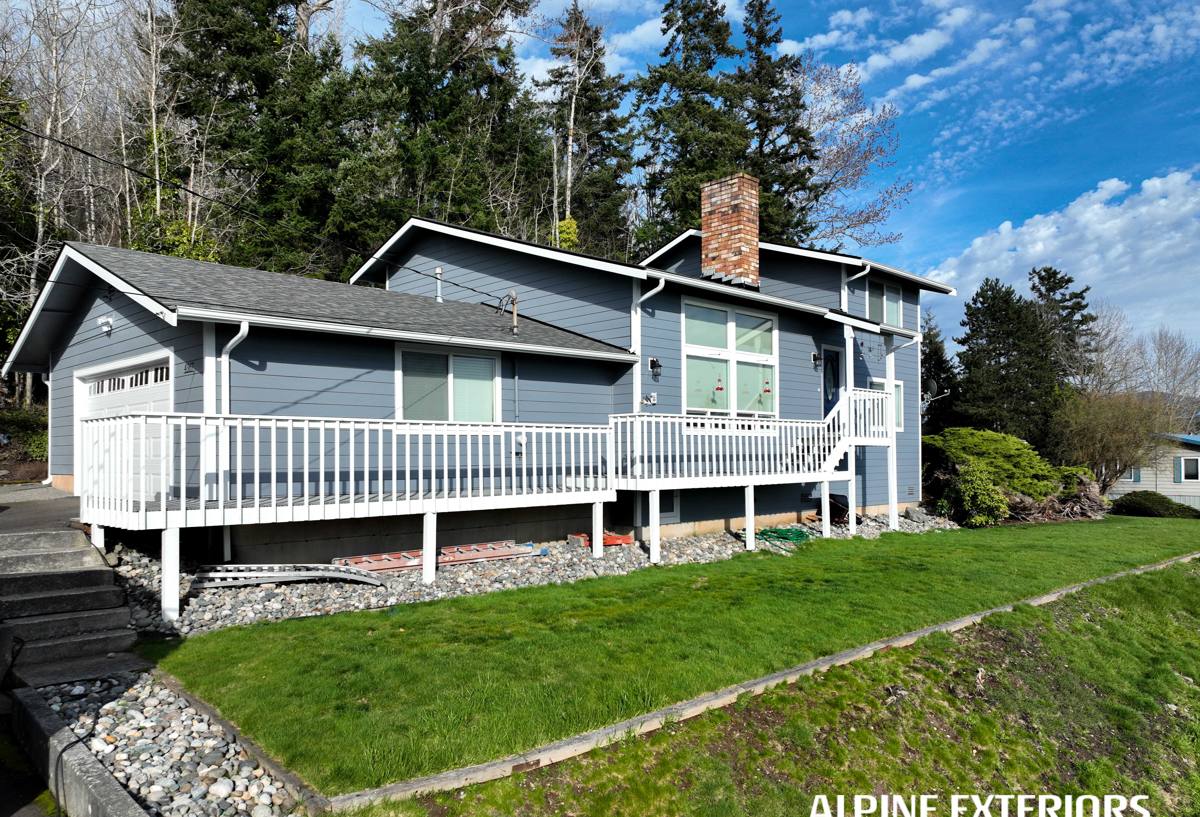
Why Point Roberts Roofs Take a Different Kind of Beating
Salt Air and Metal Fatigue
Being surrounded by saltwater on nearly every side means metal roofing components — flashing, drip edge, fasteners, vents — corrode faster here than they would ten or twenty miles inland. Corrosion doesn't announce itself. A fastener that's lost its grip or a flashing seam that's thinned out from years of salt exposure can fail quietly during a storm, letting water in at exactly the point it was supposed to keep water out.
Wind-Driven Rain Off the Water
Open water means wind has room to build before it hits the roofline. Storms here often bring rain moving nearly sideways, which pushes water into laps, seams, and vent penetrations that a straight-down rain would never reach. This is why storm damage on a Point Roberts roof frequently shows up around edges and penetrations rather than in the open field of the roof — those are the places wind-driven rain actually gets tested.
A Long Moss Season
Western Whatcom County's damp, mild climate keeps conditions right for moss and algae growth most of the year, and Point Roberts' marine exposure keeps humidity high even longer. Moss holds moisture against the roof surface, which accelerates shingle wear and can mask storm damage underneath — a mat of moss can hide a cracked shingle or a lifted tab until a leak finally shows up inside the house.
What Storm Damage Actually Looks Like
Not every storm-damaged roof looks dramatic. Some of the most costly problems start small and get missed because nothing looks "broken" from a distance.
- Shingles that are lifted, cracked, or missing granules, especially along ridges and edges
- Flashing around chimneys, vents, and skylights that's been bent, separated, or corroded
- Soft spots or sagging in the roof deck, usually a sign water has already gotten underneath
- Debris — branches, needles, moss clumps — pooled in valleys where it traps moisture
- Gutters pulled loose or overflowing, which sends water back up under the roof edge
- Water stains, discoloration, or a musty smell in the attic or upper ceilings
- Granules collecting in gutters or at downspout outlets after a storm
If you've had a recent windstorm, heavy rain event, or a stretch of freeze-thaw weather and you're seeing any of the above, it's worth getting a roof looked at before the next system comes through.
How We Approach a Storm Damage Inspection
Ground and Roof-Level Assessment
We start with a visual walk of the exterior and, when it's safe to access, a direct inspection of the roof surface. We're looking for the obvious stuff — missing or torn shingles — but also the less obvious signs: lifted tabs that haven't fully separated yet, flashing that's begun to pull away, and granule loss that signals a shingle is past its wind resistance.
Attic and Interior Check
Storm damage doesn't always show up where the storm hit. Water can travel along the underside of the deck or down a rafter before it drips somewhere else entirely. We check the attic for staining, damp insulation, or daylight coming through where it shouldn't, since that tells us more about the real extent of a leak than the exterior alone.
Documentation for Insurance
If the damage is storm-related, we document what we find with clear notes and photos so you have something usable if you're filing an insurance claim. We're not an insurance adjuster and we won't promise a claim outcome, but we can give you an honest, specific account of what's damaged and what it will take to fix it.
Repair vs. Replacement: Making the Right Call
Storm damage repair isn't always a full replacement, and it shouldn't be sold as one. The right call depends on the age of the roof, how widespread the damage is, and whether the underlying deck and structure are sound.
| Factor | Leans Toward Repair | Leans Toward Replacement |
|---|---|---|
| Roof age | Under 10-12 years, still has useful life left | Near or past expected shingle lifespan |
| Damage extent | Isolated to one area or a few penetrations | Spread across multiple slopes or the full roof |
| Deck condition | Solid, dry, no soft spots | Soft, spongy, or showing rot |
| Prior repairs | Few or none, roof otherwise in good shape | History of patch after patch |
| Moss/algae history | Manageable with cleaning and maintenance | Long-term moss damage already compromising shingles |
We'll tell you honestly which side of that table your roof falls on. A patch job on a roof that's structurally sound and near the end of a normal repair cycle is a reasonable, cost-conscious fix. Patching a roof that's already failing underneath just delays a bigger bill.
What a Correct Storm Repair Involves
A repair that actually holds up in Point Roberts conditions isn't just swapping out a few shingles. It needs to account for the same wind-driven rain and salt exposure that caused the damage in the first place.
- Remove and inspect the deck beneath the damaged area — if the sheathing is wet or soft, that gets addressed before anything goes back on.
- Match or upgrade flashing at any penetration near the repair, since corroded or undersized flashing is often the real point of failure, not the shingles themselves.
- Reset or replace underlayment in the repair zone so the water barrier underneath is continuous, not just patched around the visible damage.
- Install shingles with proper nailing and sealing for wind exposure — under-nailed or improperly sealed shingles are one of the most common reasons repairs fail again in the next storm.
- Check and clear adjacent valleys and gutters so water has a clean path off the roof instead of pooling near the new work.
Maintenance That Prevents the Next Storm Claim
Because of the moss season and salt air here, a Point Roberts roof benefits from more regular attention than a roof in a drier inland climate. A few habits go a long way:
- Keep gutters and downspouts clear so storm runoff has somewhere to go
- Have moss and algae growth treated before it builds up into thick mats
- Trim back overhanging branches that drop debris into valleys
- Get flashing and vent boots checked periodically, since these fail well before shingles usually do
- After any significant windstorm, do a visual check for lifted or missing shingles
Why Hire a Crew That Already Works Point Roberts
Point Roberts is geographically isolated from the rest of Whatcom County — getting there means crossing into Canada and back, which not every contractor is set up to do routinely. That logistics gap matters when you're dealing with active storm damage and need someone who can actually show up, not just quote a job over the phone. A crew that regularly works this peninsula knows the border crossing logistics, understands the specific wear pattern salt air and open-water wind create, and isn't guessing at what "storm damage" means in this particular climate versus a roof twenty miles inland.
We work throughout Ferndale and greater Whatcom County, including Point Roberts, and we bring that same standard of work to every job regardless of how far out the address is.
Get an Honest Look at Your Roof
If a recent storm has you wondering whether your roof took damage, we're glad to come take a direct look and give you a straight answer — repair, monitor, or replace — with no pressure either way. Reach out for a free estimate and we'll walk the roof, check the attic, and tell you exactly what we find.