 Ferndale Exterior
 Roofing on the Water Comes With Its Own Rules
Sandy Point sits right on the Strait of Georgia, and that location shapes everything about how a roof ages there. Homes just a few miles inland in Ferndale or elsewhere in Whatcom County deal with plenty of rain, but Sandy Point roofs also take on salt-laden air, near-constant wind off the water, and a moss season that runs longer than most homeowners expect. A roof replacement here isn't just about swapping old shingles for new ones — it's about building a roof system that's matched to a shoreline environment from the deck up.
This page covers what that actually means: how the local climate wears roofs down, what signs tell you it's time to replace rather than repair, how we approach material selection for this specific setting, and what our process looks like from first inspection to final walk-through.
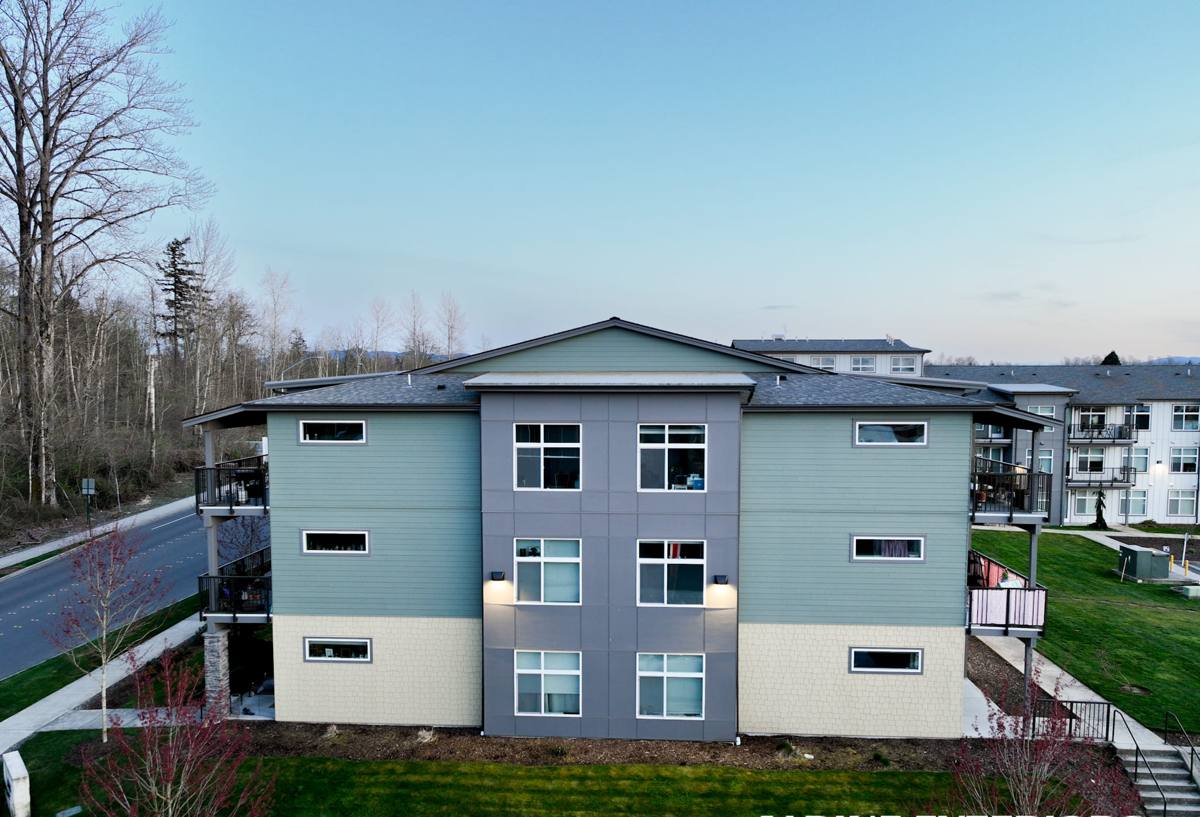
How Salt Air, Rain, and Moss Wear Down a Sandy Point Roof
Three environmental factors do most of the damage to roofs in this part of Whatcom County, and they don't act alone — they compound each other.
Salt Air
Airborne salt from the Strait settles on roofing surfaces and metal components alike. Over years, it accelerates corrosion on exposed fasteners, flashing, and any metal roofing that isn't rated for coastal exposure. It also breaks down certain sealants and adhesives faster than they'd wear inland, which shows up as premature cracking around penetrations and edges.
Driving Rain and Wind
Wind off the water doesn't just bring rain — it drives it sideways and up under shingle edges, ridge caps, and flashing details that would be fine in a calmer, inland setting. A roof that's watertight in a straight-down rain can still leak in a Sandy Point storm if the underlayment, flashing laps, and fastening pattern weren't built for wind-driven water.
Extended Moss Season
The combination of shade, moisture, and mild temperatures common along this stretch of coastline gives moss a long growing window — often nearly year-round on north-facing slopes and shaded sections. Moss holds moisture against the roofing surface, lifts shingle edges as it grows, and works its way into gaps in the granule layer. Left unmanaged, it shortens the life of an otherwise sound roof by years.
Signs a Sandy Point Roof Needs Replacing, Not Just Repairing
Not every roof problem on a shoreline home calls for full replacement. But there's a point where patching stops making financial sense and starts masking a bigger issue. Here's what tends to separate a repair situation from a replacement situation:
- Granule loss across large areas of the roof, not just isolated spots — a sign the shingles themselves are past their functional life
- Soft or spongy decking found during inspection, which usually means water has been getting underneath the roofing for some time
- Repeated leaks in different locations rather than one recurring spot — this points to broad material failure, not a single bad flashing detail
- Heavy, established moss growth that's lifted shingles or worked into the underlayment, especially on north- or shade-facing slopes
- Visible curling, cracking, or cupping shingles across most of the roof rather than a section damaged by a specific event
- Corroded or failing flashing and fasteners, particularly on older metal components that were never coastal-rated
- Roof age — most asphalt roofing in a coastal Whatcom County setting is showing its limits well before the manufacturer's stated lifespan, simply because the climate here is harder on materials than a national average rating assumes
If a roof shows two or three of these at once, replacement is almost always the more honest recommendation than another round of patching. We'll tell you plainly which category your roof falls into after an inspection — there's no benefit to us in replacing a roof that has years of real service life left.
Choosing Materials for a Shoreline Climate
Material choice matters more in Sandy Point than it does a few miles inland, because the margin for error is smaller. The table below reflects how the main options typically perform in this specific salt-air, high-moisture setting — not a generic national comparison.
| Material | Coastal Performance | Moss Resistance | Maintenance Burden |
|---|---|---|---|
| Architectural asphalt shingle | Good, with coastal-rated fasteners and proper ventilation | Moderate — benefits from zinc or copper strips at ridges | Periodic moss treatment and gutter care |
| Standing seam metal (coastal-rated finish) | Excellent when specified with a marine-grade coating and fastener package | High — sheds moisture quickly, little surface for moss to grip | Low, mainly inspection of seams and flashing |
| Standard (non-coastal) metal roofing | Poor — accelerated fastener and panel corrosion near salt air | High | Higher long-term risk of premature corrosion |
| Cedar shake | Fair — needs diligent maintenance to resist moisture uptake | Low — organic surface, prone to moss and moisture retention | High — regular treatment required |
We don't install standard, non-coastal-rated metal roofing on homes this close to the water. It's not that metal roofing is a bad product — it's an excellent one when the coating, fastener package, and detailing are specified correctly for salt exposure. Standard residential-grade metal without that coastal specification corrodes faster here than the warranty assumes, and that's a maintenance headache we'd rather steer a homeowner away from up front than deal with as a callback five years later.
What a Correct Roof Replacement Involves
A roof replacement is more than the visible layer. In a setting like Sandy Point, the parts you don't see are what determine whether the roof actually holds up.
Tear-Off and Deck Inspection
Full tear-off lets us actually see the decking, not guess at its condition from the attic. Any soft, delaminated, or water-damaged sheathing gets replaced before anything new goes down — covering over compromised decking is the single most common shortcut that leads to early failure.
Underlayment and Ice/Water Protection
Given how much wind-driven rain this area sees, we pay particular attention to underlayment coverage at eaves, valleys, and any low-slope transitions — areas where wind-driven water is most likely to find a way in through standard installation.
Flashing Details
Chimneys, skylights, sidewall transitions, and vent penetrations are where most roof leaks actually start, coastal or not. Correct step flashing, counter-flashing, and sealant work at these details matters more here because of the added wind-driven-rain factor.
Ventilation
Proper intake and exhaust ventilation keeps moisture from building up in the attic space, which matters in a climate this damp. Poor ventilation shortens shingle life from the underside just as surely as weather shortens it from the top.
Fasteners and Hardware
On a home this close to salt air, we use fasteners and flashing metals rated for coastal exposure rather than standard-grade hardware. It costs a little more up front and pays for itself in avoided corrosion callbacks.
Our Process for Sandy Point Homeowners
- On-site inspection. We look at the roofing surface, decking condition where accessible, flashing, ventilation, and any moss or moisture patterns specific to your property's exposure and shading.
- Honest assessment. We'll tell you clearly whether you're looking at a repair or a full replacement, and why — including what we'd need to see once tear-off begins to confirm decking condition.
- Written estimate. Material options, scope of work, and pricing laid out plainly, with the coastal-specific details (fasteners, flashing, underlayment coverage) itemized so you know what you're paying for and why.
- Scheduling around weather. Roofing on the water means watching wind and rain windows more closely than an inland job. We plan tear-off and dry-in timing to minimize the days your home is exposed.
- Installation. Tear-off, deck repair as needed, underlayment, flashing, and final roofing material installed to the specification we agreed on.
- Final walk-through. We go over the finished roof with you, including basic maintenance expectations for this environment before we consider the job done.
Why Working With a Crew That Already Knows Sandy Point Matters
A roofing crew that mostly works inland jobs isn't necessarily going to under-build a Sandy Point roof on purpose — but they may not think to ask about wind-driven rain exposure, specify coastal-rated fasteners by default, or recognize how aggressive the moss growth pattern is on a shaded, shoreline-facing slope. Those aren't exotic considerations; they're just details that come from having actually worked on homes in this specific setting before.
We work throughout Ferndale and the surrounding Whatcom County shoreline, so Sandy Point's particular mix of salt air, wind, and moss isn't a special case for us — it's a known factor we build into the estimate, the material recommendation, and the installation details from the start.
Maintaining Your Roof After Replacement
A correctly installed roof still benefits from basic upkeep, especially in this climate. A little attention each year goes a long way toward hitting the full expected lifespan of the materials.
- Clear gutters and downspouts at least twice a year — clogged gutters back water up under the roof edge
- Have moss growth treated before it establishes and lifts shingle edges, particularly on shaded or north-facing slopes
- Trim back overhanging branches to reduce shade, debris buildup, and moss-friendly moisture retention
- Schedule a visual inspection after major windstorms to catch lifted shingles or damaged flashing early
- Watch for granule buildup in gutters, which signals accelerating shingle wear
- Keep an eye on flashing around chimneys, skylights, and vents for early signs of sealant cracking or corrosion
None of this requires a specialist visit every time — most of it is basic homeowner maintenance. But in a salt-air, high-moss environment like Sandy Point, skipping it tends to cost more over time than it would inland.
Get a Straightforward Estimate
If your Sandy Point roof is showing its age, or you just want an honest read on how much service life it has left, we're glad to take a look. The estimate is free, there's no pressure attached to it, and if the answer is "this can still be repaired," we'll tell you that instead of pushing a replacement you don't need yet. Use the form below to get started.