 Ferndale Exterior
 Windows in Sandy Point Take a Different Kind of Beating
Sandy Point sits right up against the water, and that changes what a window has to survive day to day. Homes just a few miles inland in Ferndale deal with normal Pacific Northwest weather — rain, humidity, the occasional windstorm. Homes in Sandy Point deal with all of that plus salt-laden air coming straight off the water, near-constant wind exposure, and driving rain that hits window walls at an angle instead of falling straight down. Over years, that combination is harder on window materials, hardware, and seals than almost anywhere else in Whatcom County.
Salt air is corrosive. It works on aluminum cladding, steel reinforcement, screws, hinges, and balance hardware inside the window frame — usually slowly and invisibly, until a window that looked fine stops locking properly or gets stiff to operate. Wind-driven rain finds gaps that would never leak on a calmer inland lot. And Whatcom County's long, damp moss season adds another layer: moss and algae hold moisture against wood trim, sills, and cladding for months at a time, which accelerates rot in anything that isn't properly sealed or ventilated.
None of this means Sandy Point homes need exotic materials or premium upgrades across the board. It means the replacement has to be planned around this specific exposure — the right materials, correct flashing and sealing, and hardware that won't corrode out in a few seasons.
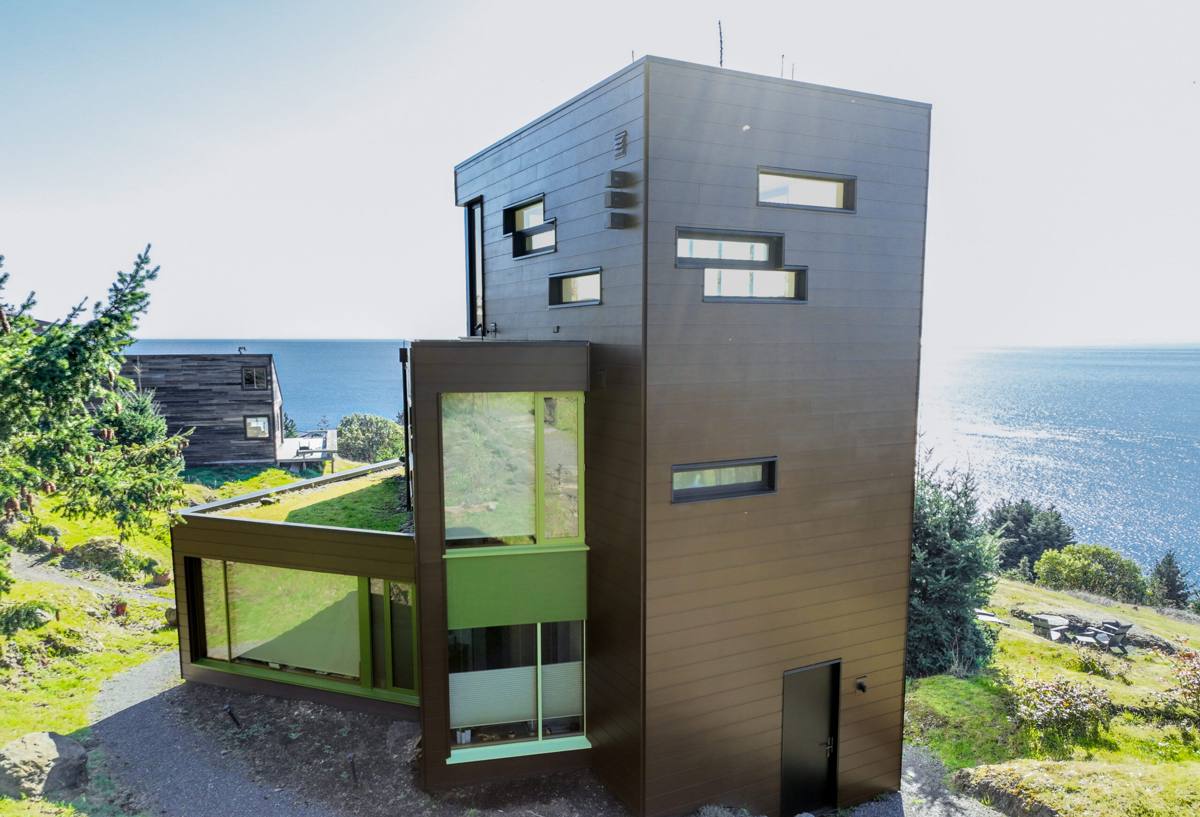
Signs a Sandy Point Home Needs Window Replacement
Coastal homes often show window failure differently than inland homes. Look for:
- Hardware that's gone stiff, gritty, or hard to turn — often the first sign of salt corrosion inside the lock or crank mechanism
- Visible pitting, chalking, or white corrosion residue on aluminum frames or cladding
- Persistent condensation between panes, which usually means the seal has failed and the insulating gas has escaped
- Soft or discolored wood at the sill or lower corners, especially on walls that face prevailing wind and rain
- Moss or dark streaking building up on frames or trim faster than it can be cleaned off
- Drafts or a cold feeling near the glass even when the window is fully latched
- Difficulty opening or closing that wasn't there a year or two ago
Any one of these on its own might just need a repair or a hardware swap. Several showing up together, especially on a home more than 15-20 years old, usually means the windows themselves — frame, seal, and glazing as a system — are past the point where repair makes sense.
What a Correct Window Replacement Actually Involves
The window itself only does part of the job. In a wind-and-salt exposure like Sandy Point, how the window is installed matters as much as which window you buy. A correct replacement includes:
Removing the old unit without damaging the opening
Old caulk, nailing fins, and trim get removed carefully so we can see the actual condition of the framing underneath — which is often where hidden problems from years of moisture intrusion show up first.
Inspecting and repairing the rough opening
Any soft or water-damaged framing gets addressed before a new window goes in. Installing a new window into a compromised opening just hides the problem behind a fresh frame — it doesn't fix it.
Flashing in the correct order
Water management around a window is a layered system: sill pan flashing, side flashing, and head flashing installed in the right sequence so water is always directed outward and down, never trapped behind the siding. On a wind-driven-rain site like Sandy Point, this step is not optional — it's the difference between a window that stays dry for decades and one that leaks within a few years regardless of how good the window itself is.
Sealing with the right materials
Not every sealant holds up to constant salt exposure and UV. We use sealants and flashing tapes rated for the job, not whatever is cheapest or fastest to apply.
Setting the window level, plumb, and square
A window that's slightly out of square will bind, won't seal evenly, and will wear its hardware and weatherstripping unevenly — problems that show up faster in a harsh coastal exposure than they would inland.
Insulating the gap correctly
The space between the window frame and the rough opening gets insulated to control both heat loss and condensation — overfilled or underfilled insulation both cause problems.
Choosing Materials for a Salt-Air, High-Wind Exposure
Every window material has trade-offs. On a normal inland lot, those trade-offs are mostly about cost and appearance. In Sandy Point, salt corrosion and wind load move to the front of the decision.
| Material | How It Handles Salt Air & Wind | Maintenance Burden |
|---|---|---|
| Vinyl | Good corrosion resistance since there's no bare metal to pit or rust; performs well in salt exposure | Low — occasional washing to remove salt film and moss growth |
| Fiberglass | Very strong dimensional stability in wind and temperature swings; resists corrosion well | Low — durable finish, holds up to washing |
| Aluminum-clad wood | Attractive but the aluminum cladding and any exposed fasteners are more vulnerable to salt pitting over time | Moderate to high — cladding and seams need regular inspection |
| Bare wood | Poor fit for direct salt and wind-driven rain exposure without diligent upkeep | High — repainting, sealing, and rot-watching on a regular schedule |
We're not against wood or aluminum-clad windows as a category — they have real appearance advantages and work fine in a lot of settings. But on a direct-exposure lot like Sandy Point, we're honest with homeowners that those materials carry a higher long-term maintenance commitment, and we'll say so up front rather than let a homeowner find out the hard way five years in. Hardware is just as important as frame material: look for stainless steel or corrosion-resistant coated hardware, not standard-grade fasteners and cranks that'll seize up in salt air.
Glass and Performance Considerations
Beyond frame material, a few glazing choices matter more on an exposed waterfront lot:
- Impact-resistant or laminated glass is worth considering on walls that catch the brunt of storm winds, since wind-driven debris is more of a factor right on the water
- Low-E coatings help with year-round comfort and reduce UV fading on interior finishes, which matters more with unobstructed sun and water-reflected light
- Double or triple glazing both work fine in this climate; the bigger performance gain usually comes from correct installation and sealing rather than paying up for an extra pane
- Argon or krypton gas fill is standard on most quality units now and holds up fine as long as the seal itself is well made
Our Process for a Sandy Point Window Replacement
1. On-site assessment
We look at each window's exposure individually — a window on the water-facing wall needs different attention than one on a sheltered side of the same house. We check framing condition, current flashing, and how the existing windows have actually held up, not just their age.
2. Product selection based on exposure, not upsell
We'll walk through material and glazing options honestly, including where a mid-range option is genuinely the right call and where spending more on hardware or glazing actually pays off given the site.
3. Careful removal and opening repair
Old units come out cleanly, framing gets inspected, and any moisture damage gets repaired before anything new goes in.
4. Installation with full flashing and sealing detail
Every unit gets sill pan flashing, correctly lapped side and head flashing, and sealants rated for marine exposure — not a shortcut version because the wall will be covered by trim afterward.
5. Final adjustment and walkthrough
We check operation, locking, and seal on every window before we consider the job done, and walk the homeowner through anything they should know about care in this environment.
What Window Replacement Typically Costs
Pricing depends on window size, count, material, glazing, and how much framing repair is needed once the old units come out — we won't know the last one until we open the wall. In general terms, the biggest cost drivers on a Sandy Point job are:
| Factor | Why It Moves the Price |
|---|---|
| Frame material chosen | Vinyl and fiberglass are generally more budget-friendly than aluminum-clad wood; salt-resistant hardware upgrades add modestly to cost |
| Number and size of windows | Larger openings and full-house replacements have better per-window pricing than one-off swaps |
| Condition of existing framing | Rot or water damage found during removal adds repair time before the new window can go in — this is the most common source of surprise cost |
| Glazing upgrades | Impact-resistant glass and higher-performance Low-E packages cost more per unit but add real durability on exposed walls |
| Access and site conditions | Upper-floor or hard-to-reach windows, and general site access on a waterfront lot, can affect labor time |
We give a written, itemized estimate before any work starts, and we flag likely framing issues during the assessment so cost surprises are rare rather than routine.
Living With Windows in a Marine Climate
Even the right window, correctly installed, benefits from some basic upkeep in a salt-air environment. A short routine goes a long way:
- Rinse frames and glass periodically to remove salt film buildup, especially after storms
- Clear moss and algae from sills and frame edges before it holds moisture against the surface
- Lubricate locks and cranks with a manufacturer-approved product if they start feeling stiff
- Check exterior caulking annually for cracking or separation, particularly on the wind-facing side of the house
- Keep gutters and drainage clear so water isn't running down over window heads during heavy rain
None of this is complicated, but skipping it is exactly how a good window installation loses years off its life on an exposed lot like this one.
Why It Matters That We Already Work Sandy Point
A lot of window crews can install a window correctly on a typical inland lot. Fewer have real experience with the specific combination Sandy Point throws at a house — salt corrosion, sustained wind exposure, and a moss season that runs long even by Whatcom County standards. Knowing which hardware grades hold up here, which flashing details matter most on a wind-facing wall, and which materials are worth the extra cost on this kind of site comes from working this shoreline repeatedly, not from a general product catalog.
We're a Ferndale-based crew, and Sandy Point is part of our regular service area — not a special trip. That means we show up knowing what this environment does to a window over time, and we build the installation around that from the start rather than treating it as a standard job with a nicer view.
If your Sandy Point home has windows showing their age — or you're planning ahead before winter storm season — we're happy to take a look and put together a straightforward, no-pressure estimate. Use the form below to get started.