 Ferndale Exterior
 Fairhaven's Marine Climate Is Hard on Siding
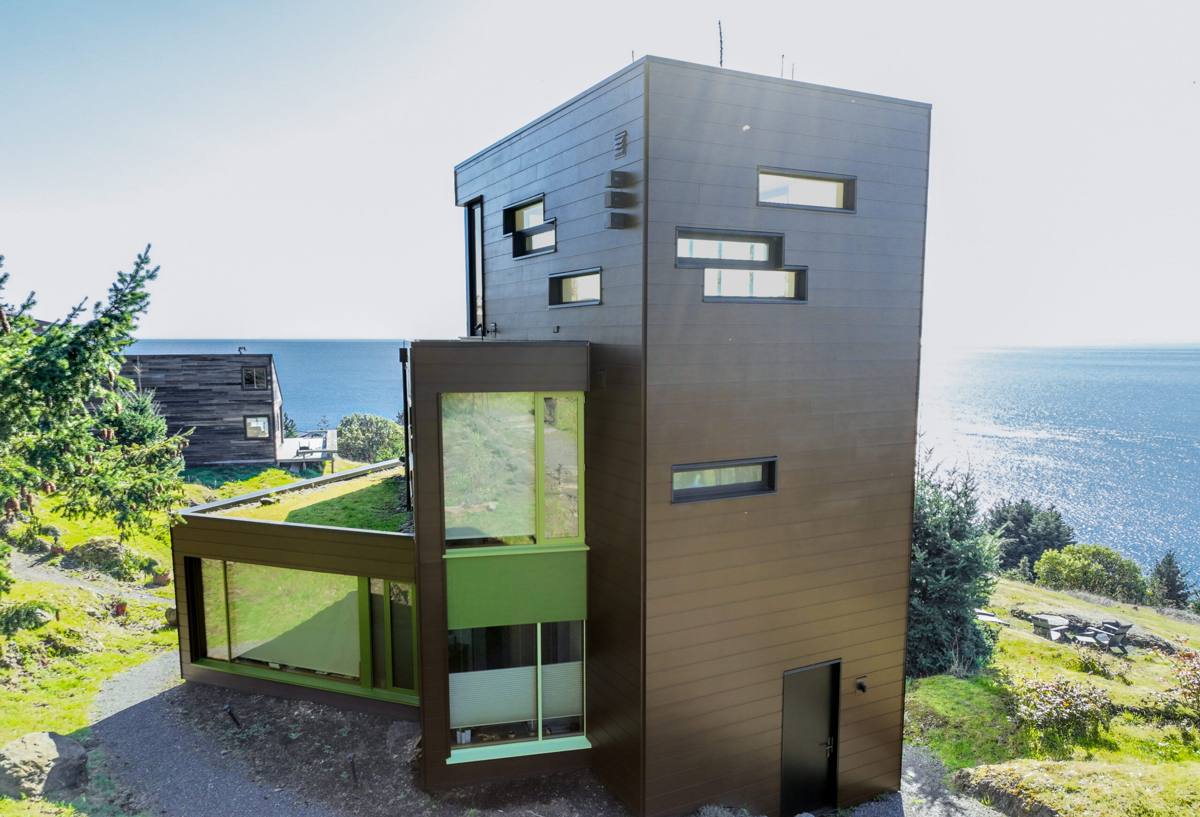
Fairhaven sits close enough to the water that homes here take a different kind of weathering than houses a few miles inland in Ferndale or elsewhere in Whatcom County. The combination is specific: salt-laden air off the water, wind-driven rain that hits siding sideways instead of falling straight down, and a moss season that can stretch from fall through spring in our mild, wet Pacific Northwest winters. None of these factors are dramatic on their own. Together, applied year after year, they're exactly what breaks down siding that wasn't built or installed to handle them.
This page is about one job done right in one place: siding repair for homes in and around Fairhaven. Not a general "we fix siding" pitch — the actual conditions this neighborhood's siding is up against, what a repair has to account for to actually last, and how we approach that work.
What Salt Air, Rain, and Moss Actually Do to Siding
Salt Air and Fastener Corrosion
Airborne salt doesn't just sit on the surface of your siding — it works into fasteners, trim joints, and any exposed cut edges. Over time it accelerates corrosion in nails, screws, and metal flashing that isn't rated for coastal exposure. A siding repair that reuses corroded fasteners or skips proper flashing is a repair that fails again in a few years, sometimes faster than the original problem took to develop.
Driving Rain and Moisture Intrusion
Fairhaven's exposure to wind off the water means rain frequently arrives at an angle, not straight down. That matters because siding systems are designed around the assumption of mostly vertical water flow — laps, flashing, and caulk lines all rely on gravity to shed water downward and outward. Driving rain pushes water sideways and upward into laps, around window and door trim, and behind poorly sealed penetrations (hose bibs, light fixtures, vents). Once water gets behind the cladding, it doesn't dry quickly in our climate, and that's when rot starts in the sheathing behind the siding, not just the siding itself.
Moss, Algae, and Trapped Moisture
Whatcom County's long damp season is ideal moss and algae territory, especially on north-facing walls, shaded siding under trees, and horizontal trim ledges that hold moisture. Moss itself doesn't eat through siding the way rot does, but it holds water against the surface far longer than open air would, and it's often the first visible sign that a wall isn't drying out between rain events the way it should. Left alone through several wet seasons, chronic moss growth is frequently a symptom of a moisture problem underneath, not just a cosmetic issue.
Signs Your Fairhaven Home Needs Siding Repair, Not Just a Repaint
A lot of siding damage gets masked with paint or caulk instead of actually fixed, which usually costs more down the line. Here's what should prompt a real inspection rather than a touch-up:
- Soft or spongy spots when you press on siding, especially near the bottom courses or below windows
- Visible gaps, cracking, or buckling at seams and corners
- Paint that's bubbling, peeling, or failing repeatedly in the same spot even after repainting
- Persistent moss or algae growth that returns within a season of cleaning
- Discoloration or staining that tracks downward from a trim joint, window head, or roofline
- Fastener heads showing rust streaks or backing out of the siding face
- Musty smell or visible staining on interior walls that share an exterior wall with damaged siding
- Warped, delaminating, or crumbling material, particularly common on older wood-based or engineered wood siding
Any one of these on its own might be minor. Several together, or any sign of soft sheathing underneath, usually means the damage extends past what's visible from the outside.
What a Correct Siding Repair Actually Involves
A siding repair that holds up here has to do more than replace a damaged piece with a new one. Done right, it includes:
- Confirming the extent of the damage. Visible damage on the surface is often smaller than what's happening behind it. We check for soft sheathing, saturated insulation, and compromised weather-resistive barrier (the house wrap or building paper behind the siding) before deciding how much needs to come off.
- Identifying the moisture source, not just the symptom. Replacing a rotted board without fixing the flashing, caulk failure, or grading issue that let water in means the same spot fails again.
- Matching material correctly. Profile, exposure, and color need to match the existing siding closely enough that a repair doesn't stand out as an obvious patch — or, where the existing material is failing broadly, a conversation about whether patching is even the right call.
- Proper flashing and sealant detail. Especially around windows, doors, and any wall penetration — this is where driving rain finds its way in, and it's the detail most often rushed on a quick patch job.
- Fasteners rated for the exposure. Coastal-adjacent conditions call for corrosion-resistant fasteners, not whatever was on hand.
Repair or Replace? How We Make That Call
Not every damaged area needs a full re-siding project, but not every problem should be patched either. The right call depends on a few honest factors:
| Factor | Leans toward repair | Leans toward replacement |
|---|---|---|
| Extent of damage | Isolated to one or two areas | Spread across multiple walls or elevations |
| Age and condition of existing siding | Siding is otherwise sound and well under its expected service life | Siding is near or past its expected lifespan, or already showing widespread wear |
| Sheathing condition | Sheathing behind the damage is dry and solid | Sheathing is soft, delaminated, or shows signs of long-term moisture |
| Material match | Discontinued or mismatched product can still be reasonably matched | Original product is no longer available in a matching color or profile |
| Underlying cause | Cause is a one-time or localized failure (a single bad flashing detail) | Cause is systemic (original installation, material choice, or drainage across the whole wall) |
We'll tell you honestly which side of that table your home falls on. A patch that's likely to fail again within a couple of years isn't a favor to anyone — it just delays a bigger job and adds cost.
Our Siding Repair Process
- Inspection. We look at the damaged area and the surrounding wall, not just the spot you called about, since moisture problems rarely stay contained to one board.
- Moisture and sheathing check. Where damage suggests water intrusion, we check what's happening behind the siding before quoting the job, so the estimate reflects the real scope.
- Scope and estimate. You get a clear explanation of what needs to happen, why, and what it costs — including if we think replacement makes more sense than repair.
- Careful removal. Damaged material and any compromised flashing or house wrap come out without unnecessary disruption to sound siding nearby.
- Correcting the cause. Flashing, sealant, or drainage details get fixed as part of the repair, not just the visible board.
- Installing matched material. New siding is fit, fastened with corrosion-resistant hardware, and finished to blend with the surrounding wall.
- Final walkthrough. We go over the completed work with you before calling the job done.
Why We Repair With James Hardie Fiber Cement
We install James Hardie fiber cement exclusively — we don't install vinyl, LP SmartSide, primed spruce, cedar, or other fiber cement brands. That standard applies to repairs the same way it applies to full siding jobs. When a repair calls for new material, we use Hardie board matched to the HZ5 climate-engineered product line built for the Pacific Northwest's wet, moderate climate, factory-finished with ColorPlus coating so the color is baked in rather than field-painted and prone to fading or peeling at a different rate than the rest of the wall.
Fiber cement handles this specific climate better than the alternatives for a straightforward reason: it doesn't absorb and swell with moisture the way wood-based products can, and it doesn't rely on a factory or field paint film alone to keep water out the way vinyl and some engineered wood systems do. For a repair specifically, that matters even more than on a new build, because a repaired section is only as good as its weakest seam — and Hardie's dimensional stability makes it easier to get a tight, lasting seam between old and new material.
If your home currently has a different siding product and the damage is significant, we'll walk you through what upgrading that section — or eventually the whole exterior — to Hardie would look like, and why we think it's worth considering rather than continuing to patch a product that's reached the end of what it can reasonably do.
Why Hiring a Crew That Already Works in Fairhaven Matters
Siding repair isn't just a product question — it's a site-specific one. A crew that regularly works this area already understands things that take time to learn otherwise: which elevations take the worst of the wind-driven rain, how much moss buildup is normal versus a red flag, what kind of drainage and grading issues show up around homes near the water, and how permitting and inspection work with the local jurisdiction. That local familiarity shortens the guesswork and reduces the chance of a repair that looks fine going in but doesn't hold up through a full wet season.
It also means honest scoping. A crew unfamiliar with coastal-adjacent conditions might treat a Fairhaven repair the same as one done twenty miles inland, using standard fasteners and skipping the added flashing detail that this exposure actually calls for. That shortcut might not show up as a problem for a year or two — which is exactly the kind of failure that costs more to fix the second time.
What Siding Repair Typically Costs in This Area
Costs vary a lot depending on scope, so treat these as broad, honest ranges rather than a quote — every home is different, and the only way to know your actual number is an on-site look.
| Repair scope | What's typically involved | Rough range |
|---|---|---|
| Small, localized patch | One or two boards, no sheathing damage, easy material match | Several hundred dollars |
| Moderate repair | Multiple boards, minor rot, some flashing or sealant correction | Low to mid thousands |
| Extensive repair or partial re-siding | Sheathing replacement, wall-wide drainage or flashing correction, larger material areas | Mid thousands and up, approaching full re-siding cost for that section |
The biggest cost swing factor isn't the size of the visible damage — it's whether the sheathing behind it is still sound. That's exactly why the inspection step matters before we ever give you a number.
Get a Straight Answer on Your Siding
If you're seeing soft spots, persistent moss, or paint that won't stop failing on a Fairhaven-area home, it's worth having someone look at it before it turns into a bigger job. We'll give you a free, no-pressure estimate and an honest read on whether you're looking at a repair or something more — just fill out the form below to get started.