 Ferndale Exterior
 Why Sandy Point Siding Takes More Punishment Than Inland Ferndale
Sandy Point sits right on the water, and that changes the math on siding maintenance. Homes a few miles inland in Ferndale deal with Whatcom County's wet winters and moss season like everywhere else in this corner of Washington. Homes in Sandy Point deal with all of that plus near-constant salt-laden air coming off the Strait. Salt is corrosive to fasteners, hard on paint film, and it holds moisture against a wall longer than plain rain does. Add wind-driven rain that hits siding at an angle instead of falling straight down, and you get water intrusion points that a house set back from the water simply doesn't have.
None of this means Sandy Point homes are doomed to constant repair. It means the repairs need to account for the environment they're in, not just patch the visible damage and move on. A repair that would hold up fine in a sheltered inland yard can fail again within a season or two on a waterfront lot if it doesn't address why the damage happened in the first place.
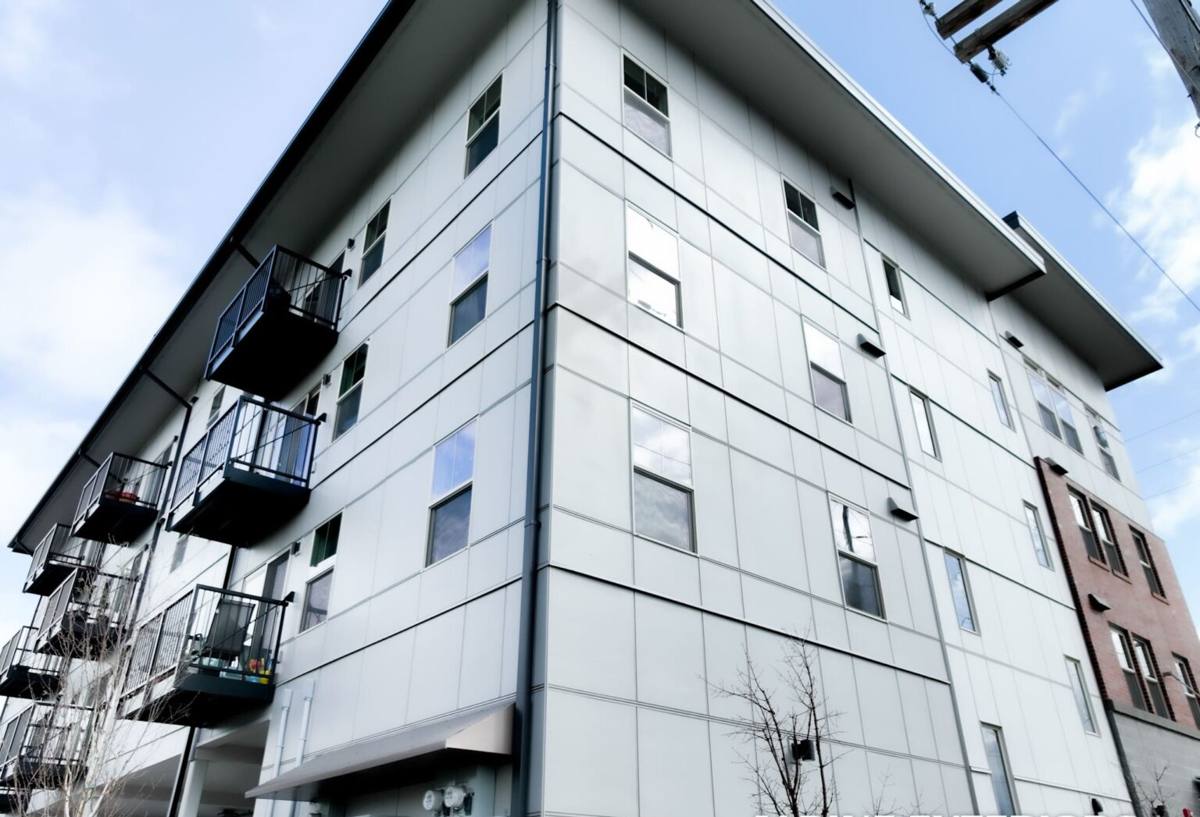
What Salt Air, Driving Rain, and Moss Actually Do to Siding
Salt Air
Airborne salt settles on siding, trim, and especially fasteners. Over years it accelerates corrosion in nails and screws that aren't rated for coastal exposure, and it can degrade lower-grade paint and caulk faster than the manufacturer's stated service life would suggest. You'll often see it first as rust streaking below fastener heads or trim joints.
Driving Rain
Wind off the water pushes rain sideways into laps, joints, and butt seams that were designed to shed water falling straight down. Repeated wind-driven rain finds the weak points in caulking, flashing, and siding overlaps years before a homeowner sees a stain on the interior wall.
Moss and Algae
Whatcom County's long wet season gives moss and algae plenty of time to establish on shaded or north-facing walls. Beyond looking bad, moss holds moisture against the siding surface, which is exactly the condition that lets rot get started on wood-based products and lets water find its way behind panels that have lost their seal.
Repair or Replace? Reading the Signs Correctly
The honest answer depends on how far the damage has spread, not just how bad one spot looks. A single cracked panel from an impact is usually a straightforward repair. Soft, spongy siding in multiple areas, or damage that shows up on more than one wall, often points to a moisture problem working its way through the whole system rather than one bad panel.
| What You See | Likely Cause | Usual Fix |
|---|---|---|
| One cracked or dented panel | Impact damage (debris, ladder, equipment) | Spot repair or panel replacement |
| Soft or spongy spots near the bottom of walls | Splash-back moisture, poor grade slope, failed caulk | Cut out and rebuild affected section, correct drainage |
| Peeling paint or bubbling in one area | Trapped moisture behind the surface | Open the area, dry it out, repair the source, then finish |
| Damage repeating on the same wall every year or two | Underlying flashing, ventilation, or water-management failure | Larger repair or replacement of that wall section |
| Widespread soft siding across multiple walls | Systemic moisture intrusion, often from the substrate outward | Full replacement usually makes more financial sense than repeated repairs |
What a Correct Siding Repair Actually Involves
A repair that only replaces the damaged piece of siding and leaves everything behind it untouched is a cosmetic fix, not a real one. On a coastal property especially, we treat every repair as a chance to check what's underneath before closing it back up.
- Remove the damaged siding carefully rather than forcing it, to avoid cracking adjacent pieces
- Inspect the house wrap or weather barrier underneath for tears, gaps, or saturation
- Check flashing at windows, doors, and any penetrations near the repair area
- Confirm fasteners are corrosion-resistant and set correctly, not overdriven or missed studs
- Replace or repair any compromised sheathing before new siding goes back on
- Match the replacement material's profile, reveal, and finish as closely as possible
- Re-seal and re-caulk joints with a product rated for the exposure the wall actually sees
- Confirm proper clearance at the bottom edge so water can't wick up from grade or hardscape
Skipping the inspection step is how a homeowner ends up paying for the same repair twice. If there's wet sheathing behind a cracked panel and we just swap the panel, the rot keeps working and shows up again in a year.
Matching Siding on an Older Home
One of the harder parts of siding repair in an established neighborhood like Sandy Point is matching what's already on the house. Discontinued colors, weathered originals sitting next to a fresh piece, and older lap profiles that newer product doesn't quite replicate are all common. We'll be straight with you about how close a match is realistic before starting the work, rather than promising an invisible repair we can't deliver. Sometimes the better long-term answer is repairing the damaged section now and planning for a full re-side down the road rather than chasing a perfect color match on a patch.
Our Process for Sandy Point Repair Calls
- On-site assessment. We look at the damage itself and walk the rest of the exterior, since coastal homes rarely have just one problem spot.
- Diagnosis, not guesswork. We open up the affected area enough to see what's actually happening behind the siding before quoting a fix.
- Honest scope and pricing. You get a clear explanation of what's damage-only versus what points to a bigger issue, and what each option costs.
- Repair or rebuild the section. Using materials and fastening appropriate for a waterfront exposure, not generic inland specs.
- Clean finish. Caulk, paint, or factory-finish touch-up matched as closely as the existing material allows.
Why Hiring a Crew That Already Works Sandy Point Matters
Siding repair on a waterfront property isn't quite the same trade as repair three miles inland. A crew that regularly works Sandy Point and similar Whatcom County coastal spots already knows to check for salt-corroded fasteners before they're asked, already expects wind-driven rain intrusion patterns around west- and water-facing walls, and already carries fastener and sealant options rated for that exposure instead of defaulting to whatever's standard for a typical Ferndale lot. That familiarity shows up in fewer callbacks and repairs that actually hold.
It also matters when a repair uncovers something bigger. A crew unfamiliar with coastal wear might mistake widespread moisture damage for a one-off issue and under-scope the fix. A crew that's seen it before knows when a patch is the right call and when it's time to have an honest conversation about the wall — or the whole exterior — needing more than a repair.
When Repair Isn't the Right Answer Anymore
Every siding material eventually reaches a point where repair stops making financial sense. If we're finding new soft spots every year, if the siding is nearing the end of its expected service life, or if repeated moisture intrusion suggests the water-management system behind the siding has failed broadly, patching individual sections becomes a losing game. That's the point where we'll tell you straight that replacement is the better investment, rather than billing you for another short-term patch.
When that conversation happens, we install James Hardie fiber cement siding and nothing else. It's a decision built around this exact climate: Hardie's HZ5 product line is engineered specifically for regions with heavy moisture exposure, it's non-combustible, and its ColorPlus factory finish holds up to sun and salt exposure far longer than field-applied paint typically does. We don't install vinyl, LP SmartSide, or other fiber cement alternatives — not because those products have no merit, but because we've made Hardie our standard for what goes back on a home we're putting our name behind, especially on a property exposed to what Sandy Point sees. If your repair conversation turns into a replacement conversation, we'll walk you through why that's what we recommend and what it involves.
Simple Maintenance That Extends the Life of a Repair
- Rinse salt residue off siding periodically, especially on walls that face open water
- Keep gutters clear so overflow isn't running down the siding face
- Trim back vegetation that keeps a wall shaded and damp
- Remove moss and algae growth before it spreads across a panel
- Walk the exterior once or twice a year looking for cracked caulk, loose panels, or new staining
- Address small damage promptly — a small crack left through a wet winter often becomes a bigger repair
If you're seeing damage, staining, or soft spots on your Sandy Point home's siding, we're happy to take a look and give you a straight answer about what it needs. The estimate is free, there's no pressure to book anything on the spot, and you'll know before we start whether you're looking at a simple repair or something bigger.